
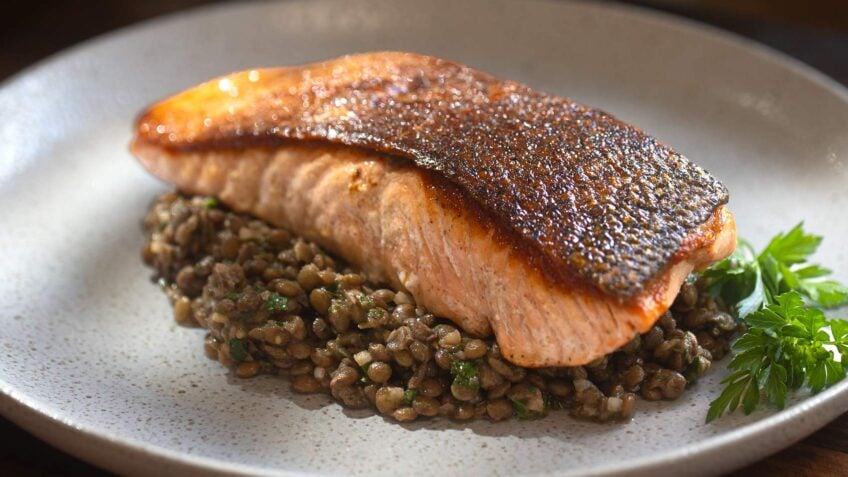
Bistro Crispy-Skin Salmon with Warm French Lentils
There’s a sound salmon skin makes when it hits a hot frying pan. A hiss, then a steady crackle that tells you something good is happening.
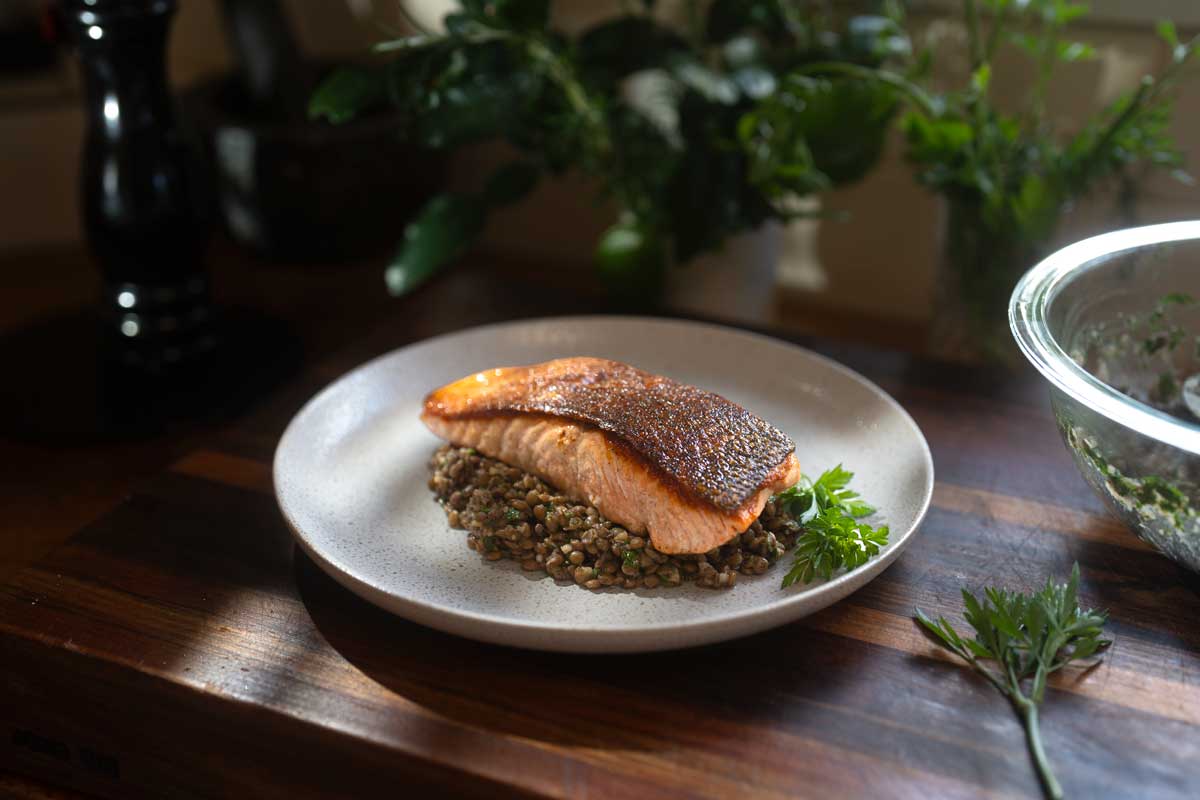
This is the plate you’d find on a Paris bistro lunch menu, chalked up on a board by the door. Golden, shattering skin on a bed of warm lentils dressed in a sharp Dijon vinaigrette.
It takes 25 minutes. It tastes like you took the afternoon off.
Why Salmon and Lentils Just Work
Salmon is rich and buttery. Lentils are earthy and a little nutty. Put them together and each one makes the other taste better.
The vinaigrette is the bridge. Red wine vinegar and Dijon cut straight through the richness of the fish, so every mouthful feels fresh instead of heavy.
It’s a classic French pairing for a reason. Bistros have been serving fish on lentils for generations because it’s cheap, fast and deeply satisfying.
The Little Lentil France Protects by Law
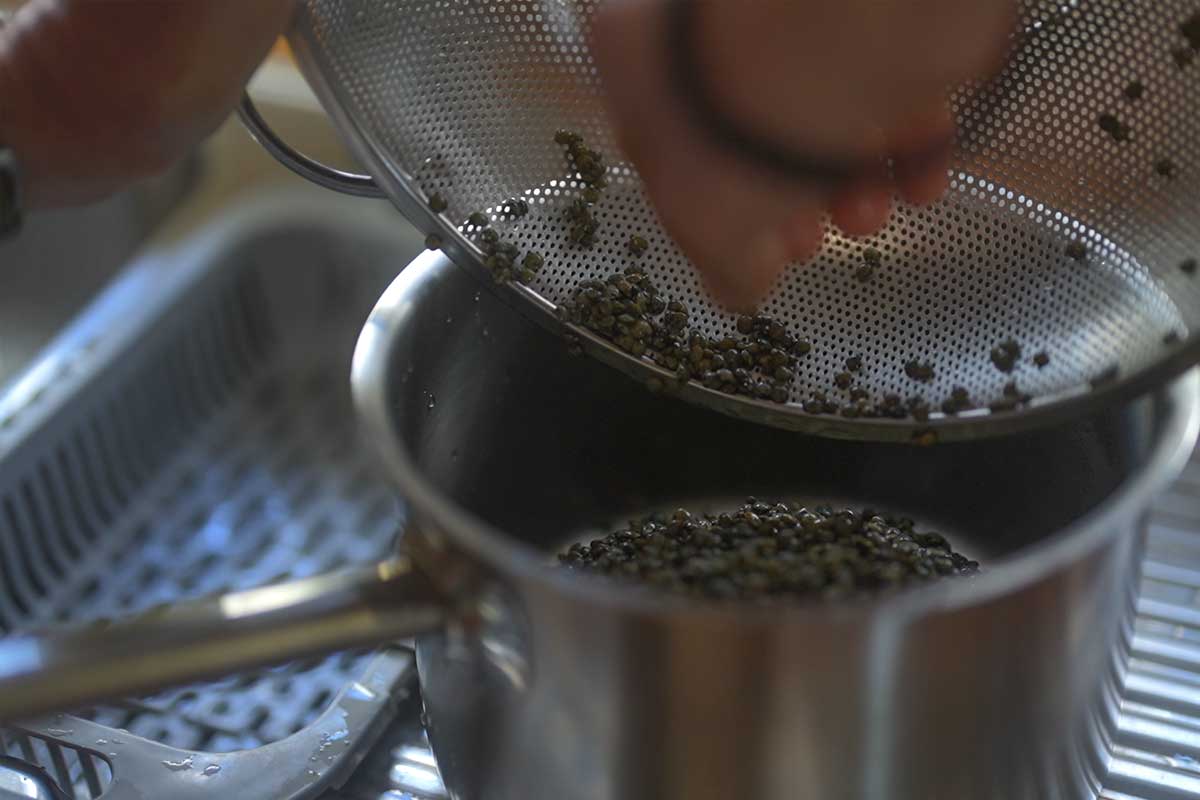
The lentils in this dish are small, green and lightly speckled with blue. In France, true Puy lentils are known as lentilles vertes du Puy. They’re grown in the volcanic soils around Le Puy-en-Velay, in the Auvergne region of central France, and the name is protected. You can also buy French green lentils, but unless they come from this specific area, they’re not true Puy lentils.
In 1996 they became the first dried vegetable in France to get protected origin status, the same kind of protection given to Champagne and Roquefort.
The high altitude, dry summers and mineral-rich soil give them a thin skin and less starch than regular lentils. That’s why they hold their shape when cooked instead of collapsing into mush.
The French sometimes call them poor man’s caviar. Once you taste them warm with a good vinaigrette, you’ll understand why.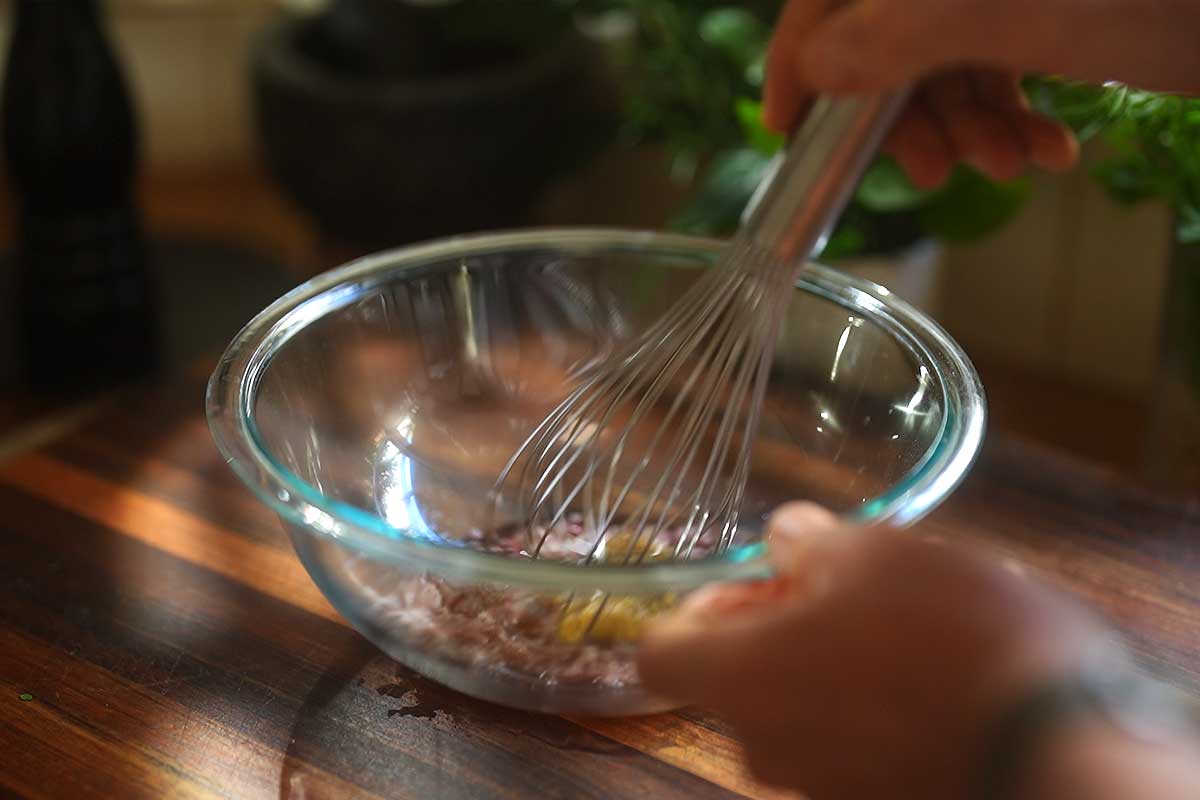 ]
]
The Secret to Properly Crispy Skin
Most soggy salmon skin comes down to two things. Moisture, and a skin that curls up off the pan.
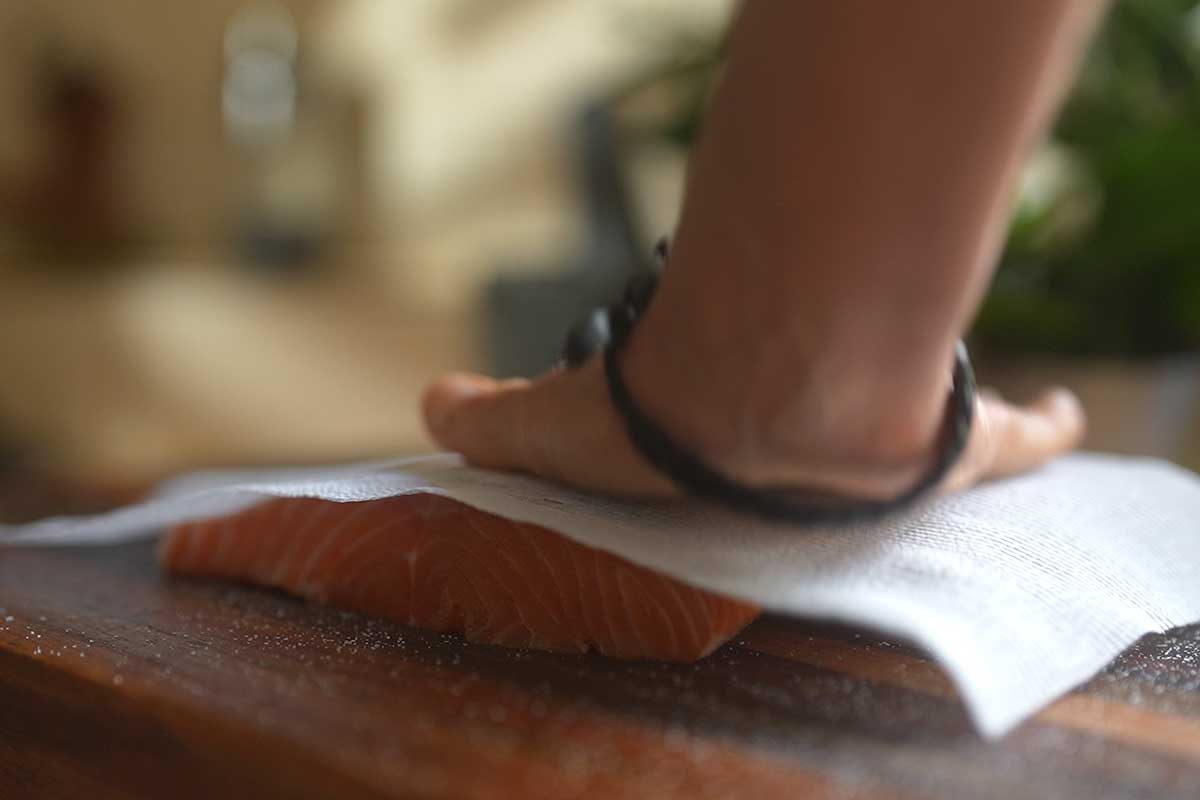
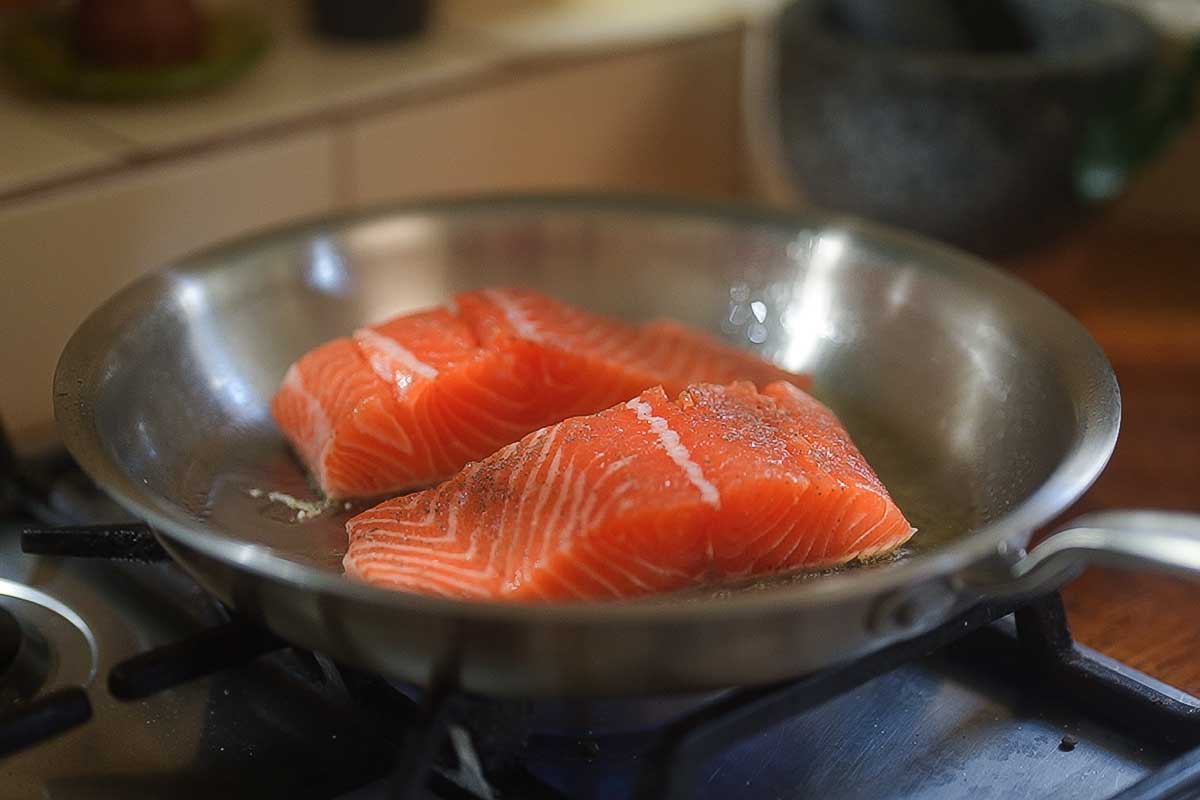
First, pat the skin very dry with paper towel. Water is the enemy here, because the pan has to steam it off before the skin can start to crisp.
Second, Heat the olive oil in a stainless steel frying pan over medium-high heat. To test the temperature, flick in a few drops of water. When they bead up and glide across the surface, the pan is ready. Third, keep it flat. As soon as salmon hits the heat, the skin shrinks and the fillet curls, so only part of the skin stays in contact with the pan.
Weighing the fish down until the skin has cooked is recommended. A fish press, a small saucepan or a plate with a tin on top all work well.
You can also just use your fingers, gently pressing the fillet flat for about 1 minute. Once the skin has set, it stays flat on its own.
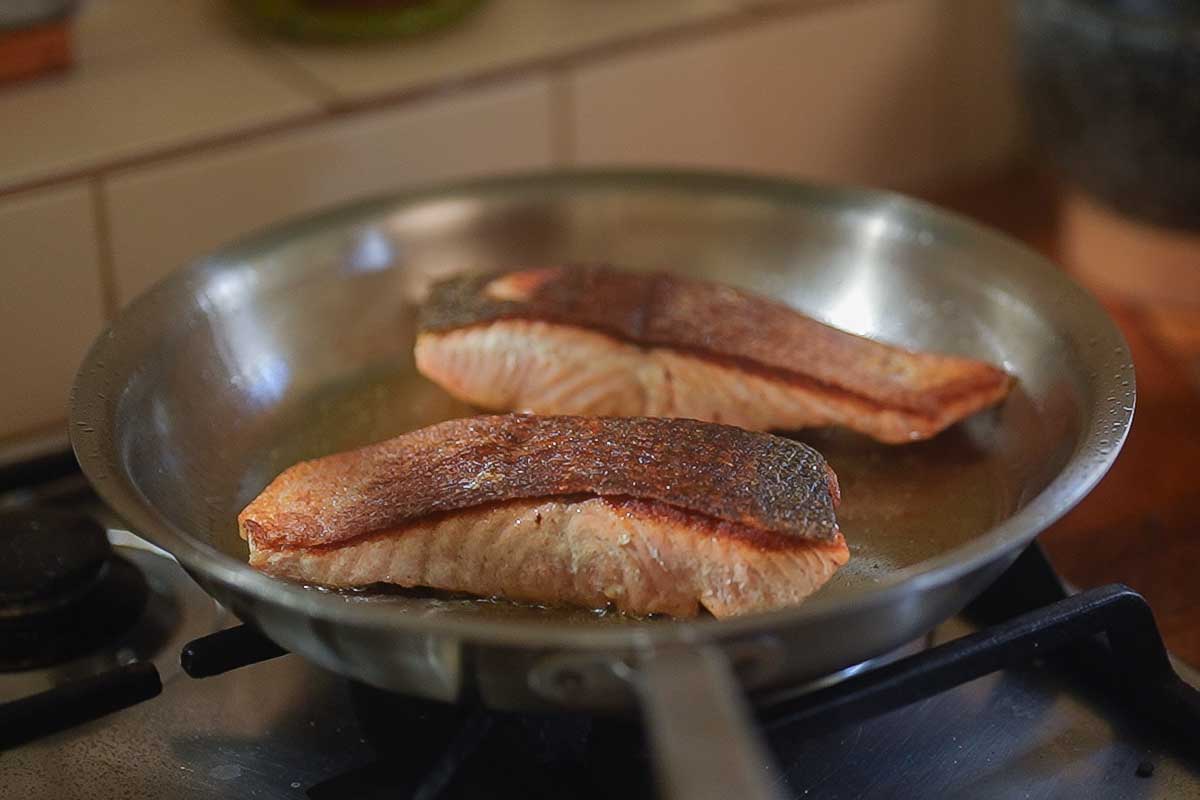
Then leave it alone. DON’T TOUCH IT! Don’t poke it, don’t lift it to check. When the skin is ready, it releases from the pan by itself.
A Plate That’s Good for You Too
Salmon is one of the best sources of omega-3 fats you can eat. Most health guidelines suggest oily fish twice a week, and this is an easy way to hit one of them.
Lentils bring plenty of plant protein, fibre and iron. Together they make a meal that keeps you full without weighing you down.
It’s the kind of dinner that feels like a treat and happens to be a sensible choice.
Cooking Tips
Simmer the lentils gently. A hard boil splits the skins and turns them cloudy.
It’s fine to salt them first, forget what you may have heard.
Start tasting at 18 minutes. You want them tender but still holding their shape, with a little bite in the middle.
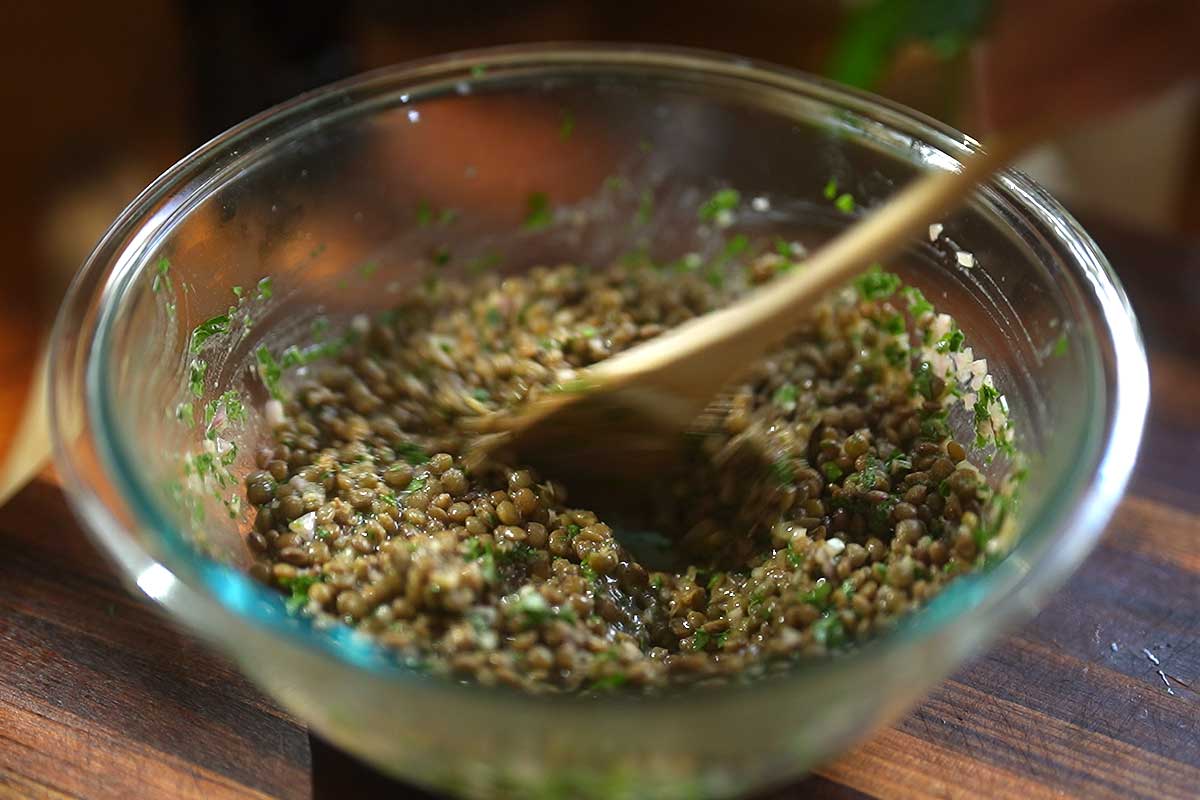
Dress the lentils while they’re still hot or warm. They soak up the vinaigrette like a sponge, so the flavour goes all the way through.
Let the shallot sit in the vinegar for a few minutes before adding the oil. It softens its bite and sweetens it slightly.
Get the frying pan properly hot before the fish goes in. The oil should shimmer.
Press the fillets flat for the first minute, either with a weight or your fingers. This is the step that makes the glassy skin crisp from edge to edge.
Cook the salmon mostly on the skin side. Watch the colour creep up the sides, and only flip when it’s about three quarters of the way up.
Serve skin side up. If you put it face down on warm lentils, all that crunch turns soft in seconds.
Ingredient Swaps
No salmon? Ocean trout, rainbow trout or skin-on barramundi all crisp up beautifully.
Black beluga lentils are a great swap for French lentils. They also hold their shape and look dramatic on the plate.
Sherry vinegar or white wine vinegar work in place of red wine vinegar. Maple syrup can replace the honey.
Swap the parsley for chives, chervil or a little tarragon if you want a more French herb flavour.
Common Mistakes
Wet skin. If you skip the paper towel, the skin steams instead of crisping. Do it just before cooking.
A cold pan. The skin sticks, tears and never gets that deep golden colour.
Not pressing the fish down. The skin curls, and you end up with crispy edges and a soft, pale middle.
Stainless steel pans work best, non stick won’t deliver the same result.
Moving the fish too early. If it’s stuck, it isn’t ready. Give it another minute.
Overcooking the lentils. Once they burst and go mushy, there’s no going back.
Dressing cold lentils. They won’t absorb the vinaigrette, and it just sits on the outside.
What to Serve With It
Honestly, it’s a complete meal on its own. Protein, legumes and herbs, all on one plate.
If you want something extra, blanched green beans, a handful of watercress or some crusty bread to mop up the vinaigrette all sit nicely alongside.
A glass of crisp white wine, like a Sancerre or a Chablis, doesn’t hurt either.
Storage and Reheating
The dressed lentils keep in the fridge for 3 to 4 days in an airtight container. They’re arguably better the next day, as they soak up even more of the dressing.
Eat them cold as a salad, or warm them gently in a saucepan with a splash of water.
Cooked salmon keeps for up to 2 days in the fridge. Reheat it in the oven at 275°F / 140°C for about 10 minutes, or flake it cold over the lentils.
The skin won’t be as crisp the second time around. That’s the price of leftovers.
FAQs
Do I need to soak French lentils?
No. Just rinse them and go. They cook in about 20 minutes straight from the packet.
Can I use regular green or brown lentils?
Yes, but they go softer and can break apart. Start checking them a few minutes earlier.
Why does my salmon skin stick to the pan?
Usually the pan wasn’t hot enough, the skin was wet, or you tried to move it too soon. When the skin is properly crisp, it lets go on its own.
Do I really need to weigh the fish down?
It’s recommended, as it keeps the skin flat and crisp all over. If you don’t have a weight, gently press the fillet with your fingers for about 1 minute.
How do I know when the salmon is cooked?
Watch the colour change up the sides. For a soft, slightly pink centre, aim for about 125°F / 52°C inside. For fully cooked, the official guideline is 145°F / 63°C.
Can I make the lentils ahead?
Absolutely. Cook and dress them up to a day ahead, then warm them through before serving. Cook the salmon fresh.
Simple Food, Done Properly
This is what French bistro cooking is really about. A few good ingredients, one or two proper techniques, and no fuss.
Dry the skin, press it flat, leave it alone. The rest takes care of itself.
👉 Learn more about the knife I use in every recipe.
 By
By 
You must be logged in to post a comment