
The Italian Fish Dish That Changed How I Cook
Coastal Italian cooking has a quiet weight to it that no gadget or clever technique can touch.
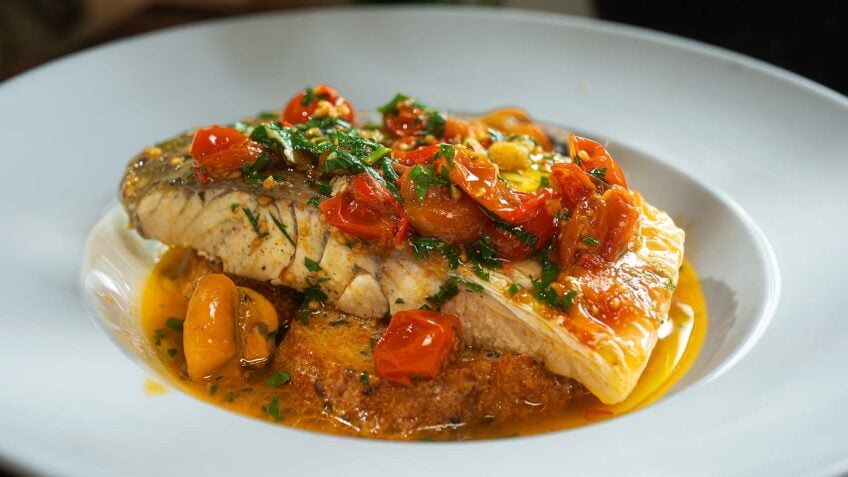
When you stand over a pan of bubbling Acqua Pazza, you catch that sharp hit of white wine burning off, then the sweet, blistered smell of cherry tomatoes and smashed garlic taking over.
Watching the mussels pop open one by one in that glossy, oily liquid feels like something small and real happening right in your kitchen. It connects you to something older than yourself. To fishermen who had nothing but the sea and a handful of wild ingredients, and made it work anyway.
By the time you’re tearing bread across the bottom of the bowl, you get it. Real luxury isn’t complicated. It’s just honest.
Why Italian Fishermen Poached Their Fish in Sea Water
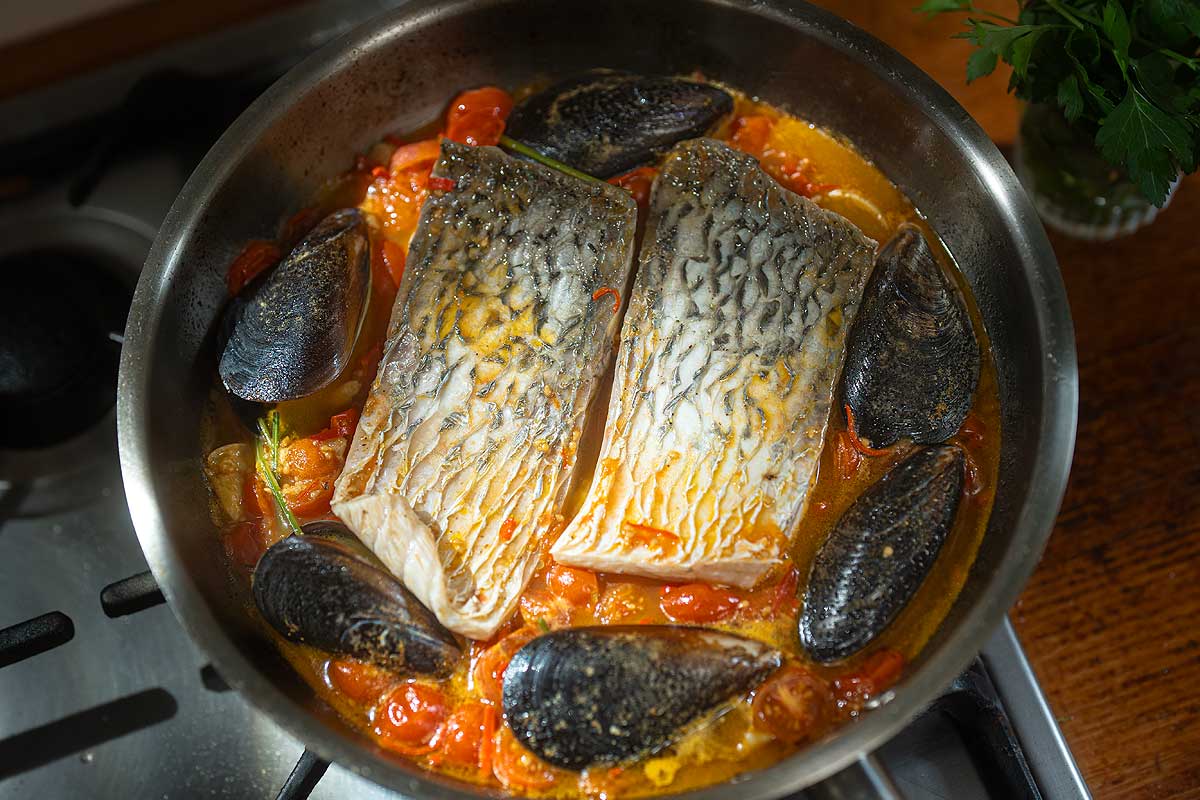
The name Acqua Pazza means crazy water in Italian. The story goes that Neapolitan fishermen, too poor to afford wine or stock, would poach their catch directly in sea water with wild tomatoes, garlic and chili foraged along the coast.
Some food historians trace it further back to a salt tax imposed on southern Italian fishing communities. Sea water was free. Everything else cost money. Necessity became technique, and technique became tradition.
What started as survival cooking is now one of the most beloved dishes in the Neapolitan repertoire, and one of the clearest examples of how Italian coastal food thinks differently about flavour.
The Broth That Is Not a Sauce
This is important to understand before you cook it. Acqua Pazza is not a tomato sauce with fish in it.
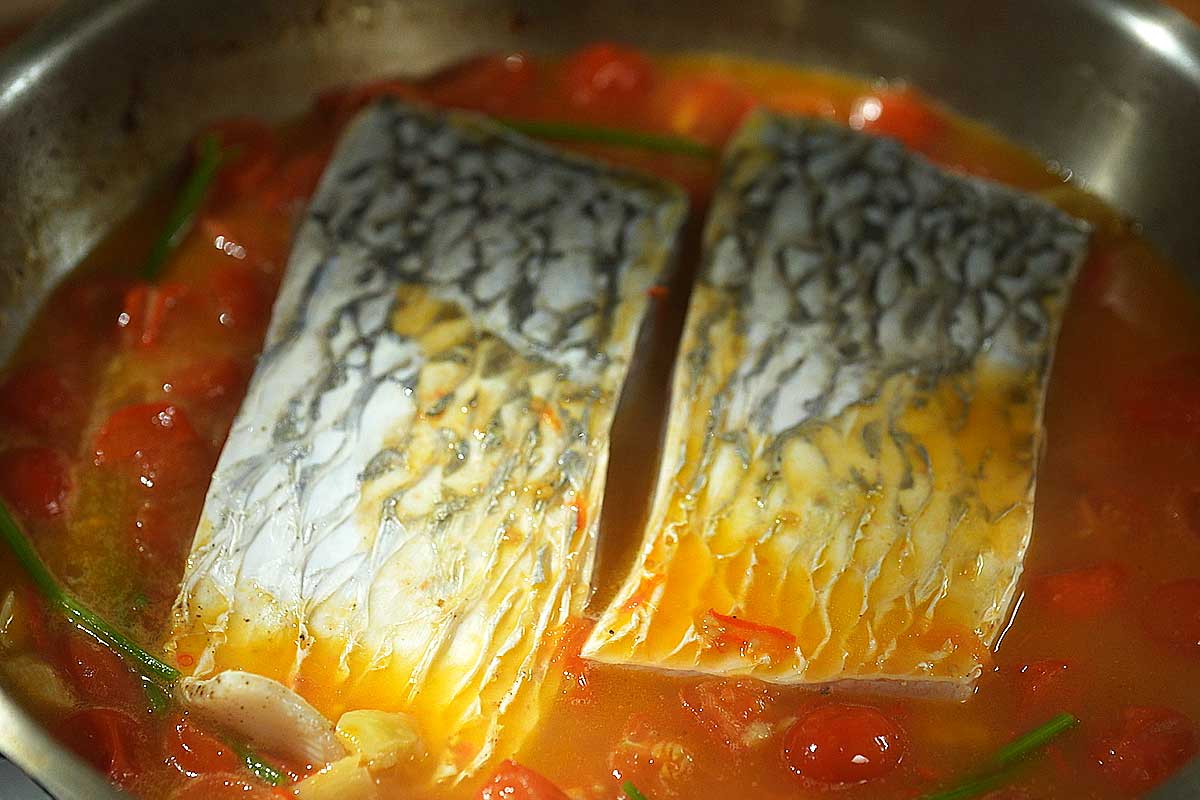
The liquid should look loose, slightly oily and shimmering when the fish goes in. Cherry tomatoes, white wine, water and extra virgin olive oil. Some tomatoes blister and collapse. Others stay partly intact. The garlic and chili infuse the oil. The fish poaches gently in that loose, fragrant broth.
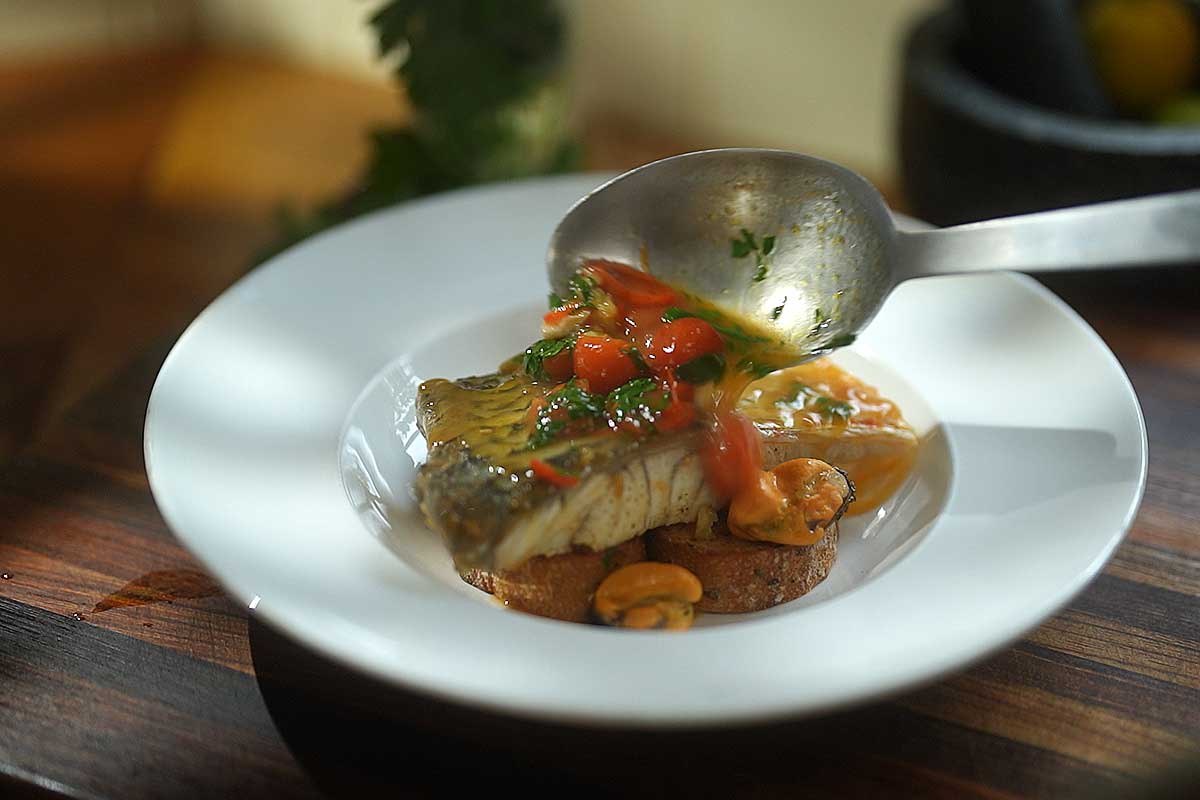
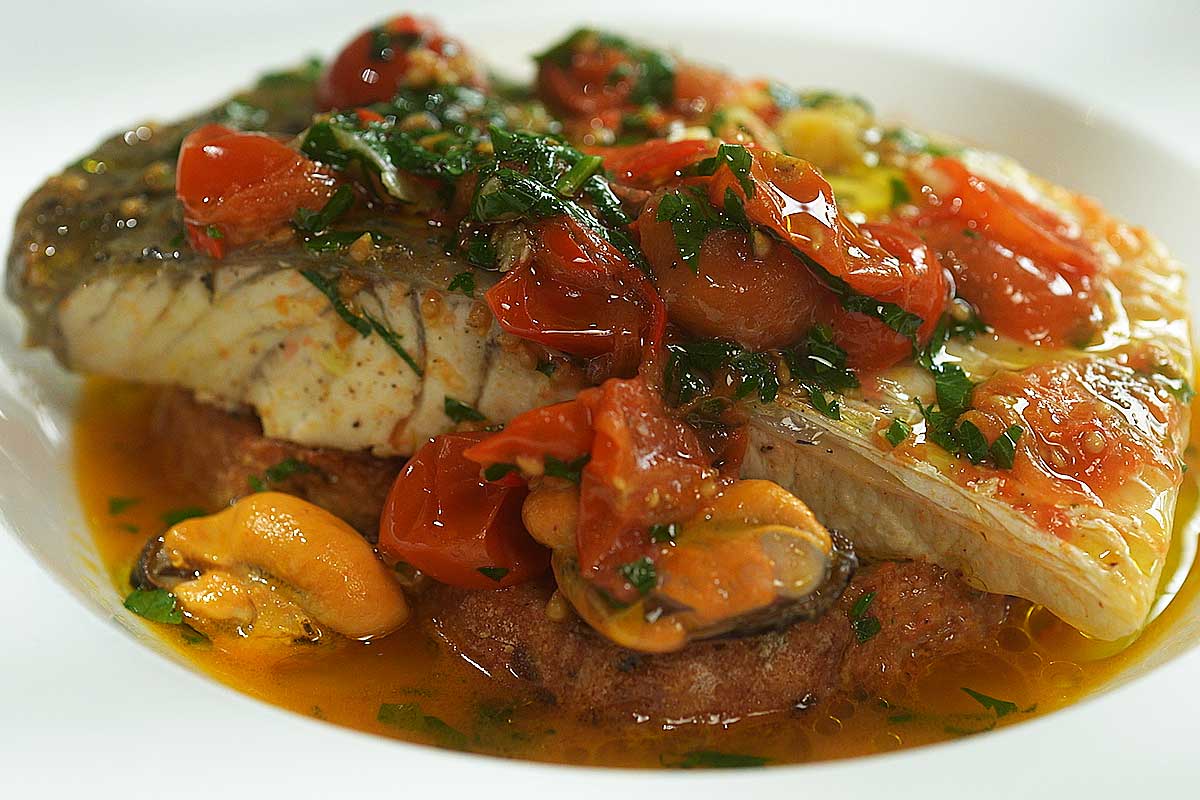
The final drizzle of raw extra virgin olive oil over everything is not decoration. It emulsifies slightly with the hot broth and gives it that glossy, silky quality that makes you want to tear bread into every last drop.
Start the Pan Cold
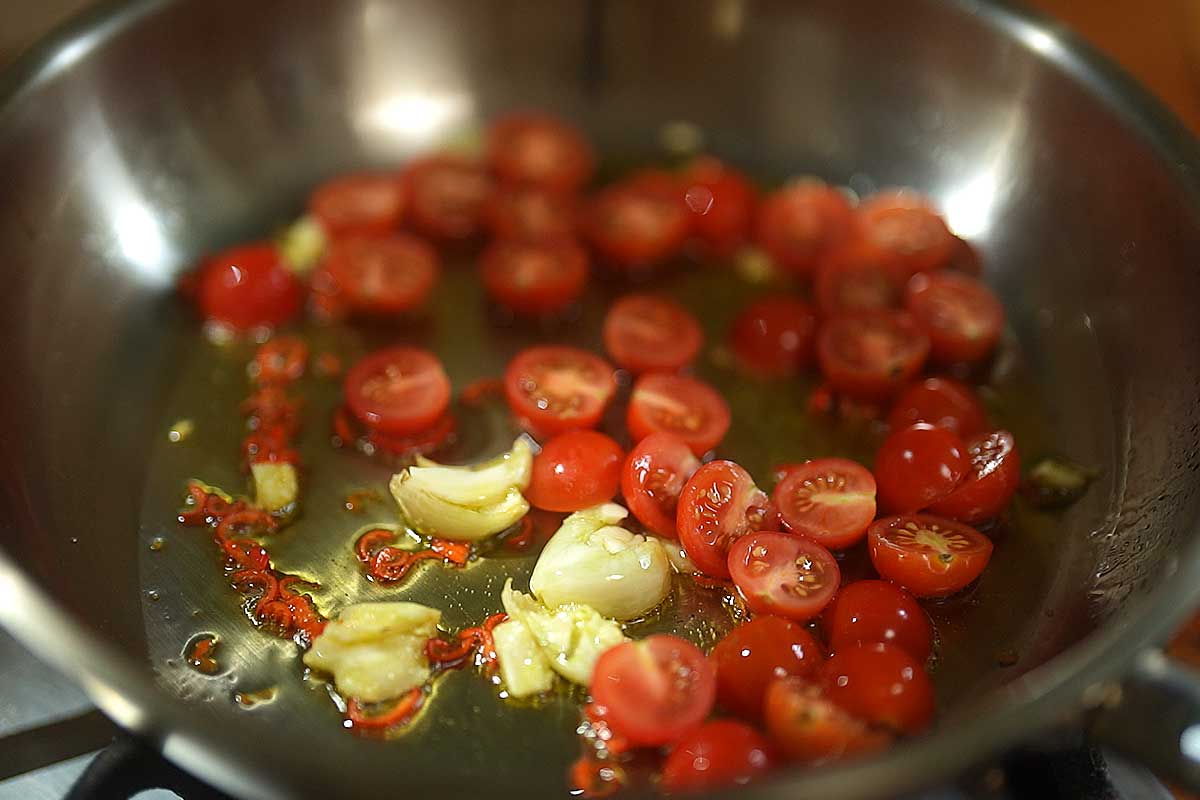
Most recipes tell you to heat the pan first. This one doesn’t, and there’s a reason.
Adding sliced garlic and chili to a cold pan with olive oil and bringing it up to heat together gives you gentle, controlled infusion. The garlic becomes fragrant and lightly golden without burning. Hot pan, cold garlic equals bitter garlic in seconds.
It’s a small adjustment that makes a real difference to the finished broth.
The Mussels Are Optional but Worth It
The mussels are not traditional in every version of Acqua Pazza but they add something important.
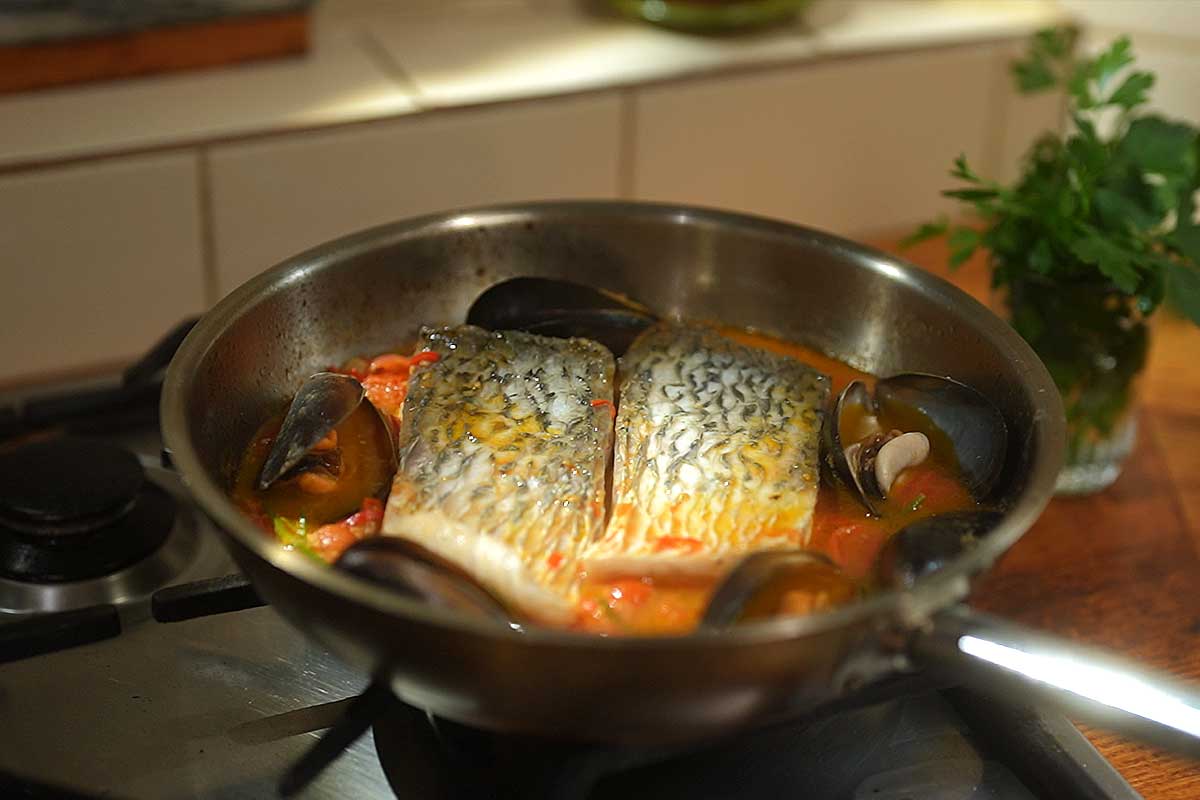
As they open in the hot broth, they release their natural juices, sweet, briny and deeply oceanic, directly into the liquid. It takes the broth from good to extraordinary. Six mussels is all it takes.
Always discard any mussels that remain closed after cooking. They were not alive when they went in and are not safe to eat.
Cooking Tips
Start the garlic and chili in a cold pan with the olive oil. Bring them up to heat together for gentle infusion without burning.
Don’t overcook the tomatoes. You want some blistered and soft, others still partly intact. That contrast of textures is part of what makes the broth interesting.
Nestle the fish skin-side up, not skin-side down. This keeps the skin from sticking to the pan and lets the flesh poach evenly in the liquid while the skin stays above it.
Spoon the hot broth over the fish a few times while it cooks. This helps it cook evenly from all sides without turning it.
Pull the fish when it’s just opaque. It continues cooking in the hot broth even after you remove it from the heat. Slightly underdone in the pan means perfectly cooked in the bowl.
Add the raw extra virgin olive oil at the very end, not during cooking. Raw EVOO drizzled over the finished dish gives brightness and a slightly grassy flavour that cooked oil can’t replicate.
Ingredient Swaps
Any firm, skin-on white fish works here. Snapper, barramundi, sea bass, John Dory or even cod all work beautifully. You want something that holds together during gentle poaching rather than falling apart.
No white wine? Add a squeeze of lemon juice and a little extra water instead. The acidity is what matters more than the wine itself.
No mussels? Clams work beautifully and are often used in more traditional versions. Or leave the shellfish out entirely and add a few extra cherry tomatoes instead.
No fresh chili? A generous pinch of dried chili flakes gives a similar heat. Add them with the garlic at the start.
Common Mistakes
Heating the pan before adding the garlic. It burns instantly. Always start cold for this dish.
Making the broth too thick. If it looks like a tomato sauce, add more water. Acqua Pazza should be loose and brothy, not heavy.
Overcooking the fish. It should be just opaque all the way through, moist and tender. A minute too long and it becomes dry and flaky in the wrong way.
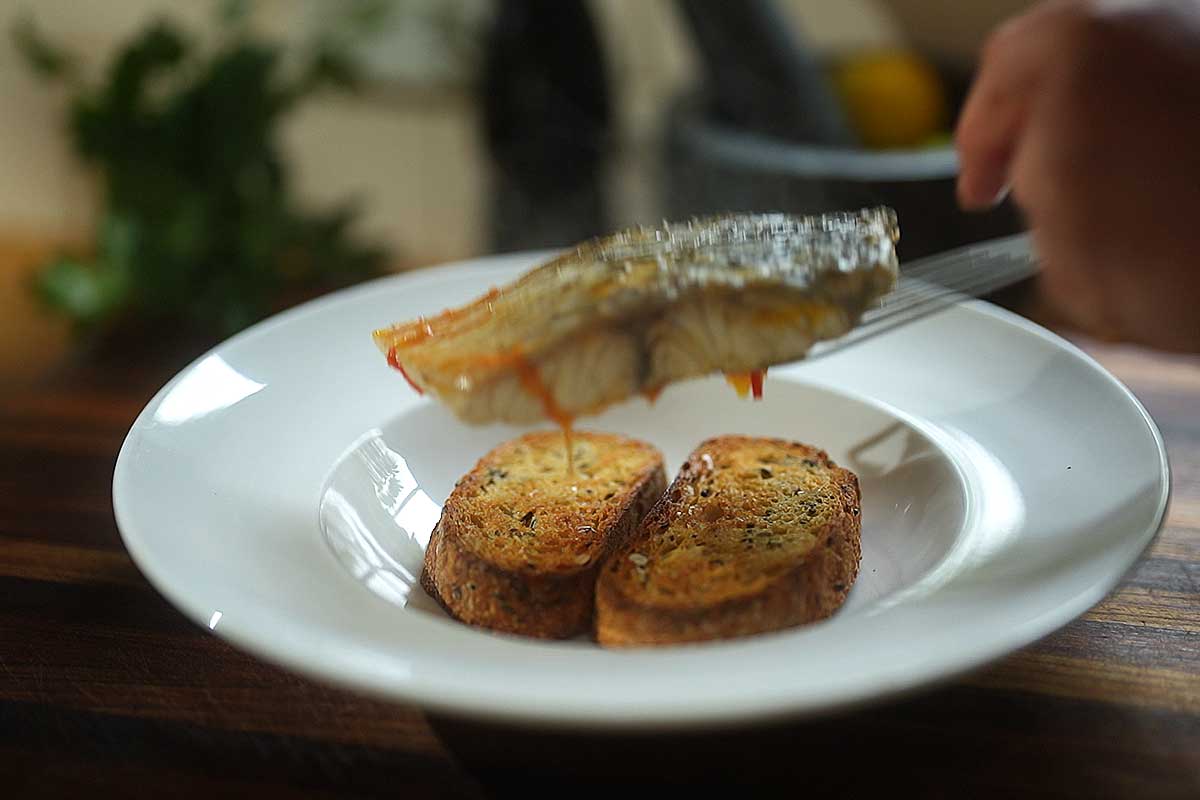
Skipping the bread. The point of the dish is partly the broth. Grilled crusty bread rubbed lightly with garlic and torn into the bowl is not optional. It’s half the experience.
What to Serve With It
Grilled crusty bread rubbed with garlic is essential. This is not a side suggestion, it’s part of the dish.
A simple green salad dressed with lemon and olive oil alongside keeps the meal feeling light and coastal.
Steamed white rice works well if you want something to soak up the extra broth.
A glass of crisp southern Italian white wine. Falanghina or Greco di Tufo if you can find them. Pinot Grigio works perfectly otherwise.
Storage
Fish is best eaten fresh. The texture changes significantly once refrigerated and reheated.
The broth on its own keeps well in the fridge for up to 2 days and is extraordinary used as a base for another fish dish or stirred through pasta the next day.
Do not freeze the finished dish. The fish texture becomes unpleasant and the broth loses its freshness.
FAQs
What does Acqua Pazza mean?
It means crazy water in Italian. The name comes from the Neapolitan fishermen who cooked their catch in sea water with wild tomatoes and garlic foraged along the coast. The broth was described as crazy because of its unusual combination of fresh and salt water ingredients.
What fish works best for Acqua Pazza?
Any firm, skin-on white fish holds up well. Snapper and sea bass are the most traditional choices in Italy. Barramundi, John Dory and cod all work beautifully. Avoid very delicate fish that fall apart easily, as they need to hold together during the gentle poaching.
Can I make this without mussels?
Yes, many traditional versions use fish only. The mussels add a sweet, briny depth to the broth as they open but the dish is excellent without them. Clams are a good substitute if you want shellfish but can’t find mussels.
Is this recipe gluten free?
Yes, the dish itself is completely gluten free. Just swap the crusty bread for a gluten free alternative if needed.
Why is the olive oil added at the end raw?
Heating extra virgin olive oil destroys its delicate flavour compounds, the grassy, peppery, slightly fruity qualities that make good EVOO worth using. A raw drizzle over the finished dish preserves all of that and gives the broth a brightness and freshness that cooked oil simply cannot.
The Most Honest Way to Cook Seafood
Acqua Pazza asks very little of you. A wide pan, good olive oil, a few cherry tomatoes, garlic and whatever fish looks best at the market.
What it gives back is entirely disproportionate to the effort. A broth that tastes like the sea. Fish that’s perfectly cooked. And that moment when the bread hits the bottom of the bowl and soaks up everything that’s left.
That’s the whole point of coastal Italian cooking. Honest ingredients, done with care. Nothing more needed.
 By
By 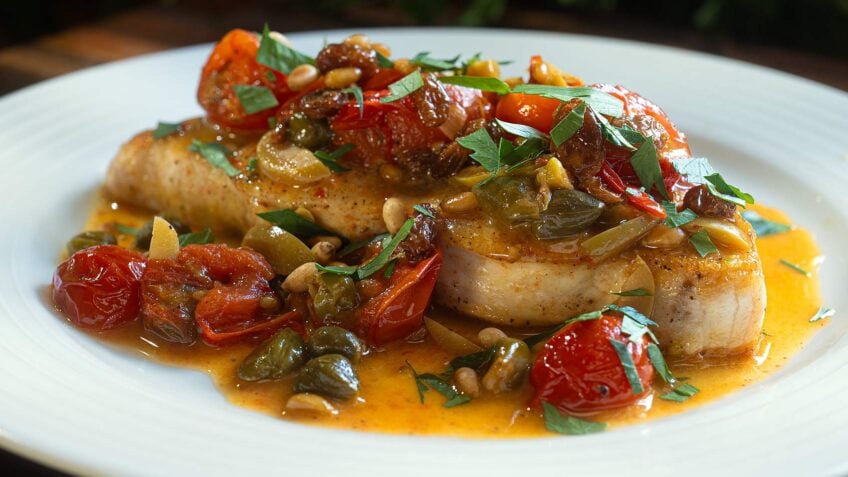
You must be logged in to post a comment