
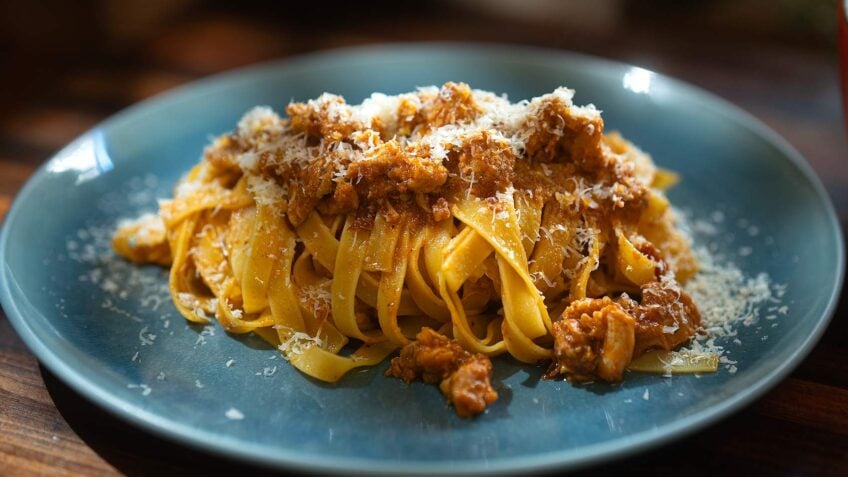
Chicken Ragu with Tagliatelle, the Bolognese Method Without the Beef
Some sauces you throw together. This one you leave alone and let it do its thing.
It’s a slow-simmered chicken ragu built the same way as a proper ragù alla Bolognese. Pancetta, a soft soffritto, white wine, a little tomato and a good splash of milk.
The kitchen smells like an Italian nonna moved in. And the chicken stays so tender you can pull it apart with a spoon.
Why Chicken Works in a Bolognese-Style Ragu
Most people think Bolognese is a tomato sauce with mince in it. In Bologna it’s the opposite, a meat sauce with just a touch of tomato.
That’s the idea I’ve borrowed here. The tomato sits in the background, and the pancetta, wine and milk carry the flavour.
Chicken thighs are the right cut for it. They have enough fat and connective tissue to handle over an hour of simmering without drying out, which breast meat simply can’t do.
It’s also lighter than the beef version. You get all the comfort without needing a lie down afterwards.
The Milk Is Not a Mistake
Milk in a meat sauce sounds odd if you’ve never done it. In Bologna it’s been part of the method for generations.
It softens the sharp edge of the wine and tomato, and it gives the sauce a round, almost silky finish. Not creamy, just smoother.
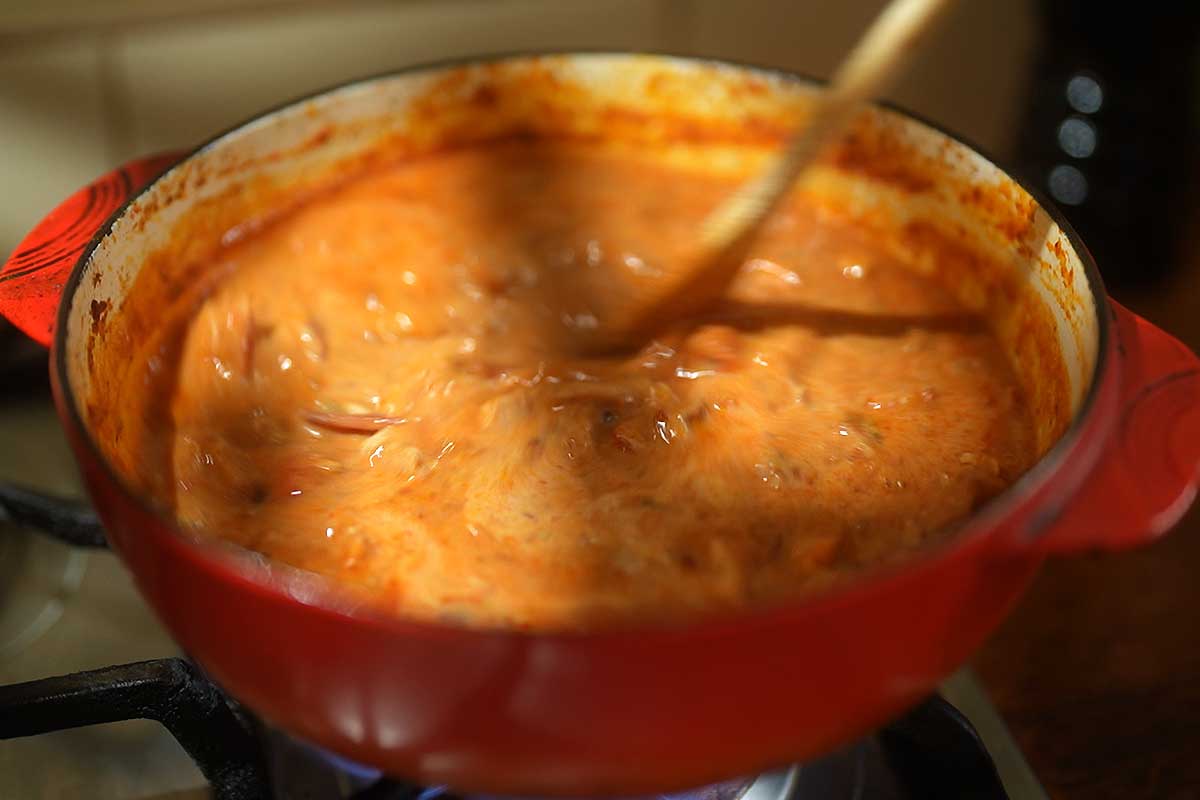
When you first pour it in, the sauce can look a bit split and grainy. Don’t panic. As it simmers uncovered and reduces, it all comes back together.
Add it gradually and keep the heat gentle. A hard boil is what makes it look rough.
Keep the Chicken Chunky
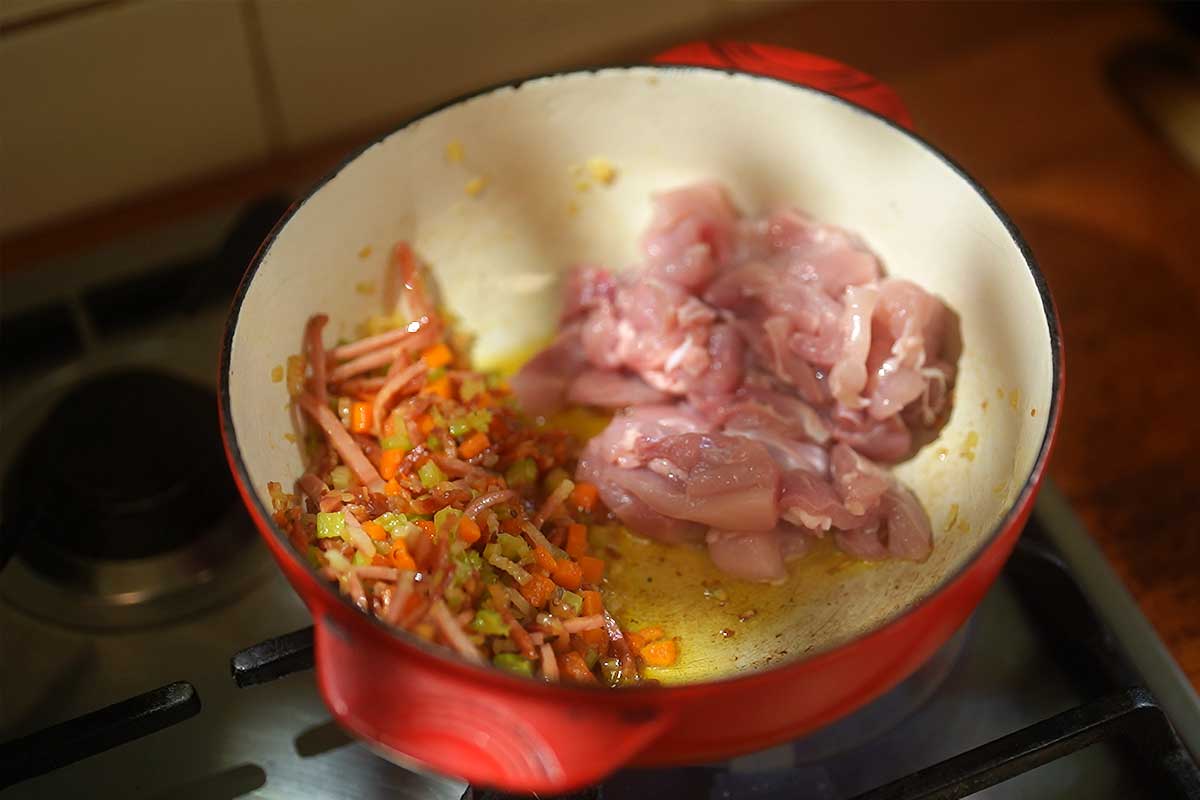
This is the part that makes the dish. The thighs are cut in chunks, or you can cook whole, and only get cut or pulled apart at the very end.
Cooking them whole keeps the juices inside. Mince or small dice would give up its moisture in the first twenty minutes.
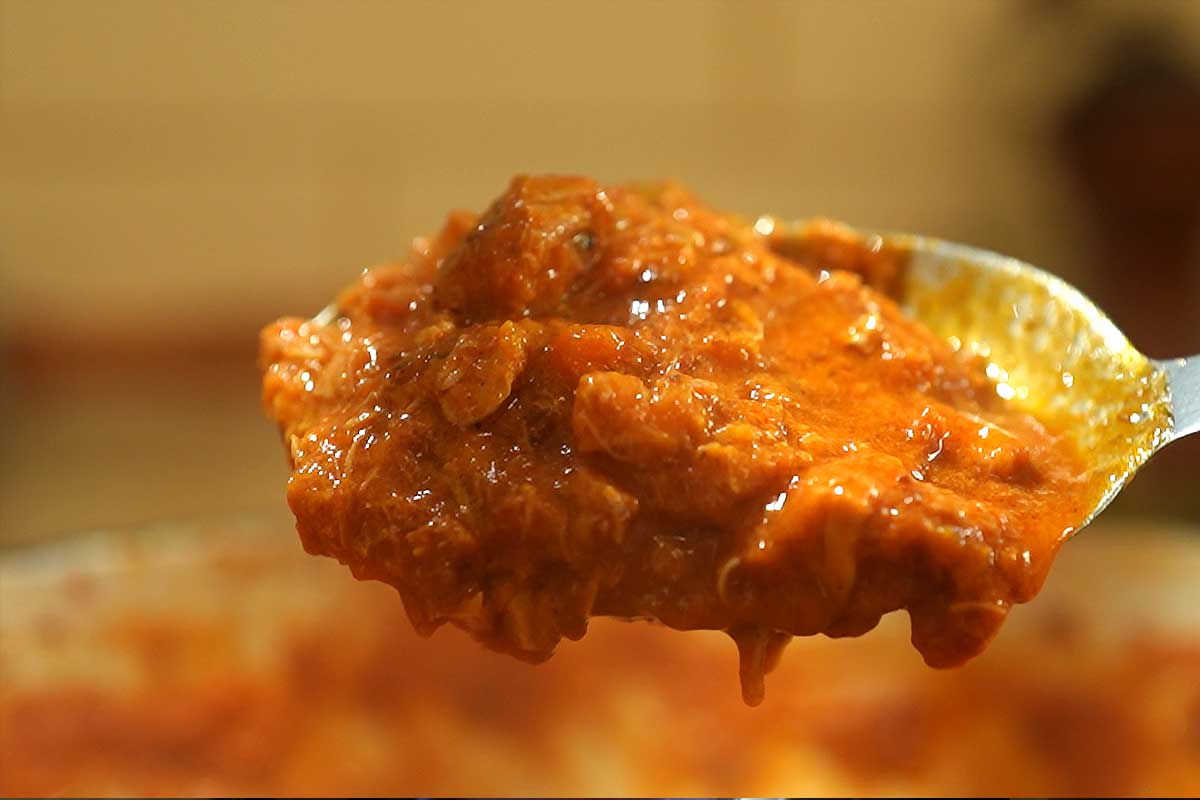
Then you break them into short, chunky pieces, not fine shreds. Chunks grab onto the wide ribbons of tagliatelle, while fine shreds turn stringy and slide to the bottom of the bowl.
You want a bit of chicken in every forkful. That’s the whole point of a ragu.
 ]
Cooking Tips
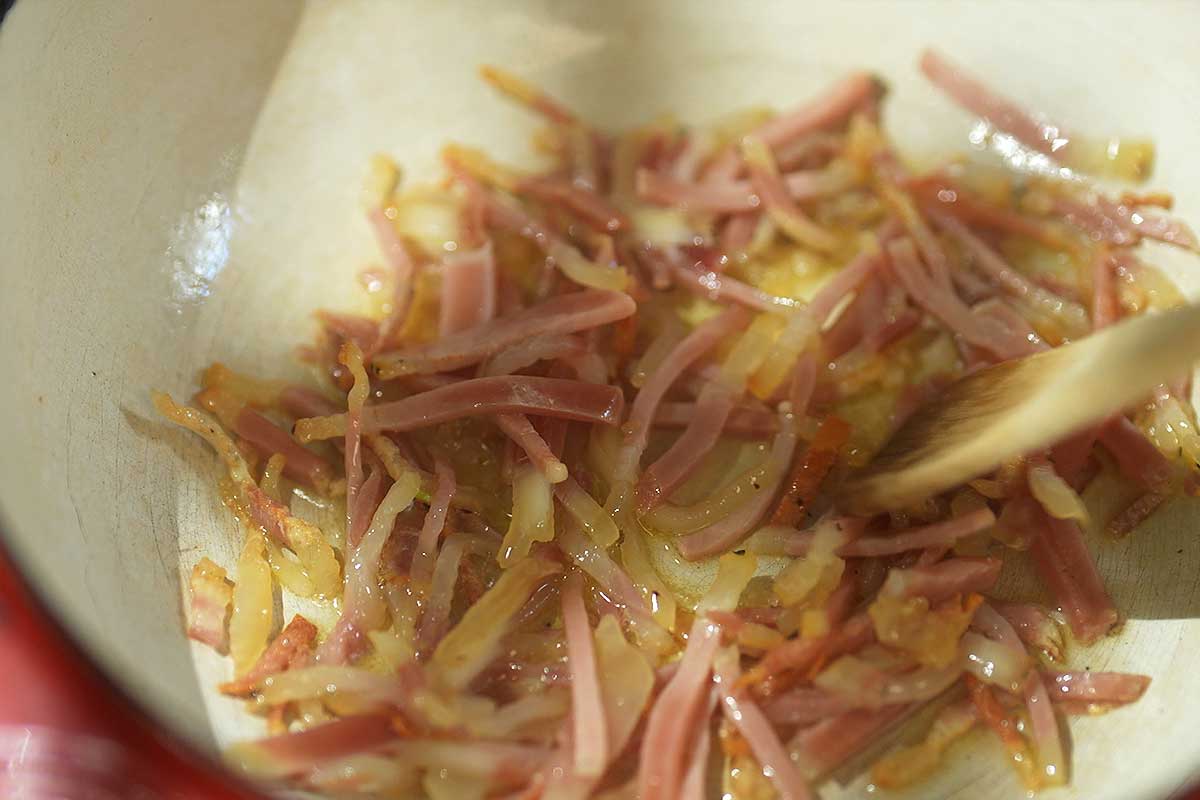
Start the pancetta over medium heat and be patient. You want the fat to melt out slowly, because that fat is what the vegetables cook in.
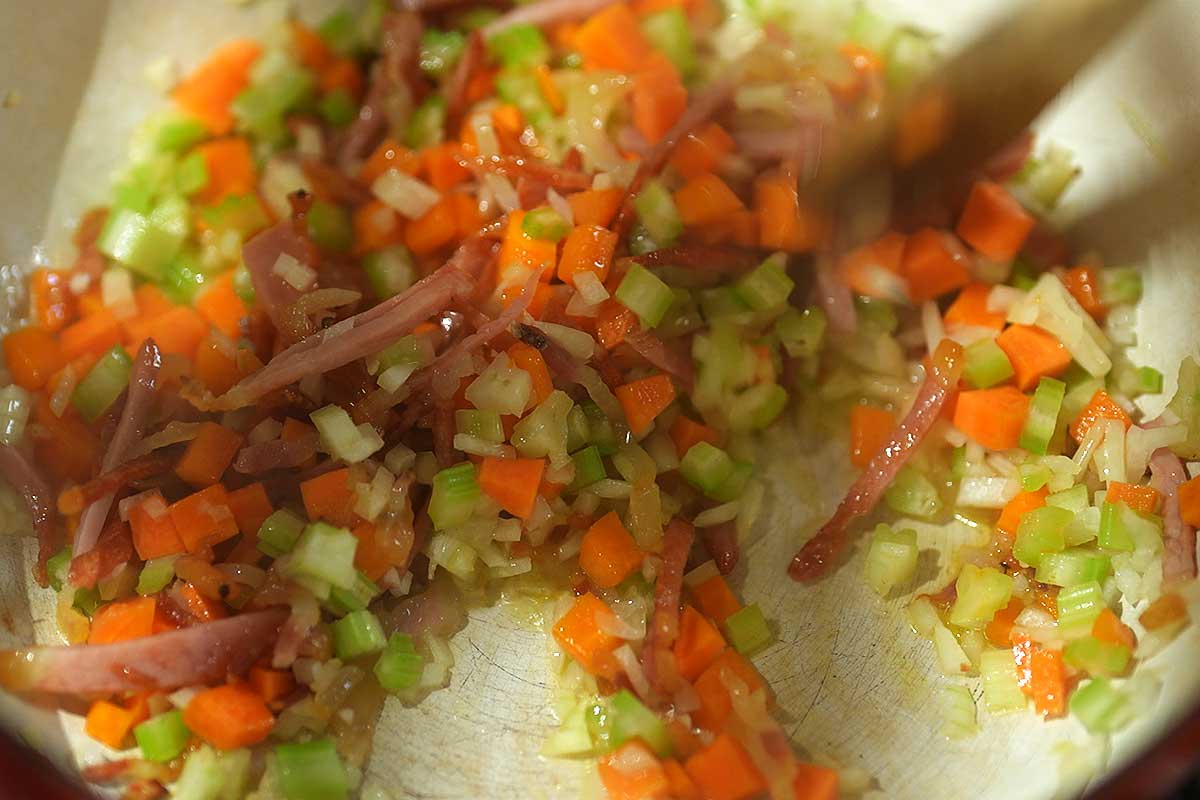
Dice the carrot, celery and onion as fine as you can. They should almost disappear into the sauce by the end.
Soft, not brown. Give the vegetables the full 10 minutes and stir often, as browned onion makes the sauce taste bitter.
Cook the tomato paste for a full minute before the wine goes in. It takes away the raw, tinny taste.
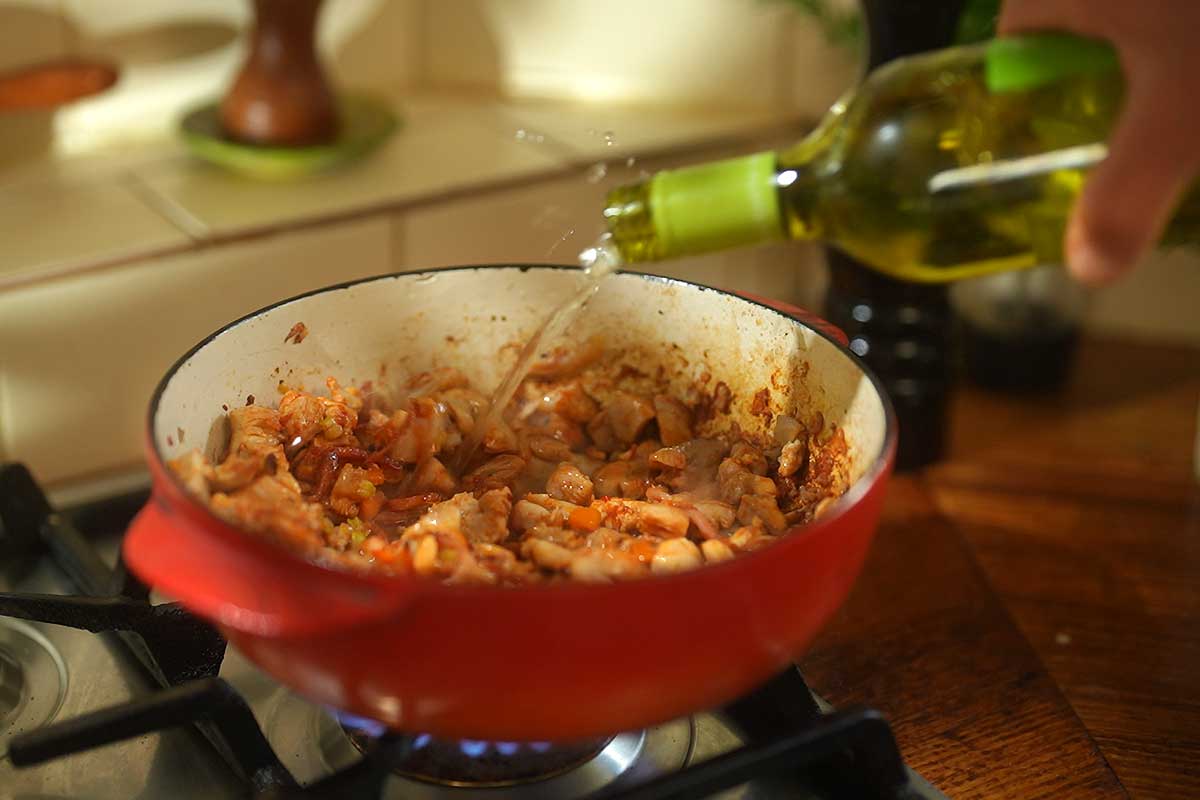
Let the wine reduce until it’s almost gone. If you rush this step, the sauce tastes boozy and sharp.
Keep it at a lazy simmer, just a few bubbles. If the pot looks dry at any point, add a splash more stock.
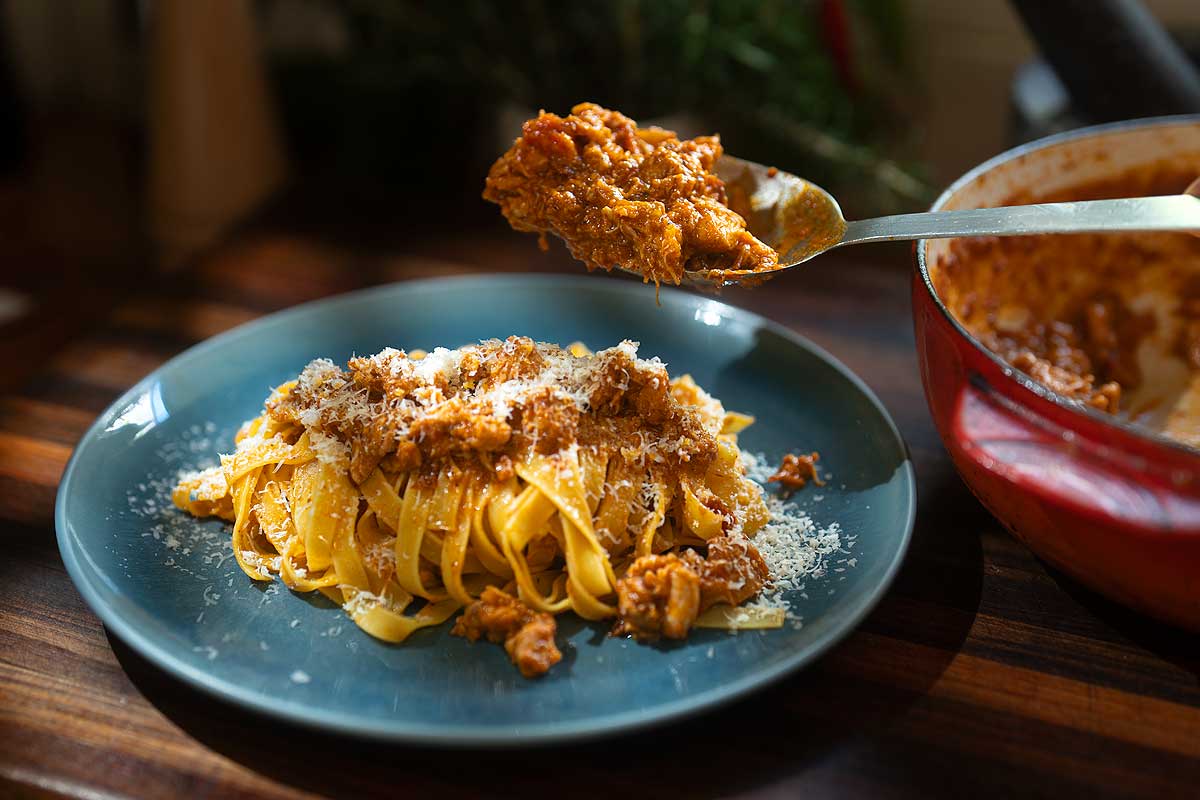
Pull the pasta out a minute early and finish it in a frying pan with the ragu and a splash of pasta water. That last minute is where the sauce and pasta become one dish.
Season at the end, not the start. Pancetta, stock and Parmigiano all bring salt, so taste first, then add fine sea salt.
Ingredient Swaps
No pancetta? Use unsmoked streaky bacon or guanciale. Smoked bacon works too, but it will take over a little.
Tagliatelle can be swapped for pappardelle or fettuccine. Stick with a wide, flat pasta, as thin spaghetti can’t hold a chunky sauce.
If you don’t cook with wine, use extra chicken stock with a small squeeze of lemon juice for brightness.
Bone-in thighs are fine and add even more flavour. Just lift out the bones when you pull the meat apart.
Grana Padano or Pecorino Romano can stand in for Parmigiano Reggiano. Pecorino is saltier, so go easy on the final seasoning.
Common Mistakes
Using chicken breast. It turns dry and chalky long before the sauce is ready.
Adding too much tomato. This is a meat sauce, not a tomato sauce, so resist the urge to tip in the whole can.
Boiling instead of simmering. High heat toughens the chicken and makes the milk look split.
Shredding the chicken too fine. You lose the texture and it turns into something closer to a paste.
Dumping the sauce on top of plain pasta. Toss them together in the pan so every ribbon is coated.
What to Serve With It
Honestly, it doesn’t need much. A simple green salad with lemon and olive oil cuts through the richness nicely.
Crusty bread is handy for cleaning the plate. And the rest of that bottle of dry white wine won’t go to waste.
Storage and Reheating
The ragu keeps in the fridge for up to 3 days in a sealed container. Like most slow-cooked sauces, it tastes even better the next day.
It also freezes well for up to 3 months. Freeze the sauce on its own, not mixed with the pasta.
Reheat gently in a pot with a splash of stock or water to loosen it. Then cook fresh tagliatelle and toss it through.
FAQs
Can I use chicken breast instead of thighs?
You can, but I wouldn’t. Breast dries out during a long simmer, while thighs stay tender and juicy the whole way through.
Why do you add milk to chicken ragu?
It’s the traditional Bolognese method. Milk softens the acidity of the wine and tomato and gives the sauce a smoother, rounder finish.
My sauce looks split after adding the milk. Is it ruined?
No, that’s normal. Keep it at a gentle simmer with the lid off and it comes back together as it reduces.
Can I make chicken ragu ahead of time?
Yes, and it’s a good idea. Make the sauce a day ahead, keep it in the fridge, then reheat and toss with freshly cooked pasta.
Can I use fresh tagliatelle instead of dried?
Absolutely. Fresh egg tagliatelle cooks in 2 to 3 minutes, so have the ragu hot and ready before the pasta goes in the water.
Can I make it in a slow cooker?
You can. Do the pancetta, vegetables, browning and wine on the stove first, then cook on low for 4 to 5 hours and finish uncovered in a pot to thicken.
Worth the Wait
There’s nothing tricky in this recipe. It just asks for a bit of time and a low flame.
Give it that, and you get a pot of chicken ragu that tastes like it came from a kitchen in Bologna. Finish with Parmigiano Reggiano, a small pinch of sea salt flakes, and enjoy the quiet at the table.
 By



You must be logged in to post a comment