
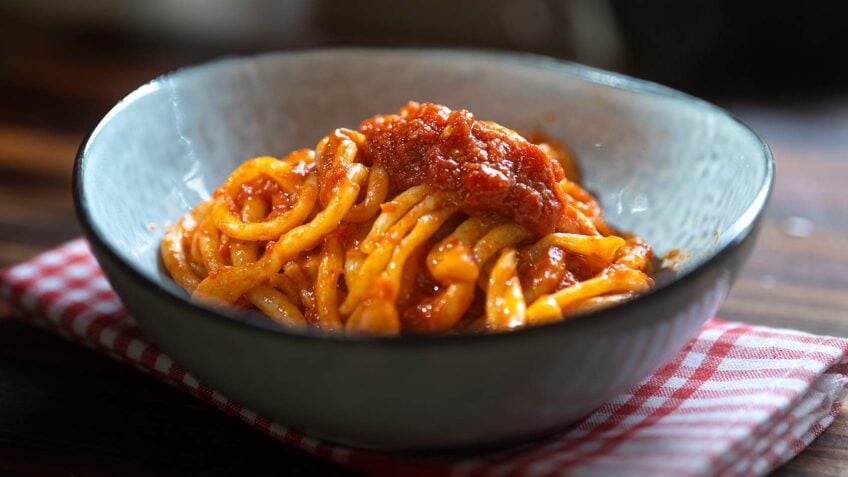
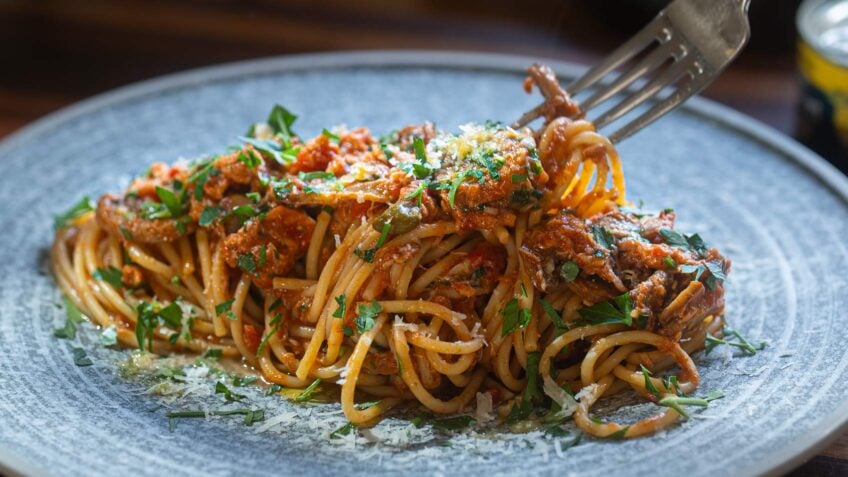
Cook this when you just need a massive hug – Pici all’Aglione
This morning reminded me of a pasta from Tuscany. Not because of the beach. Not because of the weather. But because of the pace.

You walk in after a long day. The house is quiet, then the smell hits you. Melting garlic and bubbling tomatoes.
Rolling pici by hand is cheap therapy. No machine, no rush. Just you, a bit of dough, and ten minutes to switch off. And when you eat it, it doesn’t just fill you up. It settles you.
Honest, simple food that feels like a hug from an Italian nonna.
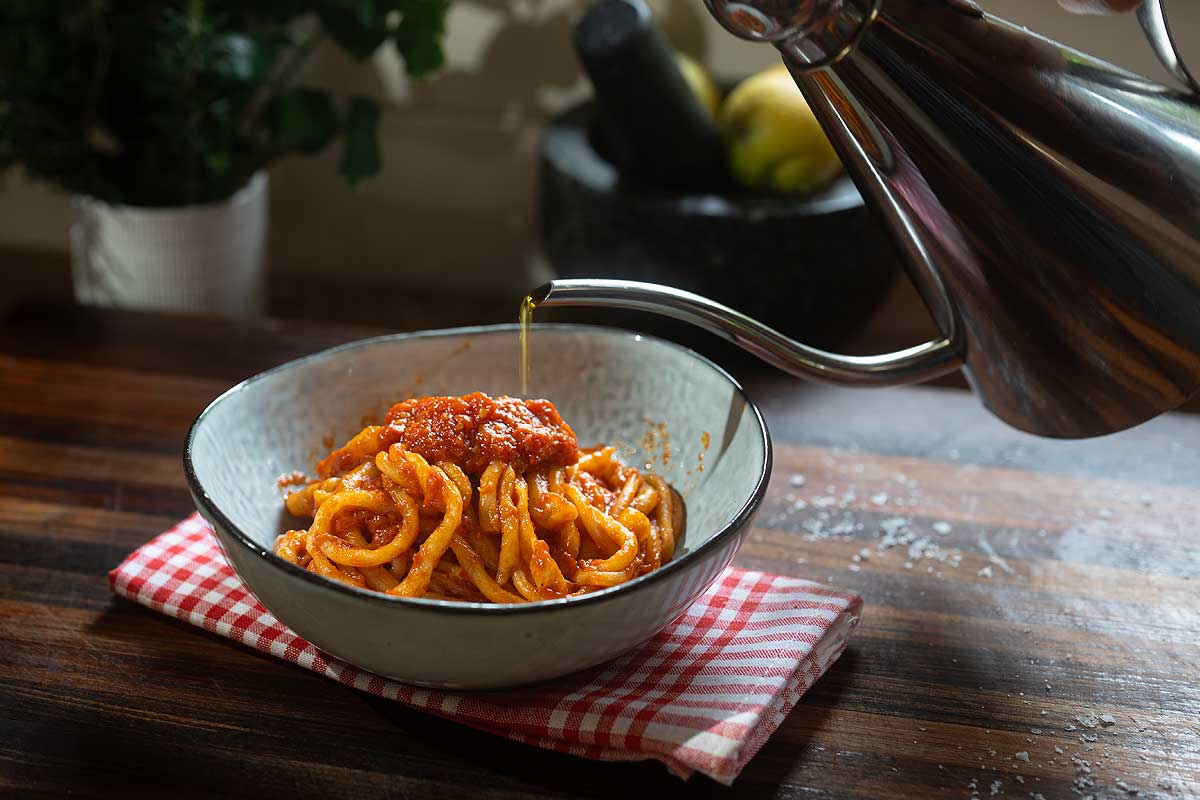
The Medieval Dish That Predates Tomatoes
Here’s something to chew on while you cook.
The original medieval version of this dish had no tomatoes at all. Tomatoes come from the Americas and didn’t reach Italy until the 1500s. Before that, Pici all’Aglione was just sweet aglione garlic, olive oil, and maybe a few stale breadcrumbs.
The dish survived the arrival of the tomato, incorporated it beautifully, and has been made in Tuscany ever since. Some recipes aren’t about ingredients. They’re about patience. In a small corner of Tuscany, they’ve been making this garlic sauce for hundreds of years.
About the Garlic: Size Matters
In Italy, aglione is a specific large-bulb garlic grown in the Val di Chiana, much bigger than the garlic you’d normally find at a supermarket. It’s naturally milder, sweeter and less pungent than regular garlic, which is why 14 cloves can go into a sauce without it becoming aggressive.
If you’re using smaller garlic cloves, which is most garlic outside Italy, be aware that the flavour will be significantly more pungent. Start with 8 to 10 cloves and taste as it cooks. You can always add more but you can’t take it back.
The slow, gentle cooking over very low heat is what transforms the garlic, whatever size you use, from sharp and pungent into something sweet, mellow and silky. Patience is the real ingredient here.
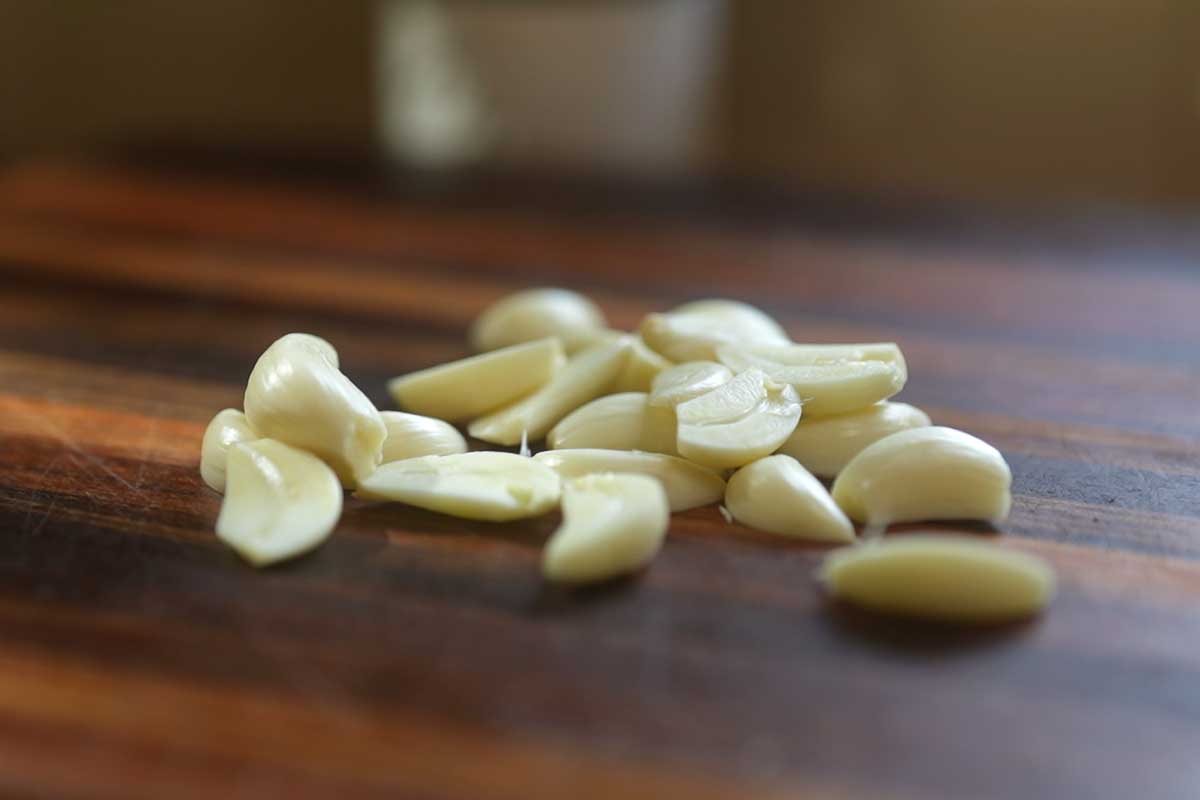
Why You Start the Garlic in a Cold Pan
Most recipes tell you to heat the pan first. This one doesn’t, and it’s deliberate.
Starting the thinly sliced (or minced garlic) in cold olive oil with a splash of water and bringing everything up to heat together gives you complete control. The garlic infuses the oil slowly and gently, softening and sweetening without any risk of burning.
Ten to fifteen minutes over the lowest heat your stove can manage. The garlic should be completely soft, almost translucent, and barely golden. If it browns it’s gone too far and the sauce will be bitter rather than sweet.
Hand-Rolling Pici Is the Point
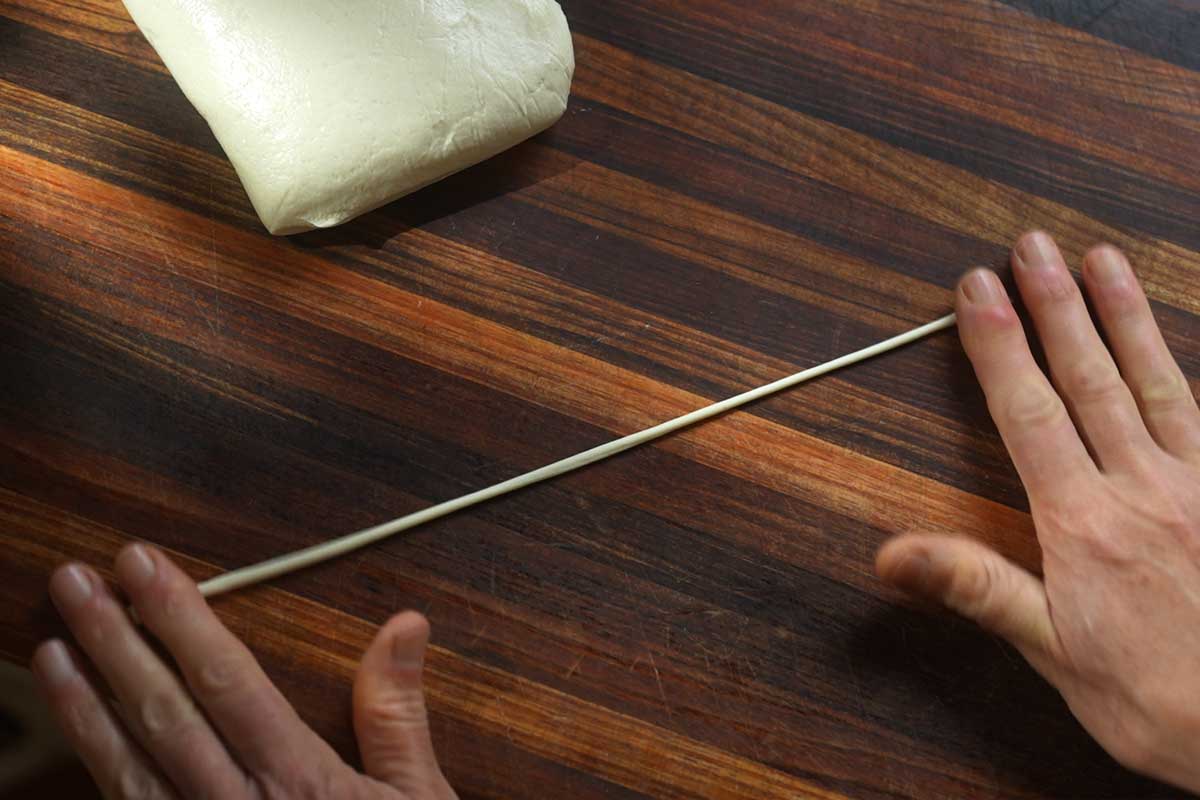
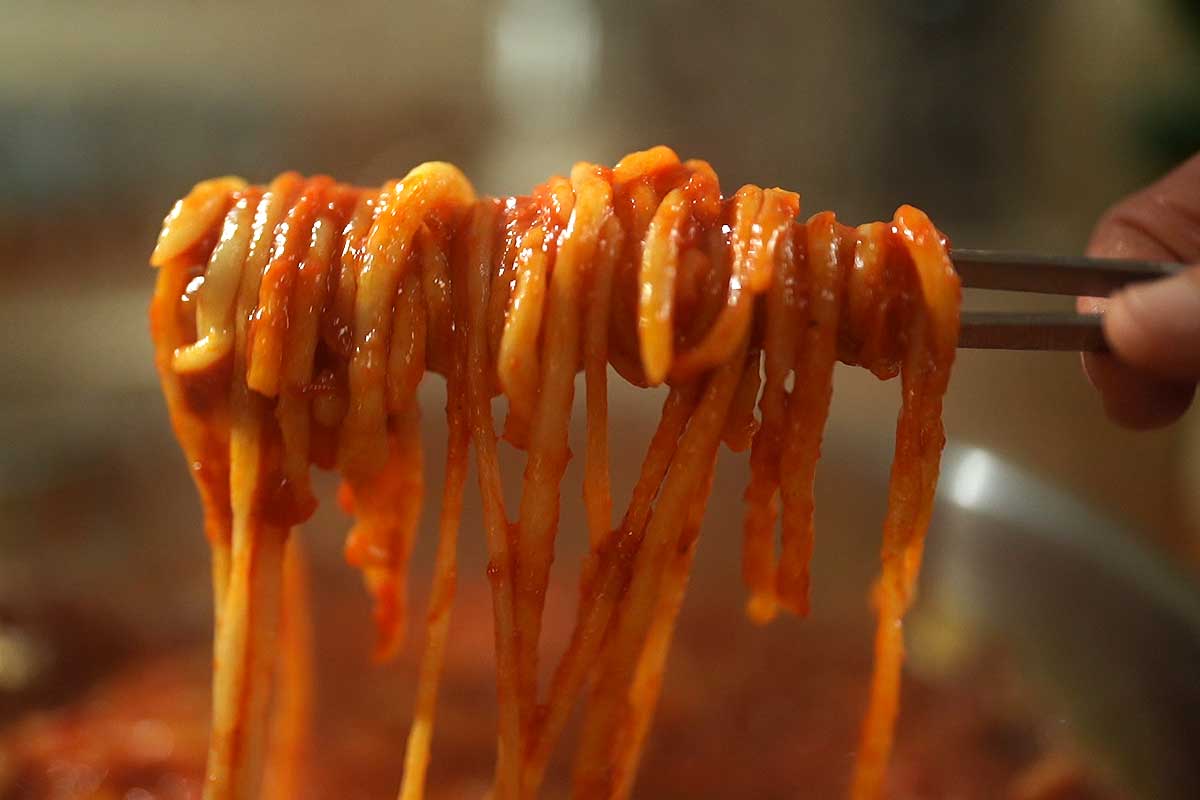
Pici is one of the oldest and most primitive pasta shapes in Tuscany. Thick, hand-rolled noodles with an uneven, rustic texture that holds sauce in a way no machine-cut pasta can replicate.
The dough is just flour, water, olive oil and salt. No eggs. Simple enough that Tuscan farmers made it daily for centuries with whatever was on hand.
Rolling it by hand is genuinely meditative. Ten minutes of palms pressing and rolling on the bench and your head empties out. That’s not an accident. That’s why people have been making this pasta for a very long time.
Cooking Tips
Remove the germ from each garlic clove before slicing. The pale green sprout running through the centre of the clove is the most pungent part. Halve the clove lengthwise and pop it out. The sauce will be noticeably sweeter and less harsh.
Use the lowest heat your stove can manage for the garlic stage. Ten to fifteen minutes of gentle infusion, not frying. If you hear it sizzling loudly, the heat is too high.
Crush the tomatoes by hand directly into the pan rather than using a can opener and pouring. Hand-crushing breaks them unevenly and gives you a more textured, rustic sauce rather than a uniform purée.
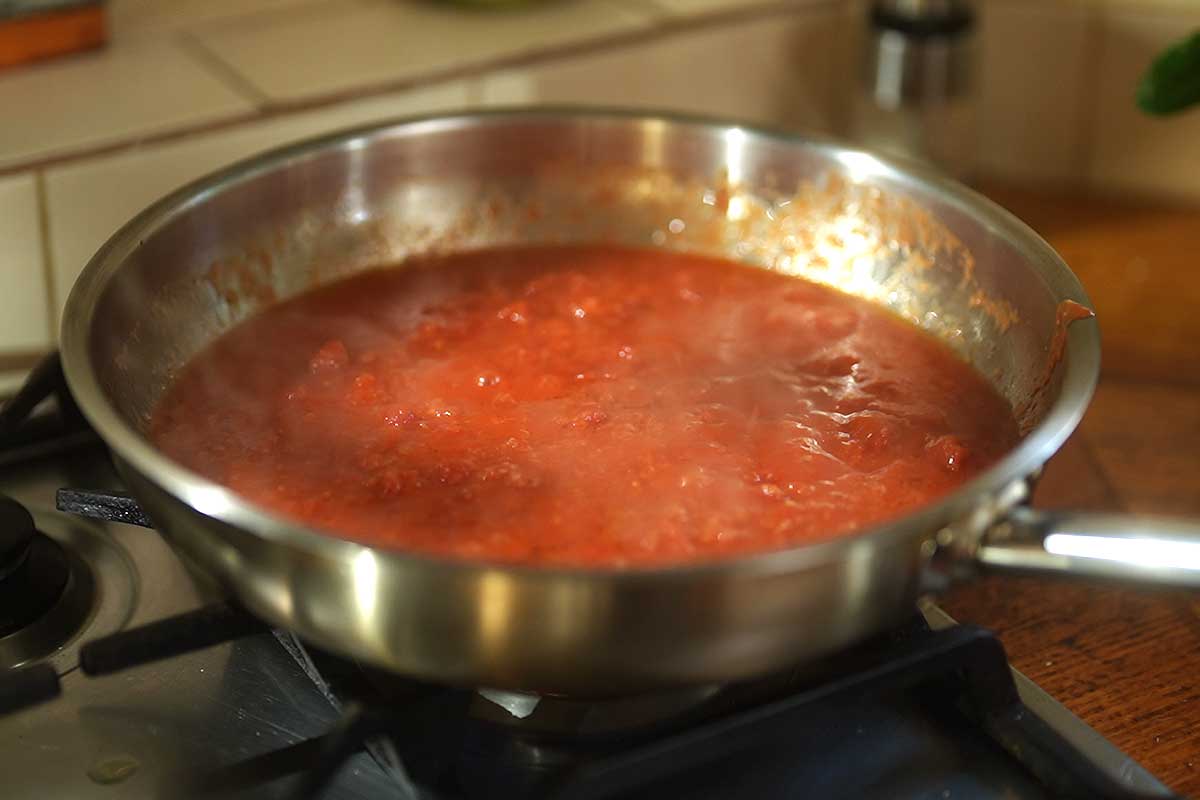
Simmer the sauce for the full thirty minutes. This is where the garlic melts into the tomato and the flavours integrate completely. Rushing it gives you a sauce that tastes of separate ingredients rather than one unified thing.
Rest the pici dough for at least thirty minutes before rolling. The gluten relaxes and the dough becomes much easier to roll into long, even noodles without springing back.
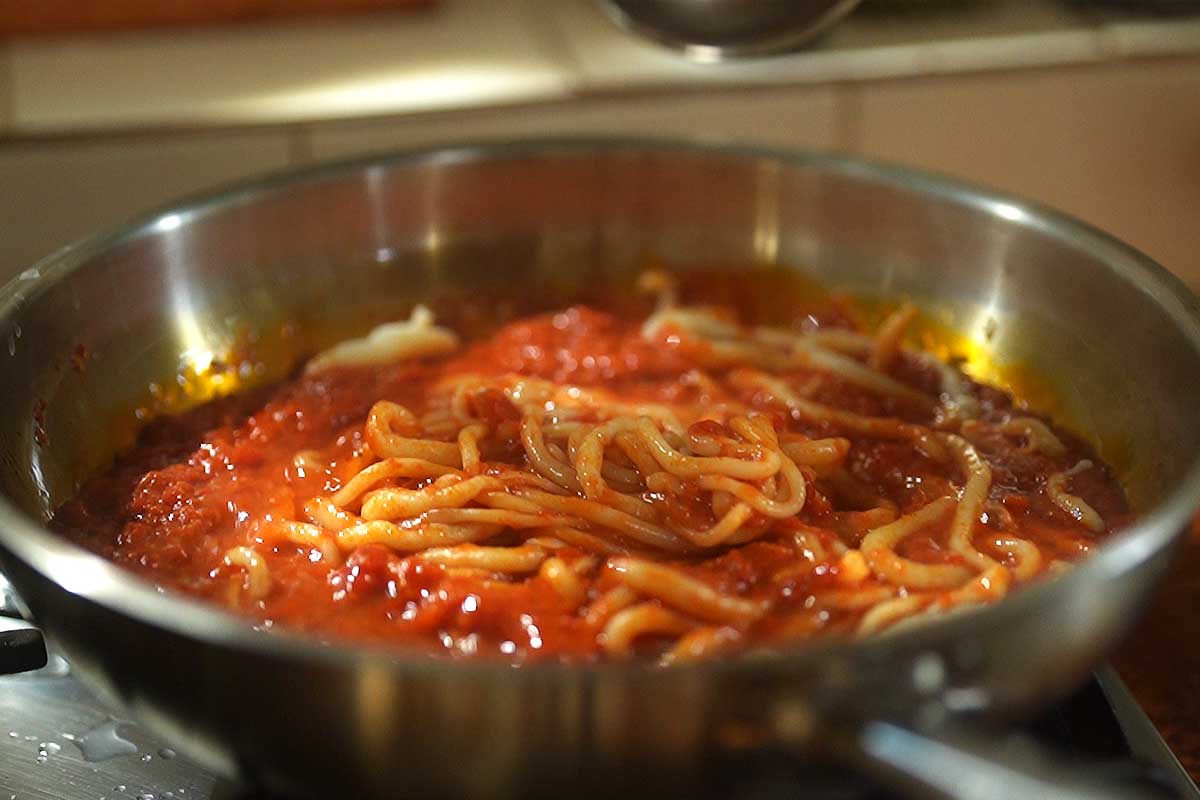
Finish the pasta in the sauce with a splash of pasta water. The starch from the water helps the sauce emulsify and coat every strand properly.
Ingredient Swaps
Can’t find aglione garlic? Regular garlic works but use fewer cloves, around 8 to 10 depending on size, and taste as it cooks. Elephant garlic is the closest widely available substitute and has a similar mild, sweet character.
No San Marzano tomatoes? Any good quality canned whole tomatoes work. San Marzano have a lower acidity and more sweetness but the dish is excellent with any good tinned tomato.
No time to make pici? Thick spaghetti, pappardelle or even thick udon noodles in a pinch carry this sauce well. The handmade pici is the experience though. Try to make it at least once.
No white wine? A small splash of white wine vinegar diluted with water gives a similar gentle acidity to the garlic cooking stage.
Common Mistakes
Browning the garlic. The moment it colours, the sweetness is gone and bitterness takes over. Very low heat, very patient cooking. Watch it constantly for the first ten minutes.
Using too much garlic if your cloves are small and pungent. The recipe is calibrated for large, mild aglione. Taste as you go and adjust accordingly.
Rolling the pici too thin. They should be the thickness of a shoelace, thick and uneven and rustic. Thin pici loses the characteristic chew that makes the dish satisfying.
Not simmering the sauce long enough. Thirty minutes is the minimum. The sauce should taste unified and sweet, not sharp and separate. If it still tastes raw, keep going.
What to Serve With It
This pasta is a complete meal on its own. It doesn’t need anything else.
A simple green salad dressed with lemon and olive oil is all you need alongside if you want something fresh.
Good crusty bread for any sauce left in the bowl. Never waste it.
A glass of Chianti Classico if you want to commit fully to the Tuscan experience. It’s the traditional pairing and it works perfectly.
Storage
The sauce keeps beautifully in the fridge for up to 3 days and actually improves overnight as the garlic continues to mellow into the tomato.
Store the pici and sauce separately if making ahead. Dressed pici absorbs the sauce completely as it sits and goes soft.
Freeze the sauce for up to 2 months. Make a double batch while you’re at it. Having this sauce in the freezer is one of the best kitchen insurance policies you can have.
FAQs
What is aglione garlic?
Aglione is a large-bulb garlic variety native to the Val di Chiana in Tuscany. It’s significantly bigger and milder than regular garlic, with a sweeter, less pungent flavour that makes it possible to use in large quantities without the sauce becoming aggressive. If you can find it at an Italian deli or specialist greengrocer, it’s worth seeking out.
Can I make the pici dough ahead of time?
Yes. Make the dough up to a day ahead, wrap it tightly and refrigerate. Bring it back to room temperature for thirty minutes before rolling. You can also roll and cut the pici a few hours ahead and lay them on a floured tray covered with a clean cloth.
Is this recipe vegan?
Yes, completely. The pici dough is just flour, water, olive oil and salt. The sauce is tomatoes, garlic and olive oil. No eggs, no dairy, no animal products anywhere in the dish.
Why does my garlic taste bitter in the sauce?
It browned. Even a small amount of colour on garlic introduces bitterness that carries through the entire sauce. Next time, keep the heat lower and watch it more closely. Removing the green germ from the centre of each clove also helps significantly.
What if I don’t have time to make fresh pici?
Use thick spaghetti or pici secca, the dried version available at good Italian delis. The experience of hand-rolling is part of the dish, but the sauce is so good it’s worth making regardless.
The Pasta That Settles You
Some recipes aren’t about ingredients. They’re about patience.
The slow garlic, the hand-rolled dough, the thirty-minute simmer. None of it is hard. All of it asks you to slow down and be present for a little while.
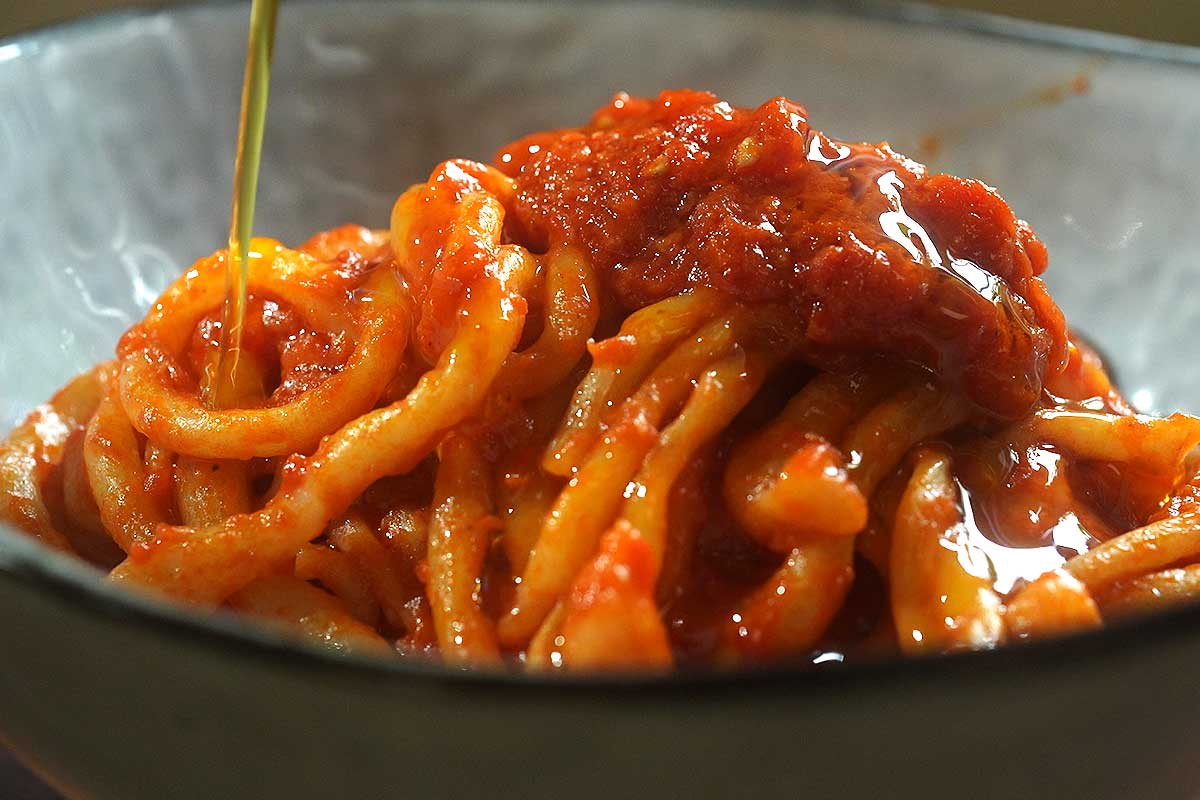
And then you eat it, and it doesn’t just fill you up. It settles you. That’s been the point of this dish for hundreds of years.
 By
By 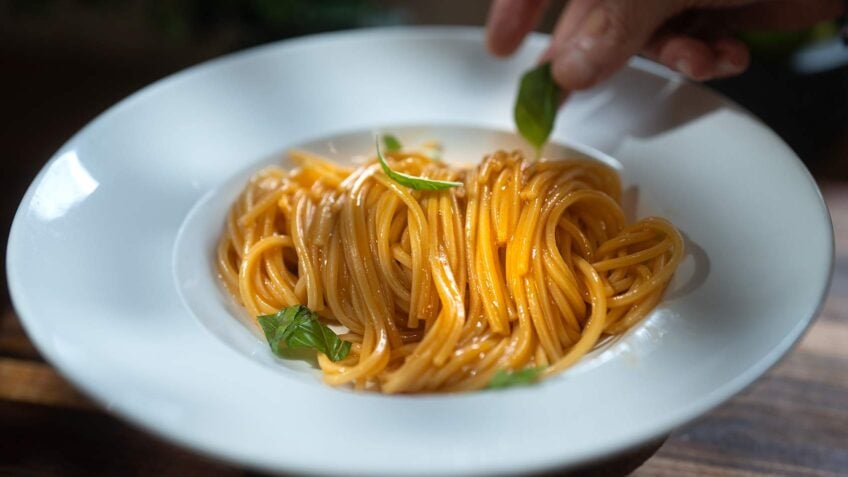
You must be logged in to post a comment