
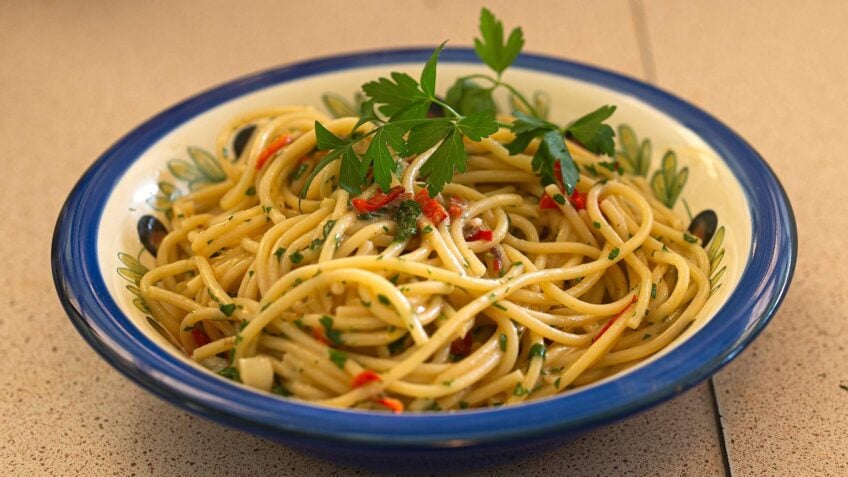
The Pasta That Converts Anchovy Haters
Some nights the fridge is empty, you’re tired, and you still want something that tastes like you tried. This is that pasta.
A tin of anchovies, a block of butter, garlic, chilli and a lemon. Twenty-five minutes later you’re twirling glossy spaghetti that tastes far richer than it has any right to.
And if you think you hate anchovies, stay with me. You won’t find a single fishy bite in this bowl.
Why Anchovies Disappear Into the Butter
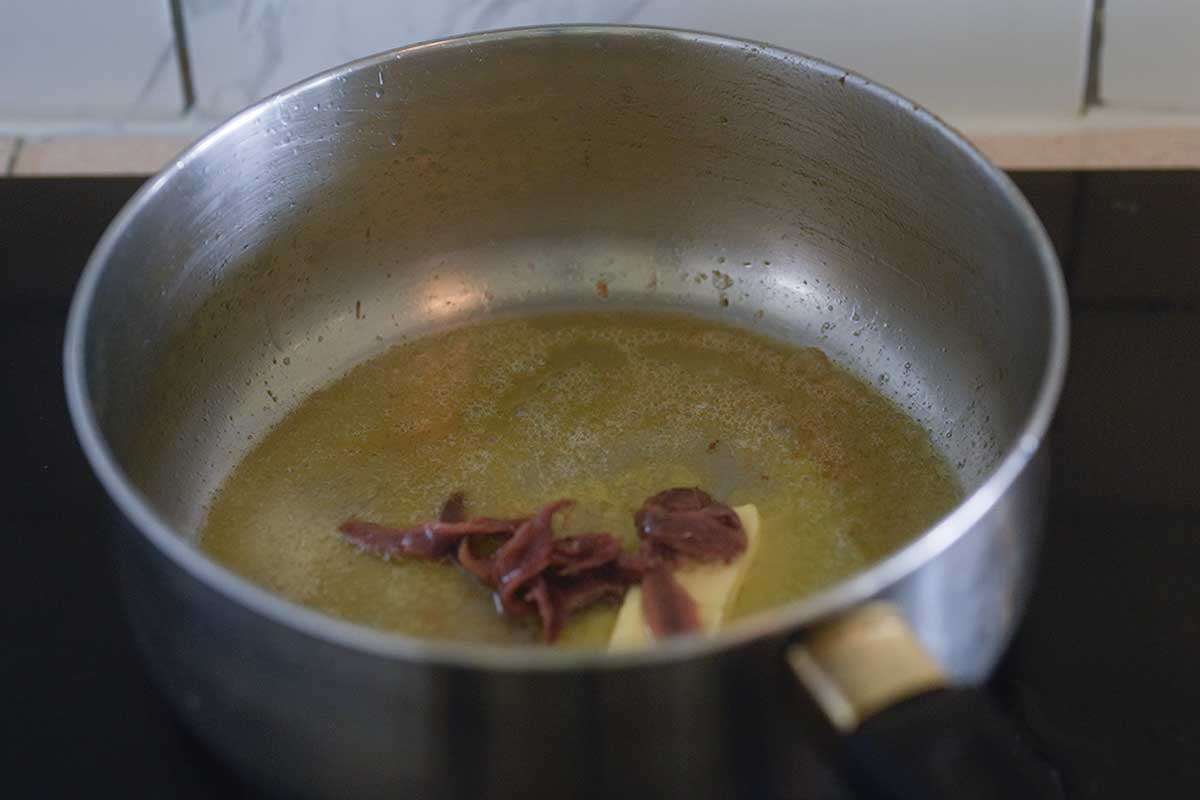
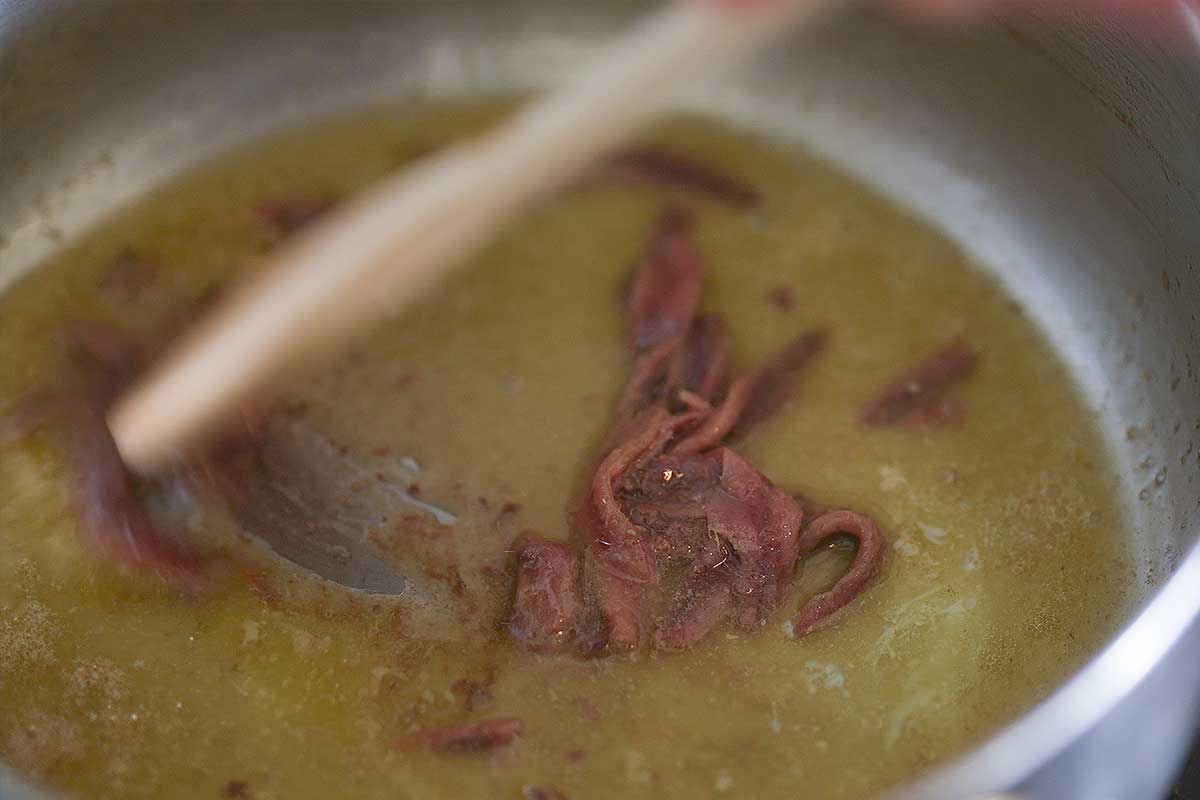
Most people have only met anchovies whole on a pizza, salty and a bit aggressive. Cooked gently in butter, they behave completely differently.
Good anchovies are cured in salt for months before they’re packed in oil. During that time, their own enzymes slowly break down the flesh, which is why they collapse into a paste the moment they meet warm fat.
That long cure also builds up glutamates, the same savoury compounds found in parmesan and soy sauce. So what’s left in the pan isn’t a fish flavour. It’s pure depth.
The Romans knew this trick two thousand years ago. Their famous garum was a fermented fish sauce used to season almost everything, and the Amalfi Coast still makes its descendant, colatura di alici, in the town of Cetara.
The Cold Butter Trick
This is the bit that makes the sauce taste like a restaurant made it. The last 75g of butter goes in cold, off the heat, a few pieces at a time.
Butter is already an emulsion, roughly 80% fat with water held inside it. Melt it slowly with constant tossing and it stays creamy, but heat it too fast and the fat breaks away into a greasy slick.
The starchy pasta water is your safety net. The starch coats the tiny fat droplets and stops them clumping back together, so you get a silky sauce that clings to every strand.
No cream. No cheese. Just butter, starch and a bit of elbow grease.
![Cold butter pieces being added to the spaghetti in the pan]](https://b3067249.smushcdn.com/2.0/3067249/wp-content/uploads/2026/10/Anchovy-Butter-Spaghetti-with-Garlic-Chilli-Lemon3.jpg?lossy=0&strip=1&webp=1)
A Small Fish With Big Benefits
Anchovies are an oily fish, rich in omega-3 fatty acids. Most health guidelines suggest two serves of oily fish a week.
They’re also one of the lowest-mercury fish you can eat. They’re small, live short lives and sit near the bottom of the food chain, so they don’t build up the mercury that big fish like tuna and swordfish do.
Cooking Tips
Pull the spaghetti a minute or two before al dente. It finishes cooking in the pan and soaks up the sauce as it goes.
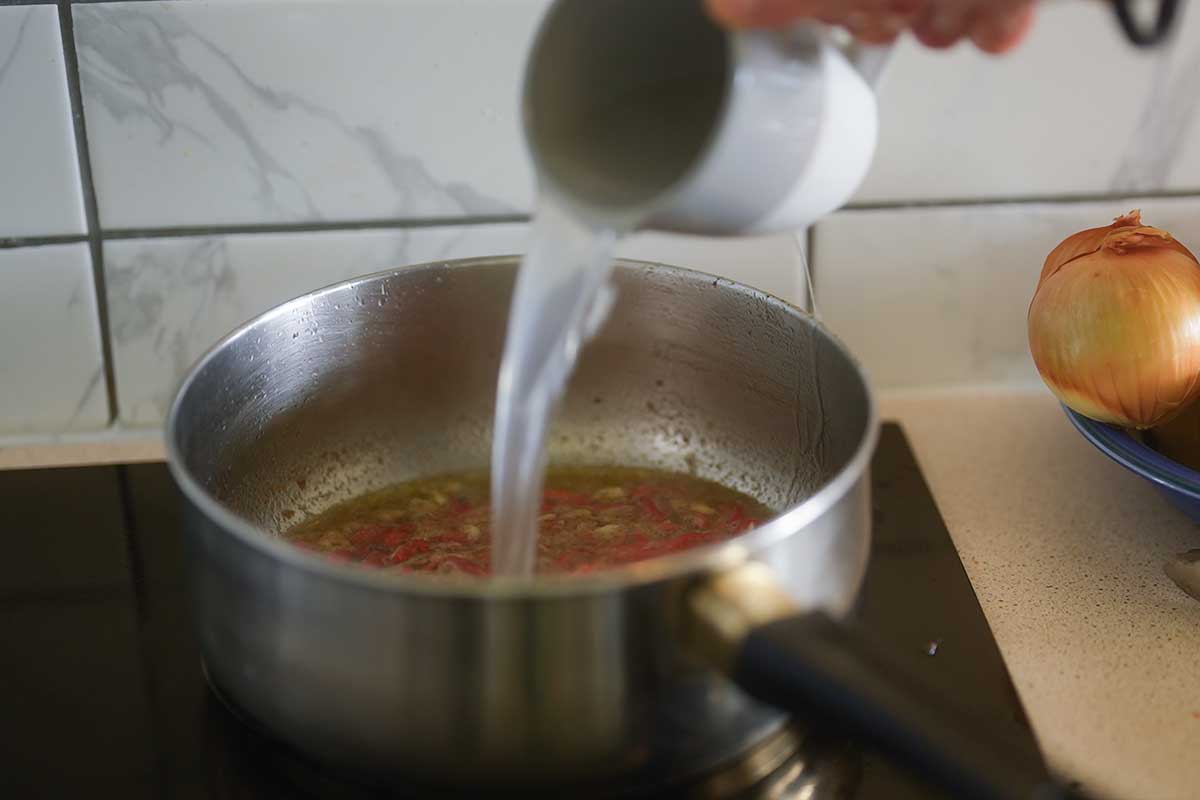
Save more pasta water than you think you need. At least 2 cups, because it’s the glue that holds this whole sauce together.
Keep the heat medium-low when the anchovies go in. You want them melting, not frying.
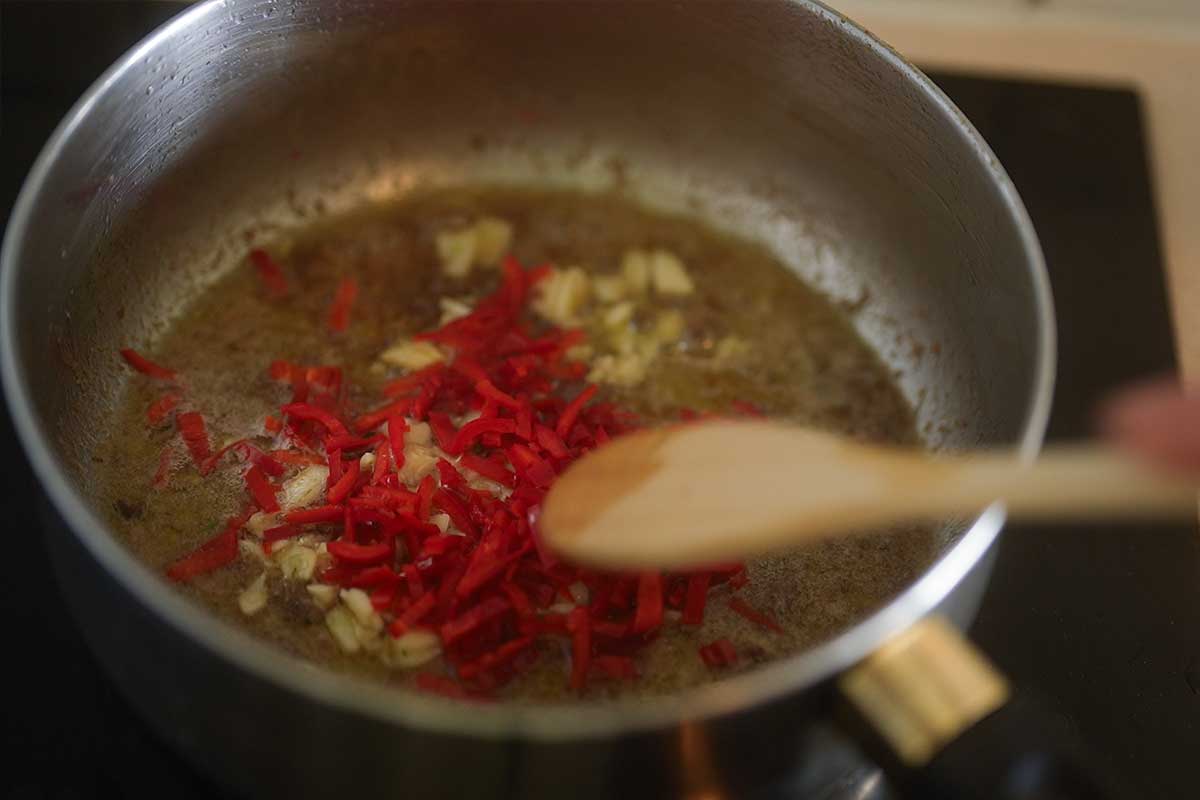
Slice the garlic, don’t crush it. Thin slices cook evenly and turn sweet instead of sharp.
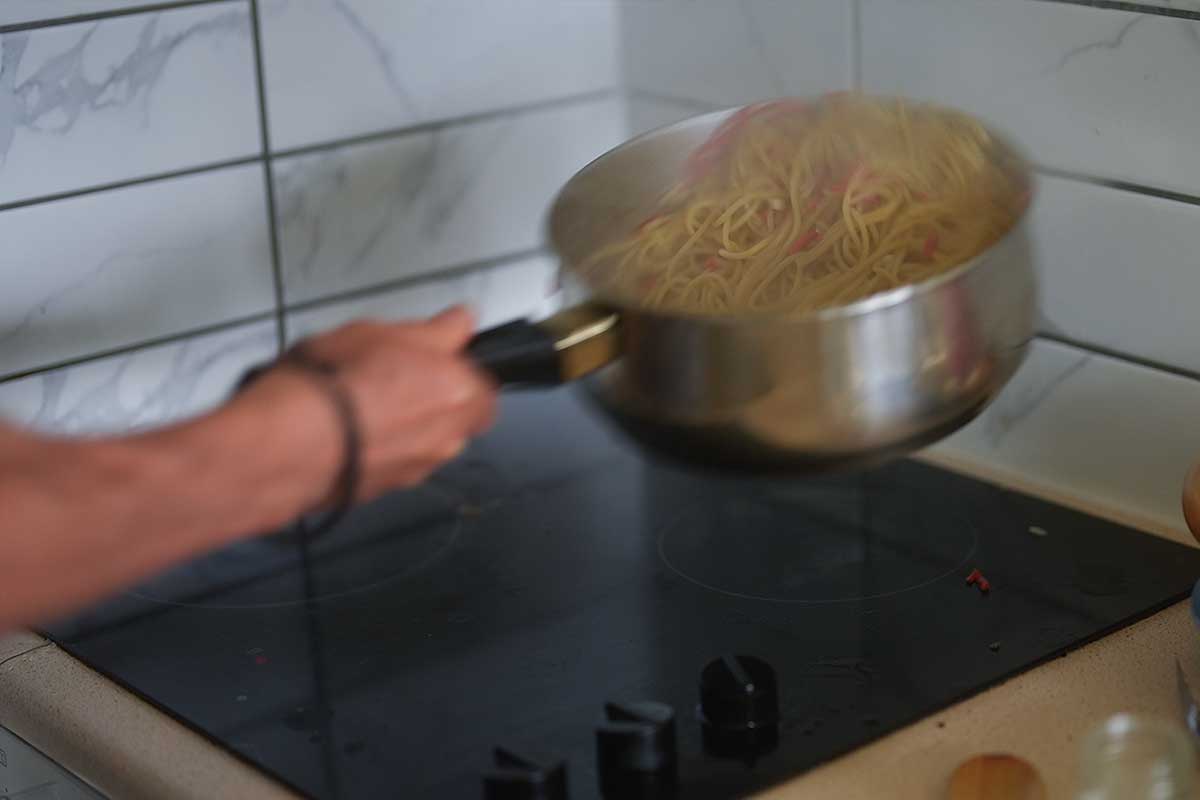
Toss hard. Vigorous tossing is what whips the water and fat together into a sauce.
Cut the cold butter into small cubes before you start, so it’s ready to go when the moment comes.
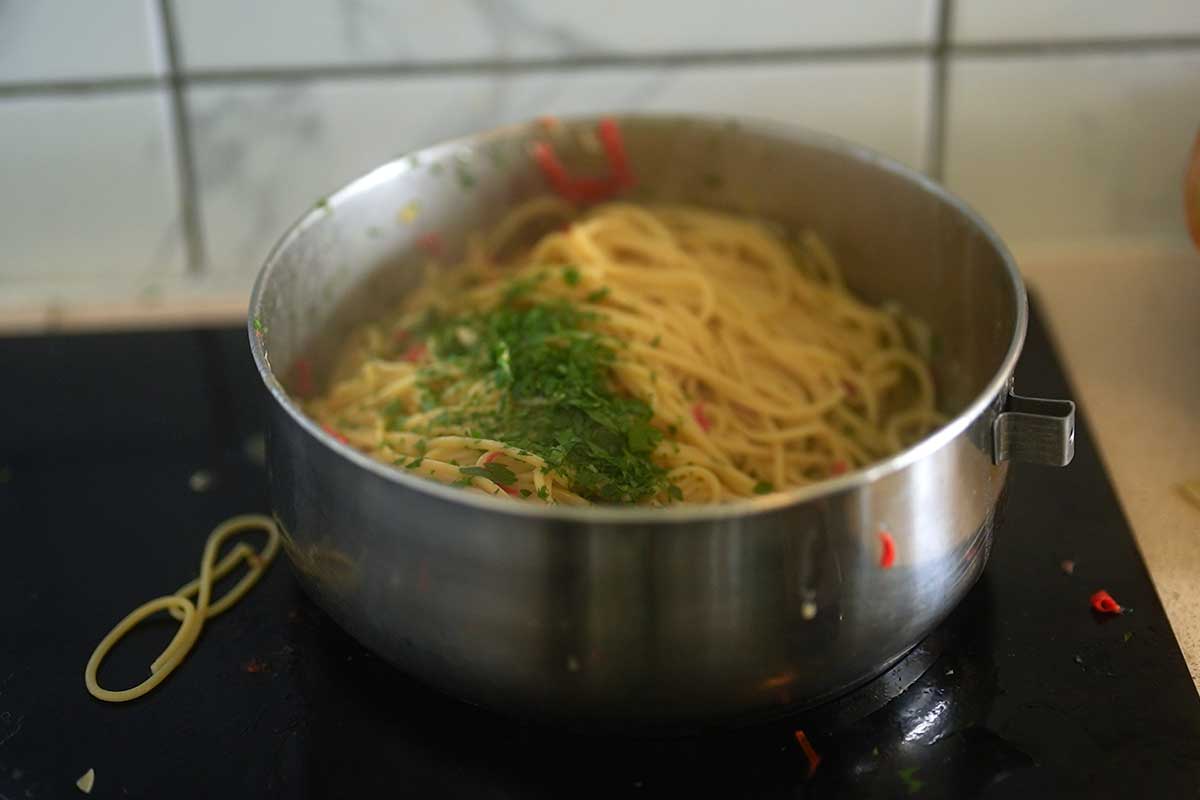
Add the lemon zest right at the end. Heat dulls its fragrance quickly.
Ingredient Swaps
No fresh chillies? Use 1 tsp chilli flakes, or less if you like it mild.
Linguine or bucatini work beautifully in place of spaghetti.
Salt-packed anchovies have a deeper flavour than oil-packed ones. Just rinse and fillet them first.
For crunch, scatter toasted breadcrumbs over the top. In southern Italy they call this pangrattato, the poor man’s parmesan.
Common Mistakes
Browning the garlic. Once it goes past golden it turns bitter, and that bitterness runs right through the sauce.
Adding all the butter at once over high heat. It splits, and you end up with oily pasta instead of creamy pasta.
Salting too early. Between the anchovies and the pasta water, you may not need any extra fine sea salt at all.
Using an old pan with a loose handle! (see video)
Draining the pasta and forgetting the water. It happens to everyone once.
What to Serve With It
This is rich, so something sharp and fresh beside it works well. A simple green salad with a lemony dressing is perfect.
Steamed broccolini or green beans with a squeeze of lemon also cut through the butter nicely.
Storage and Reheating
It’s at its best straight from the pan. Butter sauces firm up as they cool.
Leftovers keep in an airtight container in the fridge for up to 2 days. Reheat gently in a frying pan with a splash of water, tossing until the sauce loosens and turns glossy again.
FAQs
Does this pasta taste fishy?
Not at all. The anchovies melt completely and give a deep, savoury flavour rather than a fishy one.
Why did my sauce turn oily?
The pan was too hot or the butter went in too quickly. Take it off the heat, add a splash of pasta water and toss hard, and it often comes back together.
Can I use salted butter?
You can, but the dish will be saltier. Skip any extra salt and taste carefully at the end.
Can I add parmesan?
Italians usually keep cheese away from fish pasta, and this one doesn’t need it. If you want more richness, a little extra butter does the job.
What do I do with the leftover anchovies?
Cover them with oil and keep them in a sealed jar in the fridge. They’ll last a couple of weeks and are brilliant melted into salad dressings, roast lamb or tomato sauce.
Can I make it gluten free?
Yes. Use a good gluten-free spaghetti, but save extra pasta water as it tends to be less starchy.
Pantry Pasta at Its Best
This is proof that great food doesn’t need a long shopping list. It needs a few good ingredients and a bit of technique.
Make it once and that tin of anchovies will never sit at the back of your pantry again.
 By
By 
You must be logged in to post a comment