
The Most Comforting Pasta You’ve Never Tried
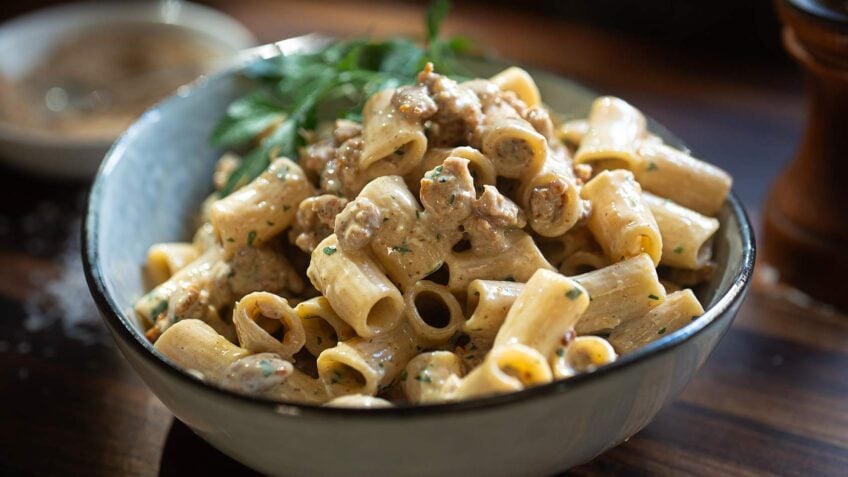
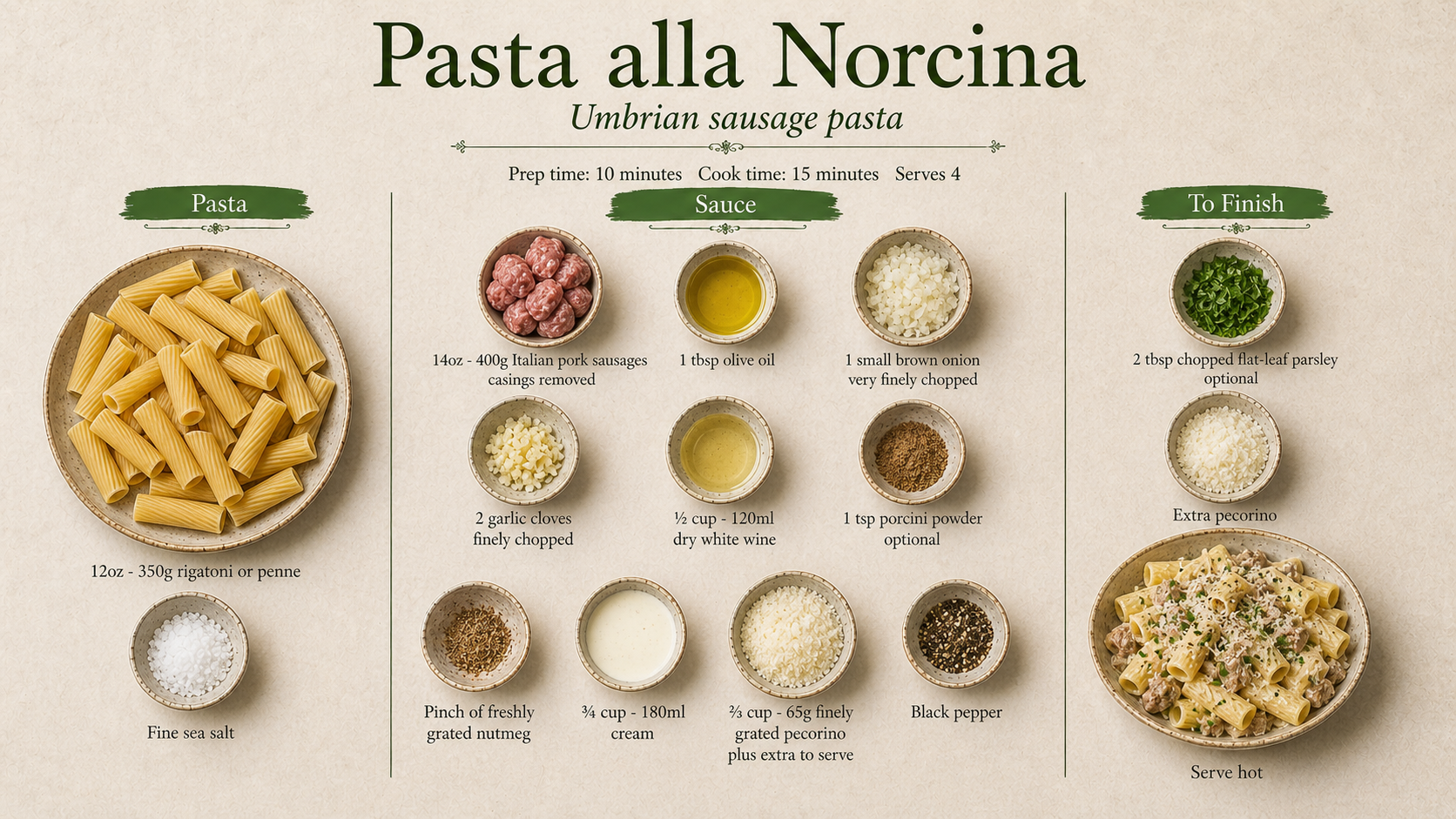
This is Pasta alla Norcina. One of the most underrated Italian comfort foods out there, and once you’ve tried it, you’ll wonder why it took this long.
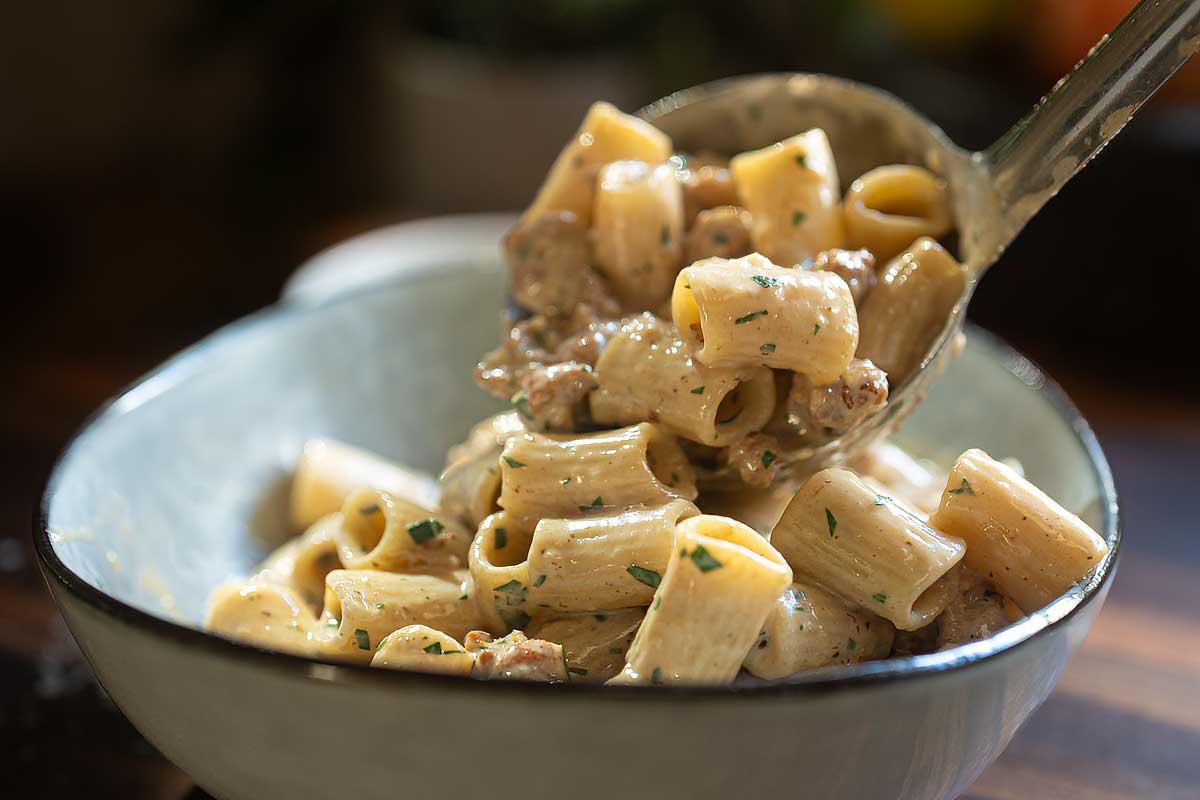
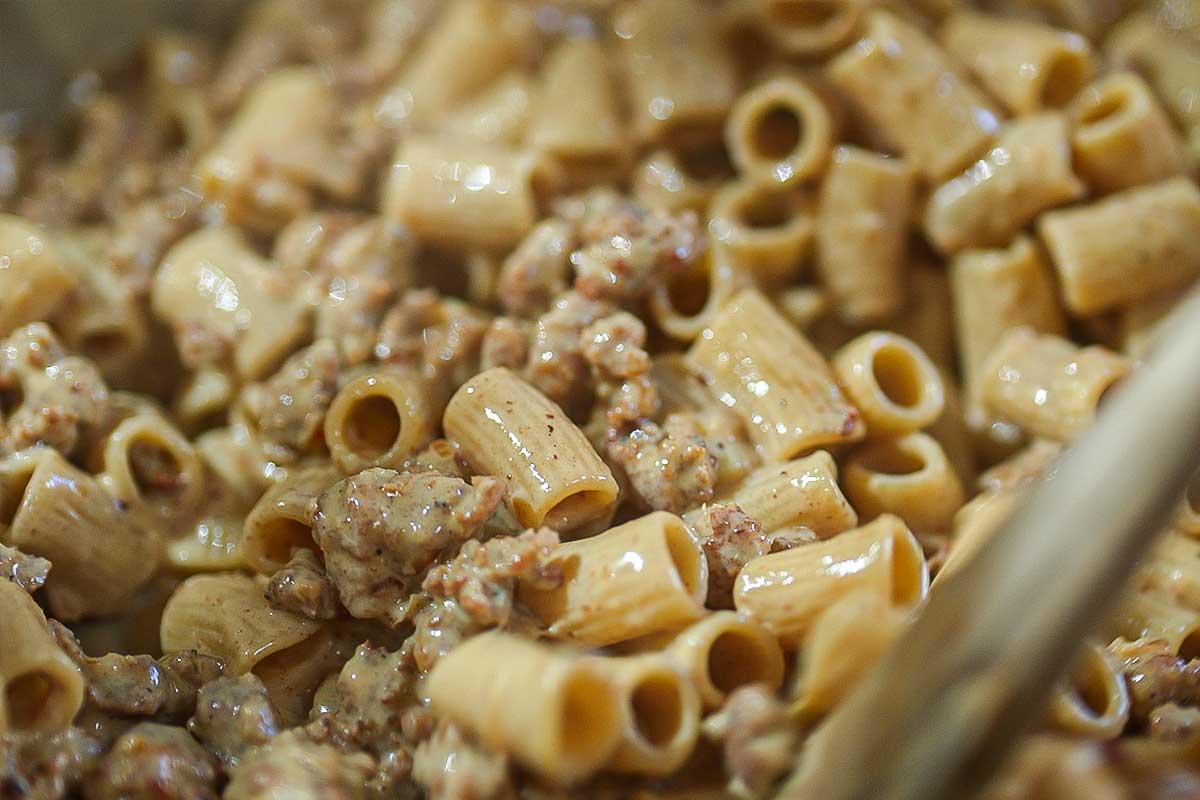
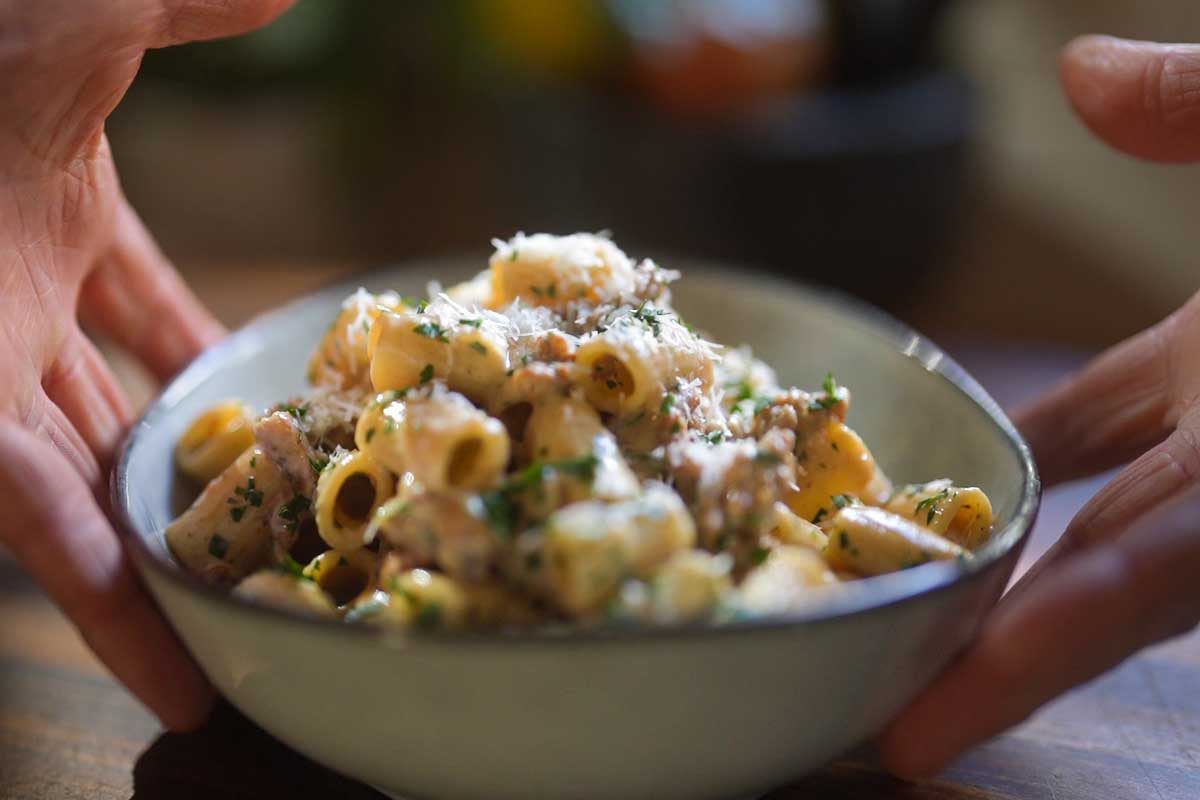
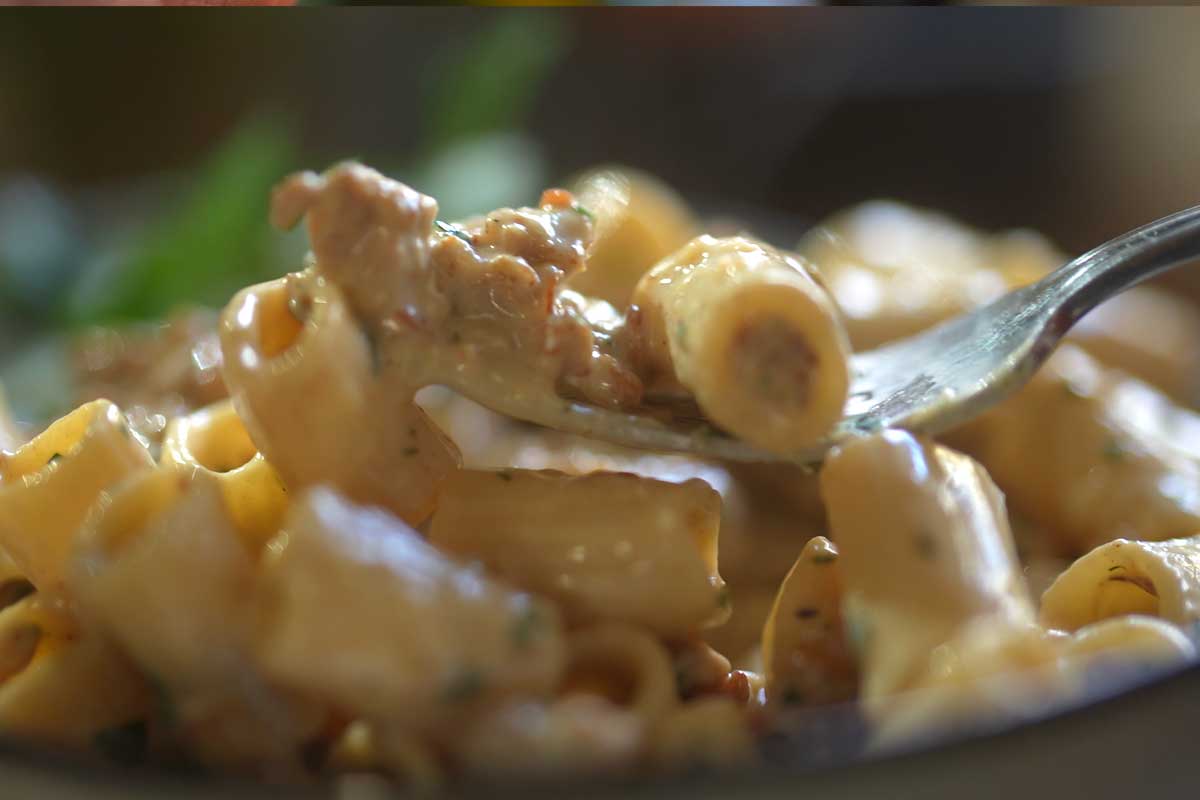
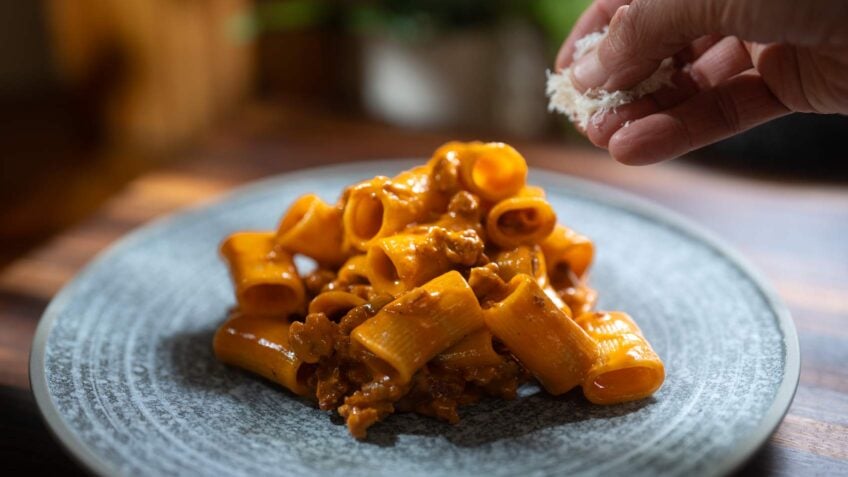
Juicy Italian sausage, pecorino cheese, and cream come together in a rich, silky sauce that clings perfectly to every tube of pasta.
Rich, savoury, and seriously addictive. This is the pasta that makes people ask for seconds before they’ve finished their first bowl.
Where Does Pasta alla Norcina Come From?
Norcina comes from Norcia, a small hilltop town in Umbria in central Italy, famous throughout the country for the quality of its pork products.
Umbrian pork sausages are seasoned with black pepper, garlic and sometimes truffle, and Norcia’s butchers, known as norcini, have been producing them for centuries. The sauce is a direct celebration of that tradition.
It’s not a Roman pasta or a Neapolitan pasta. It’s quietly Umbrian, and that quiet confidence is exactly what makes it special.
The Secret to the Silky Sauce
The sauce is simple. The technique is everything.
Finish the pasta in the sauce, not in the water. Pasta is porous, and those final minutes in the seasoned cream and wine let it pull all that flavour into its core instead of filling with plain water. This is the step most home cooks skip and the reason restaurant pasta tastes different.
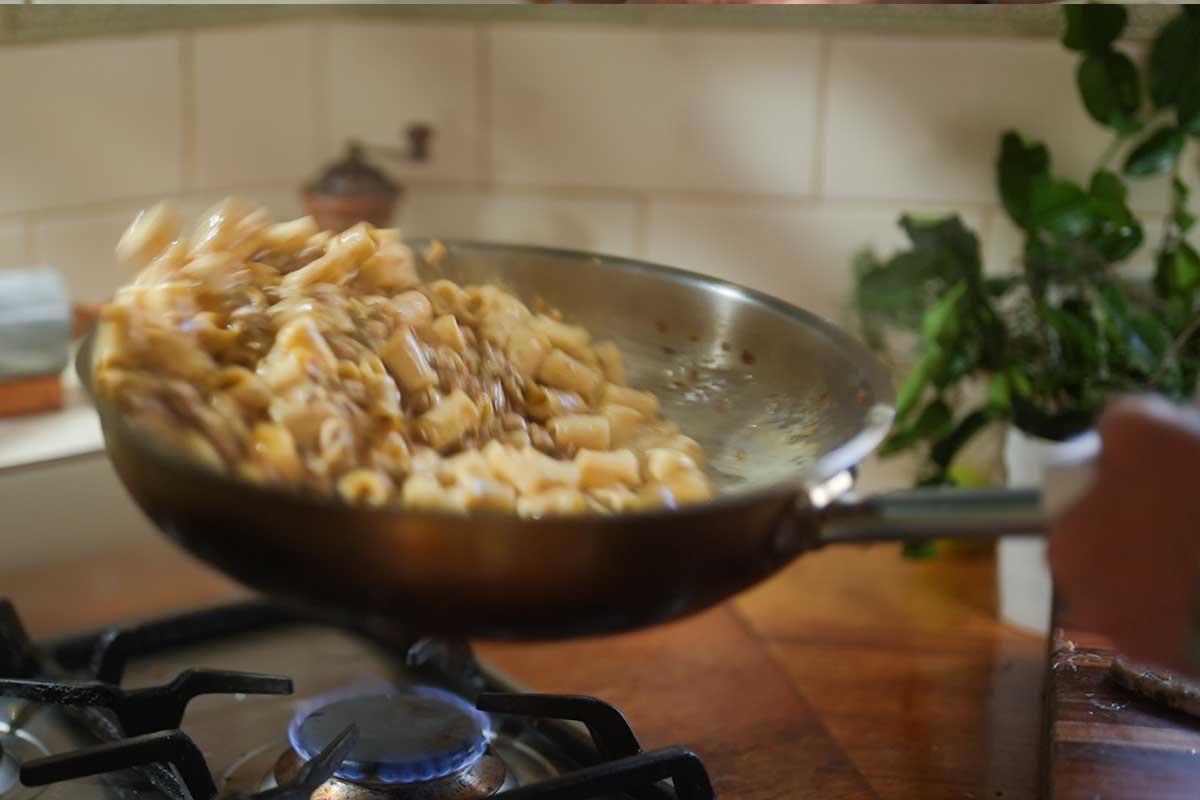
Then add the pecorino off the heat, gradually, with small splashes of pasta water, tossing constantly. That movement binds the starch, cheese and sausage fat into a glossy emulsion that clings to every piece of pasta. Toss, don’t just stir. There’s a difference.
The Porcini Powder Cheat Code
A tiny pinch of porcini powder is optional but worth knowing about.
It sits quietly in the background and deepens the savoury notes already in the pork and pecorino without making the dish taste mushroomy. Think of it as a volume knob for the umami already in the sauce.
If you don’t have porcini powder, two tablespoons of very finely minced mushrooms cooked with the sausage meat does the same job. Either way, keep it subtle.
Ricotta Instead of Cream for a More Authentic Version
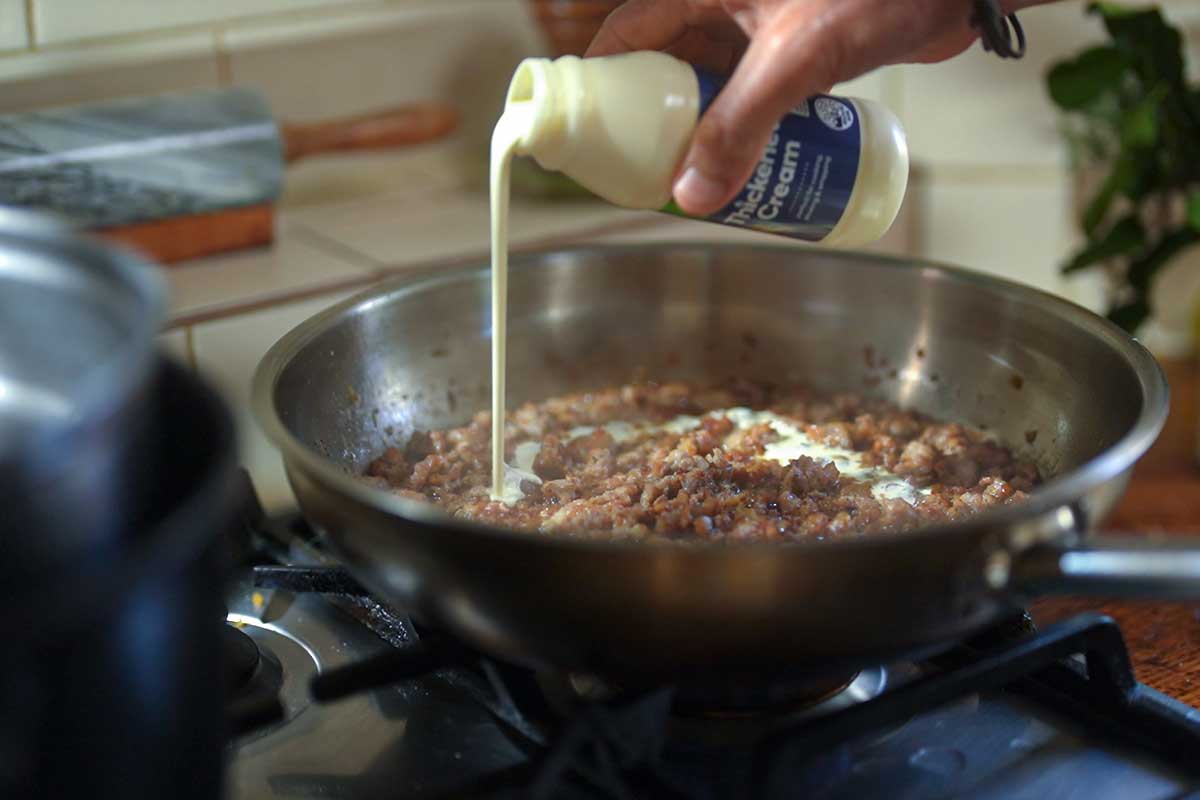
The cream version is rich and indulgent and absolutely delicious. But the more traditional Umbrian version uses ricotta.
Swap the cream for three quarters of a cup of ricotta loosened with a little hot pasta water. The result is lighter, slightly grainy in texture, and more rustic. Both versions are worth making.
The ricotta version is what you’d more likely find in a trattoria in Norcia. The cream version is what you’d happily make on a cold Tuesday night at home.
Cooking Tips
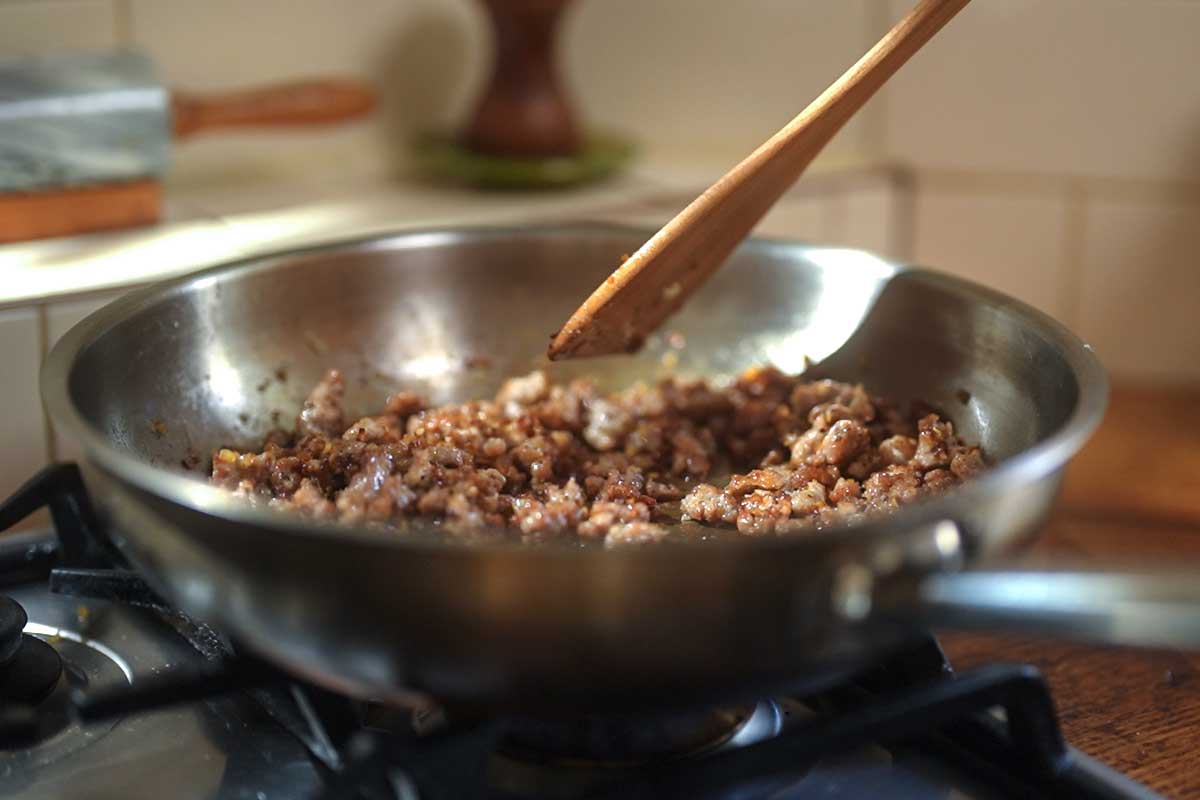
Break the sausage meat up finely as it cooks so it becomes small crumbles, almost like coarse mince. You want it distributed through every forkful, not sitting in large chunks.
Cook the pasta two to three minutes less than al dente before transferring it to the sauce. It finishes cooking there and absorbs the flavour as it does.
Add the pecorino gradually off the heat with small splashes of hot pasta water. Big shreds melt unevenly. Use finely grated, almost powdery pecorino for the smoothest result.
Keep tossing vigorously. That movement is what creates the emulsion. Gentle stirring won’t give you the same glossy, clingy sauce.
Taste before adding salt. Pecorino is already quite salty and the dish may not need any extra at all.
Ingredient Swaps
No pecorino? Parmesan works as a substitute. Pecorino is sharper and saltier so use parmesan slightly more generously and taste as you go.
No Italian pork sausages? Any good quality pork sausage works. Add a little extra black pepper and a pinch of fennel seeds if your sausages are mild to bring the flavour closer to the original.
No rigatoni? Penne or paccheri work well. You want a short pasta with ridges or tubes that can trap the sauce inside and out.
No white wine? A small splash of dry vermouth works beautifully. Or skip it and add a little extra pasta water instead.
Common Mistakes
Cooking the pasta all the way to al dente before adding it to the sauce. It will overcook. Pull it two to three minutes early every time.
Adding the pecorino over high heat. It turns stringy, clumpy and unpleasant. Always turn the heat off first.
Stirring instead of tossing. The emulsion needs movement and air. Toss the pan or use tongs and work the pasta vigorously for at least a minute.
Using too much porcini powder. It should whisper in the background, not announce itself. A pinch per person is enough.
What to Serve With It
This pasta is rich and complete on its own. It doesn’t need much alongside it.
A simple green salad dressed with lemon and extra virgin olive oil cuts through the richness perfectly.
Good crusty bread on the table. The sauce that’s left in the bowl is too good to leave behind.
A glass of full-bodied white wine. Something from Umbria if you can find it. A Grechetto or a Trebbiano Spoletino pairs beautifully.
Storage
Fridge: Store covered for up to 2 days. The pasta will absorb the sauce as it sits so add a splash of water when reheating.
Reheat gently in a pan over low heat, tossing with a little extra water until the sauce loosens and coats the pasta again.
Do not freeze. The cream sauce separates badly after freezing and the pasta texture suffers. Best eaten fresh.
FAQs
What makes Pasta alla Norcina different from other creamy sausage pastas?
The combination of pecorino, nutmeg and optional porcini gives it a distinctive savoury depth that cream and sausage alone don’t achieve. The Umbrian sausage seasoning, heavy on black pepper and sometimes truffle, is also what sets it apart from a generic sausage cream pasta.
Can I use ricotta instead of cream?
Yes, and it’s actually closer to the traditional recipe. Use three quarters of a cup of ricotta loosened with hot pasta water. The result is lighter and more rustic but equally delicious.
Is this recipe gluten free?
Swap the pasta for your preferred gluten free short pasta and check the sausage ingredients. The rest of the recipe is naturally gluten free.
Why does my sauce look greasy instead of creamy?
The sauce has broken. This usually happens when the heat is too high when the pecorino goes in, or when the pasta water wasn’t hot enough. Turn the heat off completely, add a splash of hot pasta water and toss vigorously. It will usually come back together.
Can I add truffle to this?
Absolutely. A few shavings of black truffle or a small drizzle of truffle oil at the end is deeply traditional in Norcia and takes the dish to another level entirely. Keep it restrained. Truffle is a flavour enhancer, not a main ingredient.
What pasta shape works best?
Rigatoni is the classic choice because the large tubes trap sauce inside and out. Penne works well too. You want something with ridges or hollow tubes, not a smooth, flat pasta that lets the sauce slide off.
Quiet Umbrian Magic
Pasta alla Norcina doesn’t shout. It doesn’t need to.
It’s the kind of pasta that wins people over quietly, one forkful at a time. Rich without being heavy, savoury without being salty, creamy without feeling indulgent.
Umbrian cooking at its best. Simple, confident, and deeply satisfying.
 By
By 
You must be logged in to post a comment