
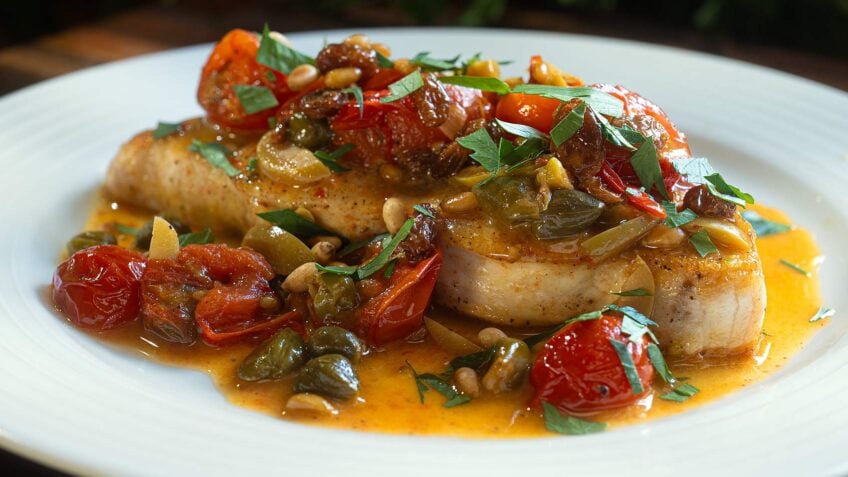

Twenty Minutes to a Sun-Drenched Terrace in Palermo
Twenty minutes. That’s all it takes to land yourself in Sicily.
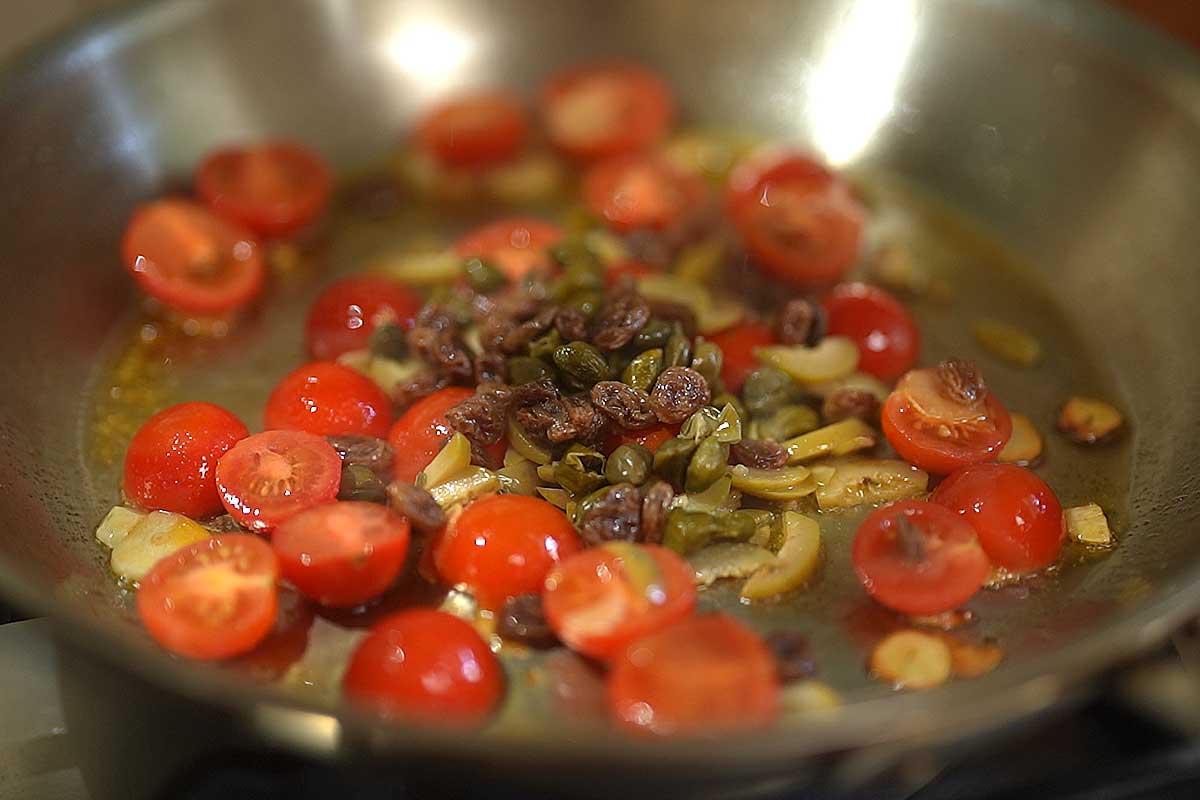
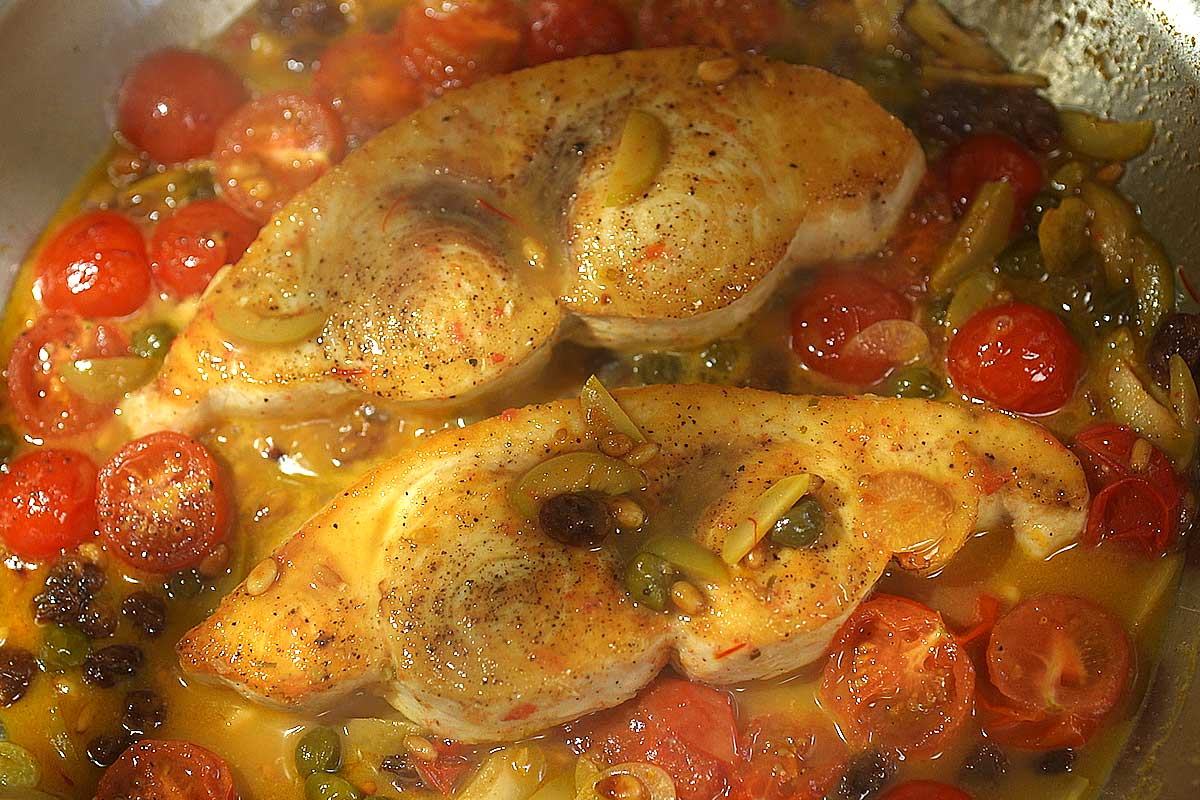
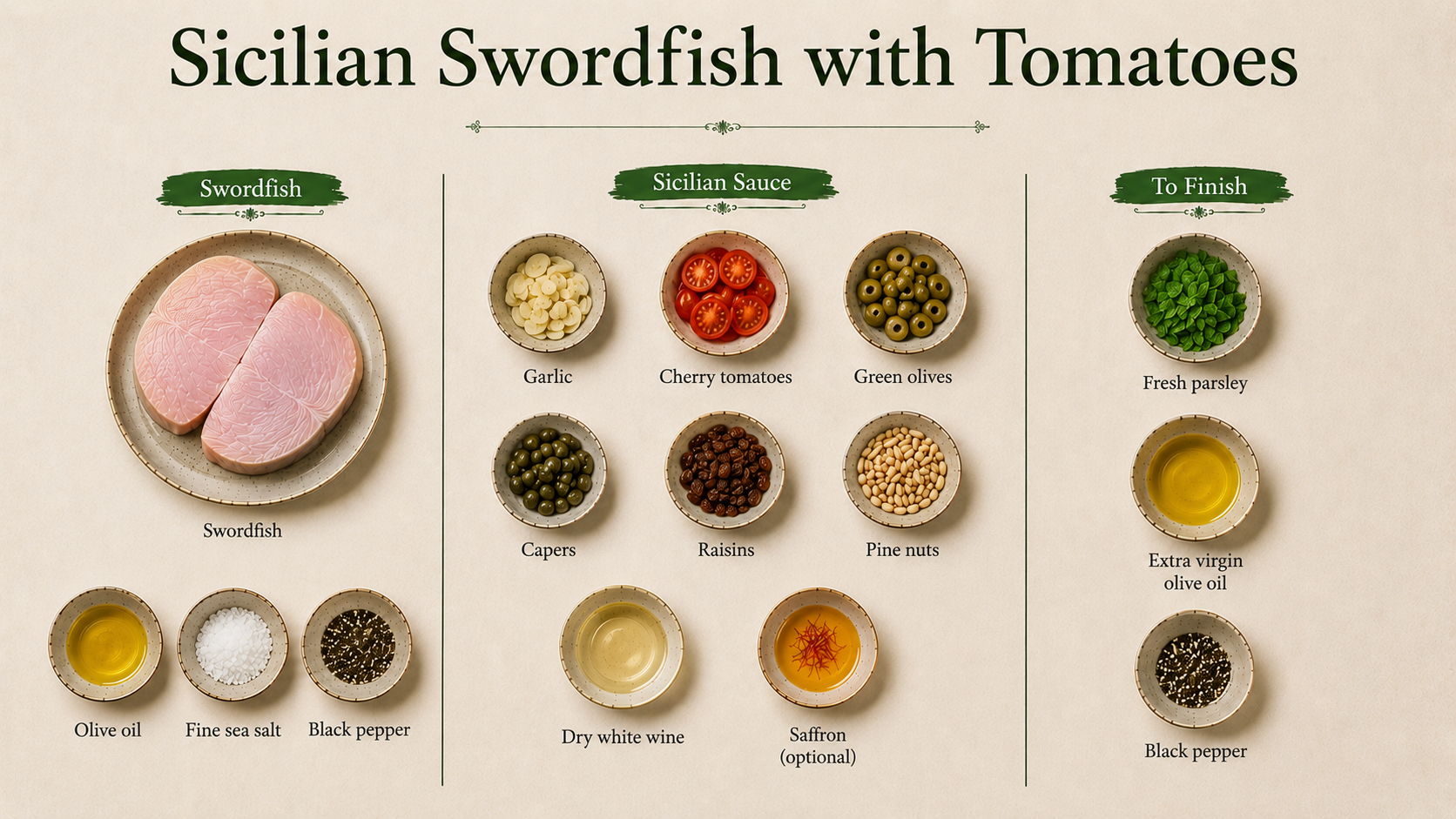
There’s something almost unfair about swordfish done this way. The moment those capers and raisins hit the pan, something clicks. Sweet, salty, a little briny. A beautiful contradiction that’s been working in Sicily for centuries, long before anyone was filming it.
Kenji’s eyes were glued to the kitchen the whole time this was cooking. He’s got good taste.
This is honest food. No fuss, no performance. Just a dish that actually transports you, without a boarding pass.
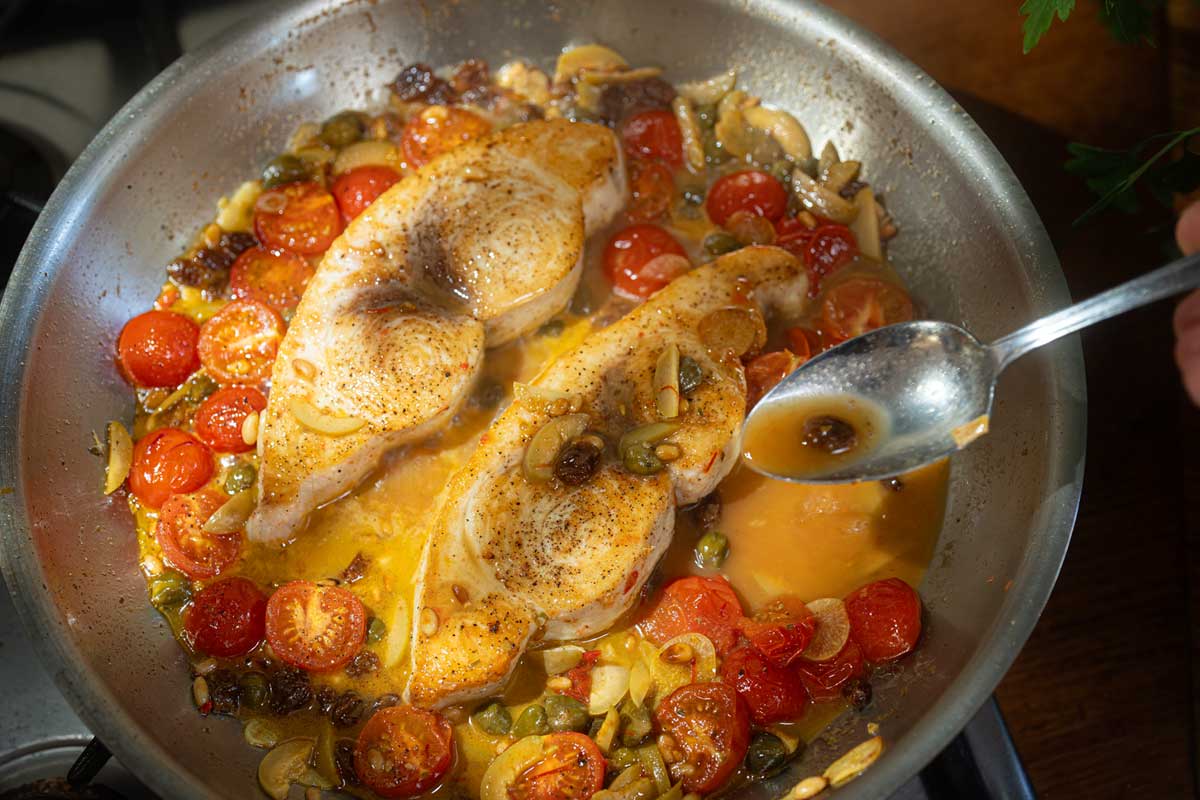
Why Are There Raisins in a Fish Dish?
Because Palermo was built by flavour travellers.
Sicily sits at the crossroads of Arab, Norman and Spanish culinary influence, and that history lives in this dish. The sweet-sour combination of raisins and capers is called agrodolce, a flavour principle that runs deep through Sicilian cooking and makes complete sense once you taste it.
Arab traders brought raisins, pine nuts and saffron to the island centuries ago. The local fishermen paired them with what they had. The result is one of the most distinctive and underrated fish dishes in Italian cooking.
Swordfish Is the Right Fish for This
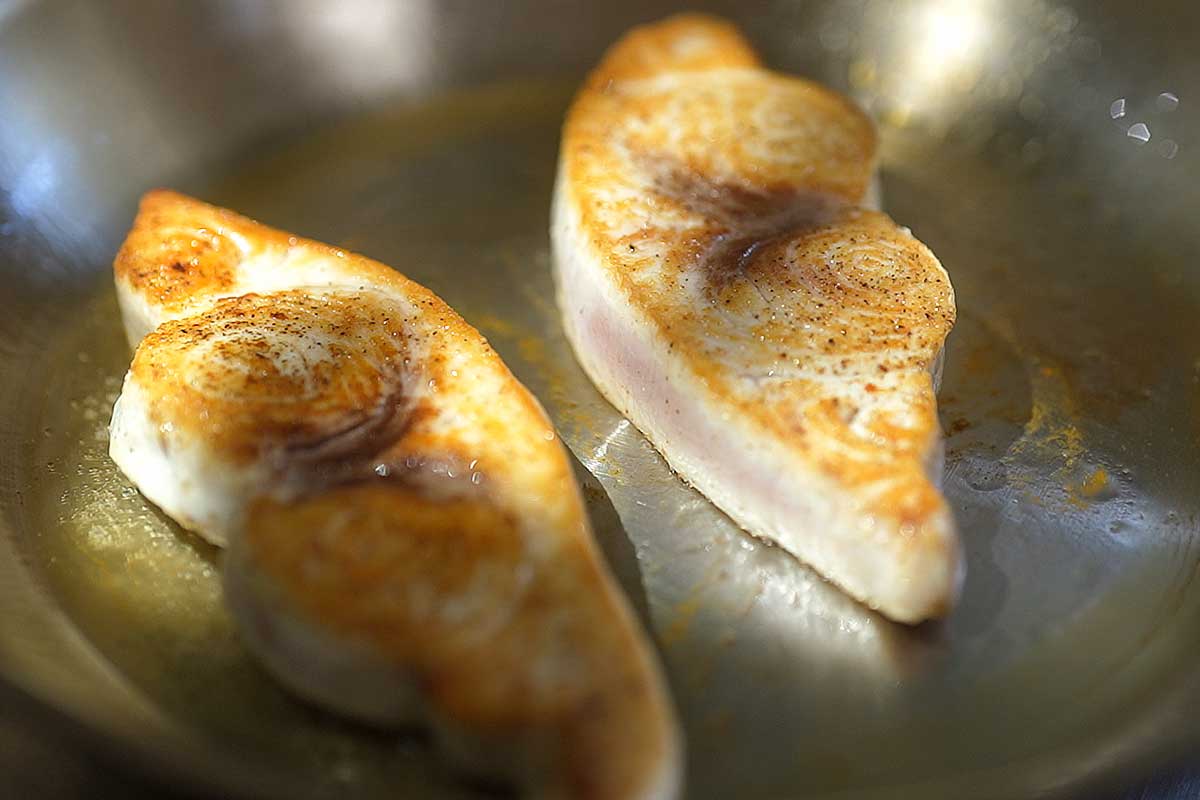
Swordfish is a firm, meaty fish that cooks almost like a steak. It can handle high heat, holds its shape in the sauce and doesn’t fall apart the moment you look at it.
That firmness also means it can take bold flavours without being overwhelmed. The capers, olives and raisins are assertive ingredients. A delicate fish would be lost. Swordfish holds its own.
The key is not to overcook it. Swordfish goes from beautiful to bathroom tile very quickly. Aim for just cooked through, moist and firm, not dry and chalky.
The Saffron That Doesn’t Announce Itself
The optional saffron in this dish is used in the same way as in traditional Sicilian cooking. A small pinch steeped in warm water and added to the sauce.
It doesn’t make the dish taste like saffron. It adds a background warmth and a golden hue to the sauce that you’d notice if it wasn’t there but can’t quite identify when it is. That’s exactly how it should work.
Worth using if you have it. Easy to skip if you don’t.
Cooking Tips
Soak the raisins in warm water for 10 minutes before cooking. It softens them and stops them burning in the pan. They should taste juicy, not like tiny handbag fossils.
Pat the swordfish completely dry before searing. Moisture is the enemy of a good crust. A few seconds with paper towel makes a real difference.
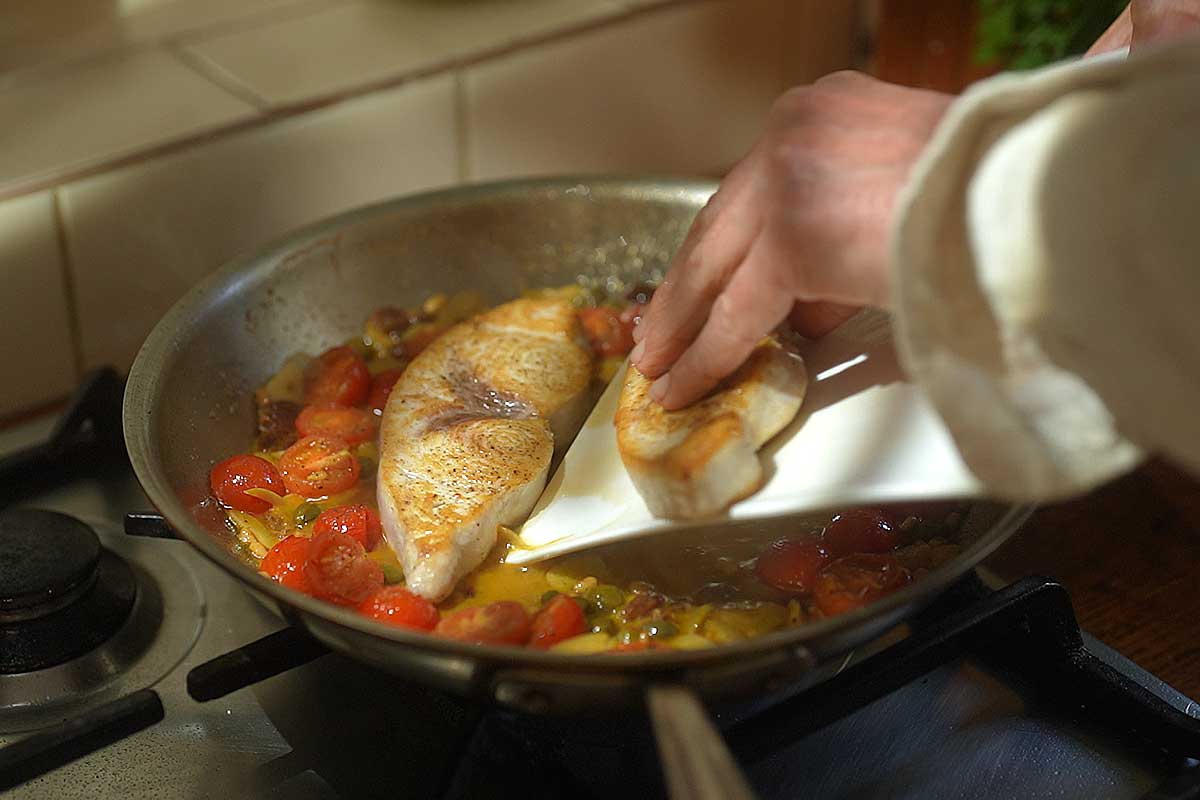
Sear the fish first over high heat, then remove it and build the sauce in the same pan. All those fish juices left behind become part of the sauce.
Don’t brown the garlic. Sliced garlic in this dish should be fragrant and soft, not golden. Thirty seconds over medium heat is all it needs before the other ingredients go in.
Return the fish to the sauce for the final two to three minutes only. It’s already mostly cooked from the sear. You just want it to finish gently in the sauce and absorb the flavour.
Add the fresh parsley at the very end with the heat off. Heat kills the freshness of parsley instantly. Scatter it over just before serving.
Ingredient Swaps
No swordfish? Tuna steak works beautifully with the same method and timing. Mahi-mahi is another good option. You need a firm, meaty fish that can handle the bold sauce.
No green olives? Kalamata olives give a deeper, more intense flavour. The dish shifts slightly but still works well.
No capers? A little extra olive brine adds a similar briny edge if you’re in a pinch.
No pine nuts? Slivered almonds toasted in a dry pan give a similar nutty crunch and are closer to the original Arab influence in the dish.
No fresh parsley? Mint gives a fresh, more traditional finish. Basil also works and keeps the dish feeling Mediterranean.
Common Mistakes
Overcooking the swordfish. This is the biggest one. It’s a thick, firm fish and it feels like it needs more time than it does. Pull it while the centre still has a tiny amount of give.
Skipping the raisin soak. Dry raisins burn quickly in a hot pan and turn bitter. Ten minutes in warm water and the problem is solved entirely.
Adding the fish to the sauce too early. Build the sauce properly first. The fish only goes back in for the final two to three minutes.
Browning the garlic. Sliced garlic goes bitter fast over high heat. Keep the heat medium and move quickly once it’s in the pan.
What to Serve With It
Crusty bread to mop up the sauce. The sauce is too good to leave in the pan.
Roasted potatoes alongside keep things simple and satisfying.
Couscous works beautifully and nods to the North African influence already in the dish.
A simple green salad dressed with lemon and extra virgin olive oil is all you need to balance the richness of the sauce.
Storage
Swordfish is best eaten fresh. The texture changes significantly once refrigerated and reheated.
If you have leftovers, store covered in the fridge for up to 1 day. Reheat very gently in a pan over low heat with a splash of water. Do not microwave.
The sauce on its own keeps well for up to 2 days and works beautifully tossed through pasta the next day.
FAQs
Why do raisins work with fish?
The sweetness of the raisins contrasts with the saltiness of the capers and olives, creating the classic Sicilian agrodolce balance. Sweet and sour together. It’s a flavour principle with centuries of history behind it in this part of Italy and it genuinely works.
Can I use frozen swordfish?
Yes, but thaw it completely in the fridge overnight and pat it very dry before cooking. Frozen fish releases more moisture so the drying step is even more important for a good sear.
How do I know when the swordfish is cooked?
Press the centre gently with your finger. It should feel firm but with a very slight give. The flesh will have turned from translucent to opaque most of the way through. If it flakes apart when pressed, it’s overcooked.
Is this dish traditionally Sicilian?
Yes. Pesce Spada alla Siciliana is a genuine Sicilian classic, particularly associated with the coastal towns around Palermo and Messina where swordfish has been caught in the Strait of Sicily for centuries. The combination of sweet raisins, pine nuts and capers reflects the strong Arab culinary influence on the island.
Can I make this without wine?
Yes. Replace the white wine with a squeeze of extra lemon juice and a small splash of water. The dish will be slightly less complex but still very good.
The Simple Things
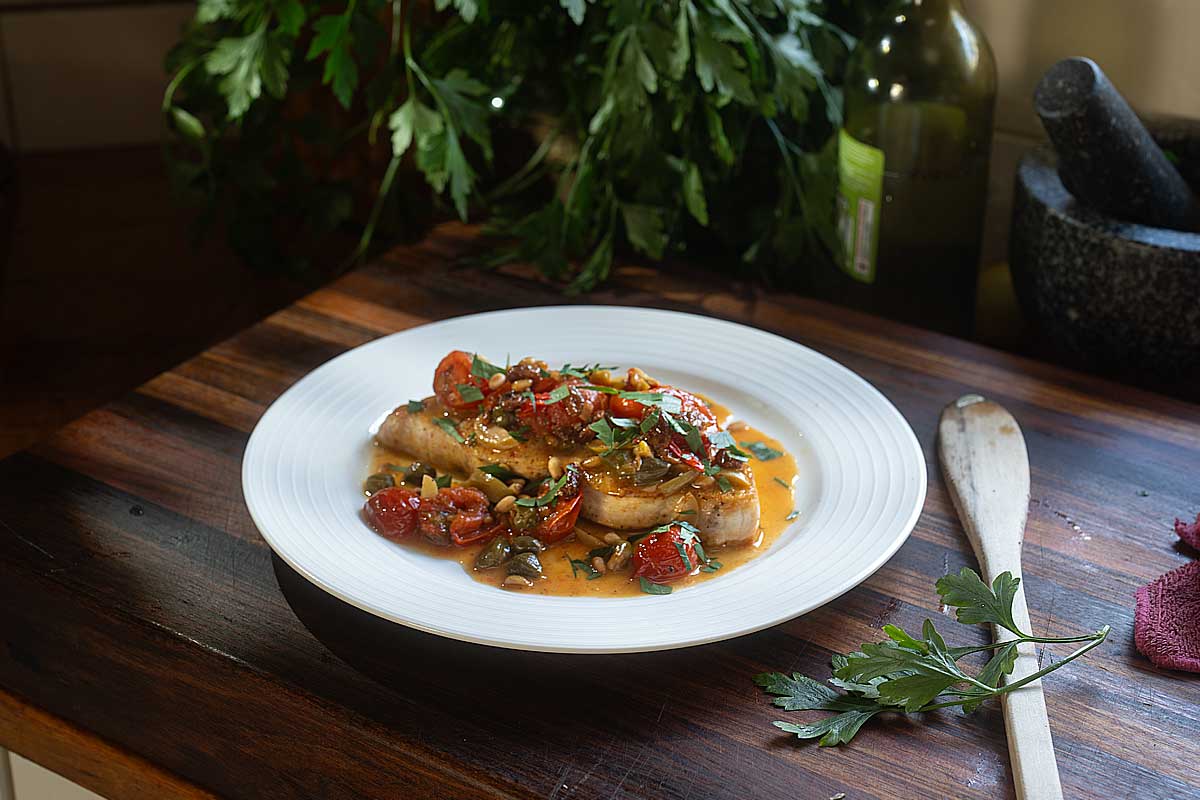
We took it outside. The bush was quiet, the air was crisp, and for a Wednesday night, life felt pretty good.
I’m not in Italy, but that’s what this dish does. One pan, twenty minutes, and somehow you’re somewhere else entirely.
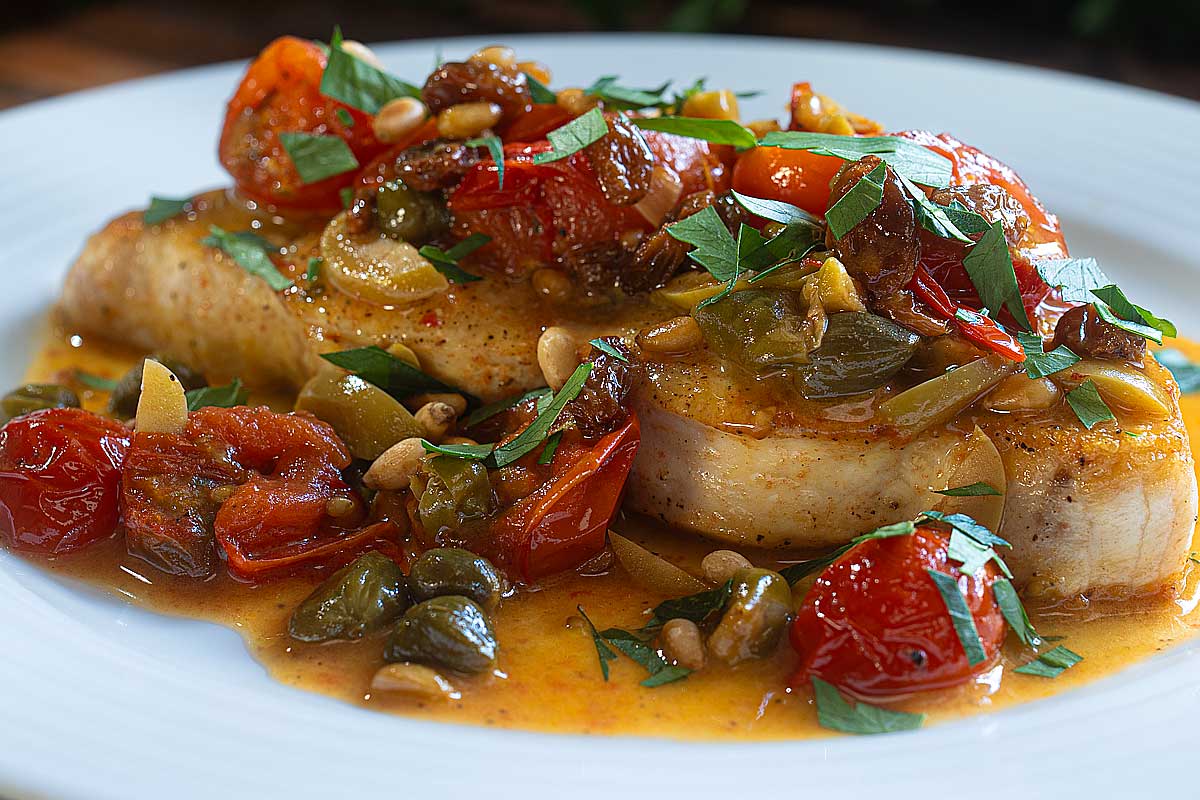
Sweet, salty, briny, fresh. Sicily in a pan. No boarding pass required.

 By
By 

You must be logged in to post a comment