

Peposo all’Imprunetina, Tuscany’s Peppery Beef Stew
Peposo is the kind of dish that sounds far too simple to be this good. Beef, red wine, garlic and a ridiculous amount of black pepper.
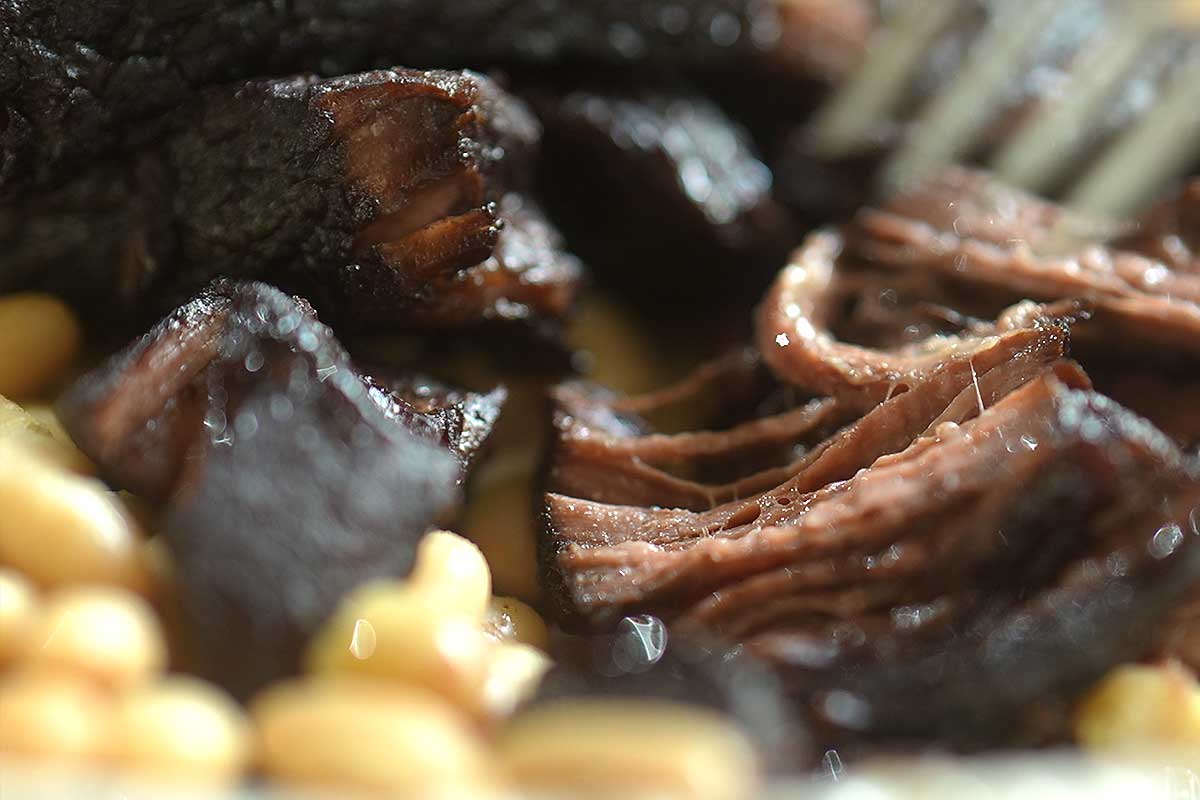
That’s it. Three hours in the oven and you get beef that collapses when you look at it, sitting in a dark, peppery wine sauce.
This is the Impruneta version, from the hills just south of Florence, and it’s one of the most honest bowls of comfort food I know.
![Cracked black peppercorns in a pile on the board, freshly crushed]](https://b3067249.assetcdn.net/2.0/3067249/wp-content/uploads/2026/11/Peppery-Beef-Stew-1.jpg?lossy=0&strip=1&webp=1)
The Terracotta Legend Behind Peposo
Impruneta is famous for its terracotta. The story goes that the kiln workers who fired the tiles for Brunelleschi’s dome in Florence made this stew while they worked.
They couldn’t leave the kilns, so they sealed beef, wine and pepper into pots and let the heat do the cooking for hours.
Nobody can prove it, but it makes sense. Cheap, tough beef, a lot of patience and not much else.
Why So Much Pepper?
The name comes from pepe, the Italian word for pepper. It’s the whole point of the dish, not a background note.
Two tablespoons sounds like a lot. After three hours in wine, the heat mellows into a warm, slow tingle rather than a sharp bite.
Crack the peppercorns roughly. Don’t grind them to dust, or you’ll lose that texture in the sauce.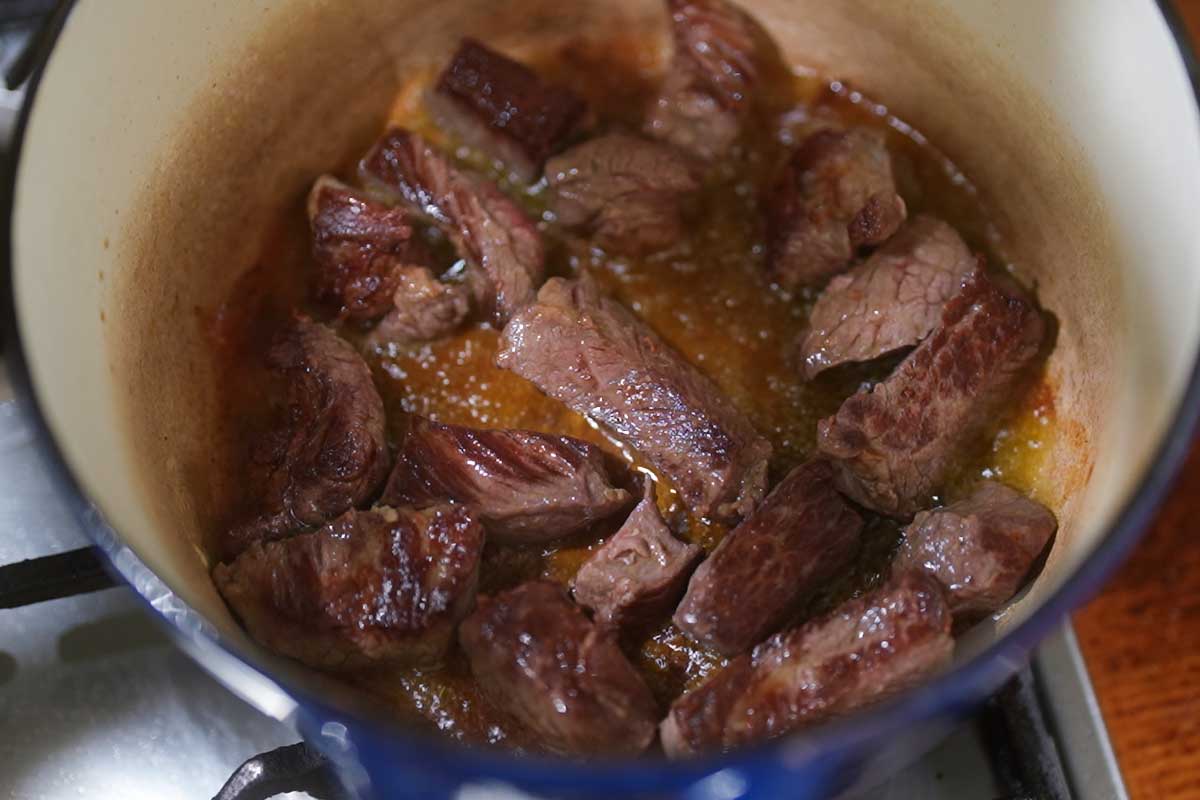
The Wine Does the Heavy Lifting
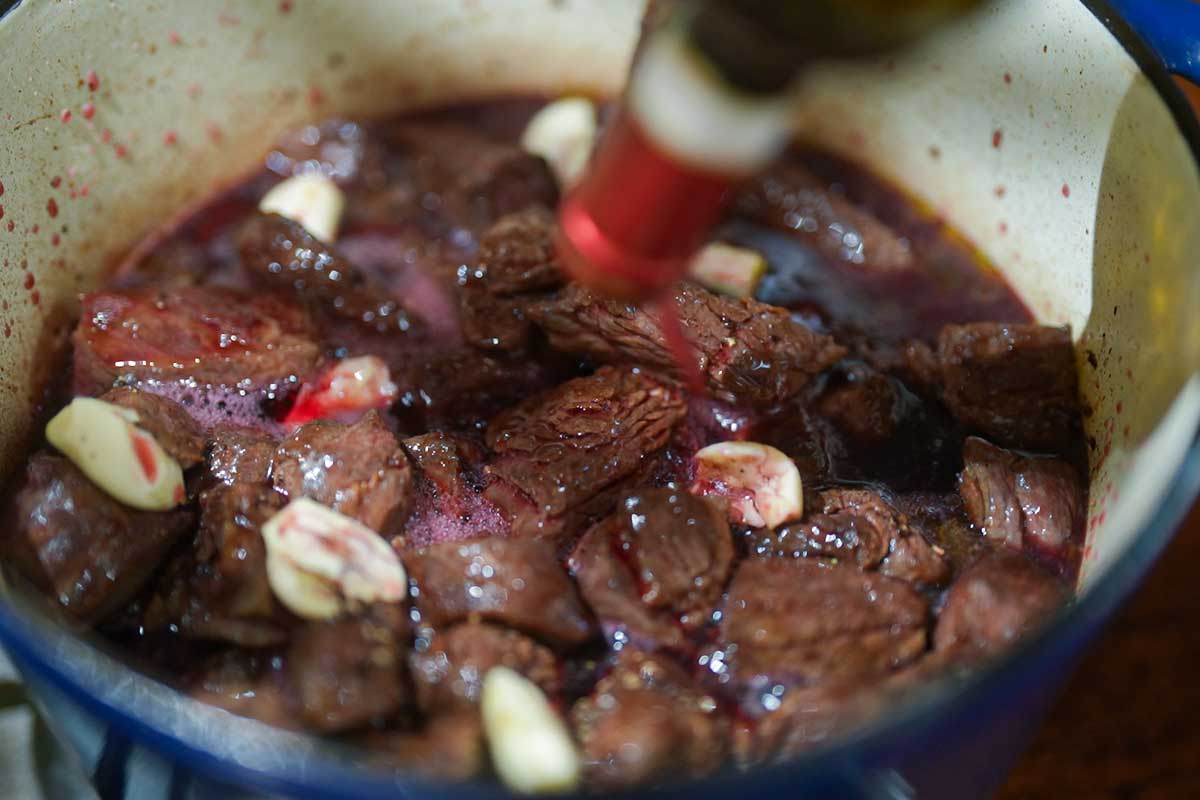
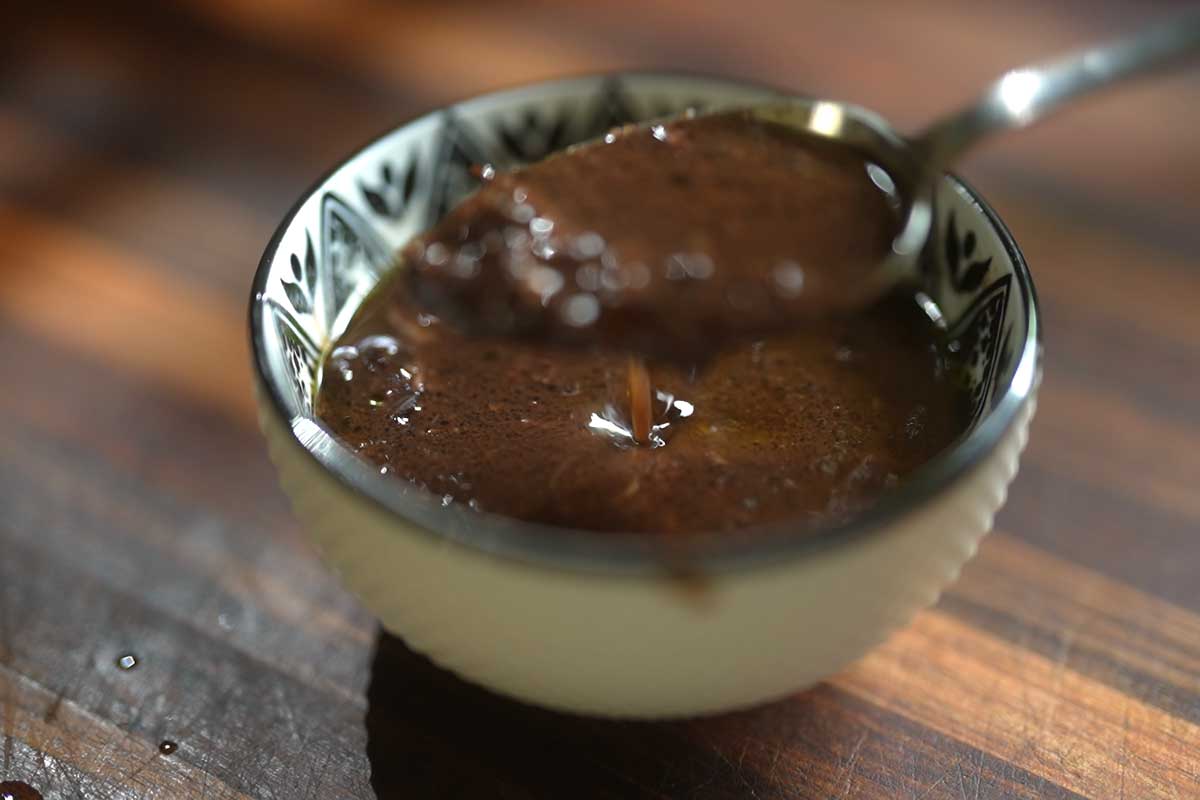
There’s no stock and no tomato in this version. The wine is the braising liquid and the sauce, so use something you’d happily drink.
Chianti is the natural choice. A dry, medium-bodied red works fine if that’s what you have.
Over three hours the wine reduces, picks up the beef and the garlic, and turns glossy and dark.
Cooking Tips
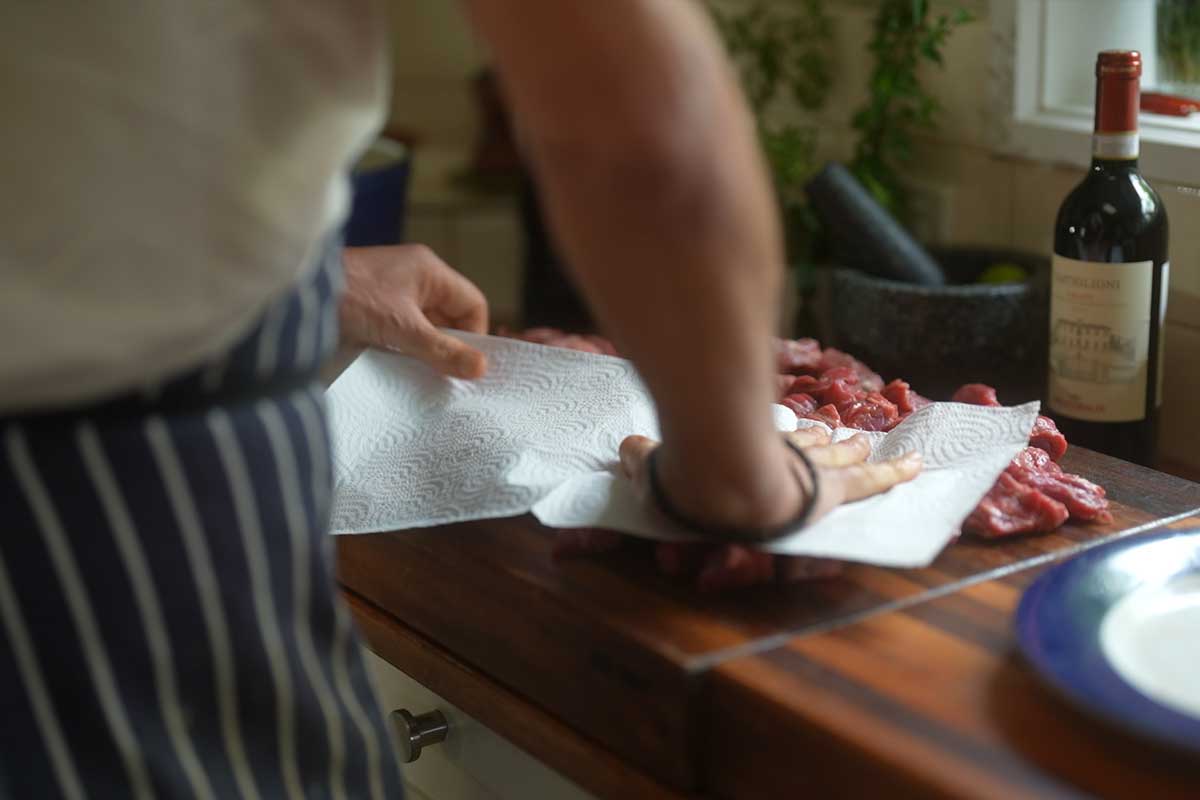
Pat the beef dry first. Wet meat steams instead of browning.
Brown in batches. Crowd the pot and you lose the crust.
Cut the beef into large chunks, about the size of a small fist. Small pieces dry out and fall apart too early.
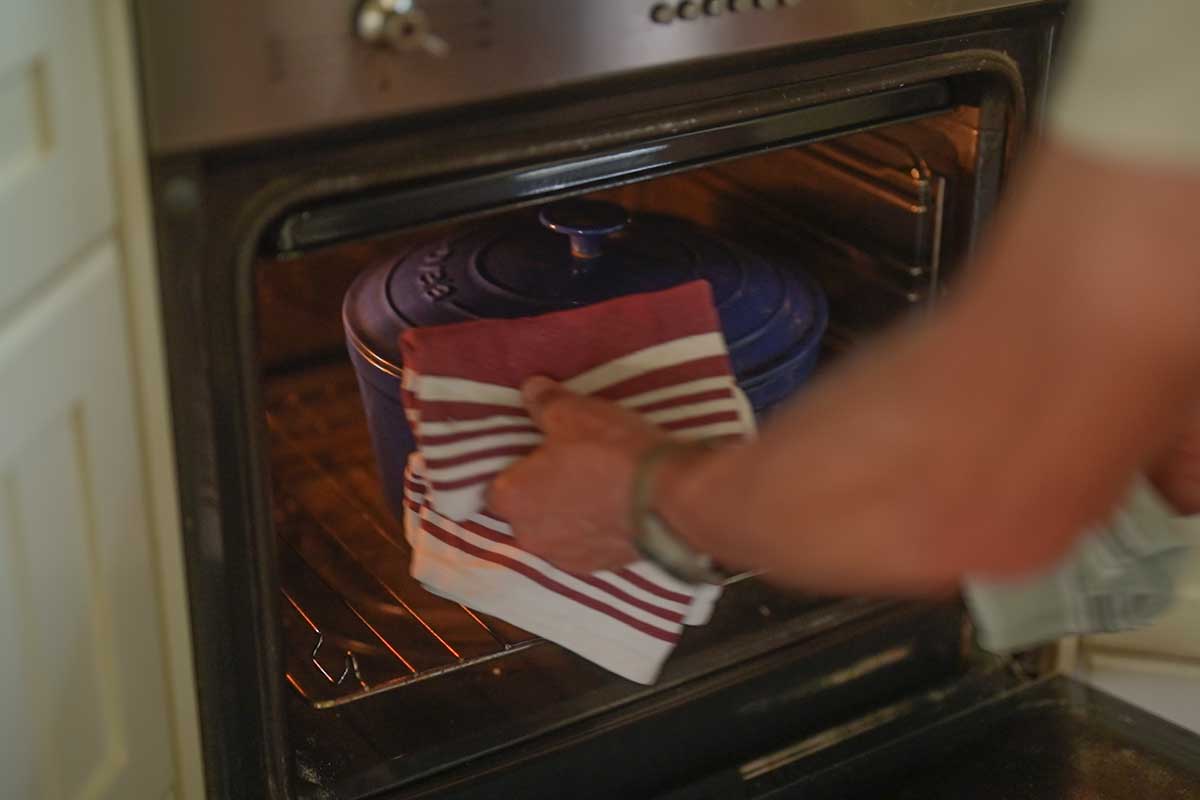
Keep the oven at 300°F / 150°C. Higher than that and the wine reduces too fast and the beef toughens.
The wine should generously cover the beef at the start. Top up with a splash if the pot looks dry halfway through.
Taste for fine sea salt at the end, not the start. The sauce concentrates as it reduces.
Ingredient Swaps
Beef cheek is the classic luxury option. It turns silky and rich, and it’s worth hunting down.
Beef shin or brisket also work well. Both have the collagen you need for a sticky, glossy sauce.
If you can’t find Chianti, use any dry Italian red such as Sangiovese. Avoid anything sweet or heavily oaked.
Common Mistakes
Using lean, expensive cuts is the big one. They go dry and stringy where chuck and cheek go tender.
Cooking too hot is the next. A hard boil in the oven gives you tough beef and a sauce that’s gone too thick too soon.
And don’t skip checking the pot. If the wine is nearly gone with an hour left, add a splash.
What to Serve With It
Toasted rustic bread is the traditional answer. Rub it with a cut garlic clove if you’re feeling generous.
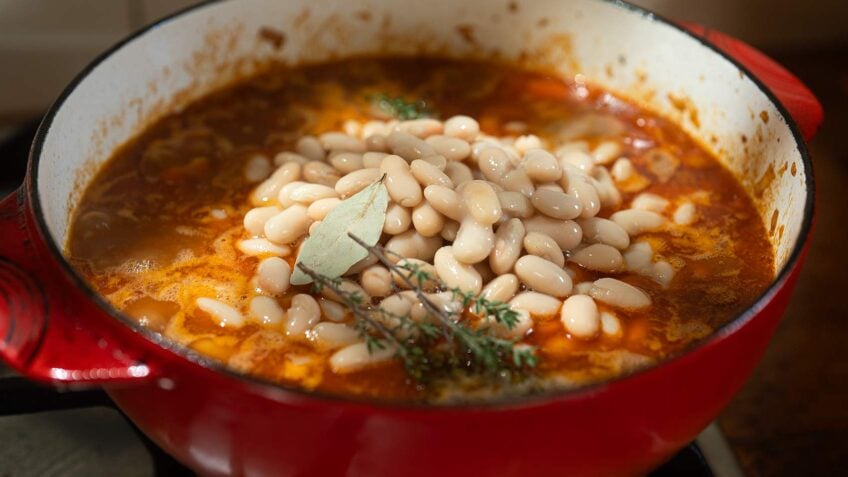
Creamy polenta, white beans or simple sautéed greens also suit it well, but the bread is what you want for mopping up the sauce.
Storage and Reheating
Cool the stew, then keep it in the fridge for up to 3 days. It tastes even better the next day.
It freezes well for up to 3 months. Reheat gently on the stove with a splash of wine or water until hot through.
FAQs
Do I have to brown the beef?
No, it’s optional. Browning gives a deeper flavour, so I’d do it if you have the time.
Is peposo very spicy?
It’s peppery and warming, but not fiery. The long cook mellows the heat a lot.
Can I make it on the stove?
Yes. Keep it at the lowest simmer with the lid on, and give it the same 3 hours.
Can I use a slow cooker?
You can, on low for 7 to 8 hours. Reduce the sauce on the stove at the end if it’s too thin.
What wine should I use?
A dry red you’d enjoy drinking. Chianti is traditional, but any decent Sangiovese does the job.
Simple Food, Slow Time
Peposo proves you don’t need a long ingredient list. You need good beef, good wine and the patience to leave it alone.
Make it on a cold weekend, tear off some bread and let the pot do the work.
 By


You must be logged in to post a comment