
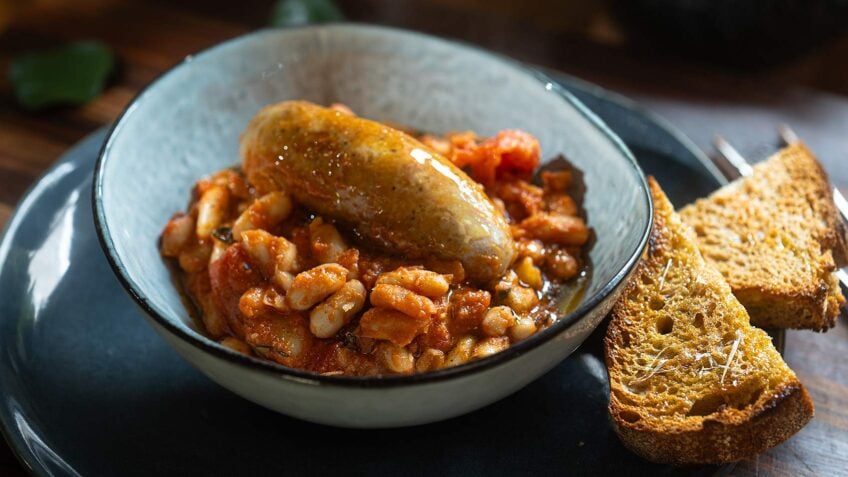
Florence Has a Bean Dish So Good They Named It After Birds
Strange name. Extraordinary dish.
Fagioli all’Uccelletto means beans cooked in the style of little birds. No birds in it. Just cannellini, garlic, fresh sage and tomato, slowly cooked until rich, creamy and full of deep Tuscan flavour.
Poor food made with the flavours once used for game. Cheap and humble, slowly turning rich and satisfying. This is the kind of Italian cooking that makes you wonder why anyone ever needed anything more complicated.
Where the Name Comes From
The name uccelletto refers to small birds, specifically the way Tuscan hunters once cooked game birds, with garlic, sage and olive oil.
At some point, the Florentines applied exactly the same flavour combination to cannellini beans and discovered it worked even better. The beans absorbed the sage and garlic oil slowly, turning silky and savoury in a way that felt far more luxurious than the shopping list suggested.
The dish became a Florentine staple, a perfect example of cucina povera, poor kitchen cooking, turning simple, cheap ingredients into something genuinely special through patience and technique.
The Beans That Become Creamy Without Cream
The creaminess in this dish comes entirely from the beans themselves.
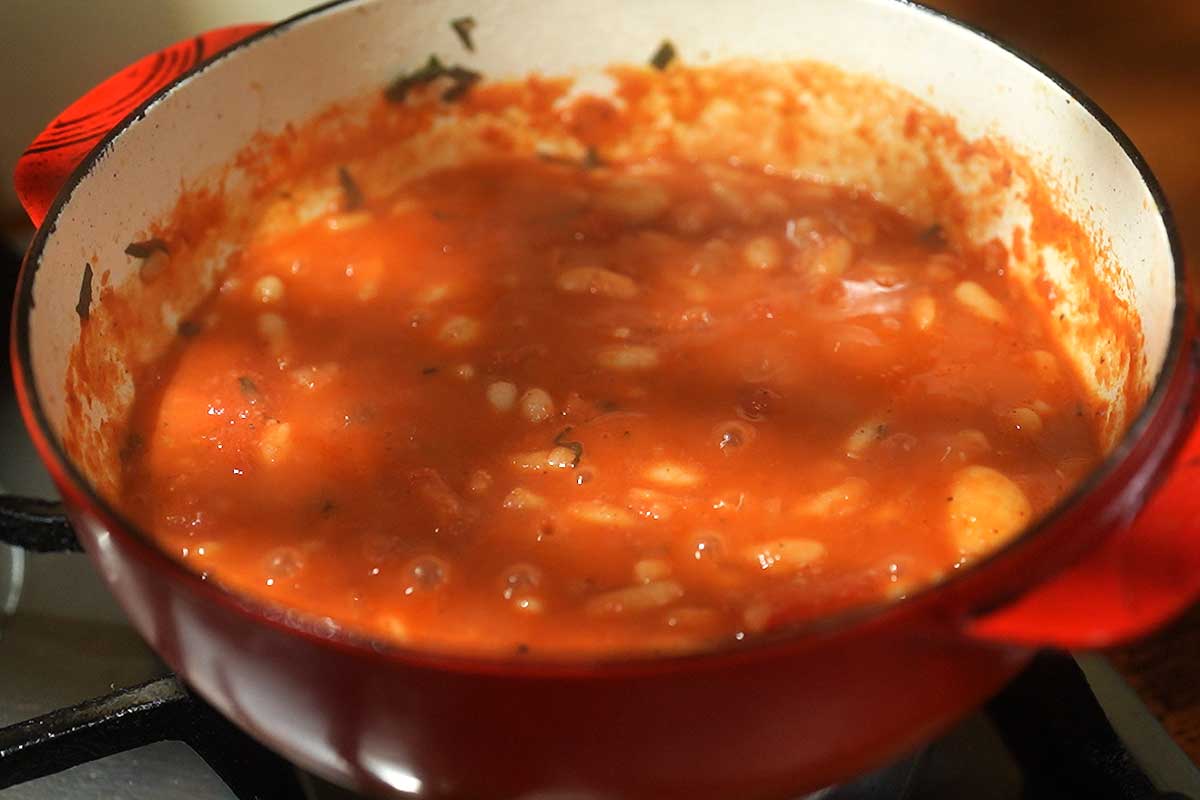
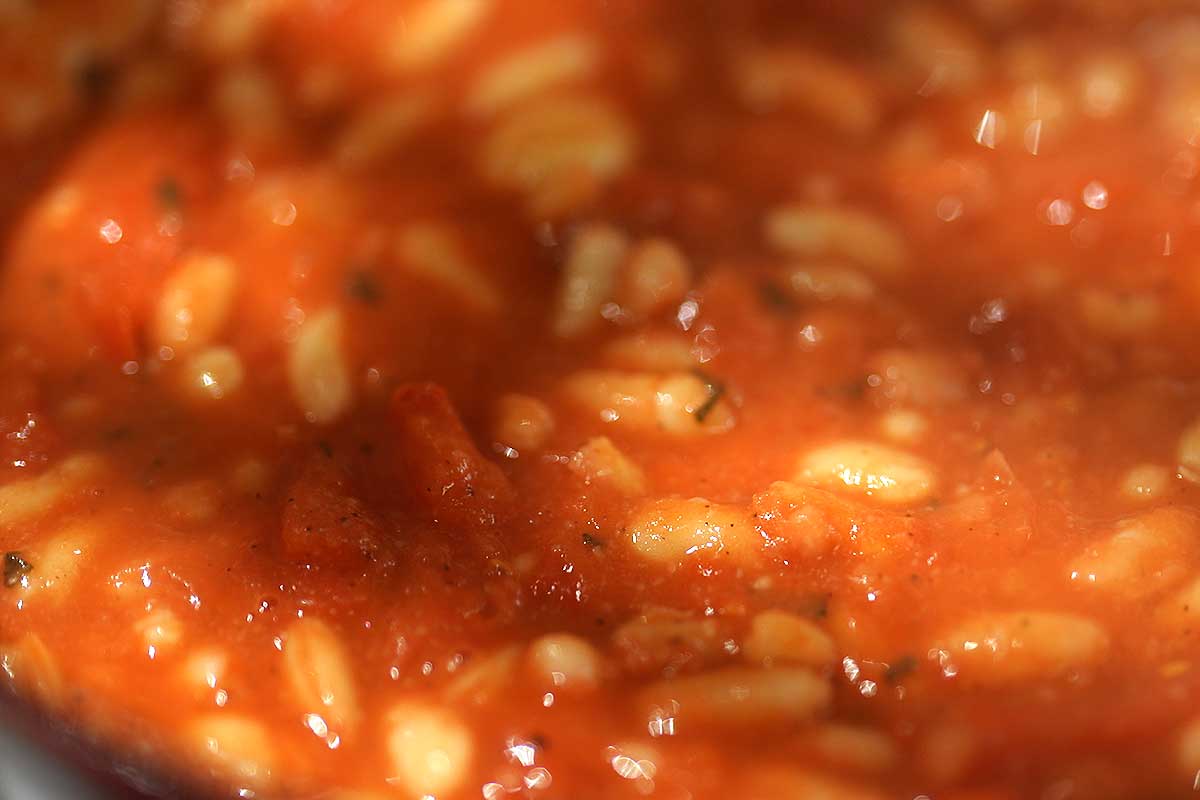
As they simmer slowly in the tomato sauce, the outer layer of each bean softens and begins to break down slightly, releasing starch into the liquid. That starch thickens the sauce naturally and gives the whole dish that silky, velvety texture that makes it feel rich without being heavy.
The key is low heat and patience. Rushing it at high temperature makes the beans tough. Gentle simmering for twenty minutes is what transforms them.
Fresh Sage Is Non-Negotiable
Dried sage will not give you the same result. Not even close.
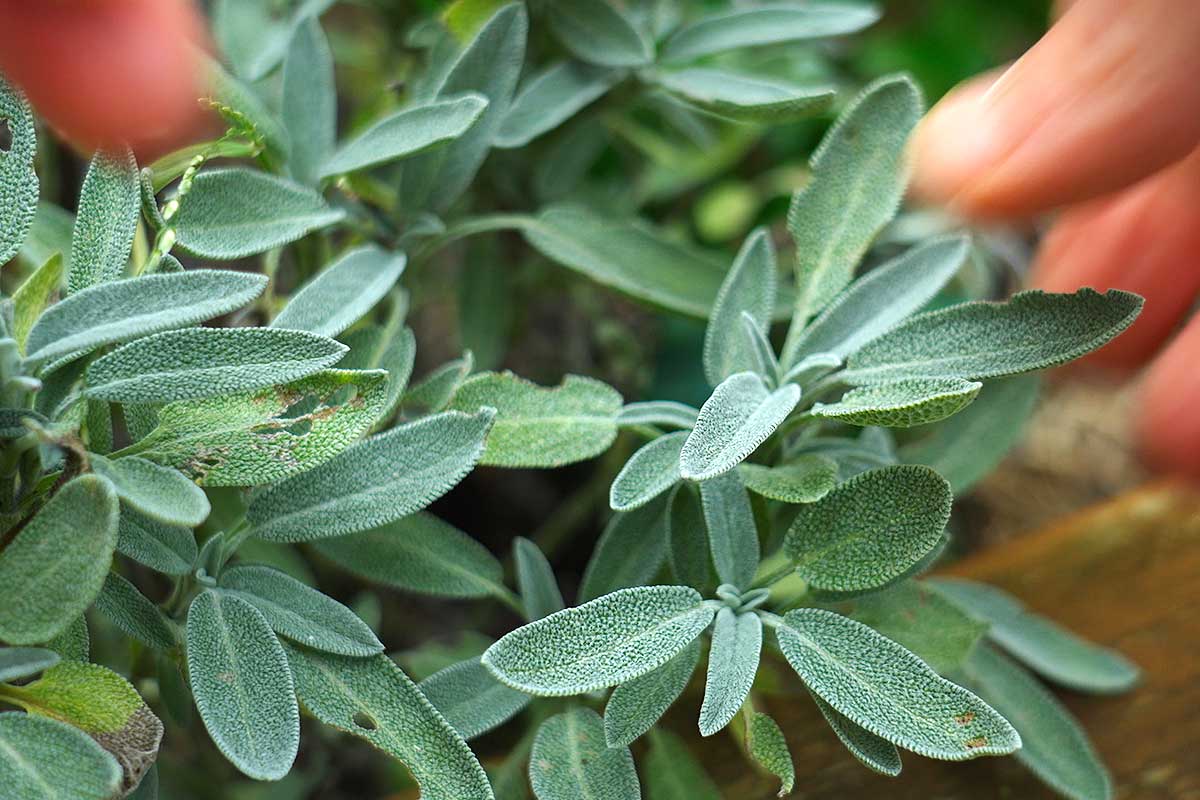
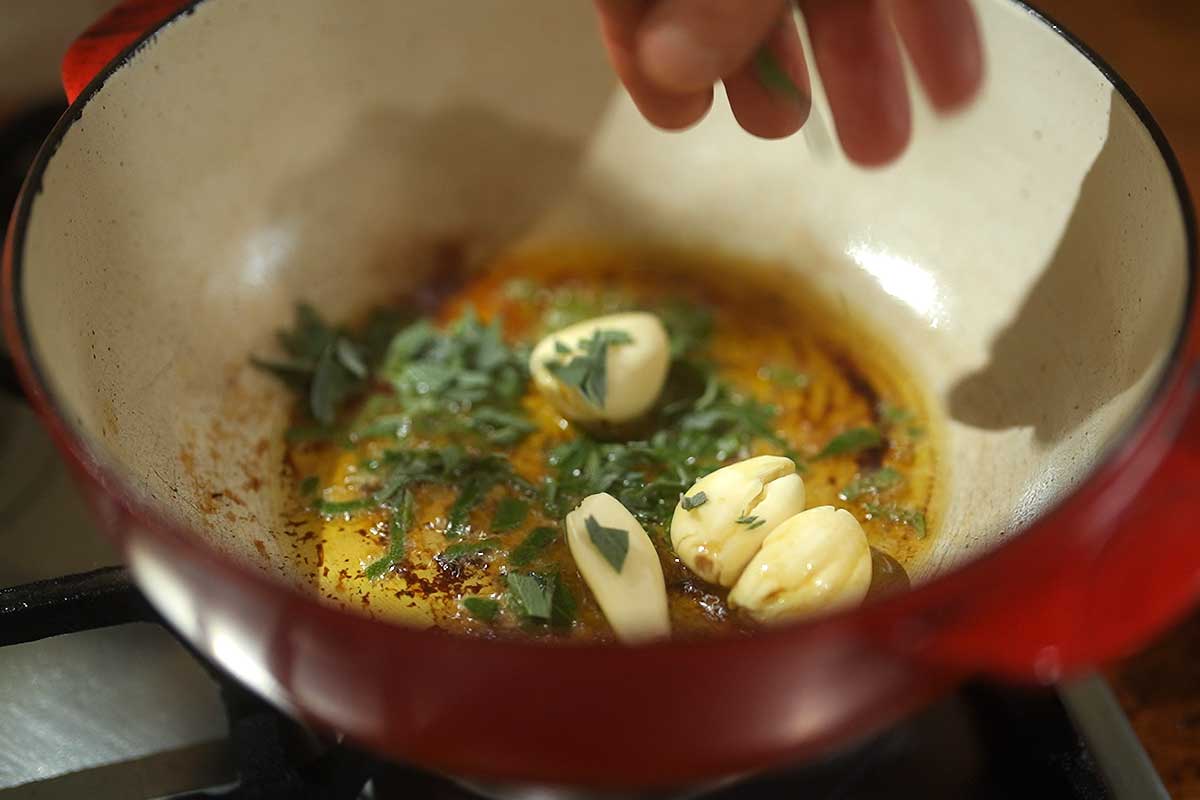
Fresh sage cooked gently in good olive oil releases a sweet, woody, slightly camphor fragrance that infuses the oil completely. That flavoured oil then coats every bean as they cook. It is the aromatic backbone of the entire dish.
Don’t let the herb cupboard mug you on this one. Fresh sage is worth buying.
Two Olive Oils, Two Different Jobs
The olive oil does two completely different things in this dish and both matter.
The first pour of olive oil at the start builds the flavour base, gently infusing with garlic and sage over low heat. This becomes the aromatic foundation everything else is built on.
The final raw drizzle at the end is different. Raw extra virgin olive oil has a grassy, peppery brightness that cooked oil loses completely. That finishing drizzle gives the dish its proper Tuscan glow and lifts everything at the very last moment. Don’t skip it.
Cooking Tips
Don’t brown the garlic. It should become fragrant and very lightly golden, nothing more. Burnt garlic turns bitter and will dominate the entire flavour of the dish.
Stir the beans gently. Cannellini beans are soft and break apart easily. Use a gentle hand when stirring so they stay whole and the sauce stays glossy rather than turning to mash.
Keep the heat low once the tomatoes go in. You want a gentle simmer, not a boil. The beans need time to absorb the flavours slowly.
Add water gradually if the sauce gets too thick. A splash at a time is all you need. The consistency should be saucy and creamy, not dry or stiff.
Taste and season generously at the end. Beans absorb salt and need confident seasoning. Taste just before serving and adjust.
Add Sausages for a Heartier Version
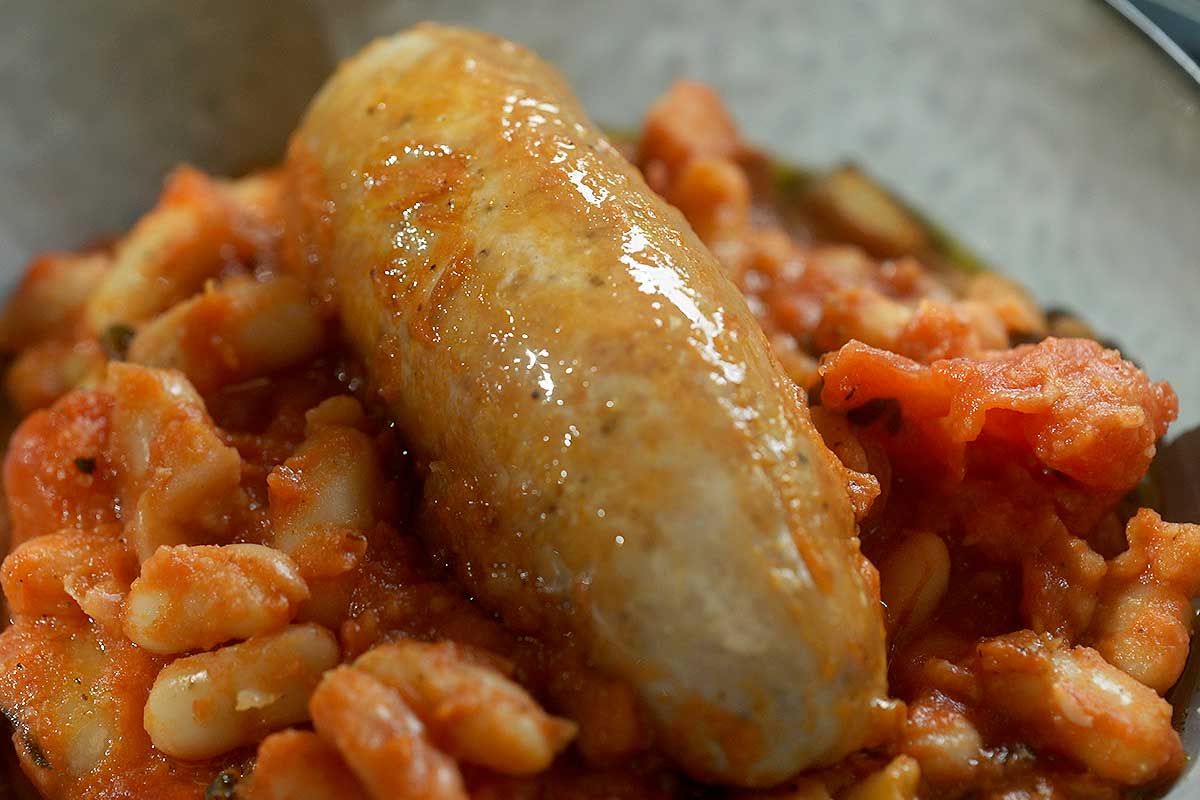
The bean dish alone is a complete, satisfying vegetarian meal. Add Tuscan-style pork sausages and it becomes something different entirely.
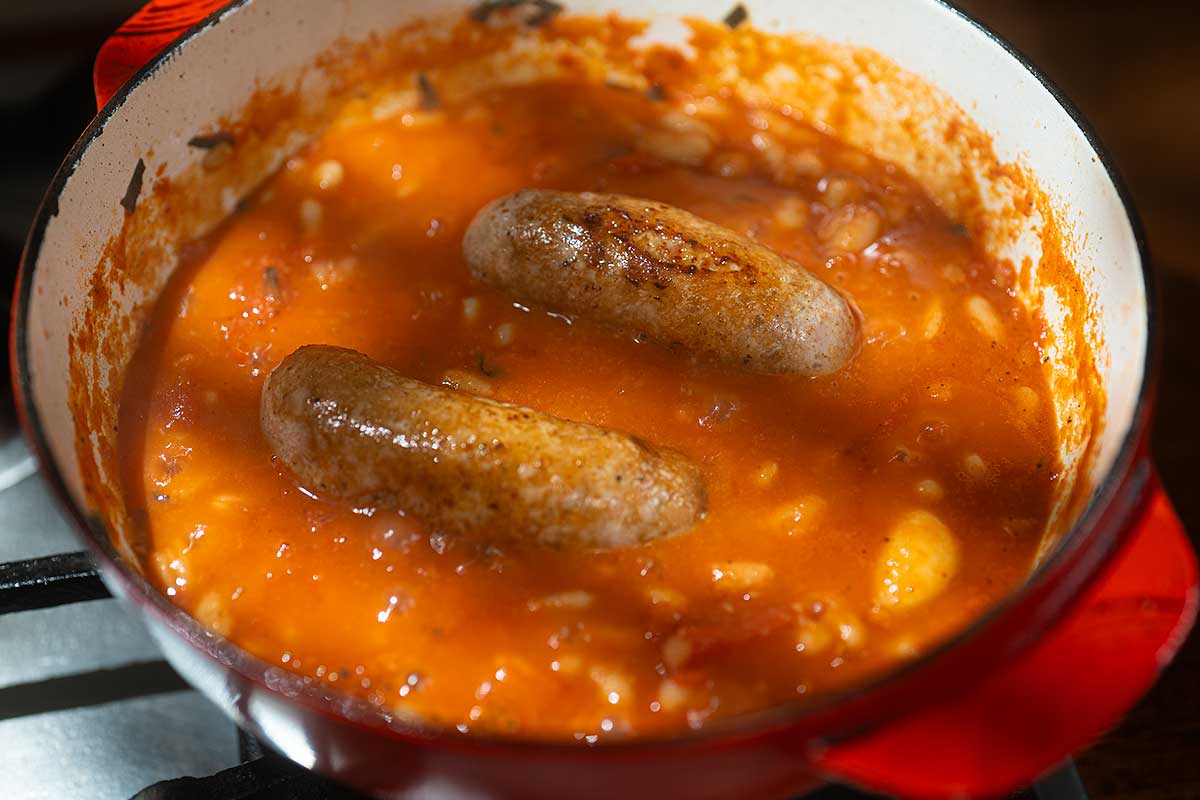
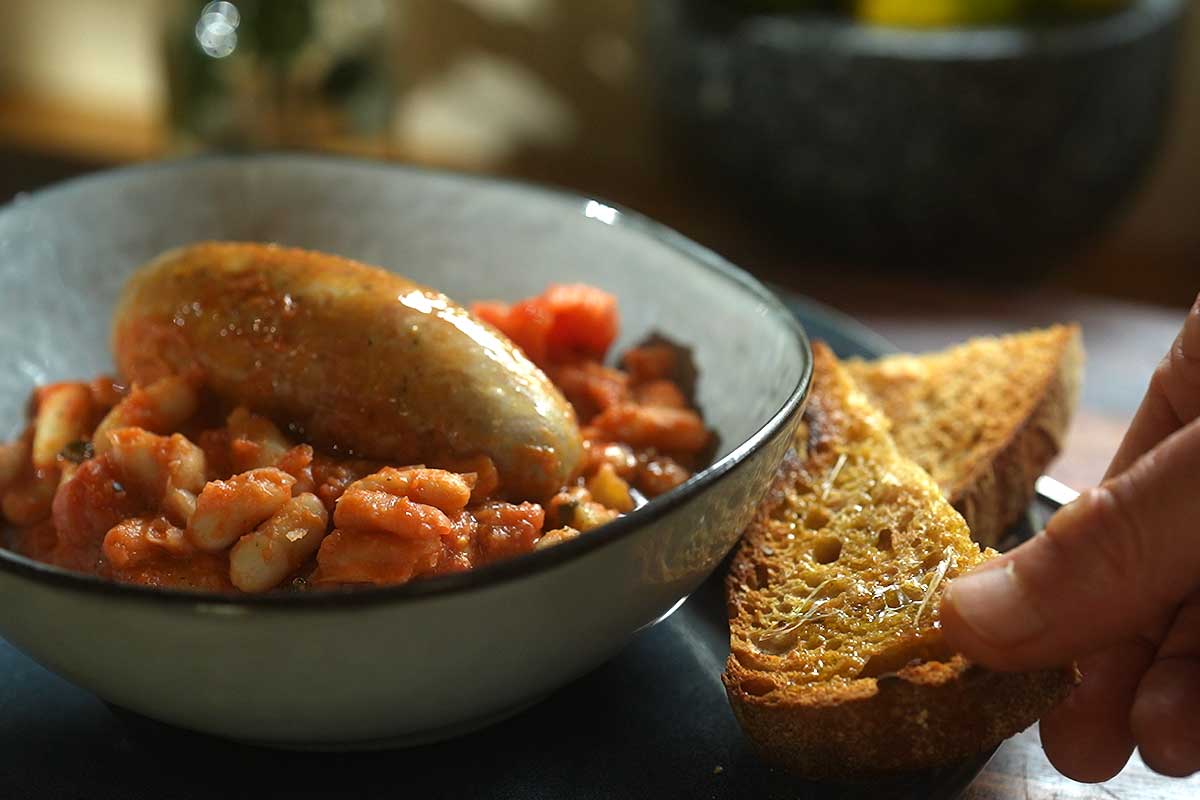
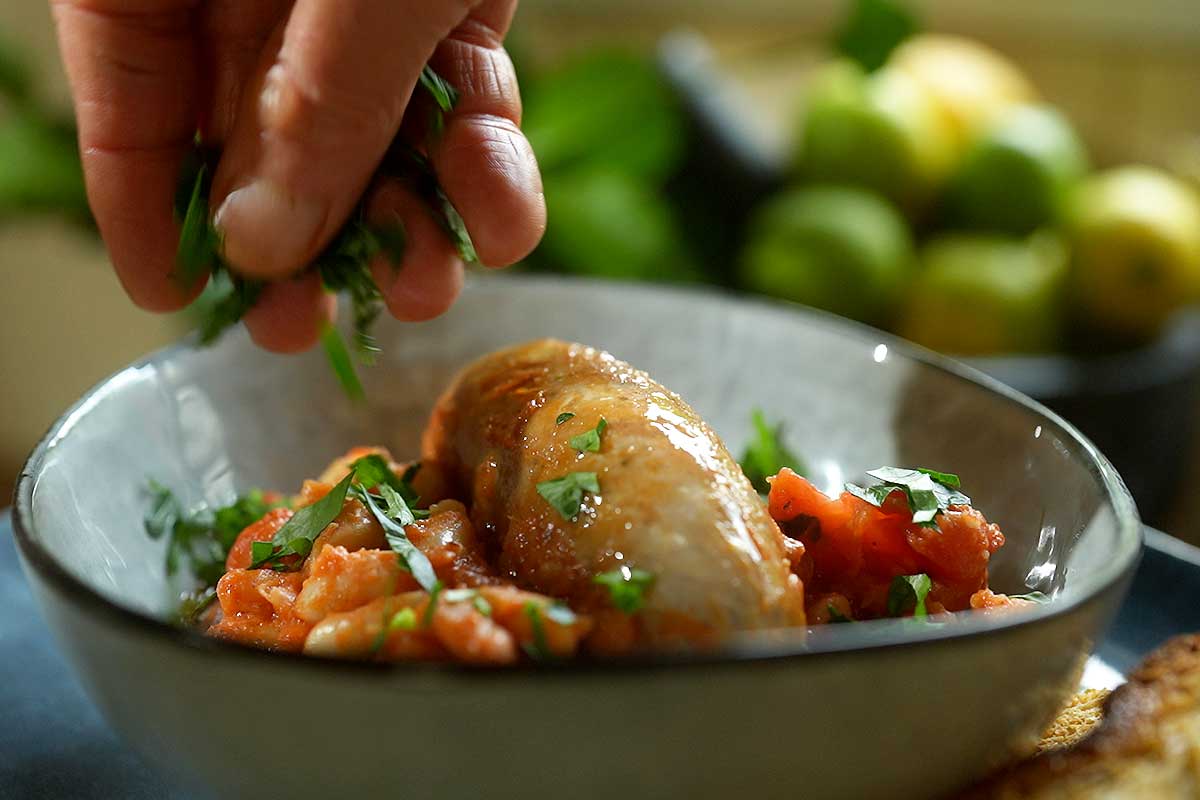
Brown the sausages first in the same pan until golden on all sides, then set them aside while you build the bean sauce. Return them to the pan once the tomatoes go in and let them finish cooking with the beans. The sausage juices melt into the sauce and add a deep, meaty richness that takes the whole dish to another level.
Kenji has already decided the sausage version is history’s finest work. He’s not wrong.
Ingredient Swaps
No cannellini beans? Borlotti beans or butter beans work beautifully. Both have a similar creamy texture and absorb the sage and garlic oil well.
No fresh sage? Fresh rosemary is the closest alternative in Tuscan cooking. Use two or three small sprigs and remove them before serving.
No crushed tomatoes? Passata gives a smoother sauce. Fresh ripe tomatoes roughly chopped work beautifully in summer.
No Tuscan sausages? Any good quality Italian pork sausage works. The fennel seed seasoning in Italian sausages fits the Tuscan flavour profile perfectly.
Common Mistakes
Using dried sage. The dish depends on the fresh herb. Dried sage has none of the same aromatic quality when cooked in oil.
Cooking over high heat. The beans need gentle, patient heat to become truly creamy. High heat makes them tough and the sauce watery.
Stirring too vigorously. Cannellini beans are delicate. Rough stirring breaks them down into mush and the texture of the dish suffers.
Skipping the final raw olive oil drizzle. It looks like a small thing but it completely changes the finish of the dish. Always drizzle raw EVOO just before serving.
What to Serve With It
Thick grilled sourdough or country bread rubbed with garlic and drizzled with olive oil. This is the classic Tuscan pairing and it’s perfect.
The beans also work beautifully alongside roasted lamb or grilled chicken as a side dish.
A simple green salad dressed with lemon and olive oil keeps the meal light if you’re eating the beans as a main.
A glass of Chianti if you want to commit fully to the Tuscan experience.
Storage
Fridge: Store covered for up to 3 days. The flavour deepens significantly overnight as the sage and garlic continue to develop in the sauce.
Reheat gently in a pan over low heat with a small splash of water to loosen the sauce. Finish with a fresh drizzle of raw olive oil when serving.
Freezer: The beans freeze well for up to 2 months without the bread. Thaw overnight in the fridge and reheat gently.
FAQs
Why is this dish called all’Uccelletto?
Uccelletto means little birds in Italian. The name refers to the classic Tuscan way of cooking small game birds with garlic, sage and olive oil. The Florentines applied the exact same flavour combination to cannellini beans and the name stuck.
Can I use dried beans instead of tinned?
Yes, and dried beans give an even creamier result. Soak them overnight, then boil until tender before using in the recipe. The extra effort is worth it for a special occasion. Tinned beans are perfectly good for everyday cooking.
Is this recipe vegan?
Yes, the bean dish without sausages is completely vegan. Just make sure your olive oil is good quality and serve with bread rather than butter-rubbed toast.
Is this recipe gluten free?
The beans and sauce are naturally gluten free. Serve with gluten free bread instead of sourdough if needed.
How healthy are cannellini beans?
Very. Cannellini beans are high in plant-based protein, around 15 grams per cooked cup, and packed with dietary fibre that supports gut health and keeps you full. They’re also a good source of iron, folate and magnesium. Combined with the heart-healthy fats in extra virgin olive oil, this is genuinely nutritious food that happens to taste incredible.
Poor Food With Rich Flavour
Fagioli all’Uccelletto is one of those dishes that proves the best Italian cooking was never about expensive ingredients.
It was about understanding what cheap, simple ingredients could become with the right technique, the right oil, and a little patience.
Cold morning. Warm bowl. Grilled bread. That’s all you need.
 By
By
You must be logged in to post a comment