
The French Bean Stew That Took 3 Days. I Made It in 1 Hour
Some dishes are worth the wait. Cassoulet is one of them, but three days is a big ask on a Tuesday.
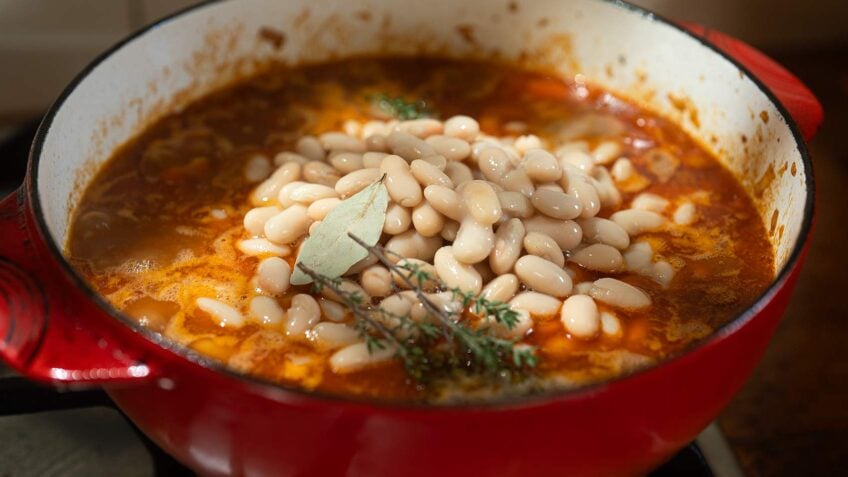
So I kept what matters. Crisp golden chicken skin, smoky bacon, fat sausages and creamy white beans soaking up every drop of the good stuff.
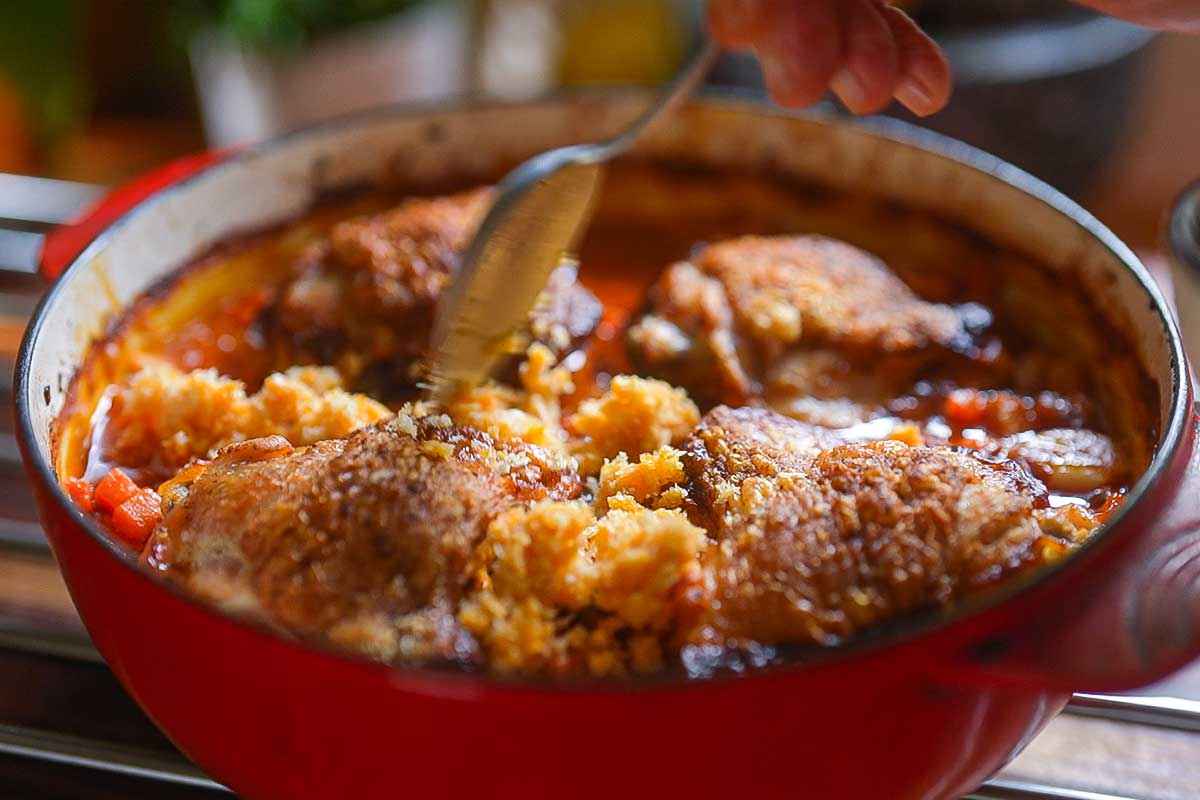
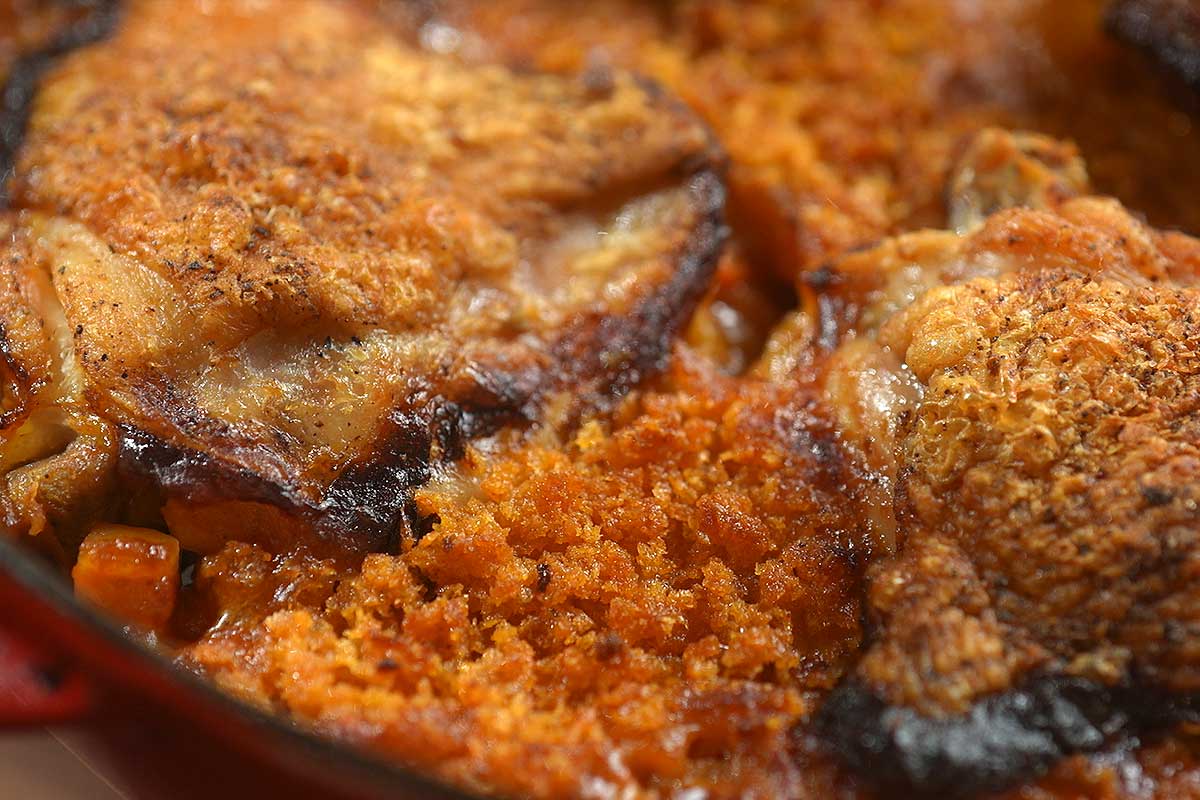
Then a crunchy breadcrumb top, baked until it crackles when the spoon goes in.
One pot, about an hour, and your kitchen smells like a farmhouse in the south of France.
What Is Cassoulet, Really?
Cassoulet is a slow-baked stew of white beans and meat from the Languedoc region in south-west France.
The name comes from the cassole, a wide glazed clay dish made in the village of Issel, just outside Castelnaudary. The pot gave the dish its name, not the other way round.
Three towns claim it as their own. Castelnaudary, Carcassonne and Toulouse each have their version, and each will tell you the others got it wrong.
The chef Prosper Montagné famously called them a holy trinity. Castelnaudary was God the Father, Carcassonne the Son, and Toulouse the Holy Spirit.
Castelnaudary sticks to pork and duck confit. Carcassonne has been known to add mutton and even partridge in season. Toulouse brings its famous garlicky Toulouse sausage.
The Siege Story, and the Truth
You will often read that cassoulet was born during a siege, when starving townsfolk threw everything they had into one giant pot.
It is a great story. It is also a legend.
Castelnaudary’s own cassoulet confrérie says the town was actually sacked and burned by Edward, the Black Prince, in 1355 during the Hundred Years’ War, rather than besieged.
The town has a brotherhood devoted to the dish, the Grande Confrérie du Cassoulet de Castelnaudary. Members wear robes and hats shaped like the cassole. That is how seriously they take beans.
The Secret: Fat, Fond and Beans That Drink It All
A true cassoulet gets its depth from hours of slow baking. We cheat that time by building flavour in layers in one pot.
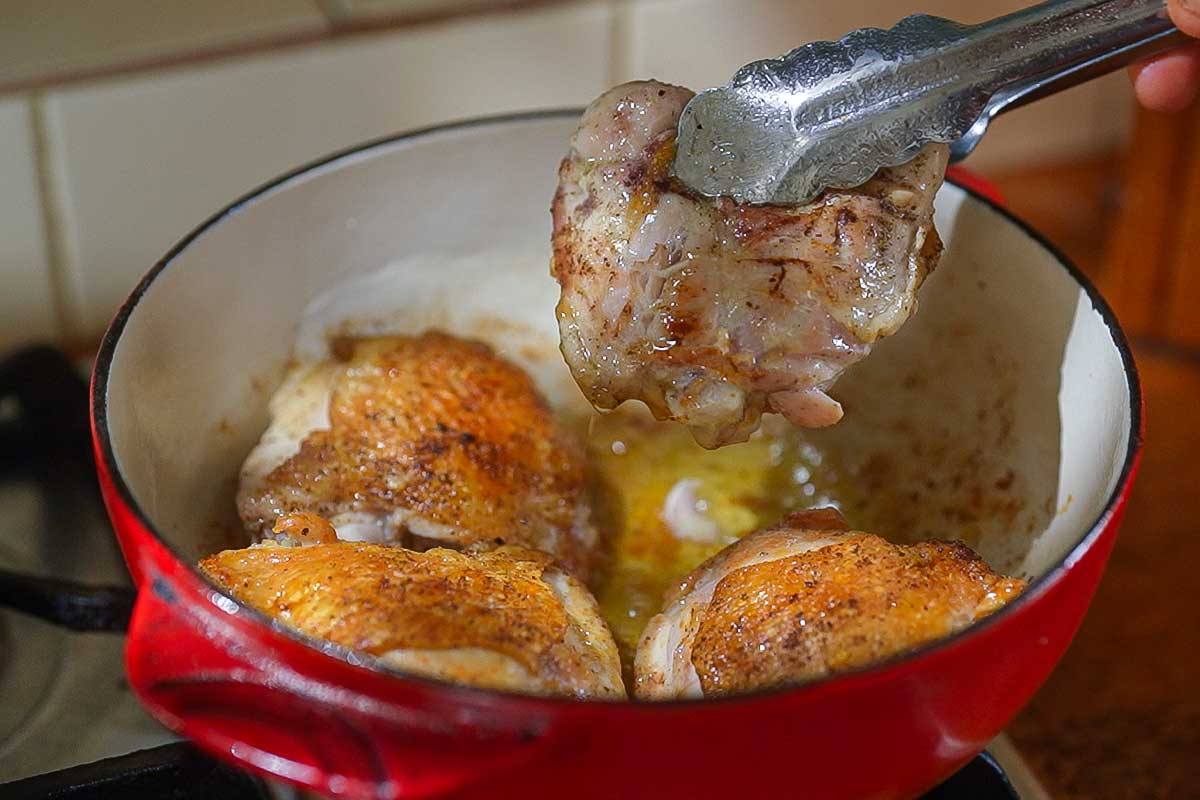
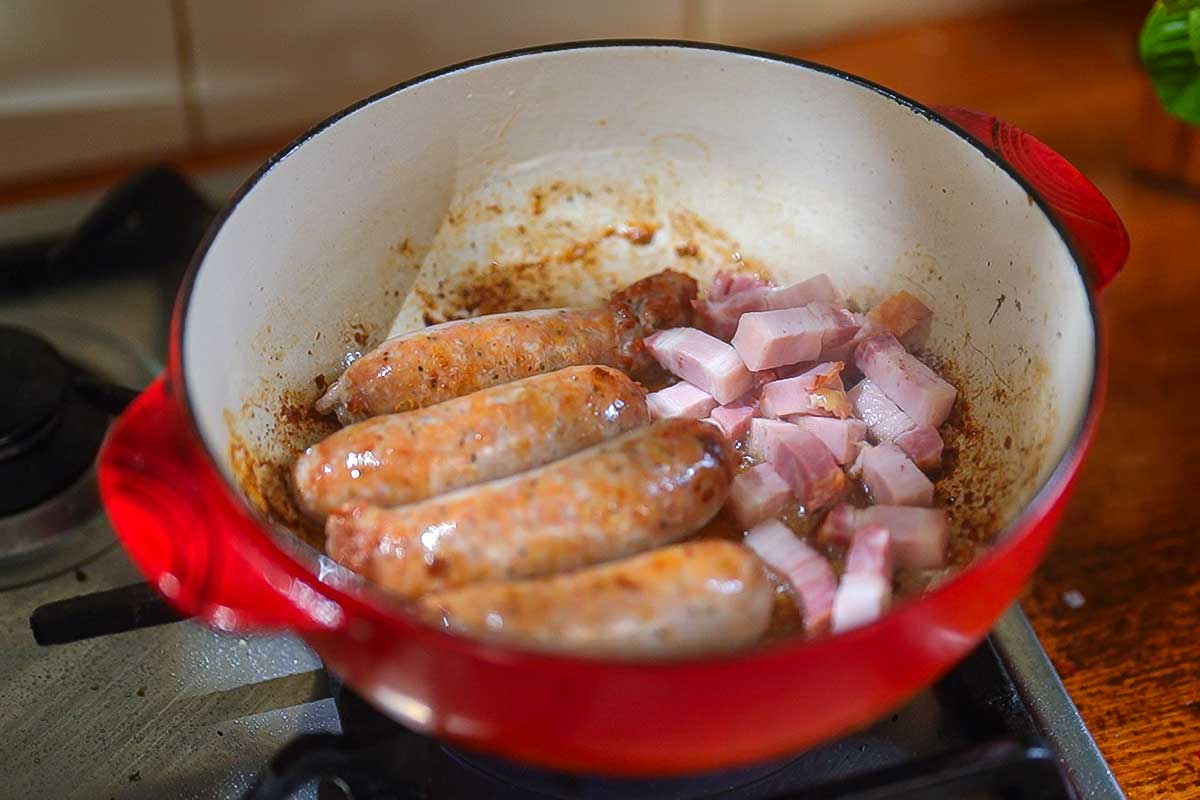
The chicken skin renders its fat first. Then the bacon and sausages add theirs, smoky and porky.
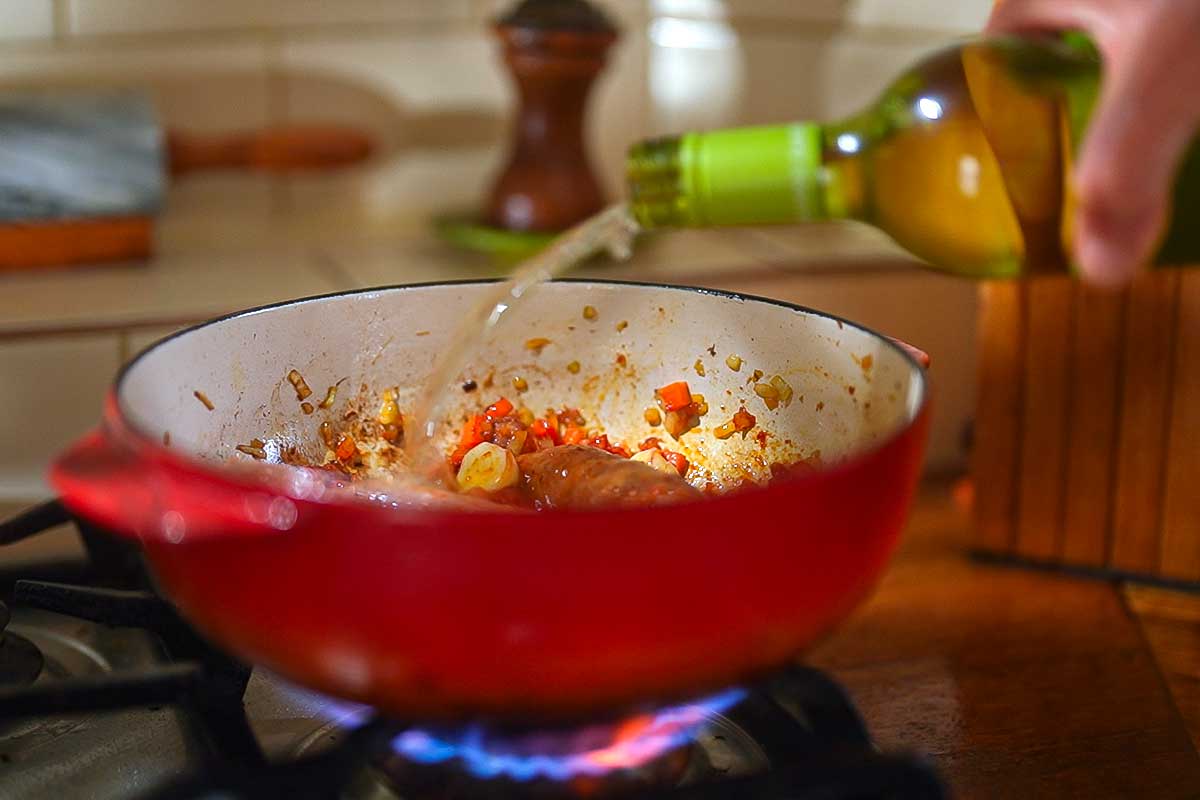
That fat softens the onion and carrot, and the brown crusty bits stuck to the bottom are pure gold. The wine lifts them off and turns them into sauce.
Canned cannellini beans are already cooked, so they don’t need hours. They just need time in the oven to soak up all that flavour and turn creamy.
Why the Crust Matters
In Castelnaudary, purists don’t use breadcrumbs at all. The crust forms naturally from the gelatine and fat as the dish bakes for hours.
Tradition says you break that crust and push it back in seven times during cooking. Some cooks swear by eight.
We don’t have that kind of time on a weeknight. A handful of fresh breadcrumbs, moistened with hot pot liquid, gives you that golden lid in 20 minutes.
Wetting the crumbs first is the trick. Dry crumbs on top just toast and stay dusty. Wet ones soak up the fat and turn crisp and nutty.
Cooking Tips
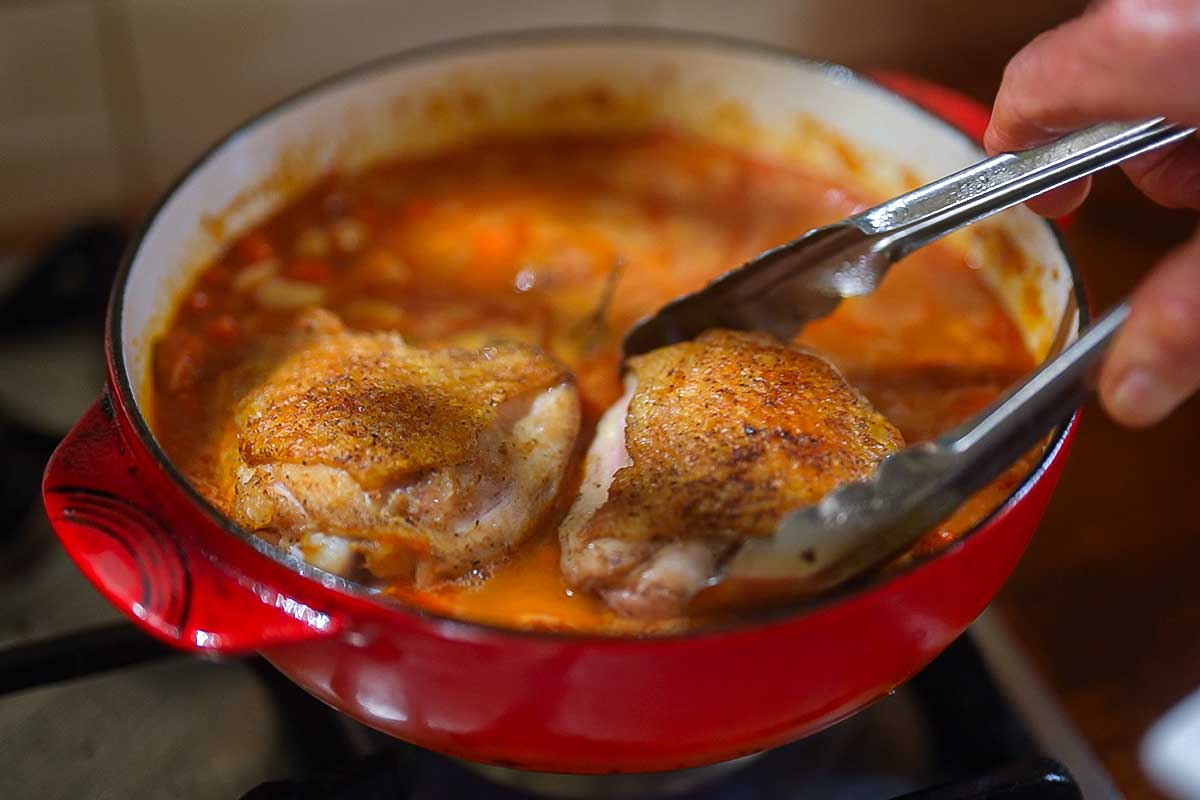
Pat the chicken skin really dry before it hits the pot. Wet skin steams, dry skin crisps.
Don’t rush the browning. Leave the chicken alone until it releases easily from the base. If it sticks, it’s not ready.
Use a heavy ovenproof pot, like cast iron. It holds heat evenly and goes straight from stovetop to oven.
Rinse the canned beans well. The starchy canning liquid can make the stew gluey and dull.
Go easy on the salt. Bacon, sausages and canned beans all bring plenty, so taste before you add more.
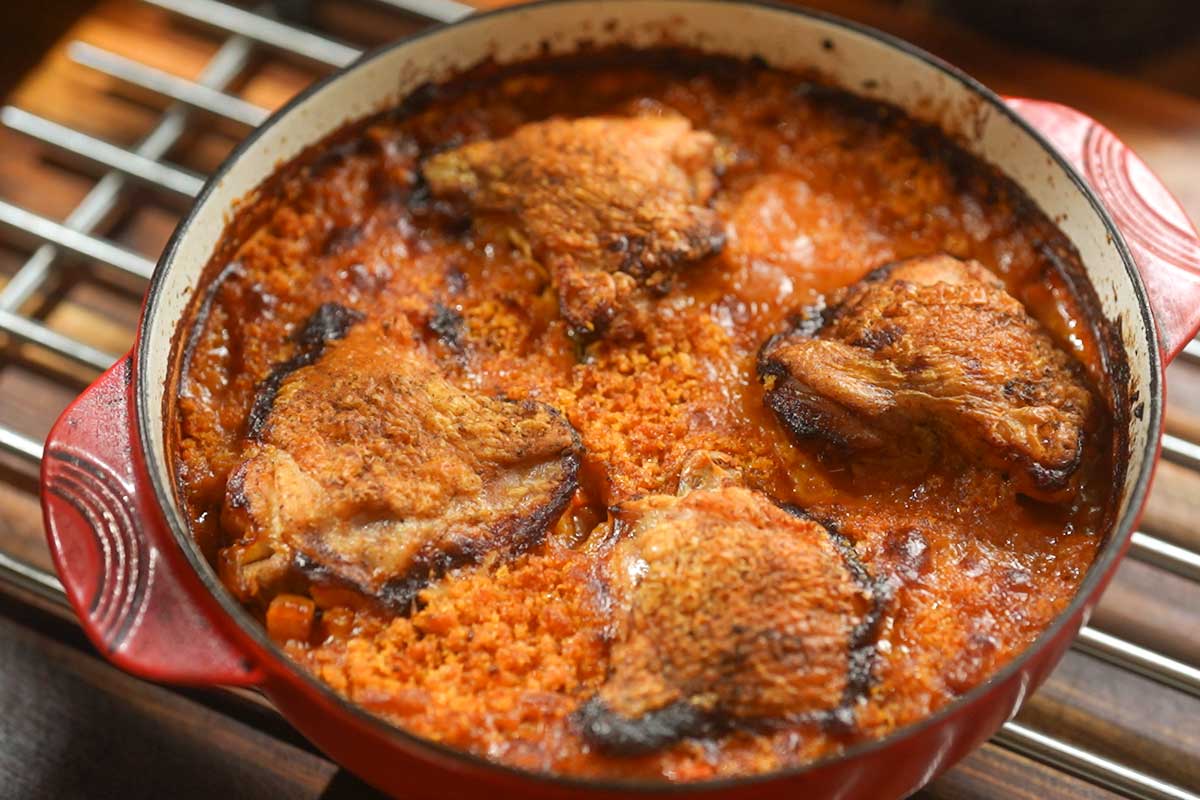
Keep the chicken skin above the liquid when it goes in the oven. That is the difference between crackling and soggy.
Bake uncovered at 375°F / 190°C. The liquid reduces and thickens while the top browns.
Ingredient Swaps
No Italian fennel sausages? Toulouse sausages are the classic choice. Any good, coarse pork sausage will work.
Duck legs instead of chicken thighs bring you closer to the original. They will need a little longer in the oven.
Swap cannellini for butter beans or haricot beans. Butter beans go extra creamy.
No wine? Use extra chicken stock with a teaspoon of white wine vinegar for that bit of brightness.
Pancetta works in place of bacon. You lose a little smokiness, so add a pinch of smoked paprika if you like.
Common Mistakes
Crowding the pot when browning. Brown the chicken in batches if your pot is small, or it will steam instead of sear.
Skipping the wine reduction. Simmer it down by half so the alcohol cooks off and the flavour concentrates.
Drowning the chicken. If the skin sits in liquid, it goes soft and pale.
Covering the crumbs over the chicken skin. Scatter them on the beans only, and let the skin do its own thing.
What to Serve With It
Cassoulet is a full meal on its own, so keep sides simple.
A sharp green salad with a mustardy vinaigrette cuts through the richness beautifully.
Crusty bread for mopping up the juices is never a bad idea.
In the south of France, it is served with a red from the region, something like a Corbières or Minervois.
Storage and Reheating
Like most stews, cassoulet tastes even better the next day. The beans keep soaking up flavour overnight.
Store in an airtight container in the fridge for up to 3 days.
Reheat covered in the oven at 350°F / 180°C until hot through, adding a splash of stock if it looks dry. Uncover for the last 10 minutes to re-crisp the top.
It freezes well for up to 3 months, though the crumb top will soften. Add fresh crumbs when reheating.
FAQs
Is this a real cassoulet?
It is cassoulet-inspired. A traditional one uses dried beans, duck confit and many hours of baking. This keeps the soul of it and fits into a weeknight.
Can I use dried beans?
Yes. Soak them overnight and simmer until tender before adding. You will need roughly 1 cup – 200 g of dried beans to replace two cans.
Can I make it ahead?
Absolutely. Bake it without the crumbs, cool and refrigerate. The next day, reheat, add the crumbs and finish in the oven.
Why use bone-in, skin-on chicken thighs?
The bone keeps the meat juicy and the skin gives you crunch and rendered fat. Thighs also stay tender in the oven where breast would dry out.
How do I know the chicken is cooked?
The internal temperature should reach 165°F / 75°C at the thickest part, away from the bone.
Can I make it without pork?
Yes. Use chicken or duck sausages and skip the bacon. Add a little smoked paprika to keep that smoky depth.
A Little Taste of the South of France
Cassoulet was built for long winters and big tables. This version is built for real life.
One pot, one hour, and a crust that crackles under your spoon. The three towns can keep arguing. We’ll be eating.
 By


You must be logged in to post a comment