
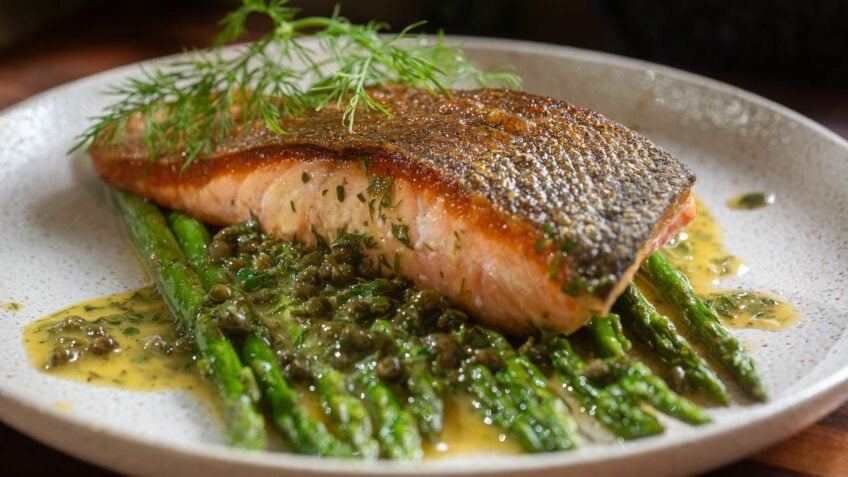
The Secret to Perfect Crispy Salmon Skin Every Time
If your salmon skin always turns out soggy and grey, this is the recipe that fixes that.
Three small changes, and you get that golden, crackling skin every single time. No fancy equipment, no chef school required.
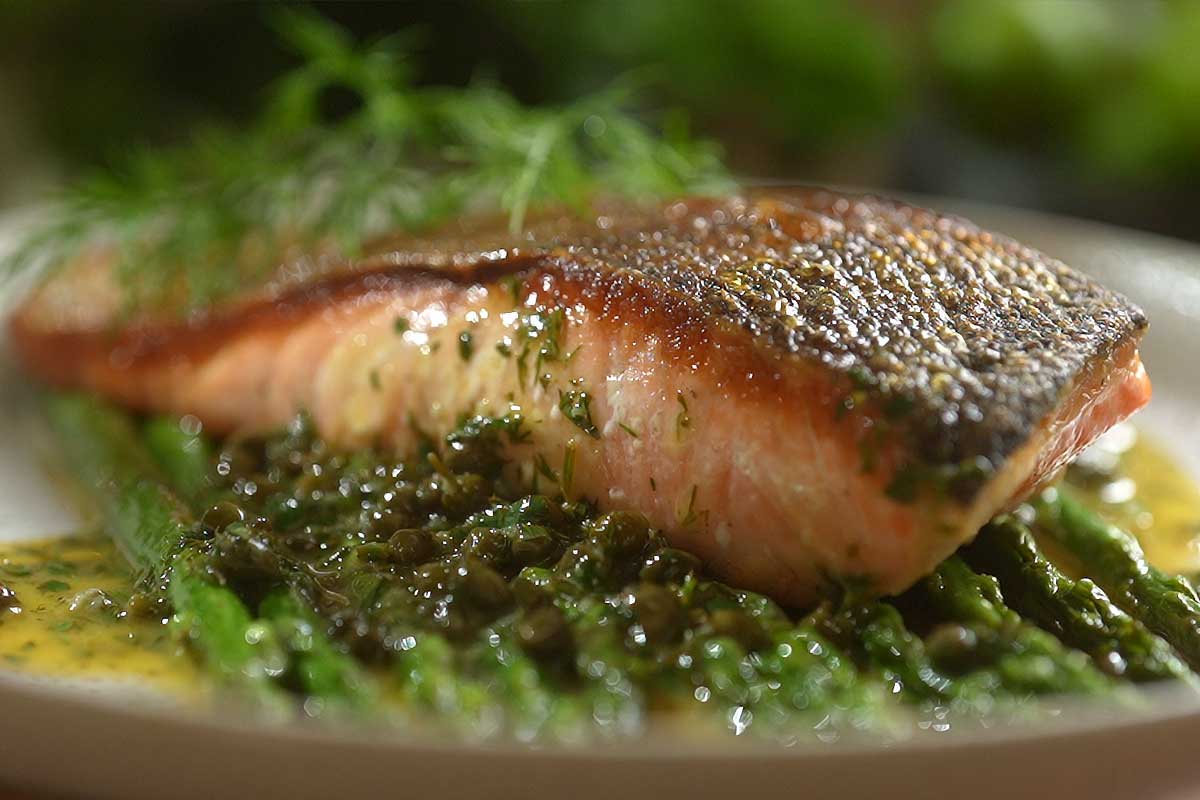
This is one of those meals that feels fresh, light and a little bit luxurious without making life hard. One pan, 15 minutes, and the asparagus soaks up every drop of that lemony butter sauce.
Why Most Home Salmon Fails
Wet skin is the number one reason home salmon turns out disappointing.
Putting wet salmon into a hot pan is like trying to fry a wet sponge. You just get steam and a grey, soft skin that sticks to everything.
The fix is almost embarrassingly simple. Pat the skin completely dry with paper towel, season just before it hits the pan, and let the heat do the rest.
Press It Flat for 20 Seconds
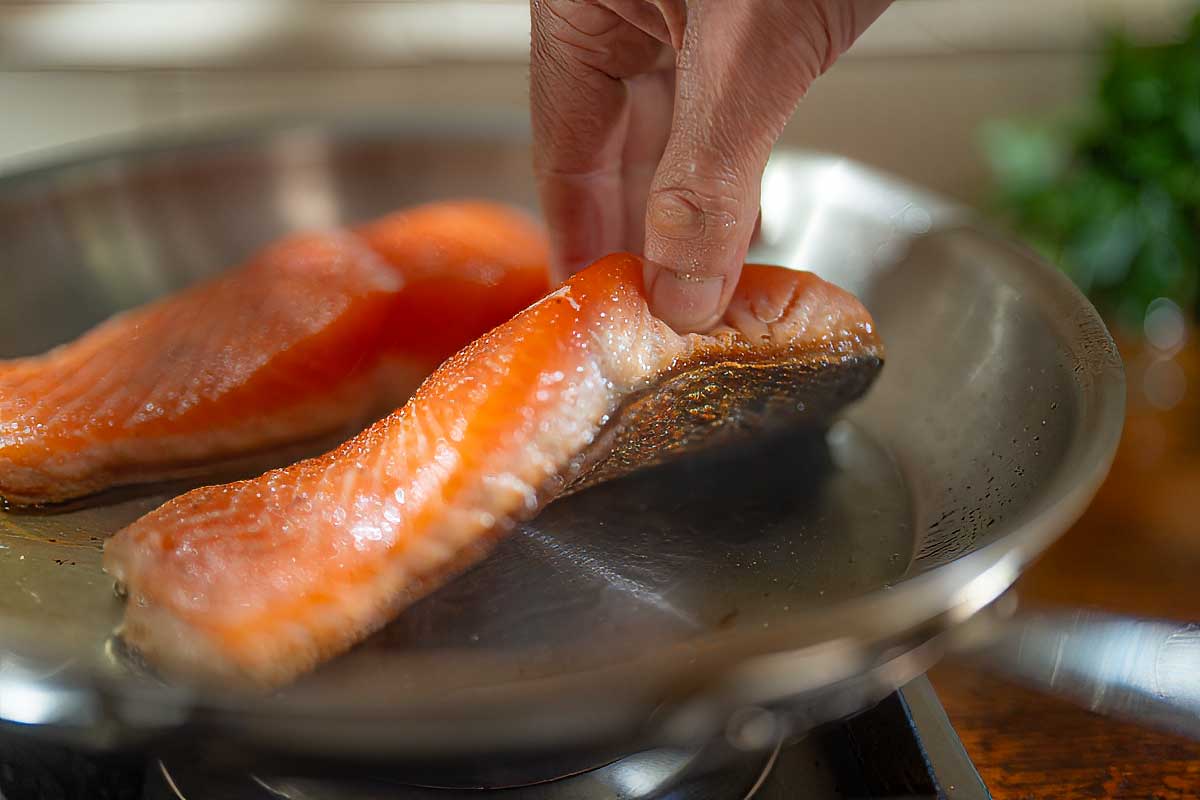
Salmon skin curls the moment it hits the pan. When it curls, it loses contact with the heat, and that’s where the patchy, uneven crispiness comes from.
Think of it like ironing a shirt. You have to hold it flat or you just get creases.
Press the fillet gently with your fingers or a spatula for the first 20 seconds. Full contact equals full crisp. That’s the whole secret.
Cook 90% on the Skin Side, Then Rest Skin Up
Most people flip too early and undo all their work.
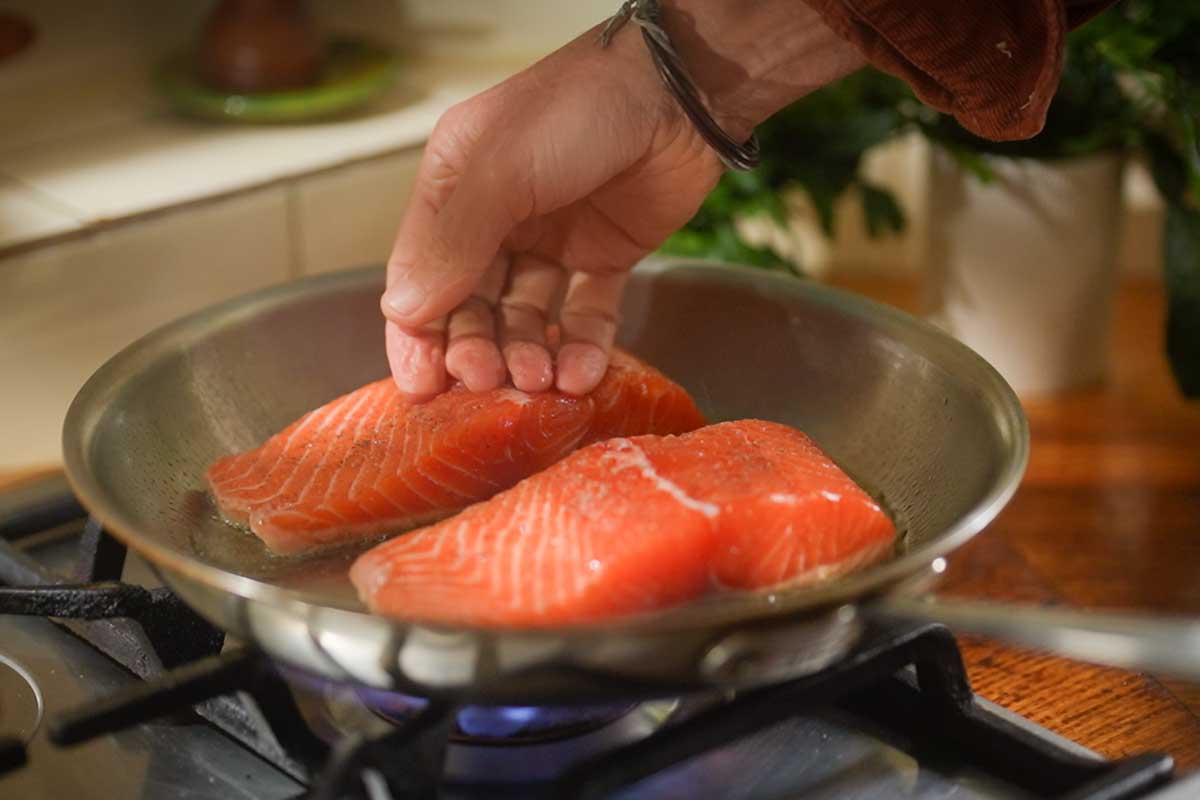
The flesh side only needs 30 to 60 seconds. The skin side does all the heavy lifting and is the hero of this dish.
Five to seven minutes skin down, flip for 30 seconds, then rest skin-side up so it stays crisp and proud of itself. Take it off while the centre is still slightly translucent. It keeps cooking as it rests and stays juicy, not sad and chalky.
The Lemon Butter Sauce That Ties It All Together
While the salmon rests, the asparagus goes into the same pan.
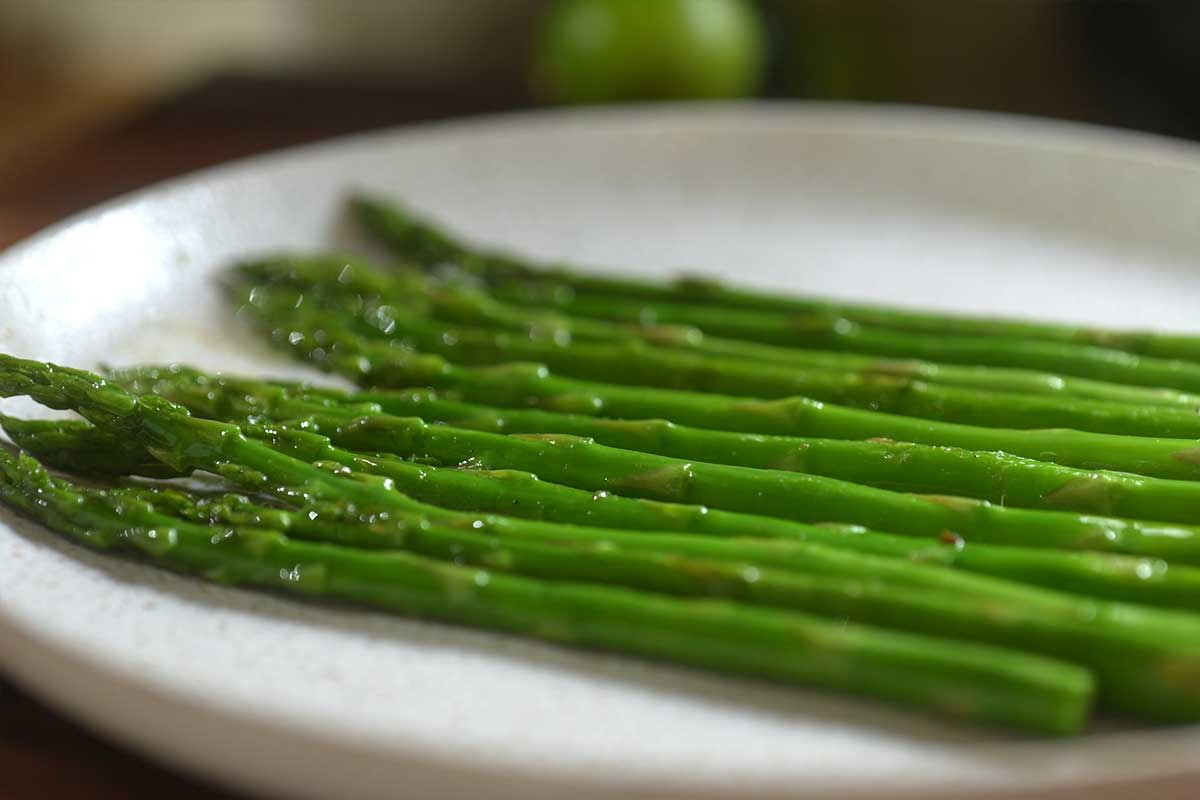
Three to four minutes over medium heat, turning often, until just tender with a little bite left and placed on warm serving plates.
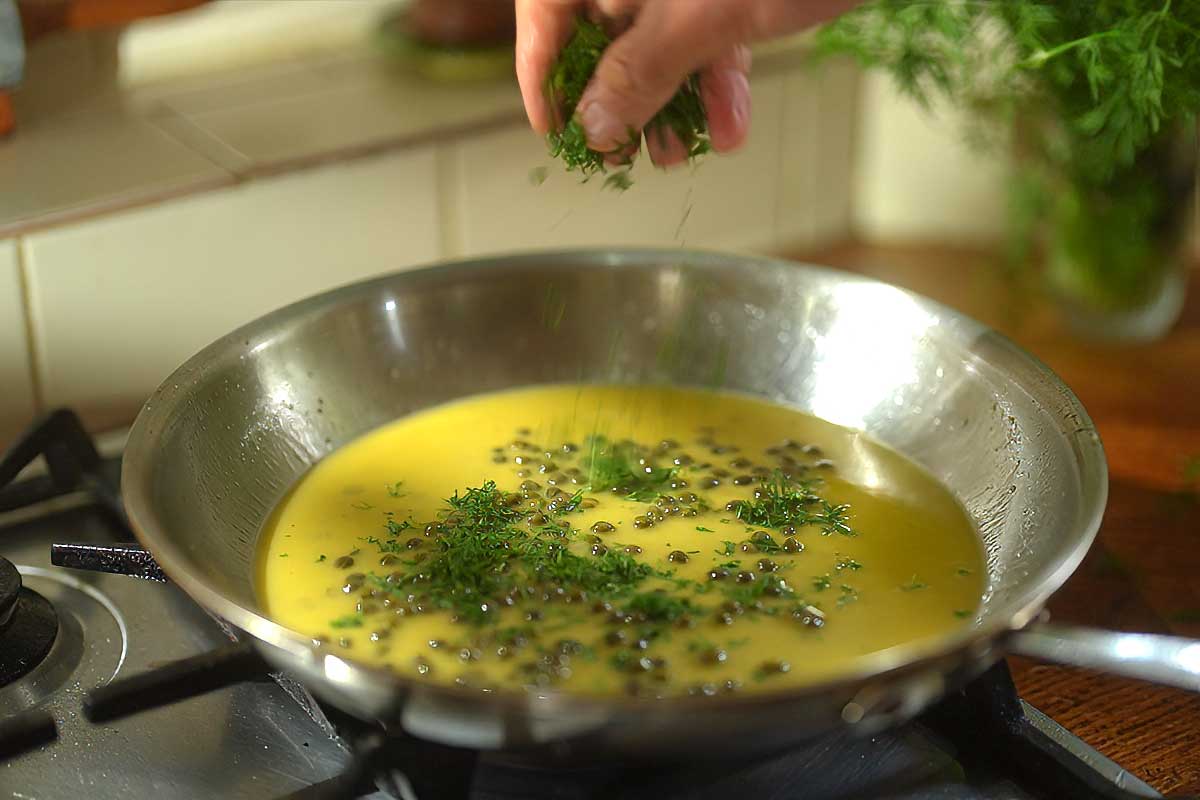
Then the garlic, capers, white wine, lemon juice and cold butter go in, whisked together into something glossy and silky.
Dill and parsley finish it off. It takes about two minutes and it’s the kind of sauce that makes people think you’ve been cooking for hours.
Cooking Tips
Dry the salmon obsessively. More than you think you need to. Use two or three sheets of paper towel and really press it down onto the skin.
Season just before the pan, not before. Salt draws moisture out of the skin. Season at the last second.
Don’t move the salmon once it’s in the pan. Leave it completely alone. The skin releases naturally when it’s ready.
Use cold butter cubes for the sauce. Cold butter whisked into a warm pan creates an emulsified, glossy sauce. Soft or melted butter just makes it greasy.
Spoon the sauce over the flesh, not the skin. You’ve worked hard for that crispiness. Don’t drown it at the last second.
Ingredient Swaps
No asparagus? Broccolini, green beans or thinly sliced zucchini all work beautifully in the same pan with the same timing.
No white wine? A splash of extra lemon juice and a little chicken stock gives a similar result.
No capers? Finely chopped green olives give a similar briny, savoury depth.
No fresh dill? Flat leaf parsley alone works well. Dill brings a particular freshness to salmon that’s worth seeking out, but it’s not essential.
Common Mistakes
Not drying the skin enough. This is the single biggest mistake. Soggy skin cannot crisp up no matter how hot the pan is.
Moving the salmon around in the pan. Leave it. It will release when it’s ready. Poking and sliding it around prevents the skin from forming a proper crust.
Overcooking the salmon. Pull it when the centre still looks slightly underdone. Residual heat finishes the job while it rests.
Resting it skin-side down. Always rest salmon skin-side up. Skin facing down steams itself soft on the plate.
What to Serve With It
The asparagus and lemon butter sauce makes this a complete meal on its own for two.
Steamed rice or creamy mashed potato alongside soaks up the extra lemon butter beautifully.
A simple green salad keeps things light if you want to keep the meal feeling fresh.
Crusty bread for mopping up the sauce. Never a bad idea.
Storage
Salmon is best eaten fresh. The skin will not stay crispy once stored.
Fridge: Leftovers keep for up to 2 days covered. Reheat gently in a pan over low heat rather than the microwave to avoid rubbery texture.
The lemon butter sauce does not store well. Make it fresh each time as it only takes two minutes.
FAQs
How do I know when the salmon is cooked?
Look at the side of the fillet. When the colour has changed from translucent pink to opaque about three quarters of the way up, it’s time to flip. The centre should still look slightly underdone when you remove it from the pan. It finishes cooking as it rests.
What temperature should salmon be cooked to?
For a juicy, slightly medium result, aim for an internal temperature of around 125°F / 52°C. For fully cooked salmon, 145°F / 63°C. Most people prefer salmon pulled slightly early at the lower temperature.
Can I use frozen salmon?
Yes, but thaw it completely in the fridge overnight first and dry it very thoroughly before cooking. Frozen salmon releases more moisture so the drying step is even more important.
Why does my salmon stick to the pan?
Either the pan wasn’t hot enough before the salmon went in, or you tried to move it too early. Let the pan heat properly over medium heat for a minute before adding the oil and salmon. Then leave it completely alone until it releases naturally.
Is this recipe gluten free?
Yes, completely gluten free as written. Just check the white wine label if you’re being strict, though most dry white wines are naturally gluten free.
A Quick Dinner That Feels Like a Proper Treat
The salmon stays juicy, the skin turns golden and crisp, and the asparagus soaks up every drop of that lemon butter.
It’s healthy food that still feels like a proper dinner, not rabbit food pretending to be a meal.
Date night, weeknight, guests or just yourself on a Tuesday. This one works every time.
 By
By 


You must be logged in to post a comment