
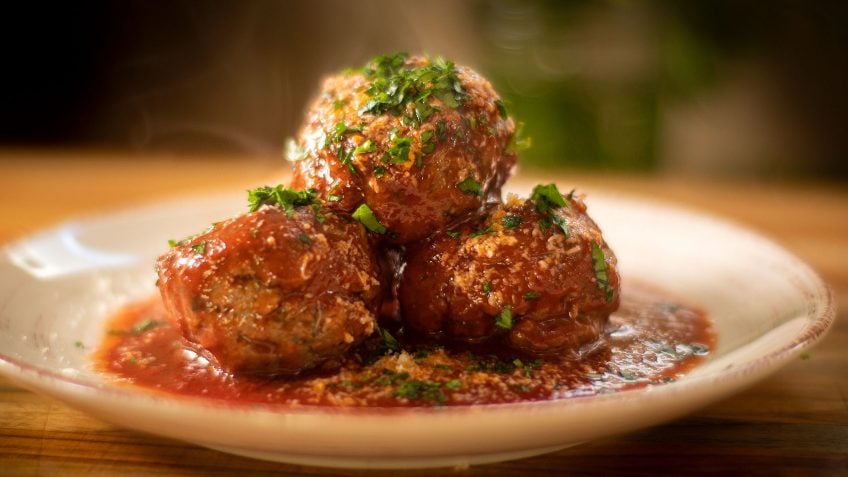
Meatballs are one of those foods that are either incredible or just plain disappointing.
There’s nothing worse than a tasteless, dry meatball. Sadly, that’s what a lot of restaurants seem to serve.
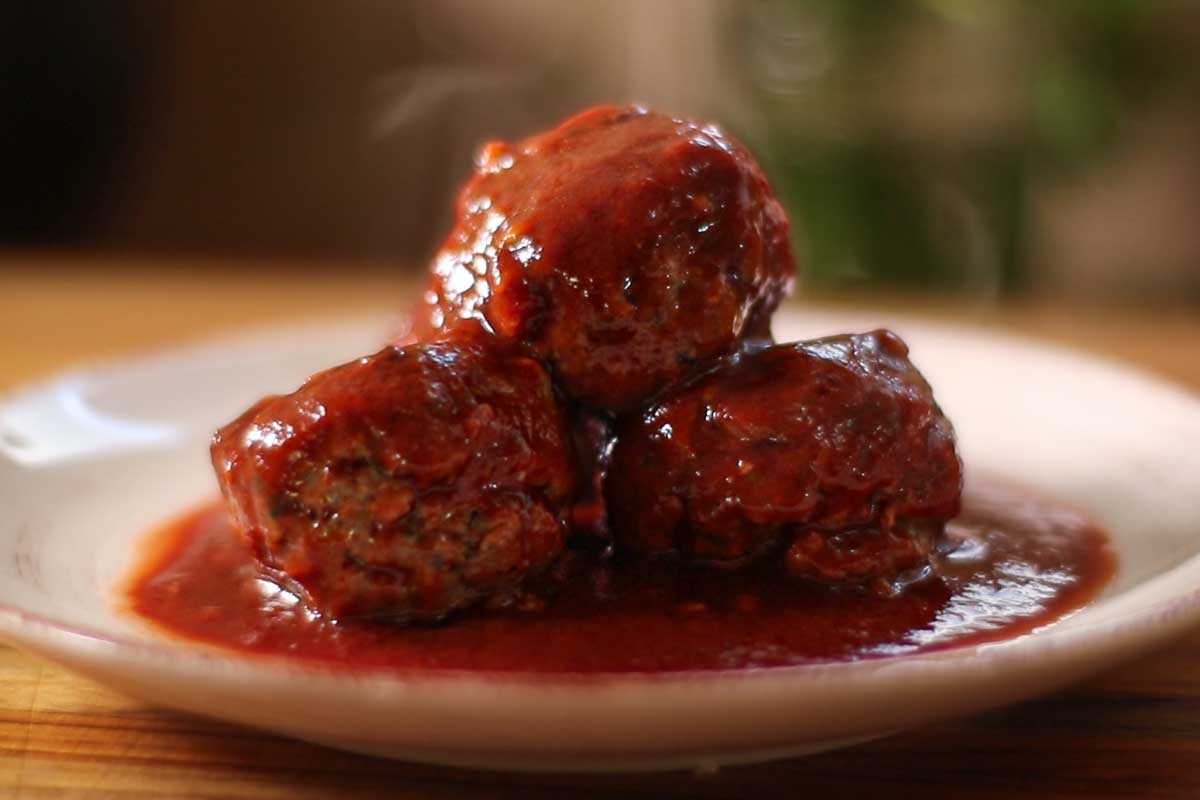
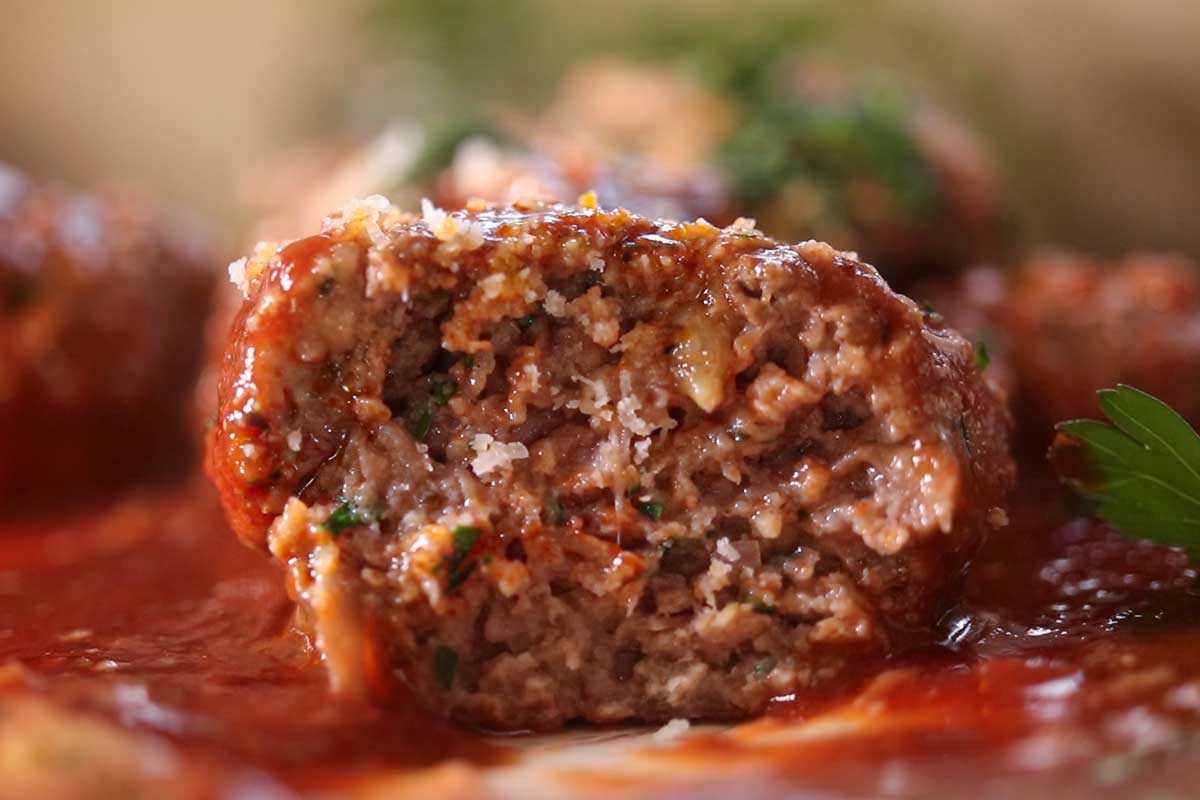
These Italian style meatballs are different. They’re juicy, packed with flavour, and once you know the secrets behind them, you’ll never go back to the basic version.
Why These Meatballs Are Different
The biggest mistake people make is starting with the wrong meat.
Skip the pre-packaged supermarket mince. It’s often made from cheap cuts with the wrong fat ratio, and that’s exactly why so many homemade meatballs end up dry and bland.
Talk to your butcher instead. Ask them to mince the meat fresh for you, and aim for around 15 to 20 percent fat content.
The combination of beef and pork is key. Beef brings the flavour, pork brings the moisture and tenderness together in every bite.
The Secret Ingredients That Make All the Difference
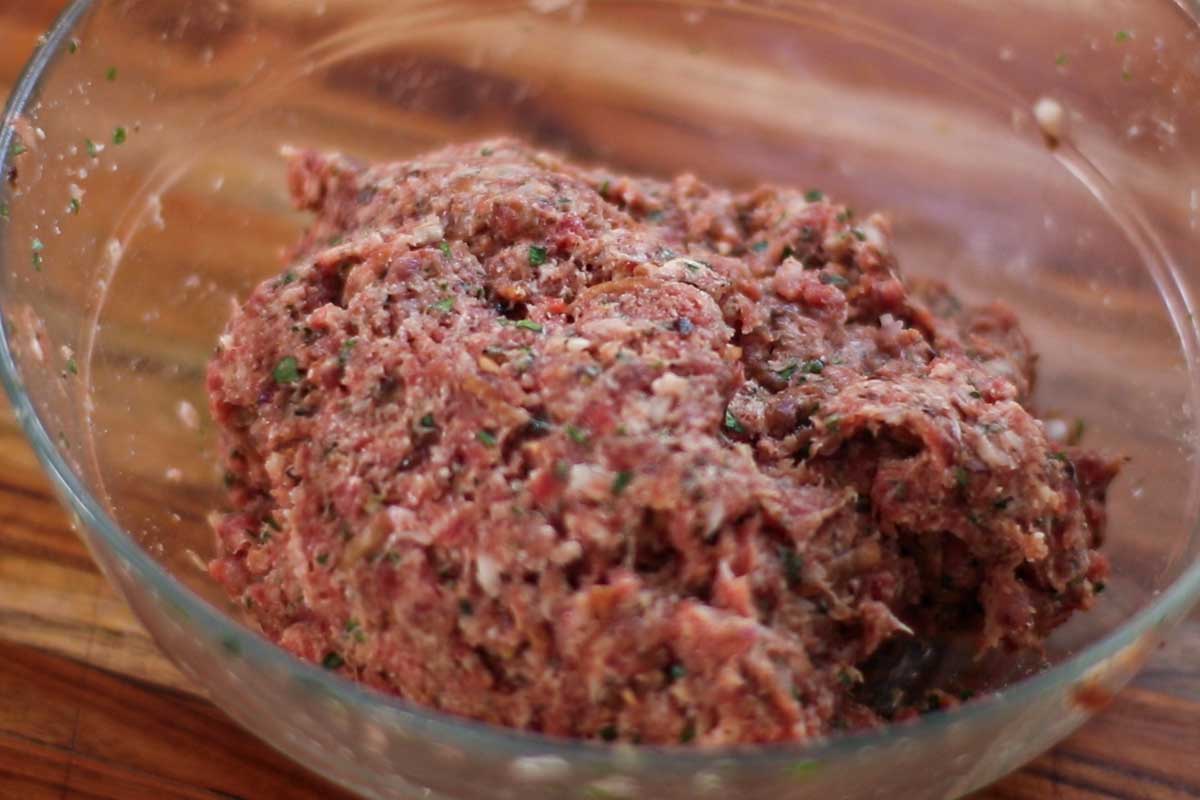
Brown bread soaked in full cream milk is the classic Italian panade, the technique that keeps the inside of each meatball incredibly soft.
Brown bread works better than white because it holds more fibre, and that fibre traps moisture inside the meat as it cooks.
Grated mushrooms are the other game changer. They disappear into the mixture completely, but they quietly boost the umami and help hold the juiciness throughout the cooking process.
If your butcher carries pancetta, ask them to mince it for you on the spot. It saves you time and adds a layer of richness you simply can’t get from regular bacon.
Tips for the Best Results
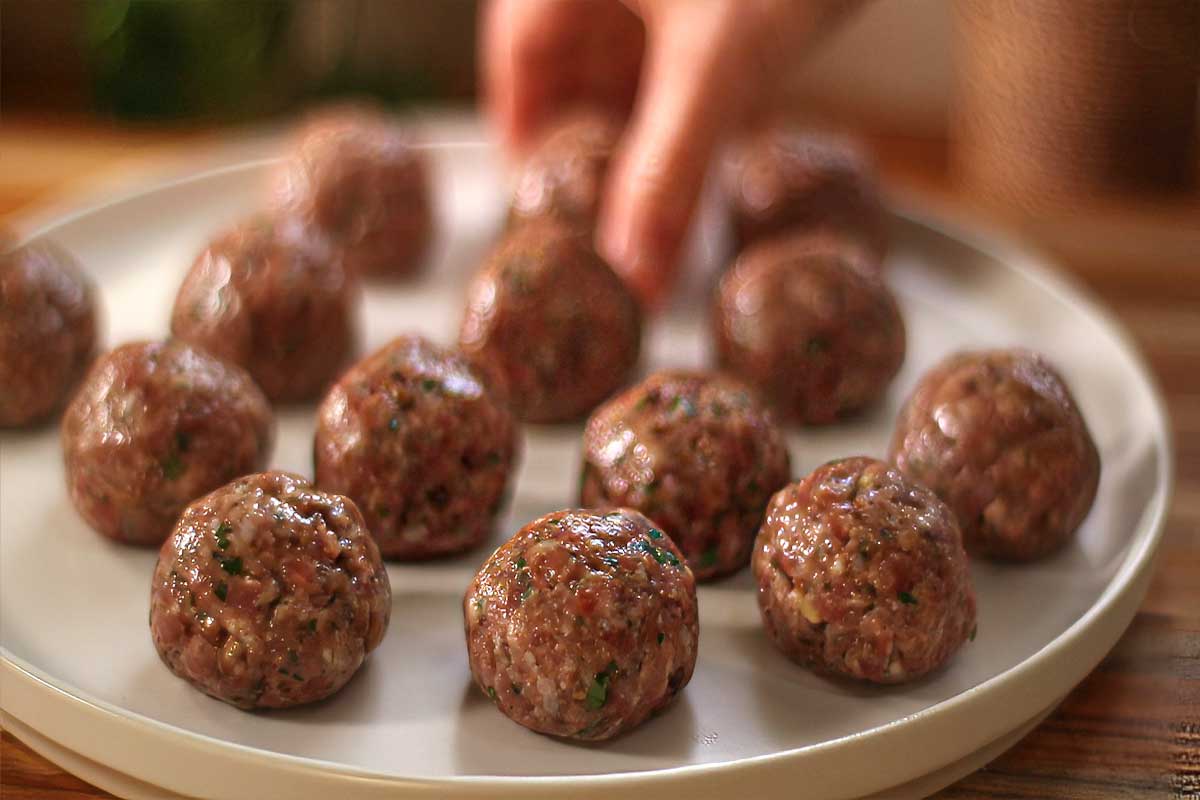
- Weigh your meatballs. Aim for 58 grams each. Consistent size means consistent cooking time, and you’ll get about 14 meatballs from this recipe.
- Oil your hands, not the pan. Rub a little olive oil onto your palms before rolling each meatball. They’ll form cleanly and won’t stick to your skin.
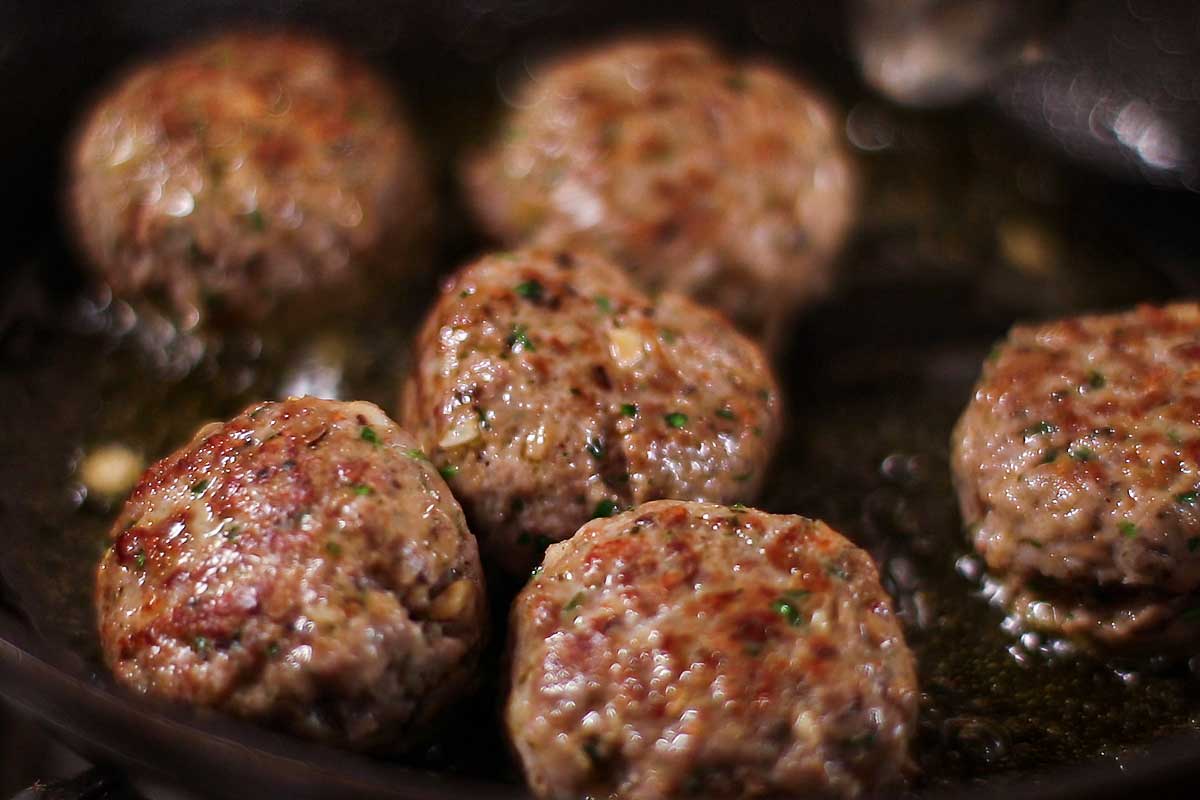
- Don’t crowd the pan. Cook in two batches. Crowding the pan drops the temperature and you’ll steam the meatballs instead of browning them.
- Baste as they brown. Tilt the pan and spoon the hot oil over the meatballs as they cook. This helps them brown evenly without rolling them too aggressively.
- Rest them on a warm plate. Once browned, move the meatballs to a warm plate in a warm spot. This step helps the juices redistribute before they go into the sauce.
Common Mistakes to Avoid
Overcooking in the sauce is the number one thing that ruins an otherwise great meatball.
Once the meatballs are browned, they are essentially cooked. All they need in the marinara is 20 to 30 seconds, just enough to warm through. Any longer and all those juices seep out into the sauce, leaving you with dry meatballs.
Don’t skip the deglaze step. After browning, there’s a layer of incredible caramelised flavour stuck to the bottom of that pan. A splash of red wine lifts all of it straight into your sauce.
Use a wine you’d actually drink. A Cabernet Sauvignon or Shiraz works perfectly here. If you’re avoiding wine, use a good beef stock instead.
Ingredient Swaps
No pancetta? Finely chopped streaky bacon or guanciale both work well in its place.
Pecorino can be swapped for Parmigiano Reggiano if that’s what you have on hand. The flavour will be slightly milder but still excellent.
For a gluten-free version, swap the brown bread for a thick slice of gluten-free bread. Soak it the same way and it will do the same job.
What to Serve With Italian Meatballs
The classic move is spaghetti, but these meatballs are honestly just as good served on their own as a starter, straight from the pan with crusty bread to mop up the marinara.
Rigatoni or pappardelle also work beautifully if you want a chunkier pasta pairing.
A simple green salad on the side keeps things balanced without competing with the richness of the meatballs.
Storage
Leftover meatballs keep well in an airtight container in the fridge for up to 3 days.
They also freeze brilliantly. Freeze them in the marinara sauce in a zip-lock bag or container for up to 3 months. Thaw overnight in the fridge and reheat gently on the stovetop, keeping that 30-second rule in mind.
Frequently Asked Questions
Can I use just beef with no pork? You can, but the texture won’t be quite as tender. Pork fat is softer and melts into the mixture differently to beef, so the combo really does matter here.
Do I have to fry them? Can I bake them instead? You can bake at 200C / 400F for about 15 minutes, but you’ll lose the browned crust and the pan drippings for the deglaze. Frying gives a result that baking simply can’t match.
Can I make the mixture ahead of time? Yes. Mix everything together, cover, and refrigerate for up to 24 hours before rolling and cooking. The flavours actually develop more overnight.
What if I can’t find guanciale or pancetta? Ask your butcher for any cured pork product with a good fat content. In a pinch, finely diced streaky bacon works fine.
 By
By 
You must be logged in to post a comment