

The Side Dish That Steals the Show
Garlic butter mushrooms are the side dish that quietly steals the show. Deeply golden, nutty, and finished with a splash of balsamic vinegar.
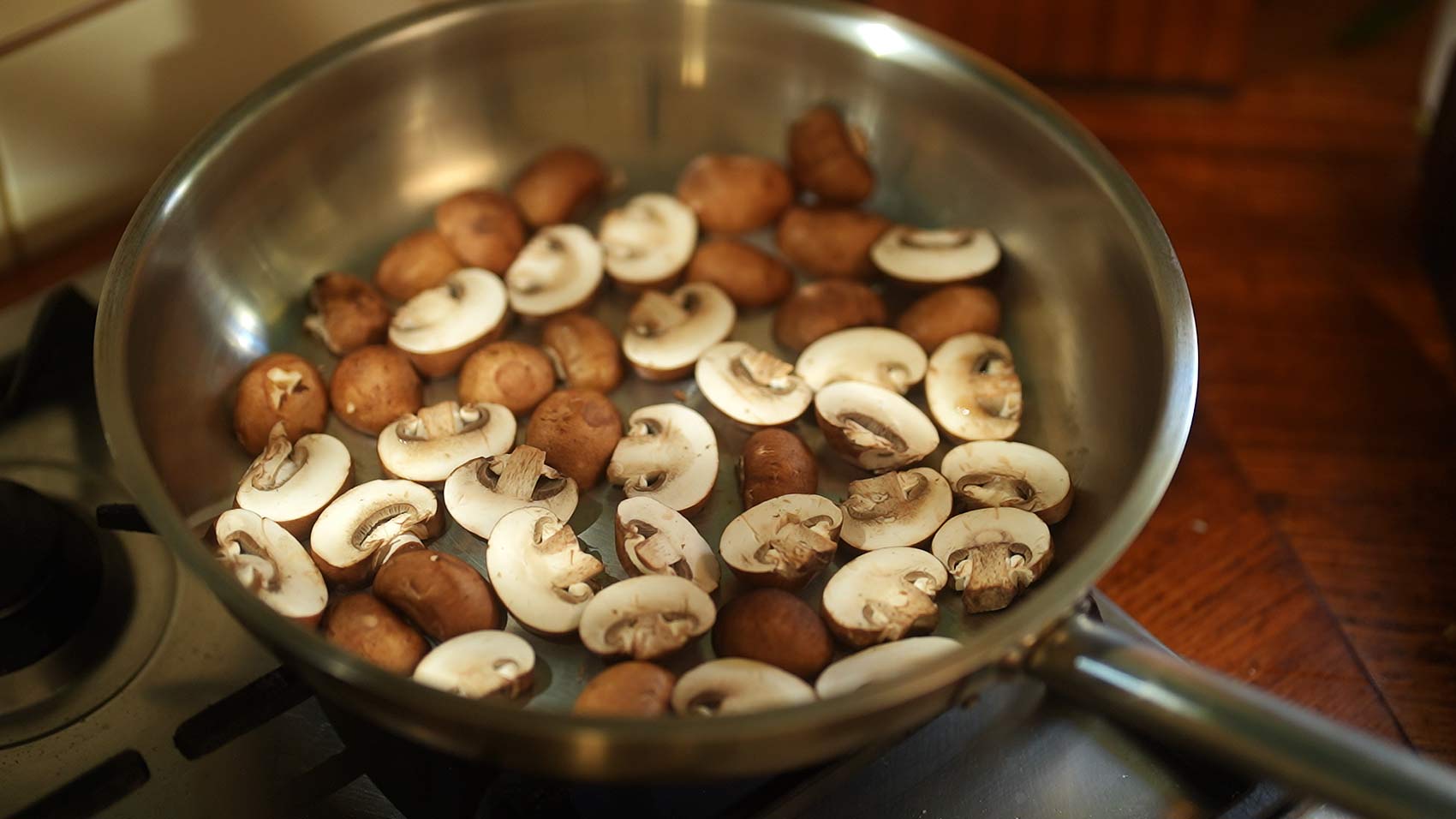
The trick is the dry frying pan. No oil, no butter at the start. There’s a few reasons to do this.
Mushrooms are about 90% water, so you let them release it and cook it off first. Only then does the oil go in, and that’s when the real browning starts.
Most people add fat straight away and end up with grey, soggy mushrooms. Do it the other way round and they turn golden every time.

Why the Dry Pan Works
Browning is the Maillard reaction, and it only really gets going at around 280°F / 140°C and above.
Here’s the catch. While there’s still water in the pan, the surface can’t climb past 212°F / 100°C, because that’s where water boils.
So as long as mushrooms are leaking liquid, they’re steaming, not browning. Getting rid of that water first is the whole game.
There’s a sponge problem too. Raw mushrooms are full of tiny air pockets, and if oil goes in early, they drink it straight up before the water ever comes out.
Cook them dry and those pockets collapse. Now the oil coats the outside instead of soaking in, and that’s what fries the surface golden.
The Mushroom That Can’t Be Overcooked
Vegetables have cell walls made of cellulose and pectin. Cook them too long and the pectin breaks down, so they go to mush.
Mushrooms aren’t vegetables. They’re fungi, and their cell walls are built from chitin, the same tough stuff found in crab shells and insect wings.
Chitin barely softens with heat. That’s why mushrooms stay meaty and springy even after 20 minutes in the pan, and why you can push them hard for colour. That bite makes all the difference.
They’re also loaded with natural glutamates and guanylates, the compounds behind umami. Browning concentrates them, which is why a golden mushroom tastes almost meaty.

Small Fungus, Big Nutrition
Mushrooms are low in calories but surprisingly rich in B vitamins, potassium and selenium.
They’re also one of the only non-animal foods that can make vitamin D. Leave them gill-side up in sunlight for an hour or so before cooking and their vitamin D levels can jump dramatically.
It’s an easy vegetarian side that pulls its weight on the plate.
Cooking Tips
Use the biggest frying pan you own. Mushrooms shrink by almost half, but at the start they need room.
Slice them 5 to 7mm thick. Too thin and they shrivel to leather, too thick and the centres stay watery.
Once the oil is in, resist the urge to stir. Leave them alone until they’re deeply golden underneath.
Season after the browning, not before. Salt pulls out moisture, and you want that moisture gone before you add more.
Slice the garlic rather than crushing it. Slices cook evenly and turn sweet, while crushed garlic catches and burns in seconds.
Drop the heat to medium-low before the butter goes in. Butter’s milk solids start to burn at around 350°F / 175°C.
Add the balsamic last and let it sizzle for just a few seconds. You want a glaze, not a puddle.

Ingredient Swaps
Swiss brown, button and portobello are actually the same species, Agaricus bisporus, just picked at different ages. Any of them work here.
For more depth, mix in some oyster or shiitake mushrooms. Shiitake stems are woody, so trim them off.
No thyme? Rosemary works, just use less. A small sprig is plenty.
Swap the balsamic for a squeeze of lemon or a splash of sherry vinegar for a sharper finish.
For a dairy-free version, use a good olive oil instead of butter and add the garlic a little earlier.
Common Mistakes
Adding fat first. The mushrooms soak it up, then the water comes out and everything stews.
Crowding the pan. Trapped steam has nowhere to go, so the mushrooms boil in their own juices.
Stirring constantly. Every time you move them, you break the contact that builds the crust.
Adding garlic too early. It goes bitter long before the mushrooms are ready.
Soaking them in water. A quick rinse is fine, but don’t leave them sitting in a bowl.
![Butter, sliced garlic and thyme added to the golden mushrooms]](https://b3067249.assetcdn.net/2.0/3067249/wp-content/uploads/2026/10/Garlic-Butter-Mushrooms-5.jpg?lossy=0&strip=1&webp=1)
What to Serve With It
These are made for a good steak. They’re just as happy beside roast chicken or a pork chop.
Pile them on thick toast with a smear of ricotta for a proper breakfast.
Toss them through pasta, fold them into an omelette, or eat them straight from the pan with a fork. Nobody’s judging.
Storage and Reheating
Keep leftovers in an airtight container in the fridge for up to 3 to 4 days.
Reheat in a hot frying pan for a minute or two. The microwave works, but it softens them and you lose the crisp edges.
Cooked mushrooms freeze for up to 3 months. They’ll be softer after thawing, so use them in sauces, soups or risotto.
![Balsamic vinegar sizzling and reducing in the pan]](https://b3067249.assetcdn.net/2.0/3067249/wp-content/uploads/2026/10/Garlic-Butter-Mushrooms-6.jpg?lossy=0&strip=1&webp=1)
FAQs
Should I wash mushrooms or just wipe them?
Give them a quick wash. Tests have shown mushrooms absorb only a tiny amount of water when rinsed, and the dry pan cooks it off anyway.
Why are my mushrooms grey and soggy?
Usually it’s fat added too early or a crowded pan. Both trap moisture, so the mushrooms steam instead of brown.
Do I need to peel the mushrooms?
No. The skin holds plenty of flavour. Just trim any dry or woody stem ends.
Can I use pre-sliced mushrooms?
You can, but they’re often cut thin and dry out faster. Keep an eye on them so they don’t turn leathery.

Can I make them ahead?
Yes. Cook them up to the balsamic stage, then reheat in a hot pan and add the parsley just before serving.
How many mushrooms do I need per person?
Allow about 4oz / 125g raw per person for a side. They shrink a lot, so it always looks like more than you need.
Golden, Not Grey
It’s one small change in order. Dry pan, water out, then oil, then butter and garlic.
Get that right and you’ll never make sad, soggy mushrooms again.
 By


You must be logged in to post a comment