
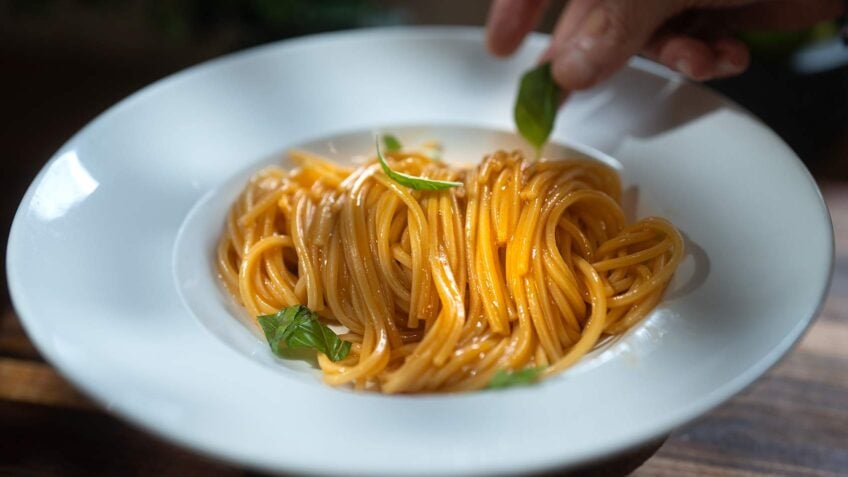
The Pasta That Tastes Like Summer by the Sea
The world is too loud right now.
Sometimes you just need to unplug. No heavy sauce. Just tomatoes and water, and twenty minutes of quiet cooking that feels like escaping modern life entirely.
Pasta al Brodo di Pomodoro is a deceptively simple pasta where tomatoes, garlic and basil are transformed into a light, fragrant broth, then emulsified with olive oil into glossy, silky spaghetti. Fresh, delicate and deeply comforting. Like summer by the sea without the heaviness of a traditional sauce.
The Science of Tomato Water
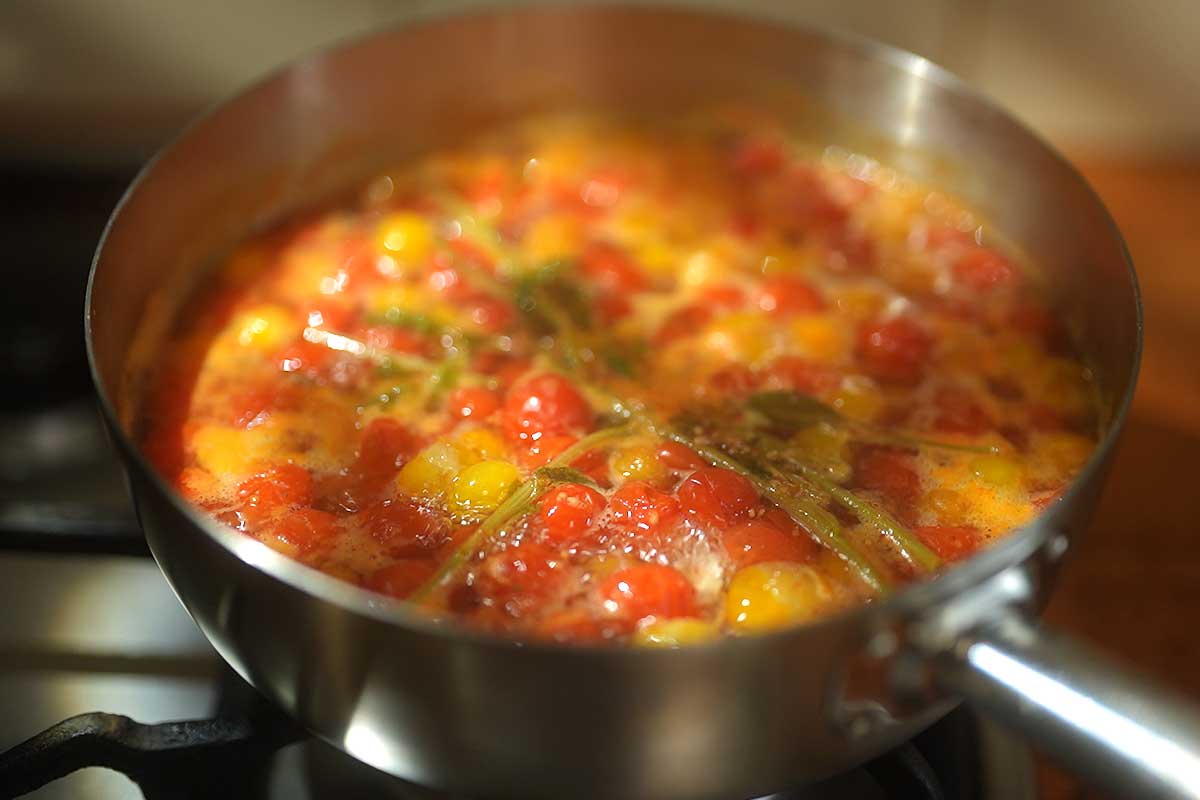
A tomato is 95 percent water. But water the plant filtered up from the earth, slowly and deliberately, absorbing minerals, sugars and flavour compounds along the way.
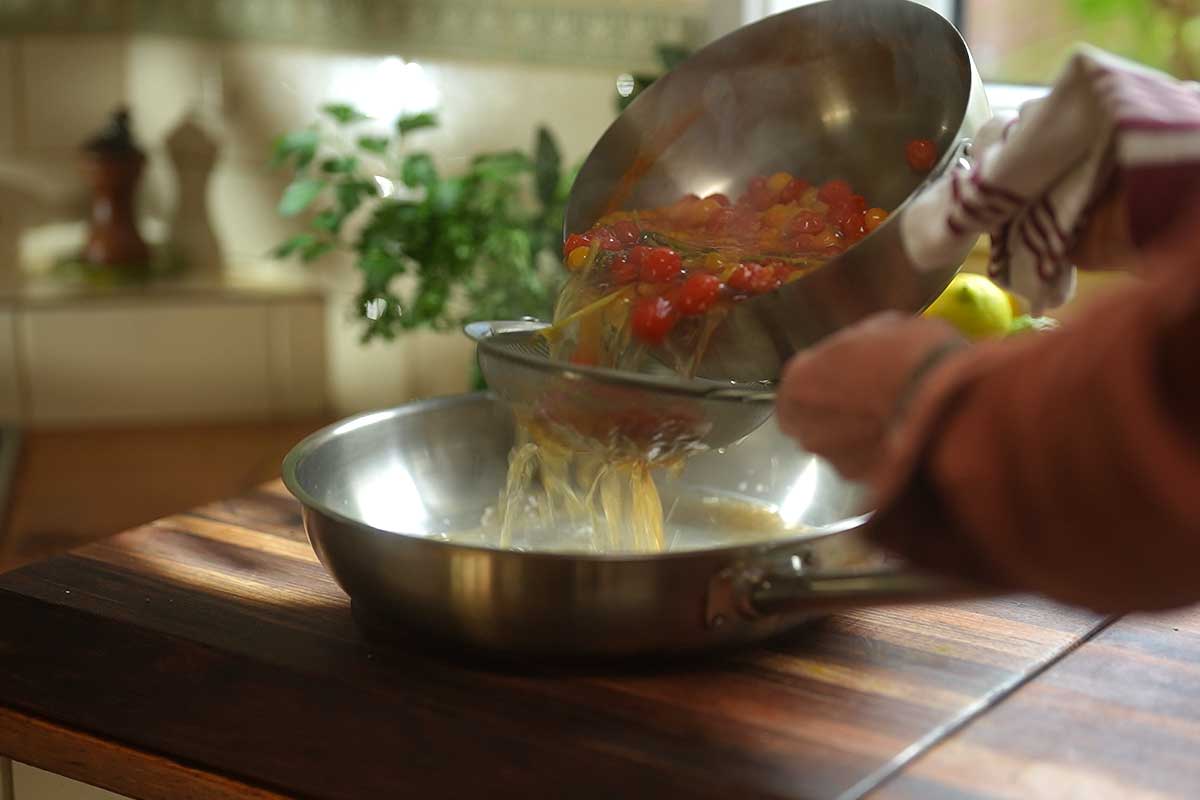
When you simmer cherry tomatoes gently and strain them without pressing too hard, what comes through the sieve is that pure essence. Clear, golden, faintly sweet and intensely flavoured. It looks like nothing and tastes like everything a tomato is.
Don’t press the tomatoes too hard when straining. Forcing the pulp through the sieve releases bitter compounds and makes the broth cloudy. A gentle hand gives you clarity and sweetness.
The Invisible Umami Bomb Inside Every Tomato
Most people think the flavour of a tomato lives in the red flesh. It doesn’t.
The clear jelly surrounding the seeds contains far higher levels of free glutamic acid than the flesh itself. Glutamic acid is the same compound that makes parmesan, anchovies and soy sauce taste so deeply savoury. It’s basically nature’s MSG.
When you simmer the tomatoes gently and strain without pressing too hard, you’re not just making flavoured water. You’re extracting a pure, concentrated umami hit that’s almost invisible but completely responsible for why this broth tastes so much more complex than it has any right to.
That’s the science behind why this simple dish punches so far above its ingredients.
Cook the Pasta in the Broth
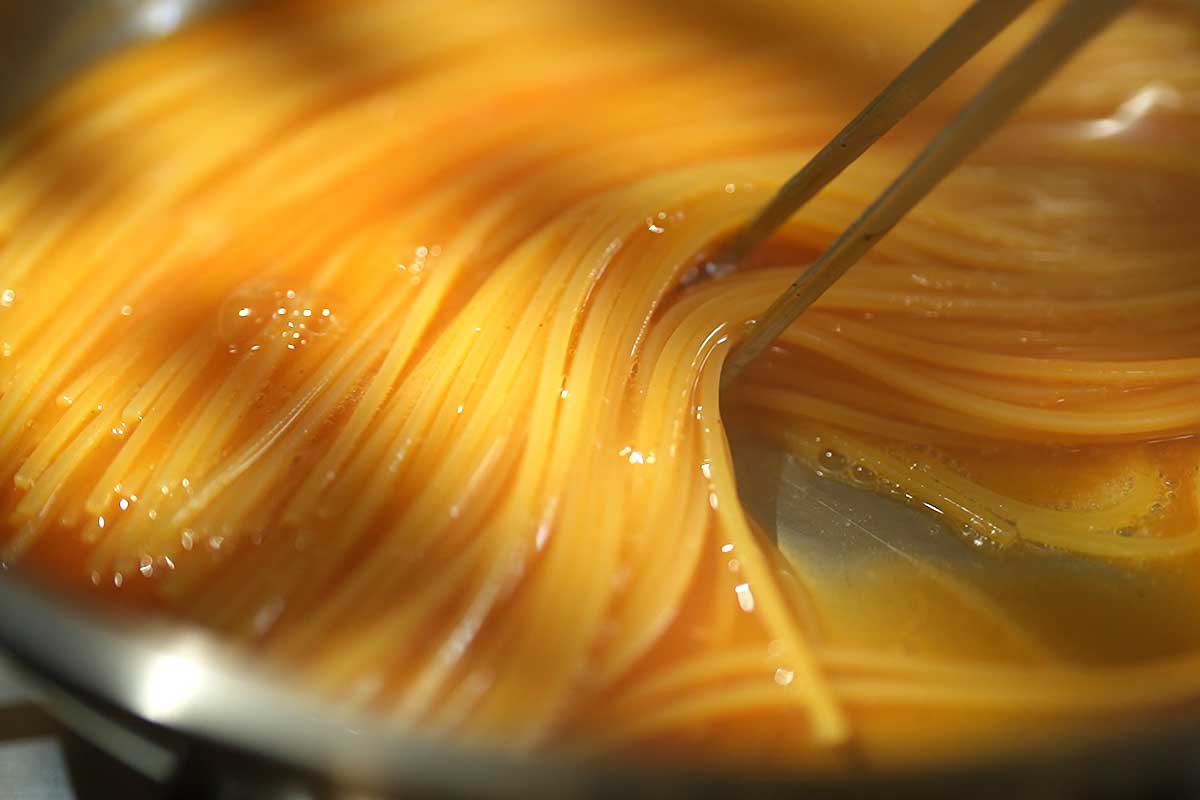
The spaghetti goes directly into the tomato broth and cooks there from start to finish, risotto-style.
As it cooks, the pasta releases its starch directly into the broth, gradually thickening it from a clear liquid into something lightly glossy and clingy. By the time the spaghetti is just under al dente, the broth has transformed into a sauce.
Stir often, add a splash of hot water if it reduces too quickly, and keep the heat gentle. This is slow, attentive cooking. It rewards patience.
The Olive Oil Emulsion That Changes Everything
The final step is where the magic happens.
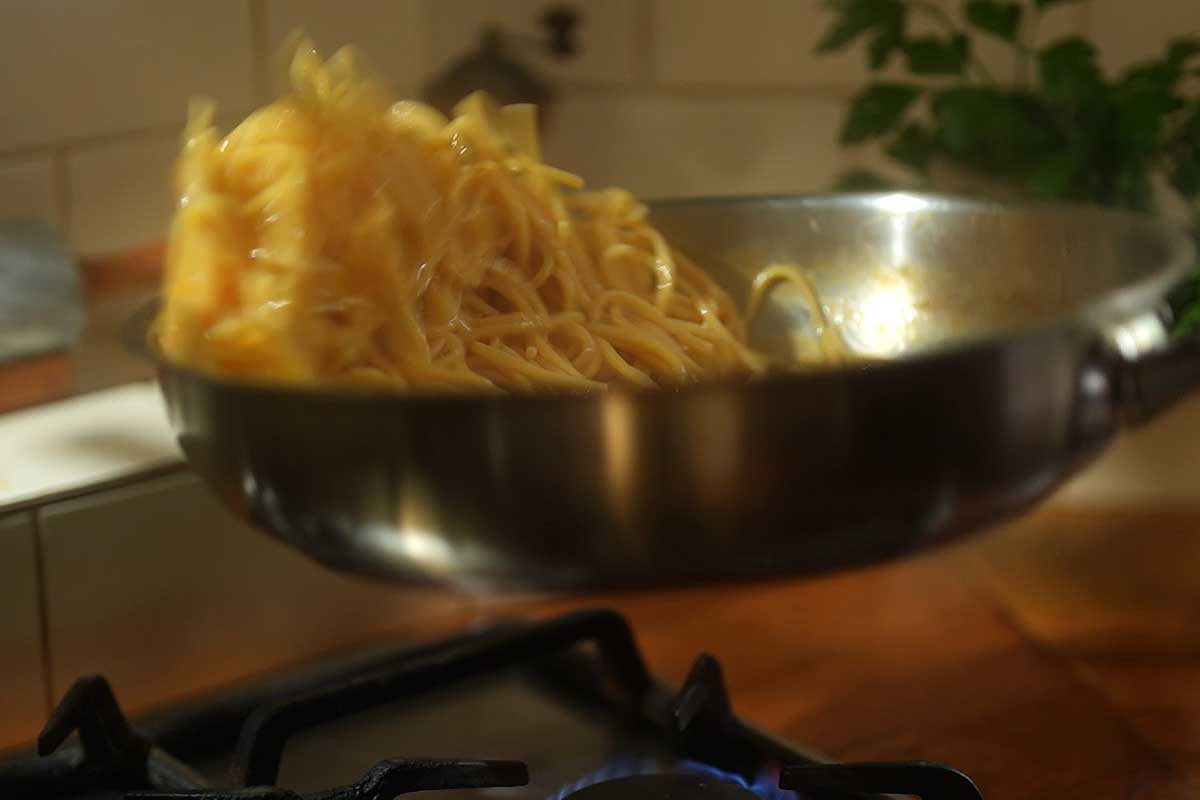
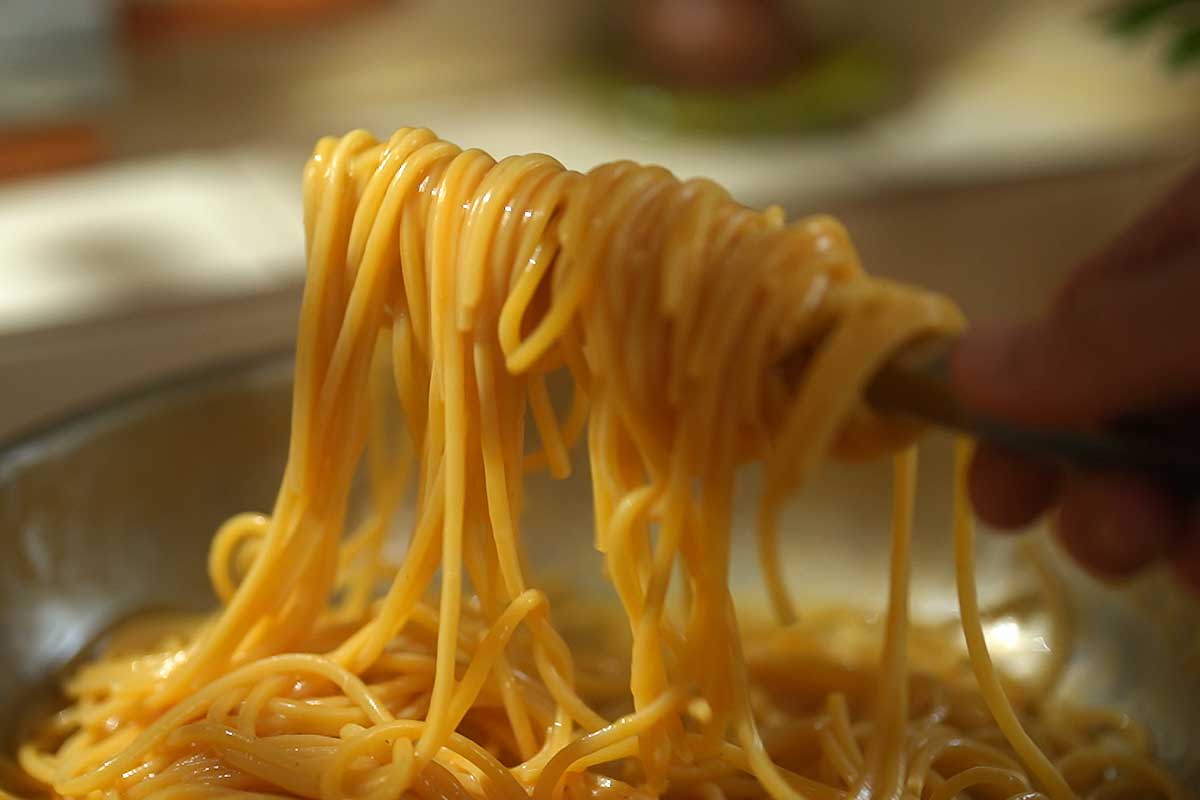
Once the pasta is just under al dente and the liquid has become lightly thickened, remove the pan from the heat. Then slowly drizzle in the extra virgin olive oil while tossing vigorously. The starch from the pasta and the tomato liquid combine with the oil to create an emulsion, turning everything from brothy and loose into glossy, silky and coating.
It looks like a transformation because it is one. The same principle that makes a great pan sauce work applies here. Movement, heat and starch binding with fat.
Use the Best Olive Oil You Have
This dish has nowhere to hide. There’s no heavy cream, no meat, no complex spice blend. It’s tomatoes, pasta and olive oil.
Which means the olive oil needs to be genuinely good. Grassy, slightly peppery, fragrant. The kind that makes you want to dip bread into it on its own.
A poor quality oil added in this quantity will make the pasta taste flat and oily rather than silky and bright. This is one of those recipes where good ingredients are the technique.
Cooking Tips
Use ripe, sweet cherry tomatoes. The quality of the broth depends entirely on the quality of the tomatoes. Mixed red and yellow gives a more complex, nuanced flavour.
Simmer the tomatoes gently, don’t boil aggressively. High heat makes the broth bitter and cloudy. Medium heat for twenty minutes gives you a clear, sweet, fragrant liquid.
Reduce the strained broth for five minutes before adding the pasta. This concentrates the flavour and gives you a more intensely flavoured base to cook the spaghetti in.
Stir the pasta often as it cooks, especially in the first few minutes. The starch that releases is what builds the sauce. Stop stirring and it sticks.
Add the olive oil off the heat and toss vigorously. If the pan is still over the heat when the oil goes in, it can break rather than emulsify.
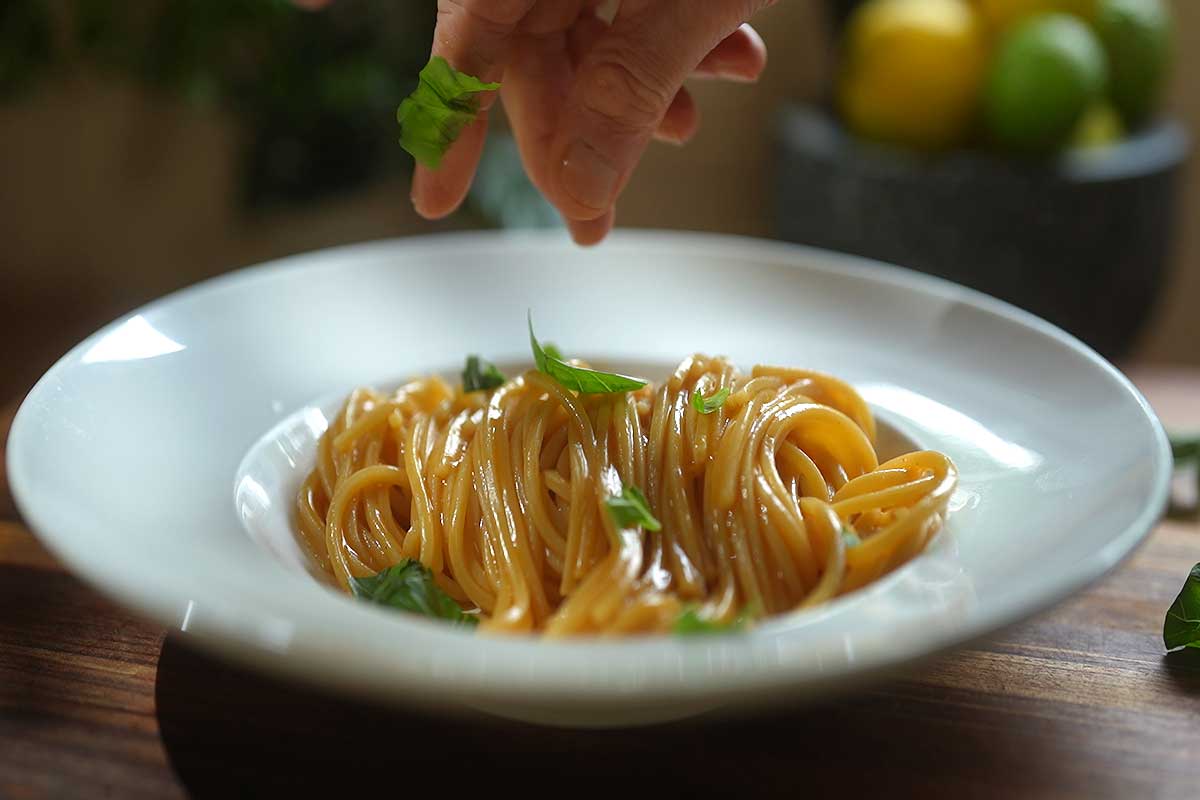
Tear the basil at the very end. Heat destroys the delicate aromatic compounds in fresh basil instantly. Add it after the oil, toss once, and serve immediately.
Ingredient Swaps
No cherry tomatoes? Ripe Roma tomatoes work well and give a deeper, slightly less sweet broth. Use the same weight and cut them into quarters before simmering.
No spaghetti? Vermicelli or thin linguine work beautifully. You need a long, thin pasta that the broth can coat evenly. Thick pasta shapes don’t suit this dish.
No fresh basil? Fresh basil is really the only option here. Dried basil in this dish is worth skipping entirely rather than substituting.
No pecorino? Parmesan works if you want to add cheese. But this dish is genuinely excellent without any cheese at all. The emulsified olive oil provides all the richness it needs.
Common Mistakes
Pressing the tomatoes too hard through the sieve. It clouds the broth and introduces bitterness. A gentle press and a patient hand gives you clarity and sweetness.
Boiling the tomatoes too hard. The broth should simmer quietly, not bubble aggressively. Gentle heat gives you a sweeter, cleaner flavour.
Adding the olive oil over heat. The emulsion breaks and you get oily pasta instead of silky pasta. Always remove from the heat first.
Using poor quality olive oil. In a dish this simple there is nothing to hide behind. The oil is half the sauce. Use the best you have.
What to Serve With It
This pasta is light and complete on its own. It doesn’t need a heavy side.
A simple green salad dressed with lemon and good olive oil alongside is all it needs.
Good crusty bread for any extra broth left in the bowl. Don’t waste it.
A glass of crisp white wine. Something with good acidity like Vermentino or Falanghina sits perfectly with the lightness of the dish.
Storage
This dish is best eaten immediately. The pasta continues to absorb the broth as it sits and the emulsion loosens and separates.
If you have leftover broth before the pasta stage, it keeps beautifully in the fridge for up to 3 days and can be used as a base for another pasta or a light soup.
Do not freeze the finished dish. The texture of both the pasta and the emulsified sauce suffers badly.
FAQs
Why is my broth cloudy?
It was either pressed too hard through the sieve or cooked at too high a temperature. Next time, let the tomatoes drain through the sieve under their own weight without pressing. Clarity comes from patience, not force.
Why did my olive oil not emulsify?
The pan was probably still too hot, or the pasta was overcooked and the starch had already broken down. Remove from the heat, let it settle for thirty seconds, then add the oil gradually while tossing with force. The starch in the pasta liquid is what holds the emulsion together.
Can I add protein to this dish?
You can, but it changes the character of the dish significantly. Poached prawns added at the very end work beautifully with the light broth. Burrata placed on top of the finished pasta adds richness without heaviness. Keep any additions gentle so the delicate tomato broth remains the star.
Is this dish suitable for vegans?
Yes, without the optional pecorino it is completely vegan. Just make sure the pasta you use is egg-free, which most dried spaghetti is.
What time of year is this dish best?
At the peak of summer when cherry tomatoes are sweet, ripe and abundant. The dish is built entirely around the quality of the tomato and summer fruit at its best is incomparable. Good quality tinned cherry tomatoes or passata can substitute in winter but it’s a different experience.
![Pasta al Brodo di Pomodoro twirled in bowl with fresh basil and olive oil]](https://b3067249.smushcdn.com/3067249/wp-content/uploads/2026/06/Silky-Tomato-Water-Spaghetti-7.jpg?lossy=0&strip=1&webp=1)
A Quiet Bowl of Summer
Early light on the bay. Slow waves. No one around.
This is that kind of food. Restrained, elegant and effortless. It doesn’t shout. It doesn’t need to.
Just tomatoes, water, good oil and patience. The simplest things, done with care, turning into something that tastes like summer remembered.
 By
By 
You must be logged in to post a comment