
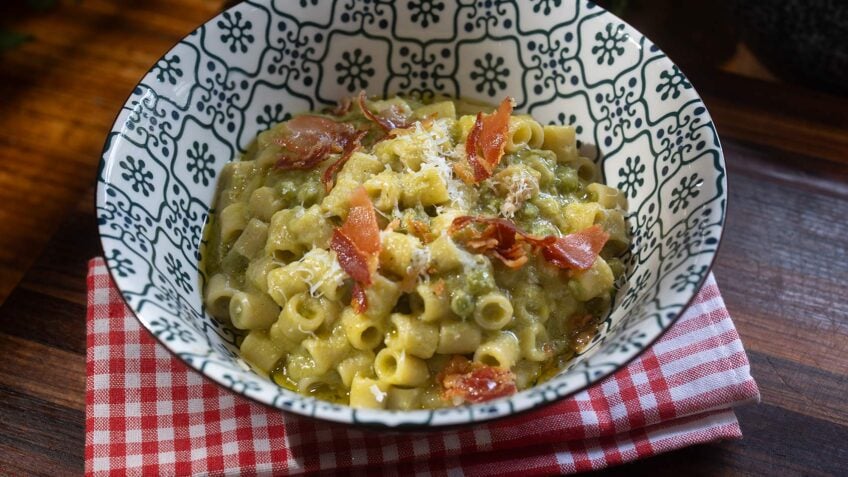
The One-Pan Italian Pasta That Doesn’t Need Cream
A humble Italian classic made with tiny pasta, sweet peas and cheese, all cooked together in one pan.
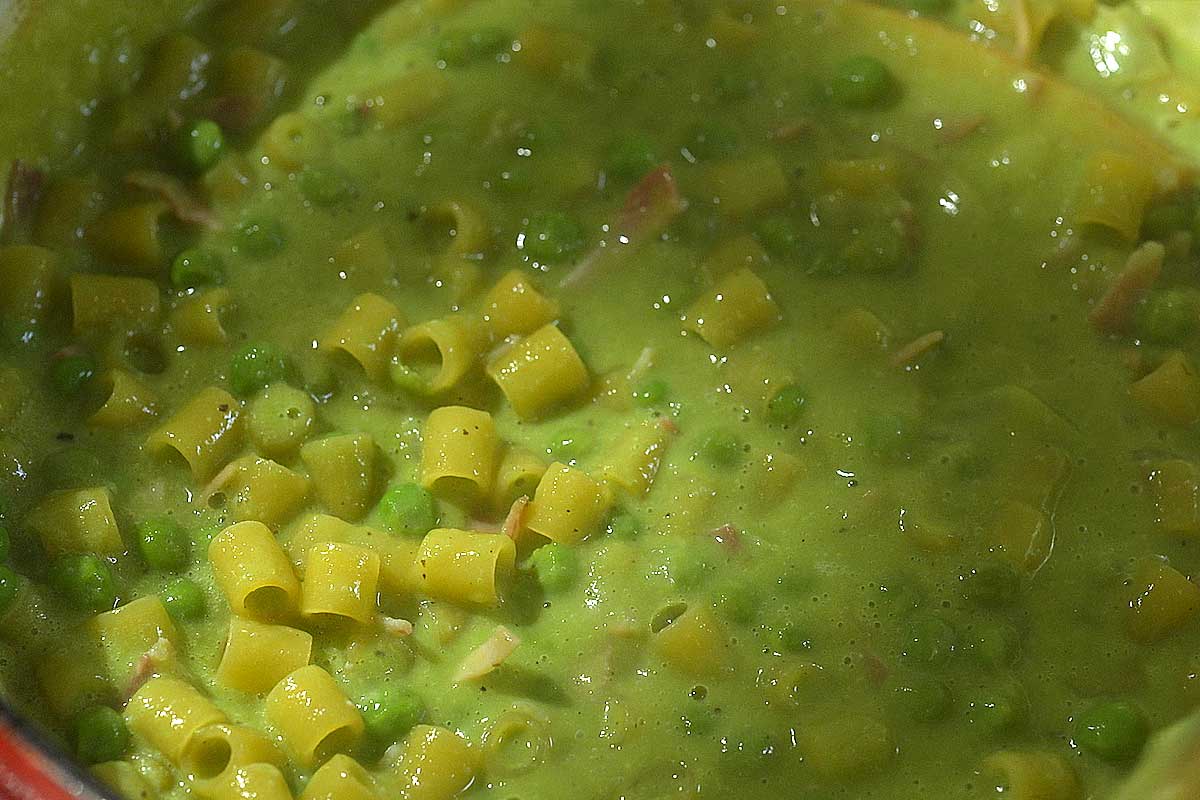
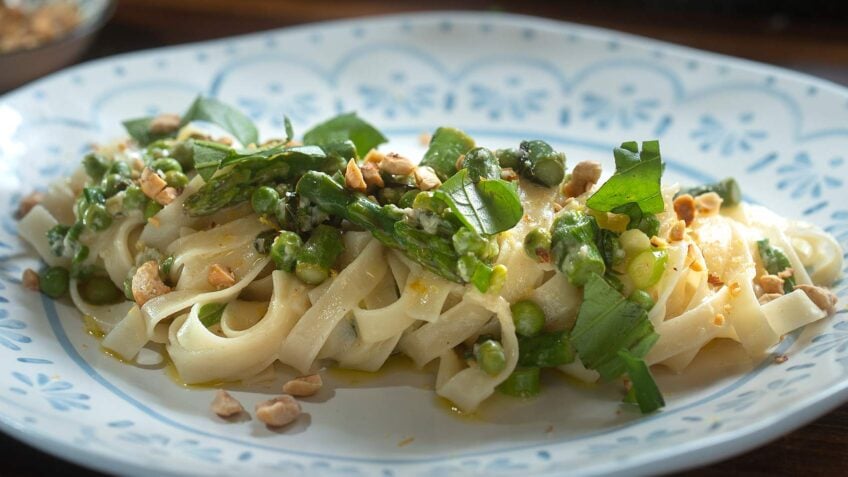
Half the peas are blended into a vibrant, velvety purée, creating a thick, glossy sauce that hugs every piece of pasta without a single drop of cream.
Cheap, comforting, and carrying that effortless Italian elegance that makes you wonder why you ever bothered with complicated sauces.
What Is Pasta e Piselli?
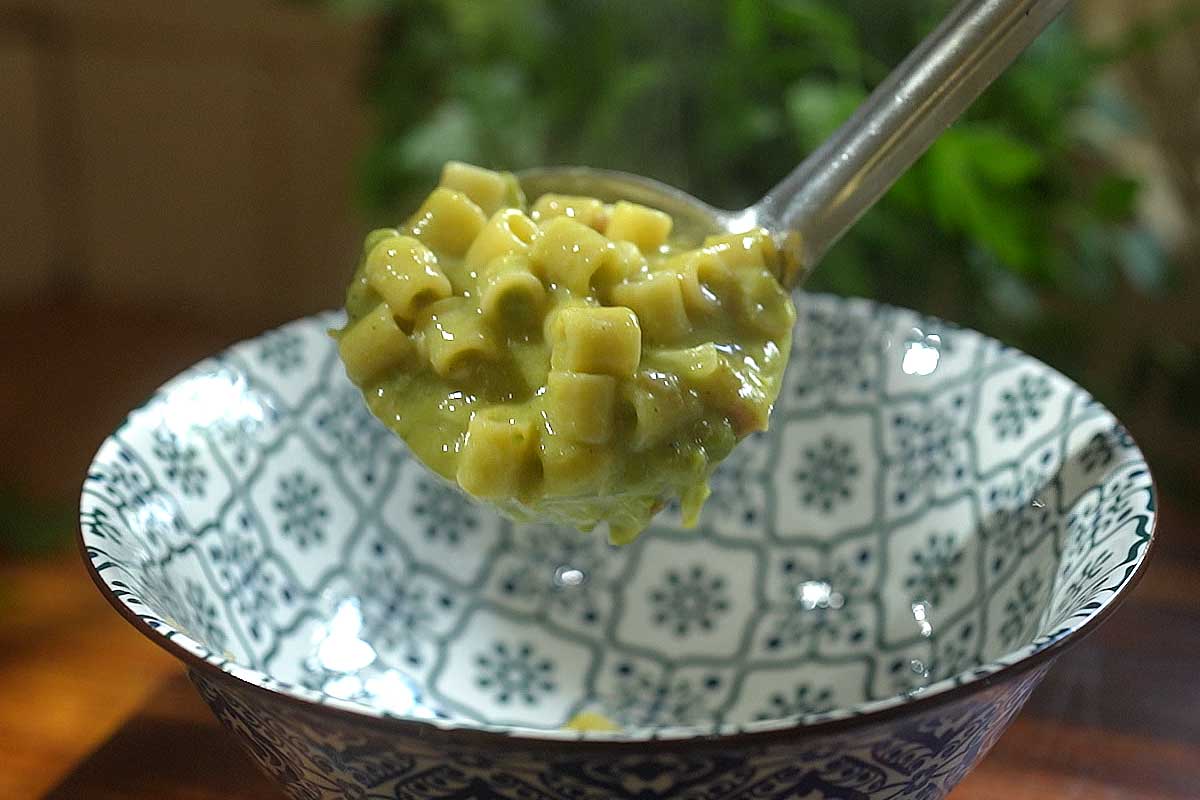
Pasta e Piselli, pasta with peas, is one of Italy’s most beloved cucina povera dishes. Poor kitchen cooking. Humble ingredients turned into something genuinely satisfying.
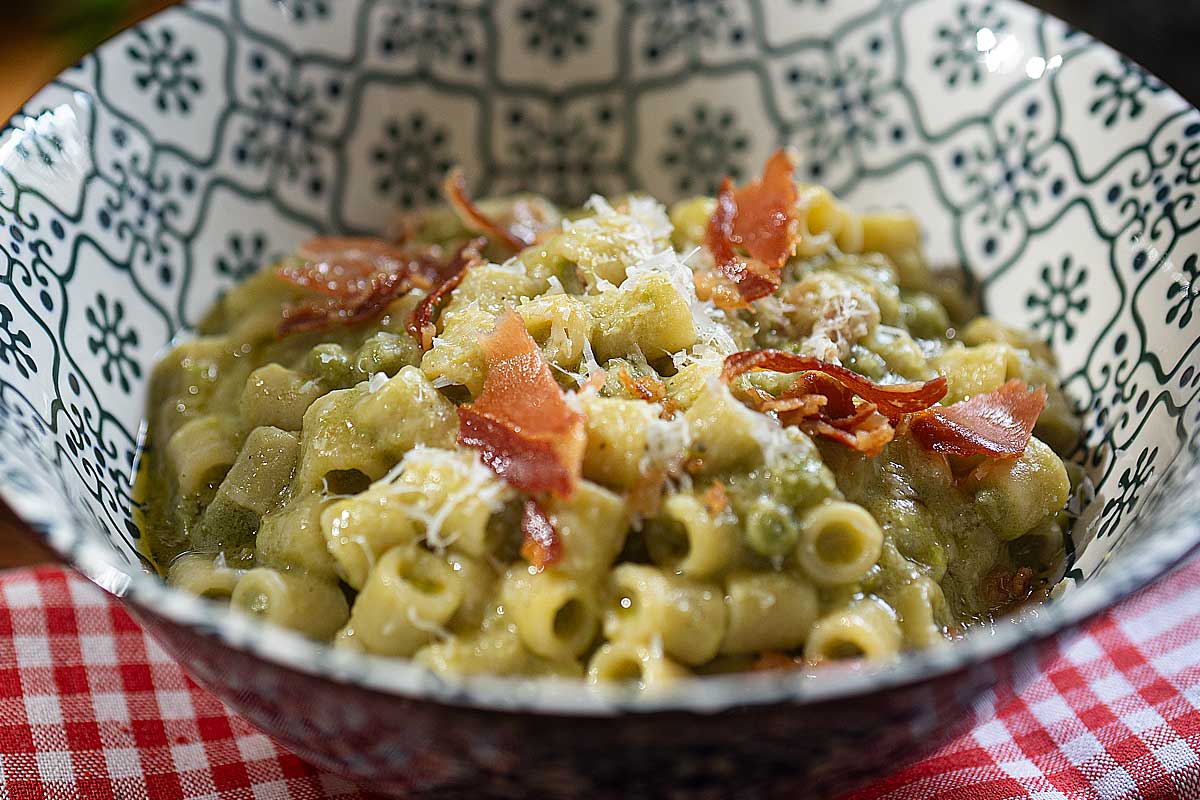
It sits somewhere between a thick pasta and a light soup, deliberately loose and spoonable rather than dry and clumped. In Naples especially, this comfort-food quality is non-negotiable. If it’s not a little soupy, it’s not right.
Every Italian family has their version. Some use pancetta, some don’t. Some use parmesan rind, some use pecorino. All of them are right. This is my version.
The Pea Purée That Replaces the Cream
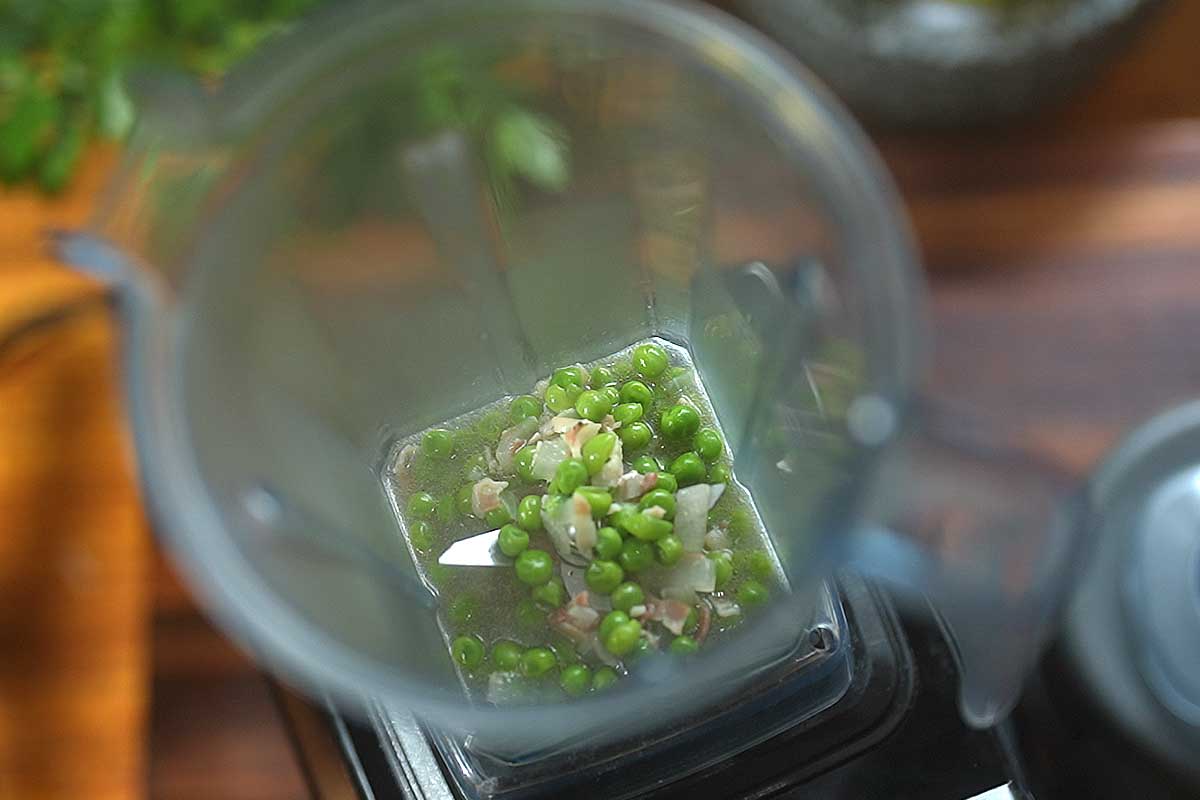
The move that makes this dish is blending half the cooked peas into a smooth purée and stirring it back into the pan.
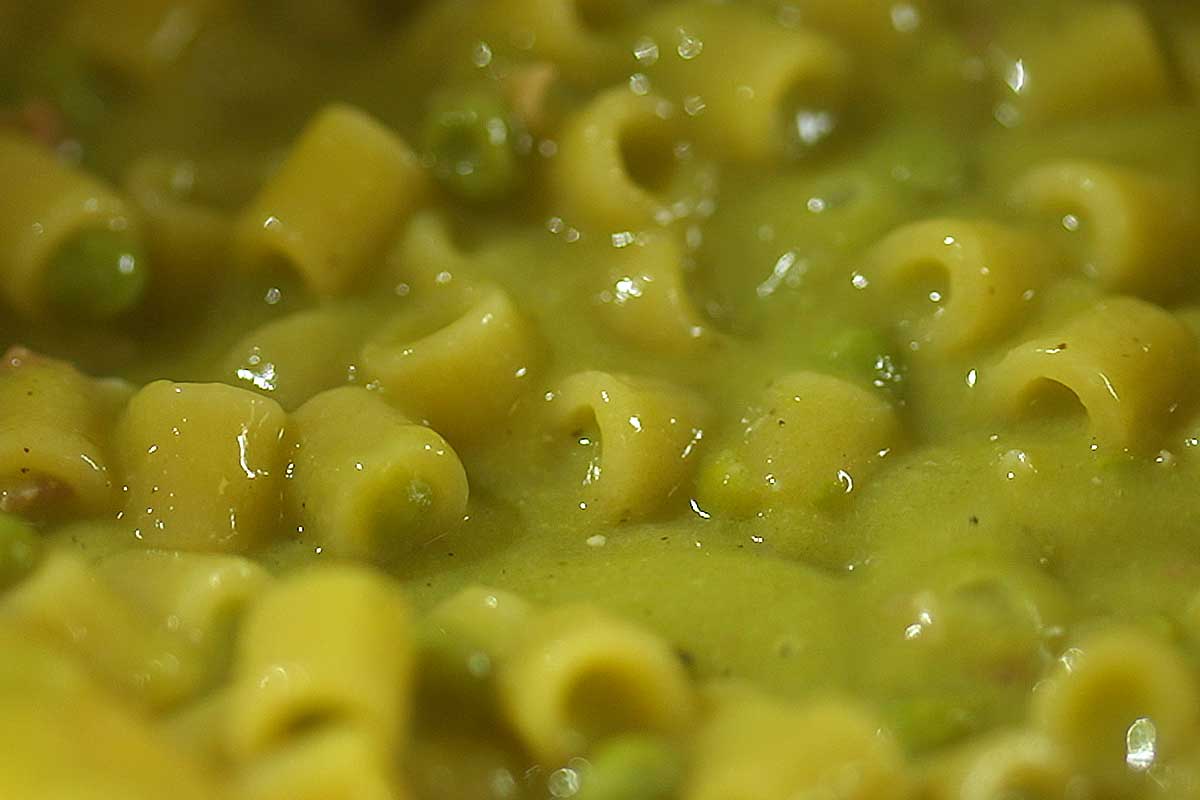
That purée becomes the sauce. It’s thick, velvety, vibrantly green and full of sweet pea flavour. Combined with the starch the pasta releases as it cooks, you get a glossy, clingy sauce that coats every piece of pasta without any cream, butter or flour.
The remaining whole peas give texture and sweetness throughout. It’s a clever technique and it takes thirty seconds.
Cook the Pasta in the Sauce, Not in Water
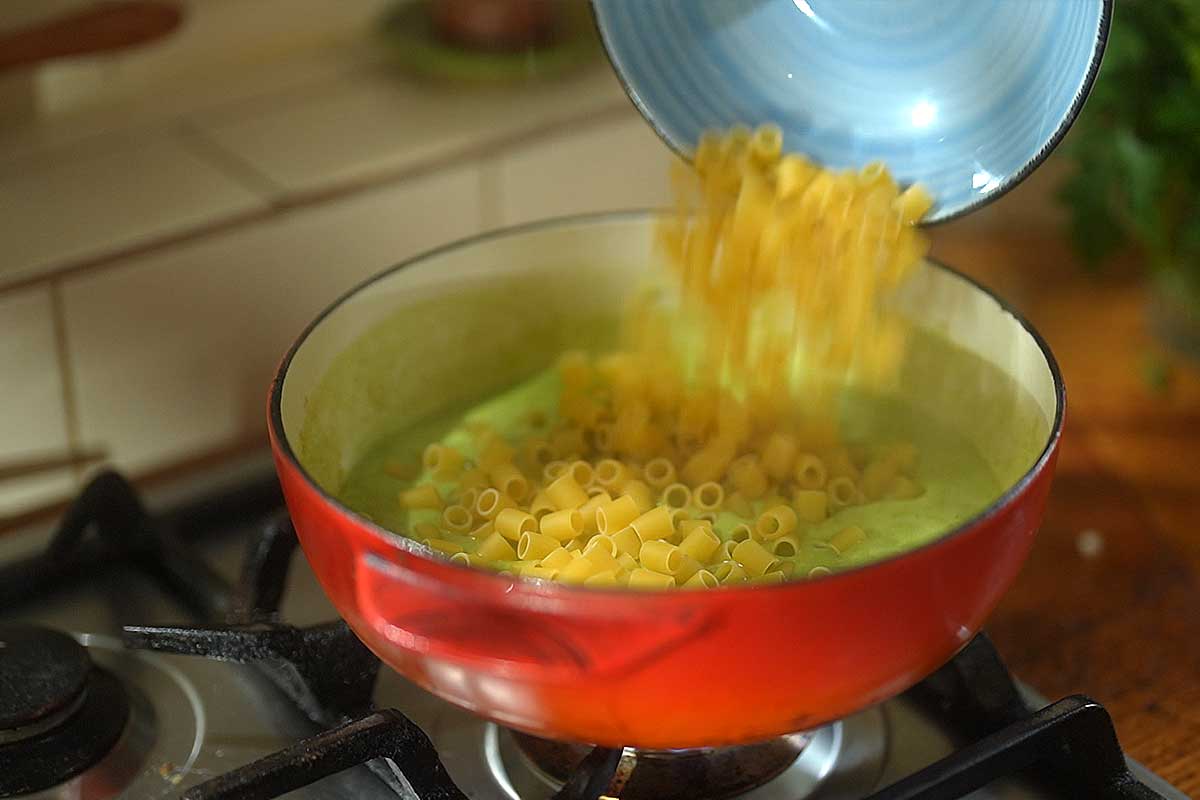
This is the key technique that makes pasta e piselli different from every other pasta dish you’ve made.
The dry pasta goes straight into the peas and stock, then cooks there from raw. As it does, it releases its starch directly into the sauce, thickening it naturally with every stir. Think of it like a simple risotto. Add stock gradually, keep stirring, let the pasta do the work.
The result is a sauce that’s integrated with the pasta rather than just coating it. The flavour goes all the way through.
The Parmesan Rind Secret
If you have a parmesan rind sitting in the fridge, this is the dish to use it in.
Drop it into the stock while the peas simmer and it quietly dissolves into the liquid, adding a deep, savoury, almost meaty flavour that you can’t quite identify but would absolutely miss. It doesn’t make the dish taste cheesy. It makes everything taste more.
Save your parmesan rinds in a zip-lock bag in the freezer. They last for months and they’re one of the most useful things in an Italian kitchen.
Cooking Tips
Use tiny pasta. Ditalini, small shells or small macaroni are the traditional choices. Big pasta shapes ruin the pea-to-pasta ratio and the texture of the whole dish.
Keep adding hot stock gradually as the pasta cooks. Cold stock drops the temperature of the pan and slows down the cooking. Always keep a pot of hot stock nearby.
Stir often, like a risotto. That movement releases the starch from the pasta and builds the sauce. Stop stirring and it sticks to the bottom.
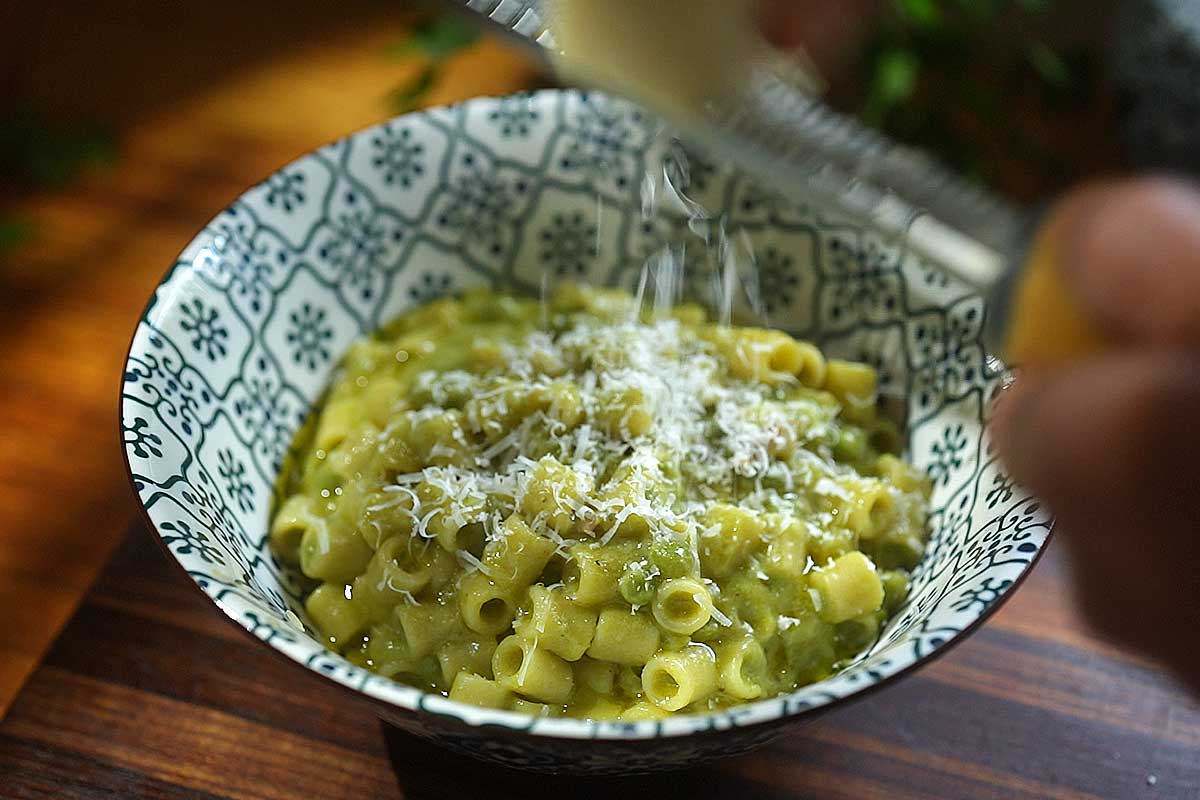
Add the cheese off the heat. Stirring cheese into a bubbling pan makes it clump and go stringy. Remove from the heat, wait a moment, then stir it in vigorously. Do this in a couple stages.
Don’t let it get too dry. Pasta e piselli should be slightly loose and spoonable when it hits the bowl. It thickens as it sits so err on the side of too much sauce rather than too little.
Season carefully. Pancetta, pecorino and parmesan rind all add salt. Taste before seasoning and adjust at the end.
Ingredient Swaps
No pancetta? Leave it out entirely for a vegetarian version. The dish is complete without it. A small drizzle of extra olive oil at the end compensates for the missing fat.
No pecorino? Parmesan works beautifully. Pecorino is sharper and saltier so use parmesan generously and taste as you go.
Frozen peas are perfect here. They’re picked and frozen at peak sweetness and work just as well as fresh. No need to thaw first, just add them straight from the freezer.
No ditalini? Small macaroni, orzo or any tiny pasta shape works well. Whatever you use, it needs to be small enough to fit on a spoon alongside a whole pea.
Common Mistakes
Using large pasta shapes. The pea-to-pasta magic disappears with big shapes. Small is non-negotiable.
Not stirring enough. This is a hands-on dish. Leave it alone and the pasta sticks to the bottom of the pan and the sauce separates.
Making it too dry. If the pasta looks tight and clumped when you plate it, you’ve gone too far. Add stock and loosen it up before serving.
Adding the cheese over high heat. It seizes and goes grainy. Always stir it in off the heat.
What to Serve With It
This is a complete meal on its own, especially with pancetta and plenty of cheese.
A simple green salad on the side keeps things light and fresh.
Crusty bread to scoop up any sauce left in the bowl. Never a bad idea.
A glass of light white wine. Something crisp like Pinot Grigio or Vermentino works perfectly with the sweetness of the peas.
Storage
Fridge: Store covered for up to 2 days. The pasta absorbs the sauce completely as it sits and will need a generous splash of water or stock when reheating.
Reheat gently in a pan over low heat with plenty of added liquid, stirring continuously until loose and creamy again.
Do not freeze. The texture of both the pasta and pea purée suffers badly after freezing.
FAQs
Should pasta e piselli be soupy or dry?
Soupy. It should sit somewhere between a thick pasta and a light soup, loose, glossy and spoonable. If it looks like a stiff, dry pasta dish, it’s gone too far. Add more stock and loosen it up.
Can I use fresh peas instead of frozen?
Yes, and they’re wonderful when in season. Fresh peas may need an extra minute or two of cooking before blending. Frozen peas picked at peak sweetness are excellent year-round and genuinely hard to tell apart in this dish.
Is this recipe vegetarian?
It is if you leave out the pancetta and use vegetarian parmesan or pecorino. Traditional Parmigiano-Reggiano uses animal rennet so check the label if you’re being strict about it. Also use vegetable stock not chicken stock.
What does cucina povera mean?
It translates as poor kitchen cooking. It refers to the tradition of Italian peasant cooking where nothing was wasted and simple, cheap ingredients were transformed into something genuinely delicious through technique and care. Pasta e piselli is one of its great examples.
Why cook the pasta in the sauce instead of boiling it separately?
Because the pasta releases its starch directly into the sauce as it cooks, naturally thickening it and integrating the flavours all the way through the pasta itself. Boiling it separately and adding it at the end gives you pasta with sauce on top. Cooking it in the sauce gives you pasta that is part of the sauce.
Simple, Cheap and Quietly Brilliant
Pasta e piselli is one of those dishes that reminds you what Italian cooking is actually about.
Not complexity. Not expense. Technique applied to humble ingredients with care and confidence.
One pan, twenty minutes, and a bowl of something that feels like it took far more than it did. That’s cucina povera at its best.
 By
By 
You must be logged in to post a comment