
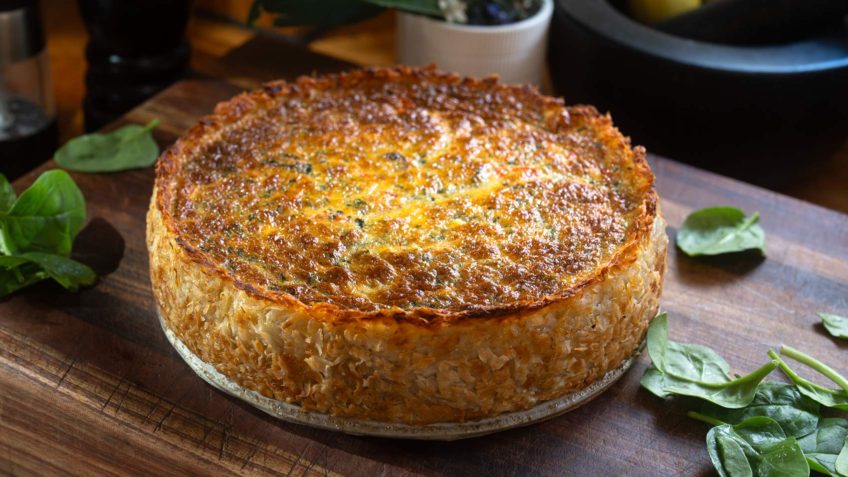
Sometimes I just don’t feel like making pastry. Too much fussing about.
So I grab a couple of Sebagos, or Russets if you’re in the US, peel them, and turn them into a crust. Press the potato in, bake it until golden, then fill it up. Feta, roasted capsicum, olives, spinach, all those Mediterranean bits that taste like sunshine.
It smells amazing, it’s easy, and you don’t miss the pastry one bit.
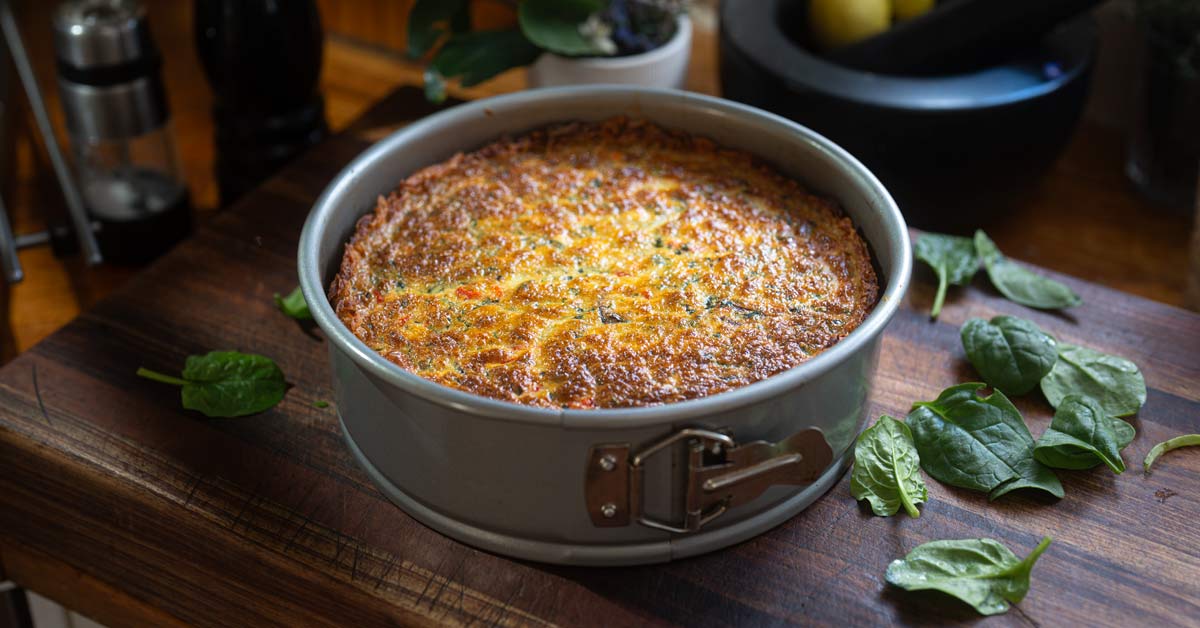
Why This Works Better Than Pastry
Pastry is fussy. It needs resting, rolling, blind baking, and it still manages to go soggy half the time.
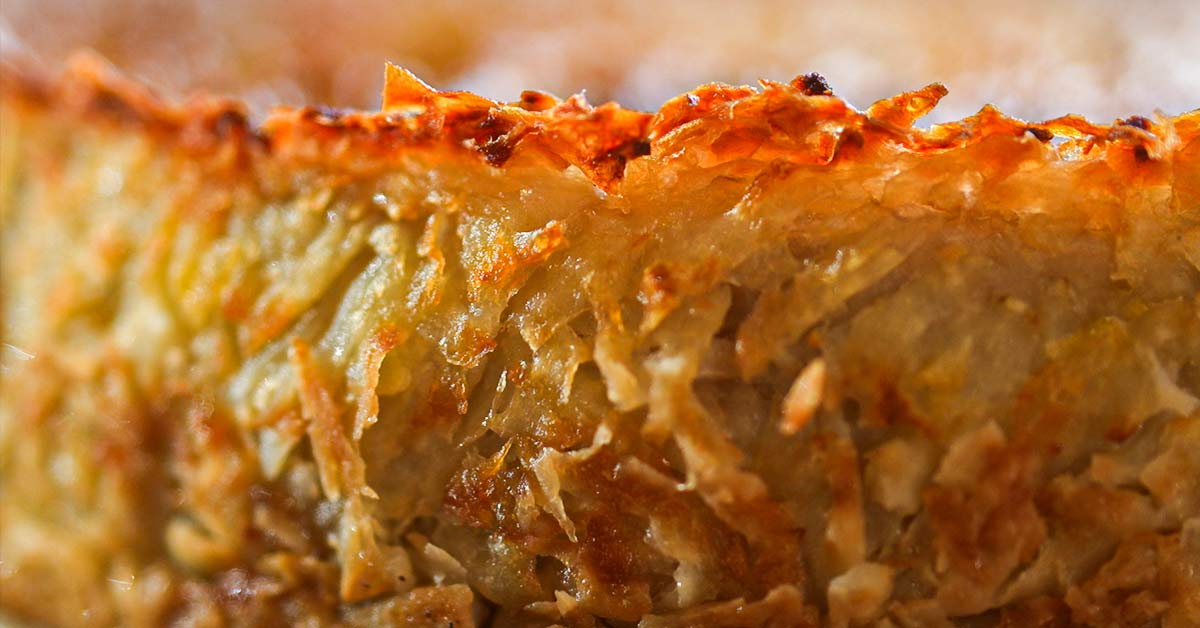
A potato crust is forgiving, faster, and honestly more interesting. The edges go crispy and golden while the base stays firm enough to hold the custard filling without collapsing.
Make the sides tall. That crispy potato rim is pure joy and you want as much of it as possible.
The Moisture Problem and How to Solve It
Raw potato is mostly water. Skip the drying step and you will end up with a steamed, soft, pale crust instead of something golden and crisp.

I’ve used parchment paper in the past but honestly the crispiest results come without it. If you trust your tin and grease it well, skip it.
Grate, salt, drain, squeeze, pat dry. That sequence is not optional. The more moisture you remove, the better your crust will be.
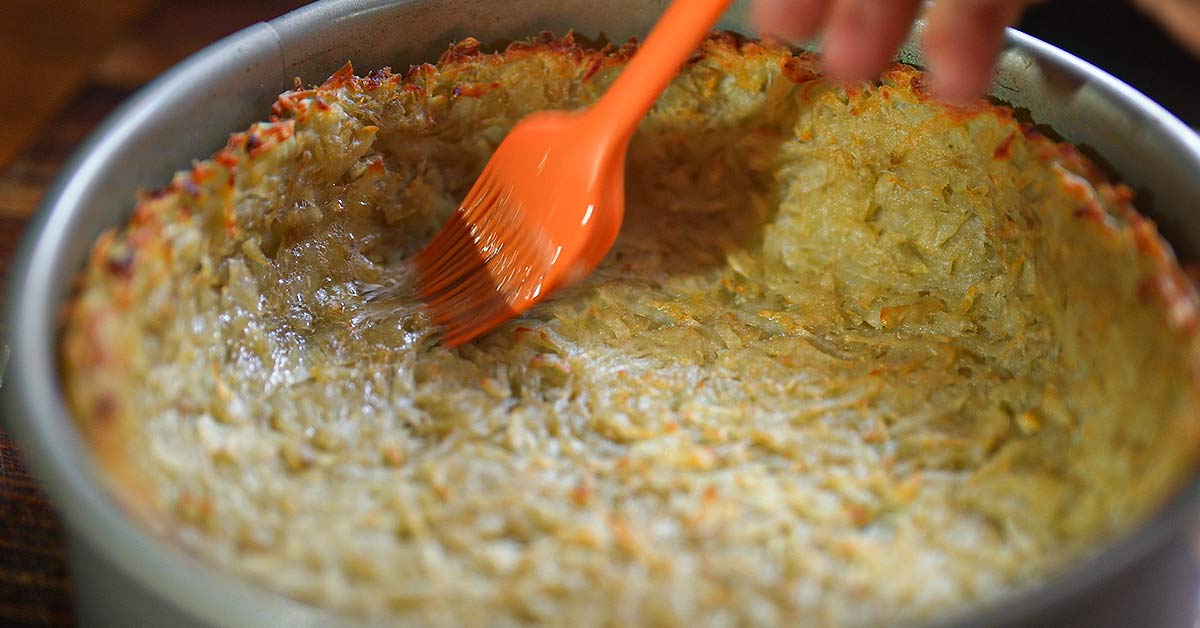
The egg white seal at the end is the final insurance policy. It forms a barrier between the potato and the filling so the custard does not soak through.
Cooking Tips
Use a starchy potato. Sebago or Russet in the US. High starch helps the shreds bind and crisp properly. Waxy potatoes stay soft and can collapse under the filling.
Pack the crust firmly and make it even. Thin patches will burn before thick patches are cooked. Take your time pressing it in.
Pre-bake at high heat. 200°C drives off moisture fast and starts the crisping process before the filling goes in.
Use duck fat if you have it. It adds a flavour and crispness that butter cannot quite match. But butter is perfectly good too.
Rest for a full hour before slicing. This is the step most people skip and then wonder why their quiche falls apart. The custard needs time to set completely.
Ingredient Swaps
No Gruyère? Fontina, Comté, or a good sharp cheddar all work well. You want something that melts smoothly and has flavour.
No roasted capsicum? Sundried tomatoes can carry more of the load, or add some roasted zucchini instead.
No Kalamata olives? Any good pitted black olive works. Or leave them out entirely if olives are not your thing.
No fresh oregano? Dried is fine. Use about a third of the quantity.
No heavy cream? Full fat milk works but the custard will be slightly less rich and set a little firmer.
Common Mistakes
Not squeezing enough moisture out of the potato. This is the number one reason potato crusts fail. Squeeze harder than you think you need to.
Skipping the egg white seal. Without it the filling soaks into the crust and you lose that crispy base entirely.
Cutting too soon. A wobbly quiche straight from the oven looks done but is not. Give it the full hour rest and it will slice cleanly.
Pouring in too much filling. If your custard overflows the crust during baking it will stick to the tin and make the whole thing very difficult to remove. Fill to just below the rim.
Using a tin with a loose base without a tray underneath. Butter drips, custard leaks. Always put a baking tray underneath.
What to Serve With It
A simple green salad with a sharp lemon dressing is the classic pairing. The acidity cuts through the richness of the custard beautifully.
Serve warm or at room temperature. This quiche is actually better the next day once it has fully set overnight in the fridge.
For a dinner party, serve alongside roasted cherry tomatoes and crusty bread. Simple, impressive, zero stress.
A glass of crisp white wine. Sauvignon Blanc or a dry Rosé both work perfectly with the Mediterranean filling.
Storage and Reheating
Fridge: Cover and store for up to 3 days. The flavour improves overnight as everything melds together.
Freezing: This quiche freezes well. Slice it first, wrap each piece individually and freeze for up to 2 months.
Reheating: Warm slices in the oven at 160°C for about 10 minutes. The microwave works in a pinch but the crust loses its crispness.
Serve cold straight from the fridge for lunch the next day. It is genuinely one of the better cold lunches going.
FAQs
Can I make this ahead?
Yes, and it is actually better for it. Bake the day before, refrigerate overnight, and bring to room temperature before serving. The crust firms up and the custard sets perfectly.
Can I use a regular pie dish instead of a quiche tin?
Yes. A deep pie dish works well. Just make sure it has enough depth for a good layer of potato crust up the sides.
Why is my crust soggy?
Almost always a moisture issue. The potato was not squeezed dry enough, or the egg white seal was skipped. Both steps are essential.
Can I make this vegetarian?
It already is. Every ingredient in this recipe is vegetarian.
Can I add meat to the filling?
Absolutely. Diced chorizo, crispy bacon, or shredded leftover chicken all work beautifully with the Mediterranean filling.
How do I know when the quiche is cooked?
The edges should be set and lightly golden. The centre can have a very slight wobble but should not look liquid. It will continue to firm up as it rests.
 By
By 

You must be logged in to post a comment