
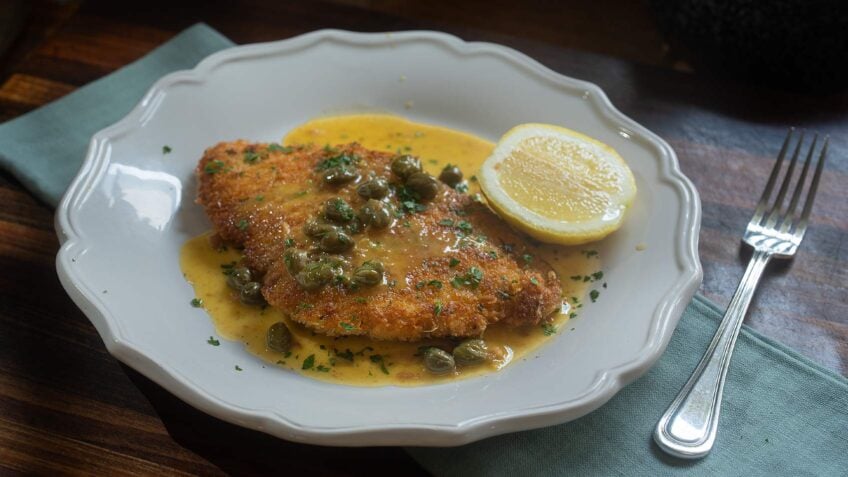
Panko Crusted Schnitzel Piccata
Crumbed chicken and piccata sauce should never have been separated in the first place.
One gives you that shatter of golden crust. The other gives you salty, buttery, lemon sharpness that cuts right through it.
Put them on the same plate and you have got something that tastes far more expensive than it actually is.
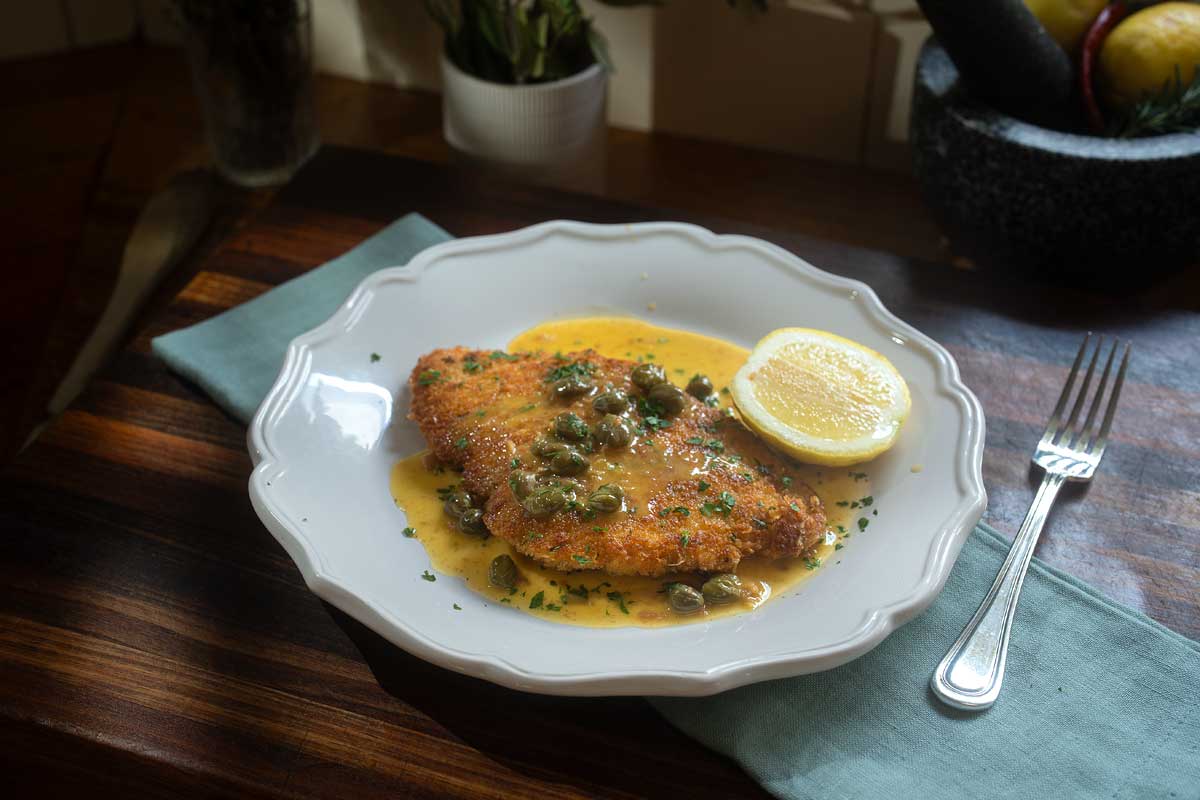
Two Classics, One Plate
Schnitzel is Austrian in spirit, panko is Japanese, and piccata is straight out of an Italian trattoria.
None of that matters once it hits the pan. What matters is contrast.
Crisp crumb on top, silky sauce underneath. Keep the two apart until the last second and you get the best of both worlds instead of a soggy compromise.
Why Panko Changes Everything
Regular breadcrumbs are dense and they soak up oil like a sponge.
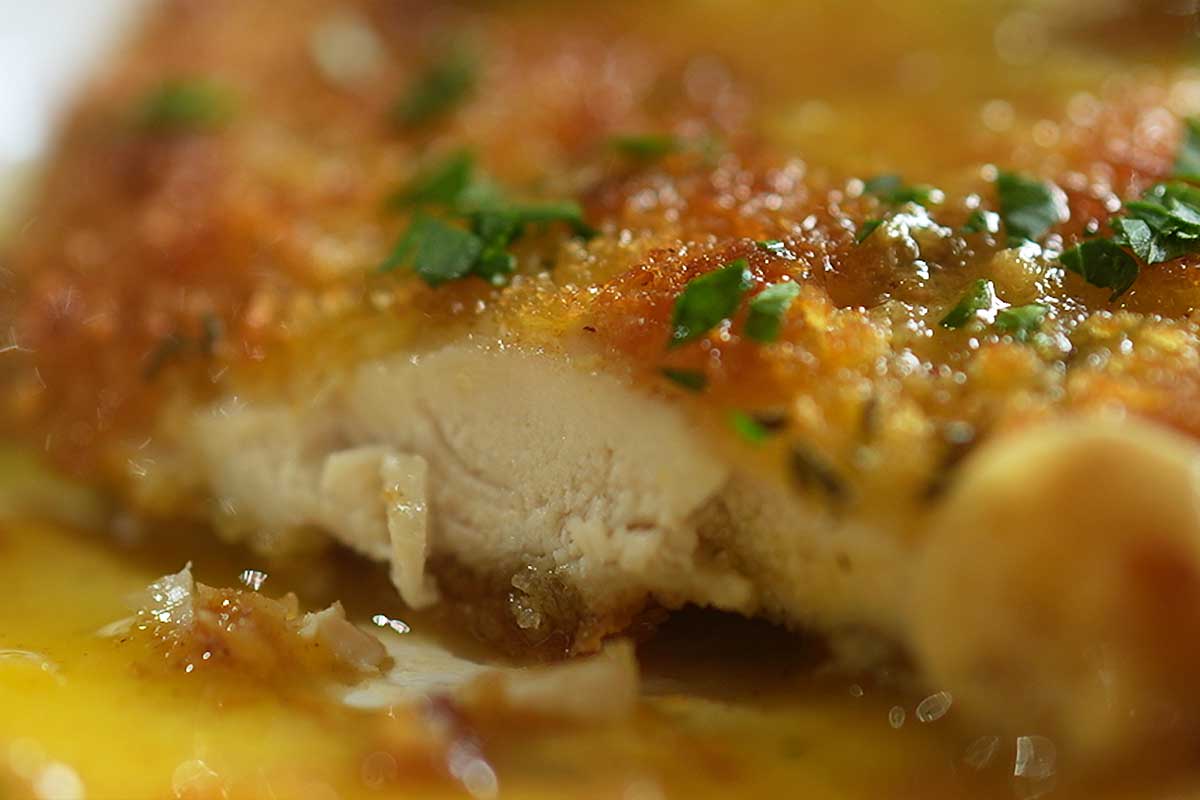
Panko is coarser and drier, so it fries up light and full of air pockets instead of turning greasy.
That is the difference between a schnitzel that crunches and one that just goes soft the second the sauce touches it.
The Sauce Is Not Optional
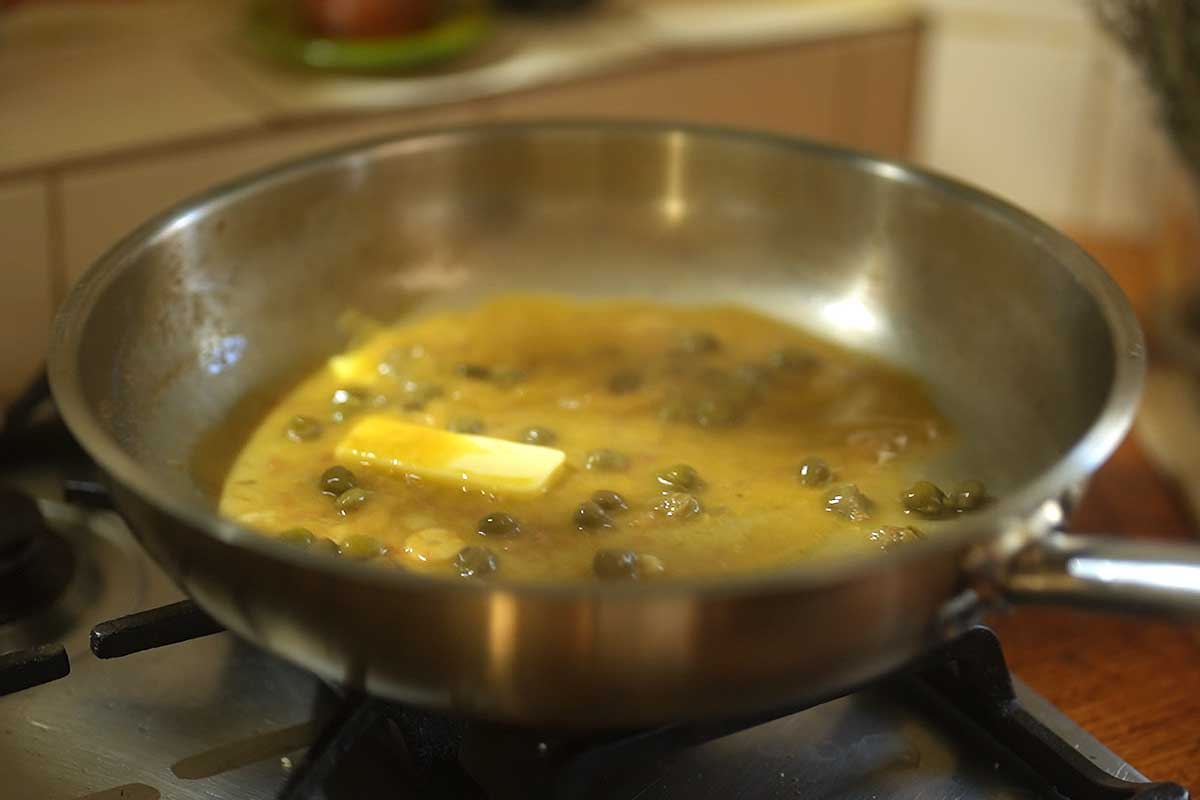
A piccata sauce is just wine, stock, capers and lemon reduced down, then finished with cold butter.
That last step of swirling in cold butter off the heat is called a beurre monte, and it is what makes the sauce glossy instead of greasy.
It takes about five minutes in the same frying pan you cooked the chicken in, so all those browned bits on the bottom go straight into the flavour.
Cooking Tips
Pound the chicken to an even thickness, thickest part only, so it cooks through at the same rate as the thin edges.
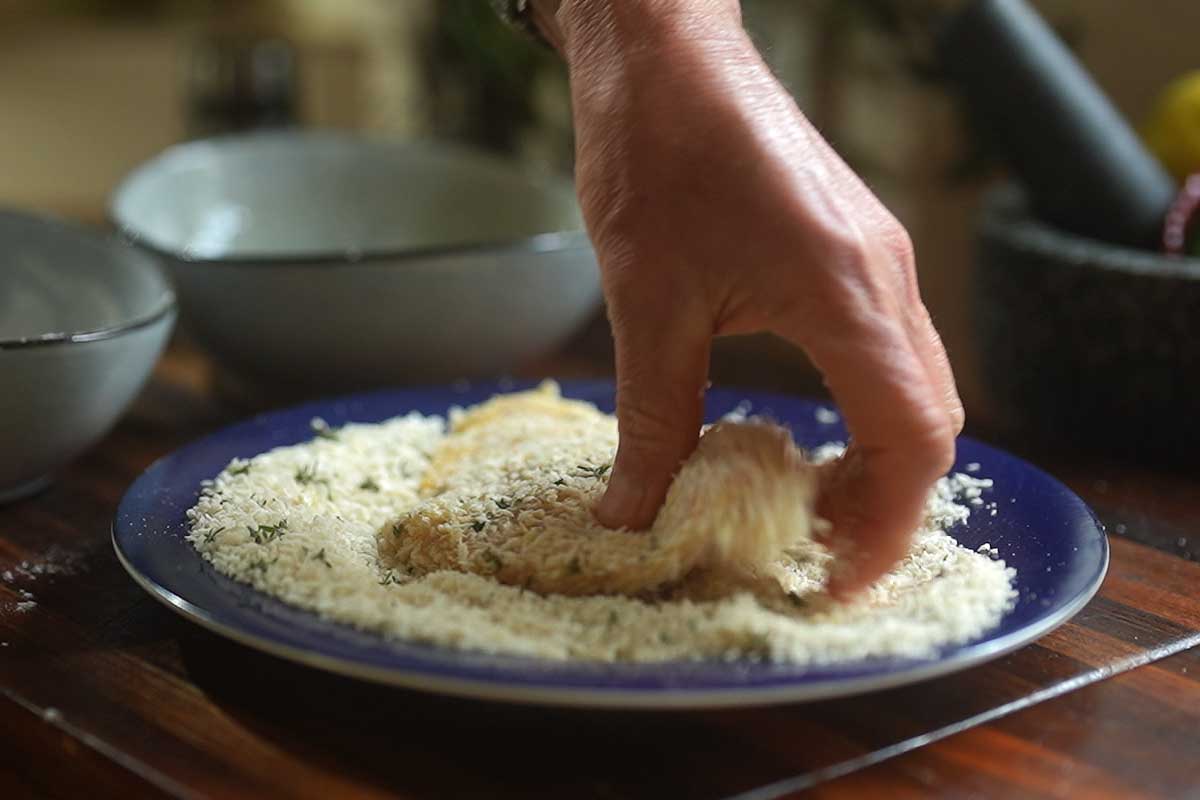
Press the panko on firmly. A loose crumb falls off in the pan.
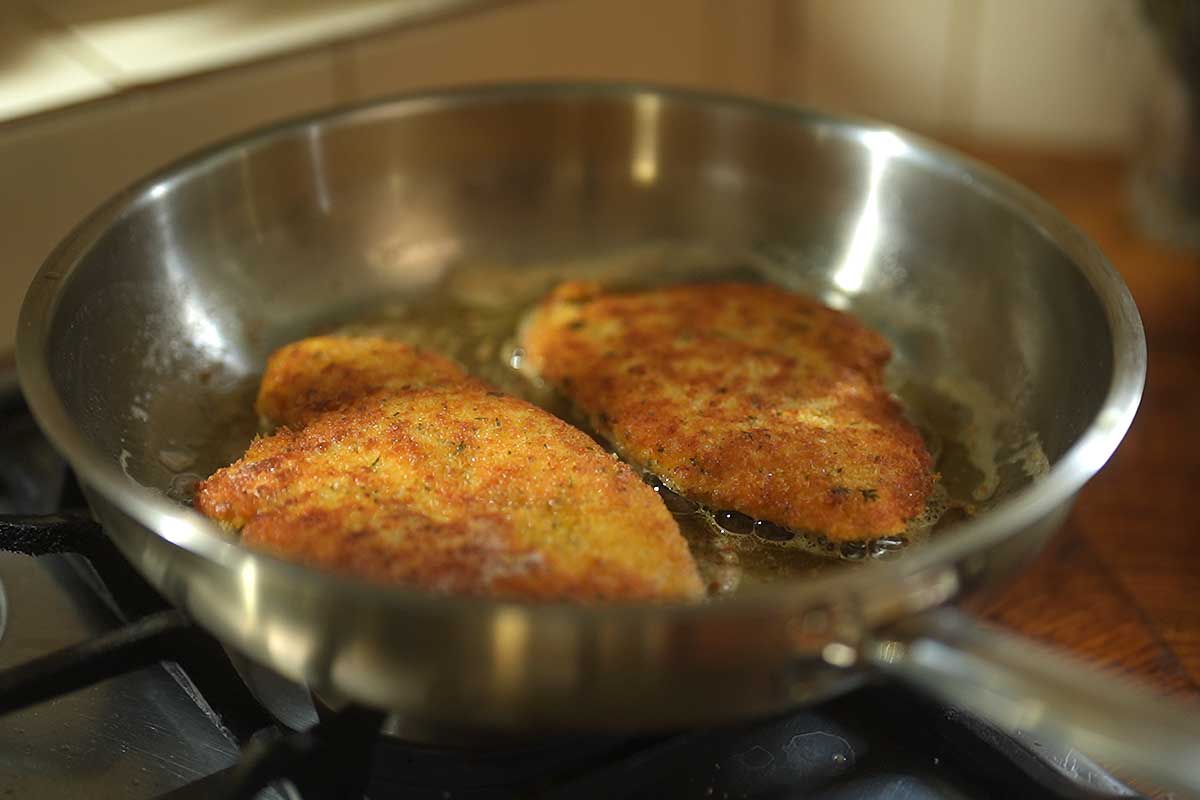
Do not crowd the frying pan. Cook in batches or the temperature drops and the crumb goes soft instead of crisp.
Medium heat, not high. Panko browns fast and you want the inside cooked before the outside burns.
Let the wine reduce properly before adding the stock. That is where most of the flavour concentration happens.
Take the pan off the heat before adding the cold butter. If it is too hot, the sauce splits instead of turning silky.
Rest the schnitzels on a wire rack, not a plate, while you make the sauce. A rack keeps the underside from steaming and going soft.
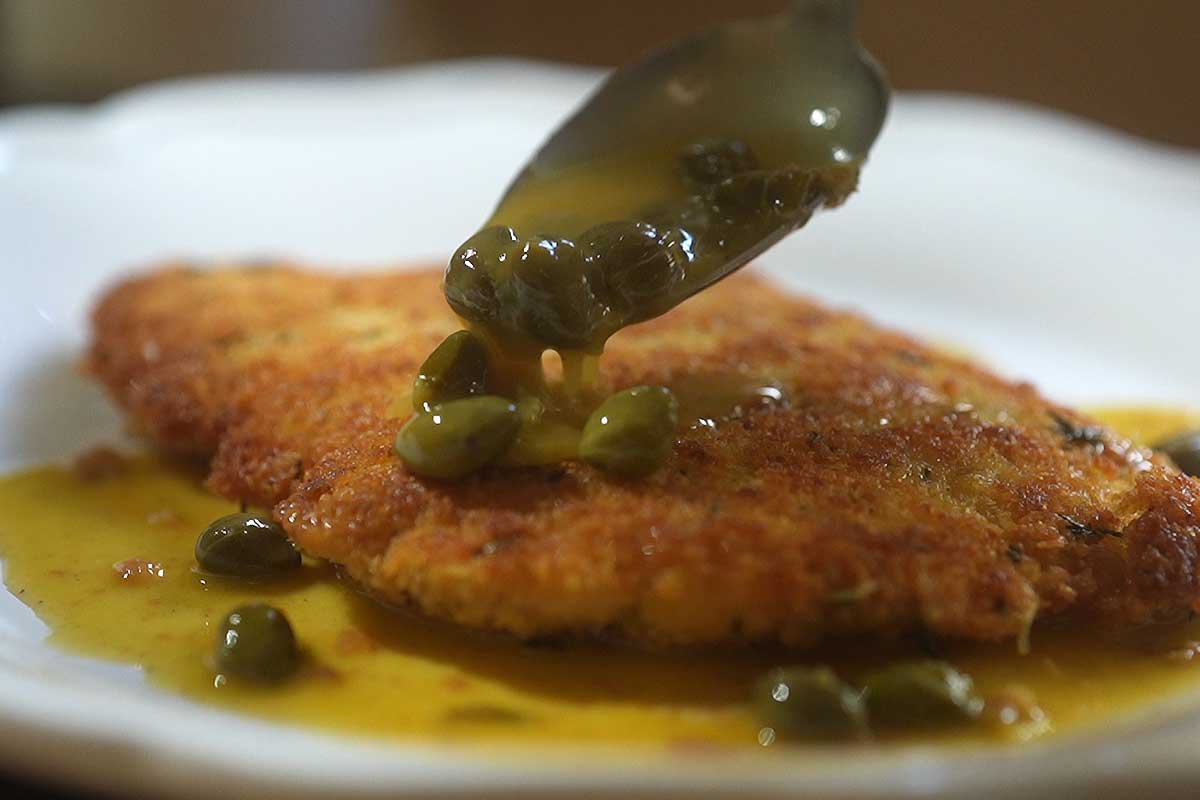
Sauce goes under and around the chicken, not over the top. Keep the crust dry.
Ingredient Swaps
No white wine. Use extra stock with a squeeze more lemon juice for acidity.
Chicken breast too thick to find. Ask your butcher for chicken schnitzel cut, already flattened.
No capers. Chopped green olives give a similar salty punch.
Want it gluten free. Swap the flour and panko for gluten free versions, same method.
Common Mistakes
Skipping the flour step. It is what gives the egg something to grip so the panko actually sticks.
Boiling the sauce after the butter goes in. That splits it. Keep the heat off.
Cutting the chicken too thin at the edges while pounding. Aim for even thickness, not paper thin all over.
Drowning the schnitzel in sauce. A little goes a long way, and you want to still hear that crunch.
What to Serve With It
Buttery mashed potato or a simple green salad with lemon dressing both work well here.
A pile of steamed greens or roasted asparagus takes on the sauce beautifully too.
Storage and Reheating
Keep the chicken and sauce in separate containers in the fridge for up to two days.
Reheat the chicken in a hot oven or air fryer to bring back the crunch. Warm the sauce gently in a small pan.
Never microwave the schnitzel. It goes rubbery and the crust turns to mush.
FAQs
Can I make this ahead of time?
Crumb the chicken up to a few hours ahead and keep it in the fridge on a tray. Fry it fresh so the crust stays crisp.
What white wine should I use?
Something dry and crisp like a sauvignon blanc or pinot grigio. Nothing sweet or oaky.
Can I bake instead of fry?
Yes, at 425°F – 220°C on a wire rack with a light spray of oil, about 15 to 18 minutes. It will not brown quite as deeply as pan frying though.
Why did my sauce split?
The pan was too hot when the cold butter went in. Take it off the heat completely before swirling the butter through.
Can I use chicken thighs instead of breast?
Yes, just pound them to an even thickness the same way. They stay juicier if you overcook them slightly.
The Bottom Line
This is restaurant food made in one frying pan on a weeknight.
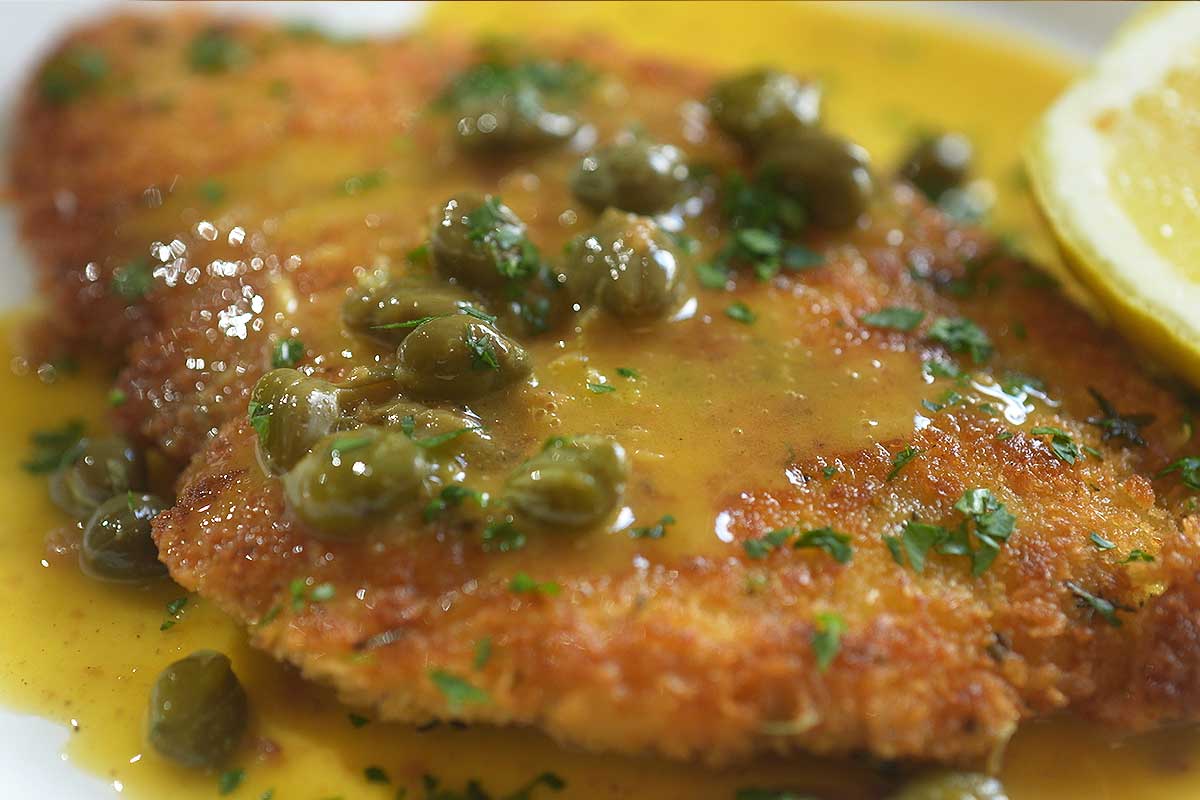
Crisp on top, silky underneath, sharp with lemon and capers all the way through.
 By
By 
You must be logged in to post a comment