
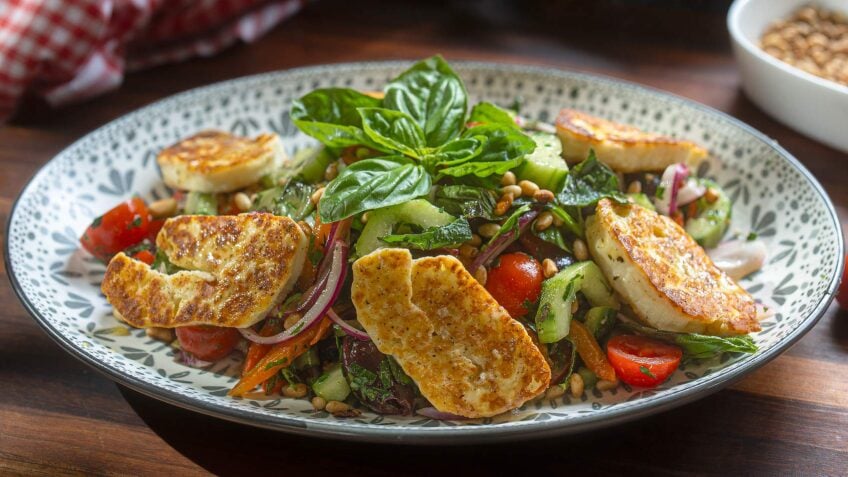
The Cheese That Sizzles, Squeaks and Steals the Show
When I pull this together, it’s like catching the last ten minutes of a Mediterranean sunset.
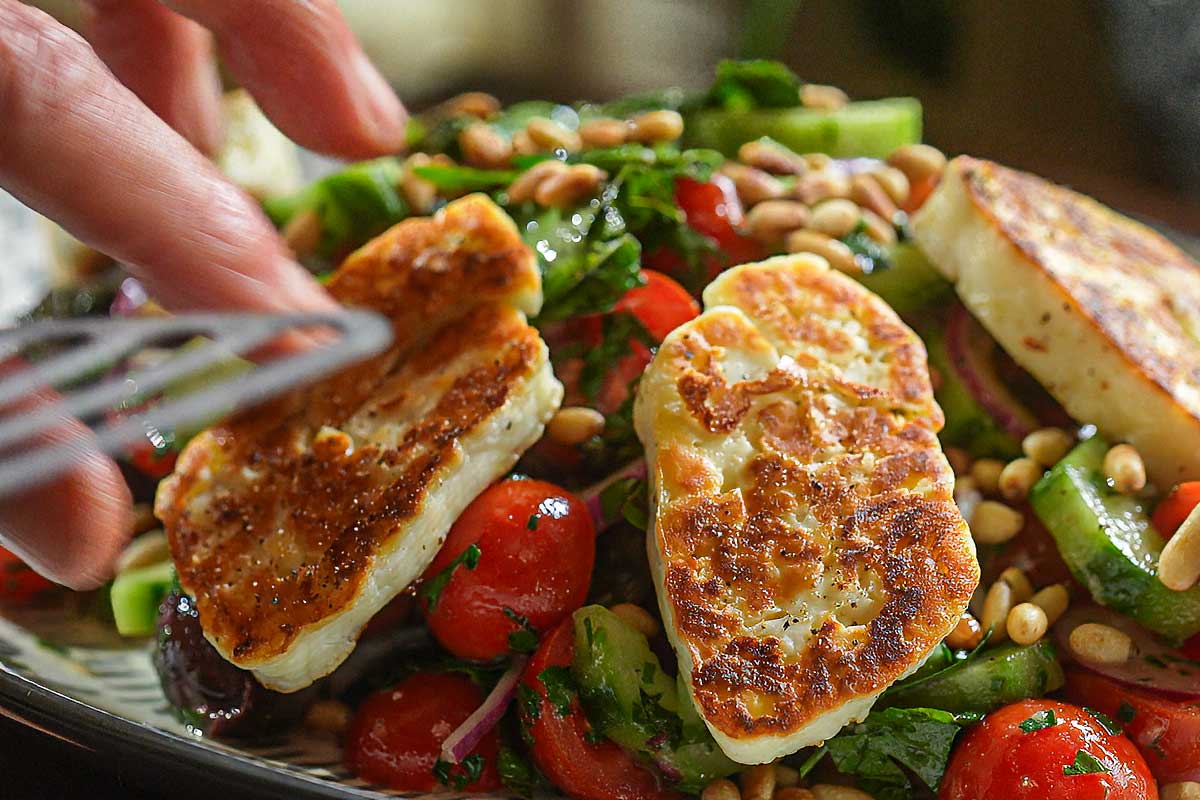
The smell of toasted pine nuts hitting the air, followed by that aggressive sizzle of the cheese finding its crisp. Bright, punchy, and that first warm, squeaky bite of halloumi against the cold, zingy tomatoes is pure soul food.
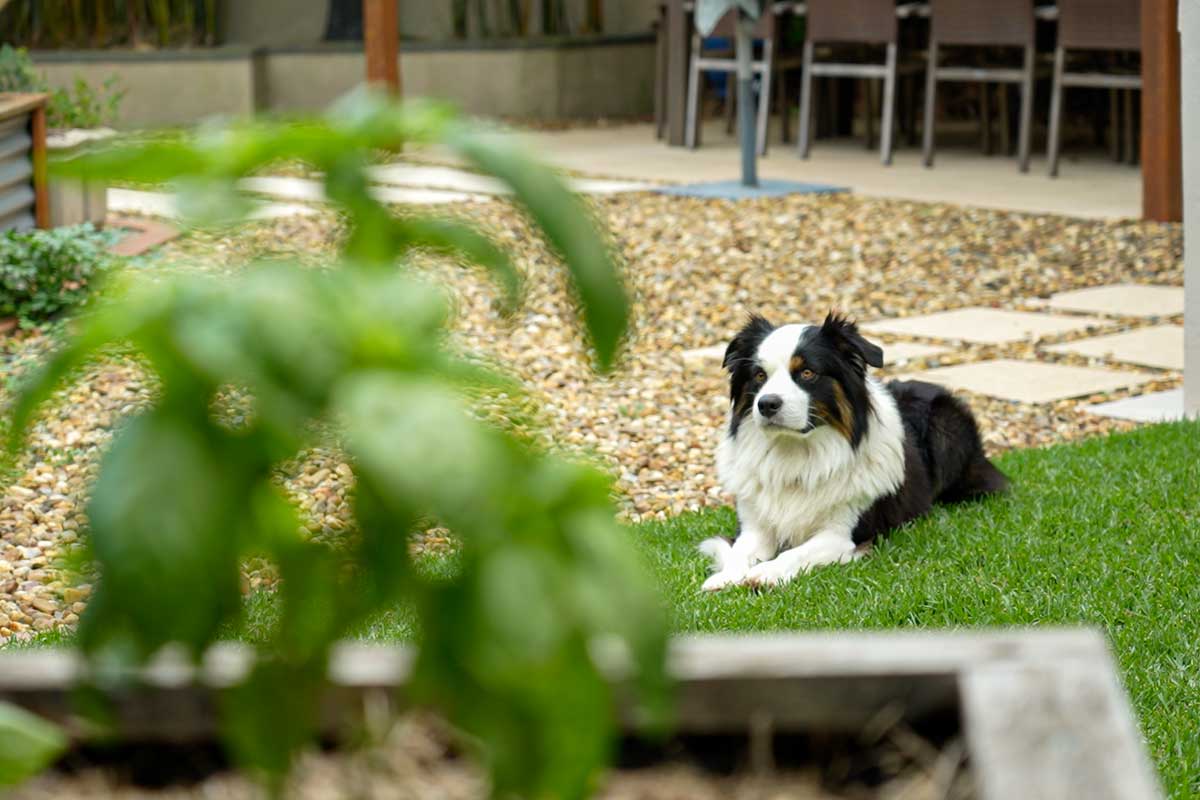
It’s the kind of meal that makes you feel like you’re sitting on a sun-drenched terrace rather than standing in your kitchen. Kenji my Aussie Shepherd dog gets it.
Why Halloumi Is Unlike Any Other Cheese
Most cheeses melt the moment they hit a hot pan. Halloumi doesn’t.
It’s a semi-hard cheese from Cyprus, traditionally made from a mix of sheep and goat’s milk, with a uniquely high melting point. That’s what allows it to be pan-fried or grilled until golden and crisp on the outside while staying firm and wonderfully squeaky on the inside.
It’s also naturally high in protein, making this a genuinely satisfying vegetarian meal that keeps you full. Around 25 grams of protein per 100g, which puts it right up there with chicken. It is salty so don’t over do it.
The Trick to Perfectly Crispy Halloumi
Most people throw halloumi straight into an oiled pan and wonder why it turns rubbery and pale.
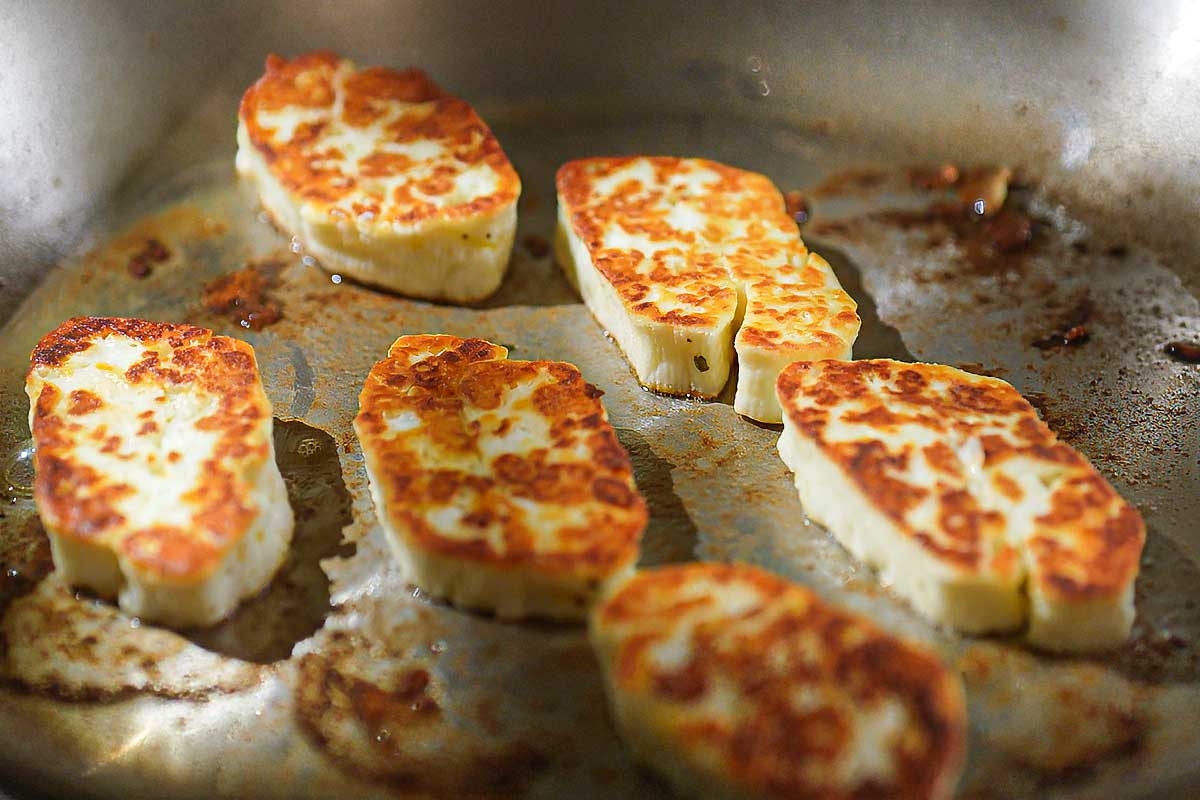
The secret is to start it in a dry pan first. Cook it for one to two minutes on each side with no oil at all. This wicks away the brine and excess moisture that would otherwise cause the cheese to stew in its own liquid instead of crisping up properly. It can stick a little but not too much, so use a thin fish spatula or egg flipper.
Once the moisture has cooked off, add a small drizzle of olive oil and cook for another 30 to 60 seconds per side. That’s when you get the golden, crisp exterior that makes halloumi worth eating.
 A Mediterranean Salad Worth Making
The salad here isn’t an afterthought. It’s doing real work.
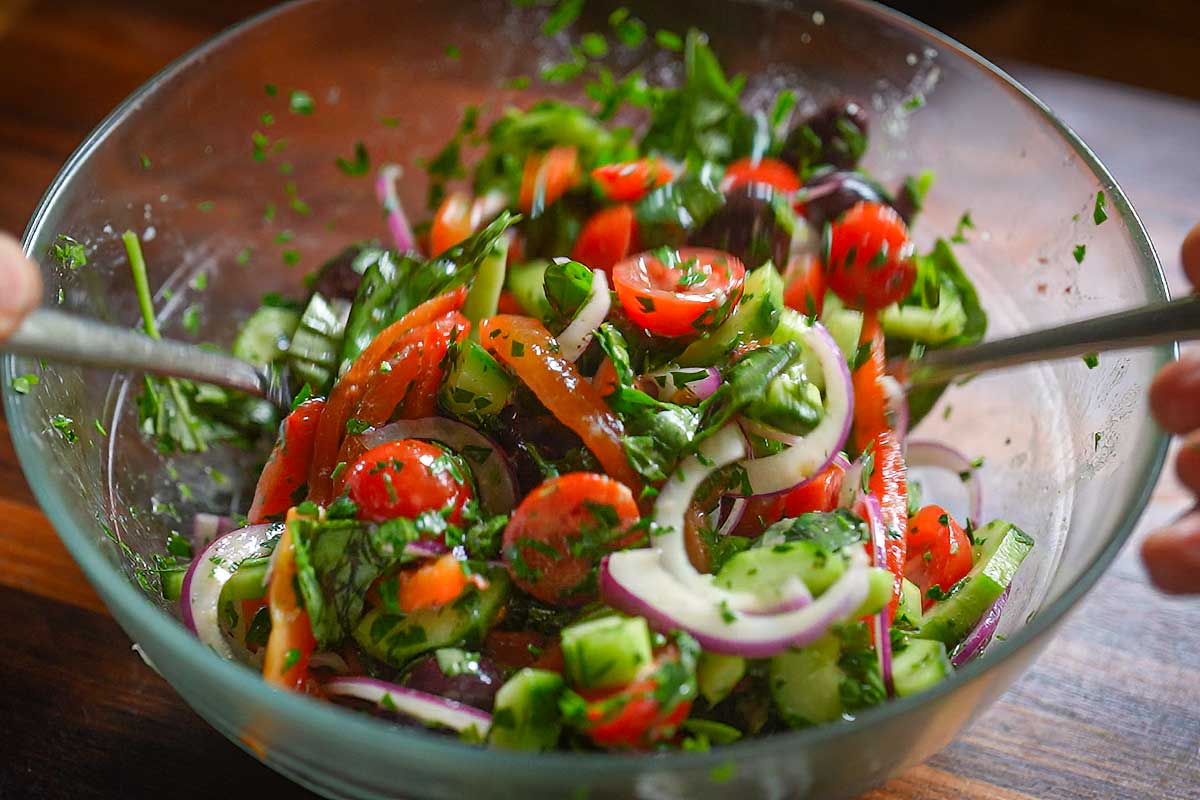
Cherry tomatoes, cucumber, red onion, kalamata olives, roasted capsicum, fresh basil and parsley. Every element brings something, sweetness, brine, crunch, freshness. Dressed in a sharp lemon and red wine vinegar dressing, it cuts straight through the richness of the warm cheese.
The toasted pine nuts on top add a buttery, nutty crunch that ties the whole thing together. Don’t skip them or use other nuts.
Cooking Tips
Pat the halloumi dry before cooking. Just like salmon, moisture is the enemy of a good crust. A few seconds with paper towel makes a real difference.
Start in a dry pan, no oil. This is the step most people miss. Give it 30 seconds to one minute each side before adding the oil.
Don’t walk away from the pine nuts. They go from pale to burnt in seconds. Toast them over medium heat, tossing constantly, and pull them the moment they turn golden, otherwise they will continue to darken if left in the pan.
Dress the salad before the halloumi goes in the pan. Everything is ready to plate the moment the cheese comes out, and you want to serve it immediately while it’s still warm and squeaky, not a minute later.
So serve straight away. Halloumi firms up and loses that wonderful squeak as it cools. This is a dish that waits for no one.
Ingredient Swaps
No roasted capsicum? Sun-dried tomatoes give a similar sweet, smoky depth and work beautifully in the salad.
No pine nuts? Toasted slivered almonds or roughly chopped walnuts give a similar nutty crunch.
No fresh basil? Fresh mint is a surprisingly good substitute here and keeps the Mediterranean feel going.
No red wine vinegar? White wine vinegar works well. Apple cider vinegar is a good backup too.
Common Mistakes
Skipping the dry pan step. Going straight to an oiled pan gives you pale, rubbery halloumi. Always start dry.
Cutting the halloumi too thin. Thin slices cook through too fast and lose that satisfying squeak. Thick slices, at least one centimetre, give you the right texture.
Letting it sit too long before serving. Halloumi is a dish to eat the moment it’s plated. It goes from perfect to chewy quickly once it starts cooling down.
Over-dressing the salad. The dressing is sharp and punchy. A light hand is better here as the halloumi and olives are already salty.
What to Serve With It
Warm pita bread on the side for scooping. It works beautifully with the lemony dressing.
A bowl of hummus alongside turns this into a proper spread.
Grilled flatbread brushed with olive oil and a little garlic rounds the meal out perfectly.
This also works brilliantly as a starter or side dish alongside grilled lamb or chicken.
Storage
Halloumi is best eaten fresh and does not reheat well. The texture becomes rubbery and dense once it cools and firms up.
The salad keeps well in the fridge for up to 2 days without the dressing. Add the dressing fresh each time.
Store any leftover dressing separately in a jar in the fridge for up to 5 days. It works on any salad.
FAQs
Is halloumi healthy?
Halloumi is high in protein and calcium, making it genuinely nutritious. It is also higher in sodium than many other cheeses due to the brining process, so it’s worth being mindful of portion size if you’re watching salt intake. As part of a Mediterranean diet alongside fresh vegetables, olive oil and herbs, it’s a great choice.
Is this recipe vegetarian?
Yes, completely vegetarian if you’re a cheese eater. It’s also naturally gluten free as written.
Can I grill the halloumi instead of pan-frying?
Absolutely. A hot grill or griddle pan gives beautiful char marks and a slightly smokier flavour. The same dry-first rule applies. Let the grill get hot before the cheese goes on.
Why does halloumi squeak when you eat it?
The squeak comes from the protein structure of the cheese. Halloumi has long, intact protein strands that rub against your teeth as you chew, creating that distinctive squeak. It’s a sign the cheese is fresh and hasn’t been overcooked.
Can I make this ahead for a dinner party?
You can prep the salad and dressing ahead of time and keep them separate in the fridge. Toast the pine nuts earlier in the day. Cook the halloumi fresh at the last minute as it needs to be served immediately.
Mediterranean Eating at Its Best
The Mediterranean diet is consistently ranked as one of the healthiest ways to eat on the planet, and dishes like this show exactly why.
Extra virgin olive oil, fresh vegetables, herbs, and quality protein sources like halloumi. Simple ingredients prepared with care, eaten with pleasure.
This isn’t diet food dressed up as something exciting. It’s genuinely delicious food that happens to be good for you too.
That’s always the goal and it’s always worked for me. I’m living proof.
 By
By 
You must be logged in to post a comment