
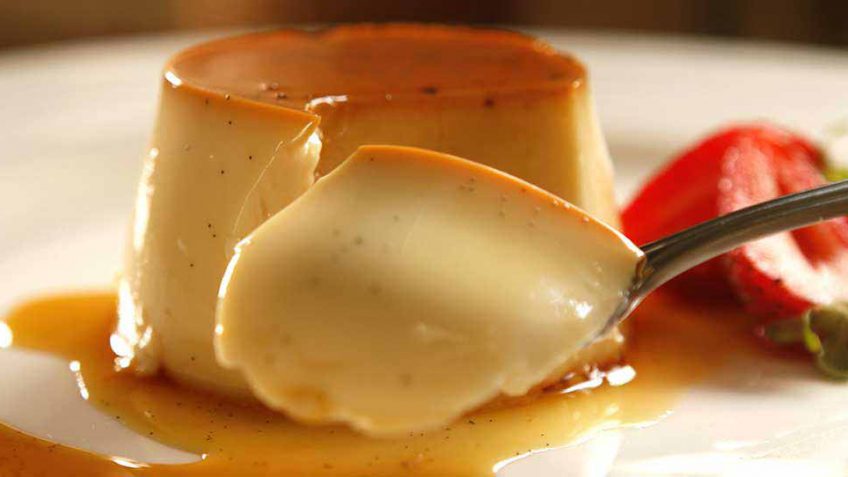
Made With Just Four Ingredients
A crème caramel is a delicate baked custard dessert topped with a runny caramel sauce. It’s one of the finest desserts in the world and yet remarkably simple to make.
This has always been one of my absolute favourites. In fact, I could eat a crème caramel every single day. What amazes me most is that something this elegant is made with only four ingredients.
It used to be a staple of French restaurant menus, cheap to make and perfectly suited to being prepared days in advance. The ultimate dinner party dessert.
Why Four Ingredients Demand the Best Quality
When a recipe has only four ingredients, there is nowhere to hide.
Always use full cream milk. Never low fat, not under any circumstance. The fat is what gives the custard its silky, rich texture.
Use a real vanilla bean or genuine vanilla bean extract. The lab-made versions are synthetic and the difference in flavour is noticeable. With only four ingredients, every one of them counts.
The Secret to Perfect Caramel
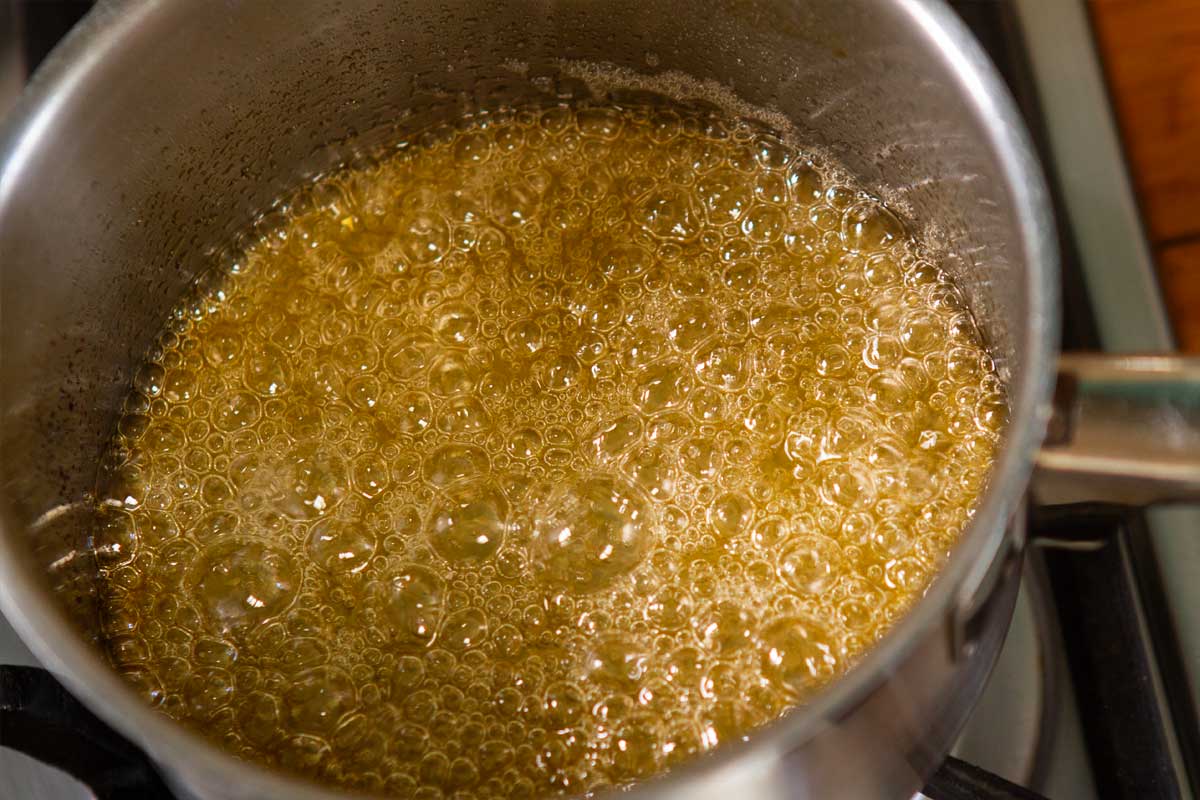
The caramel is where most people go wrong.
Too light and it has no flavour. Too dark and it turns bitter and unpleasant. You’re aiming for a deep amber colour with just a hint of bitterness. A little bitterness is highly regarded in a proper crème caramel. It balances the sweetness of the custard beautifully.
Once it starts to colour, shake the pan gently to distribute the heat evenly. Don’t stir it. Stirring causes crystallisation. Watch it carefully because caramel moves from perfect to burnt in seconds.
Why You Must Wait at Least One Day
This is the step that separates a good crème caramel from a great one.
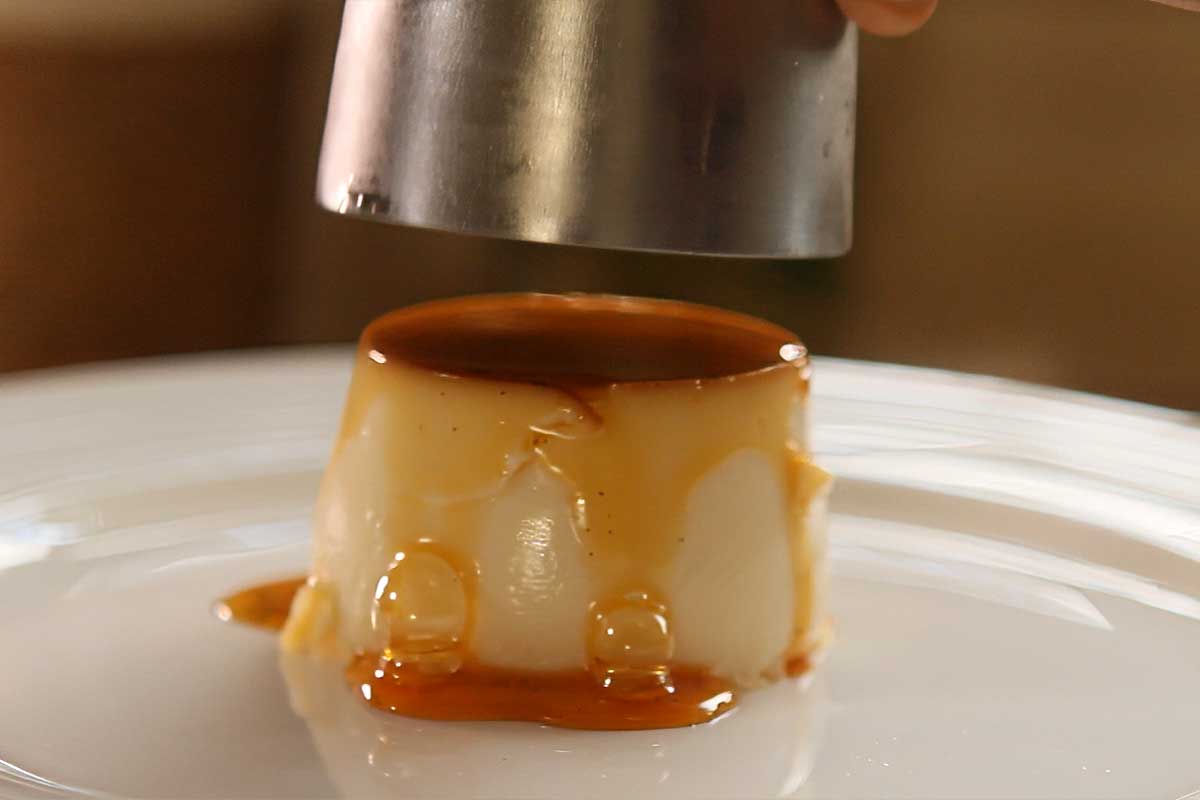
The hardened caramel at the bottom of the mould needs time in the fridge to slowly dissolve back into a liquid sauce. If you unmould it too soon, most of the caramel stays stuck to the bottom.
One day in the fridge is the minimum. Two days is even better. The patience is absolutely worth it.
The Bain Marie Is Non-Negotiable
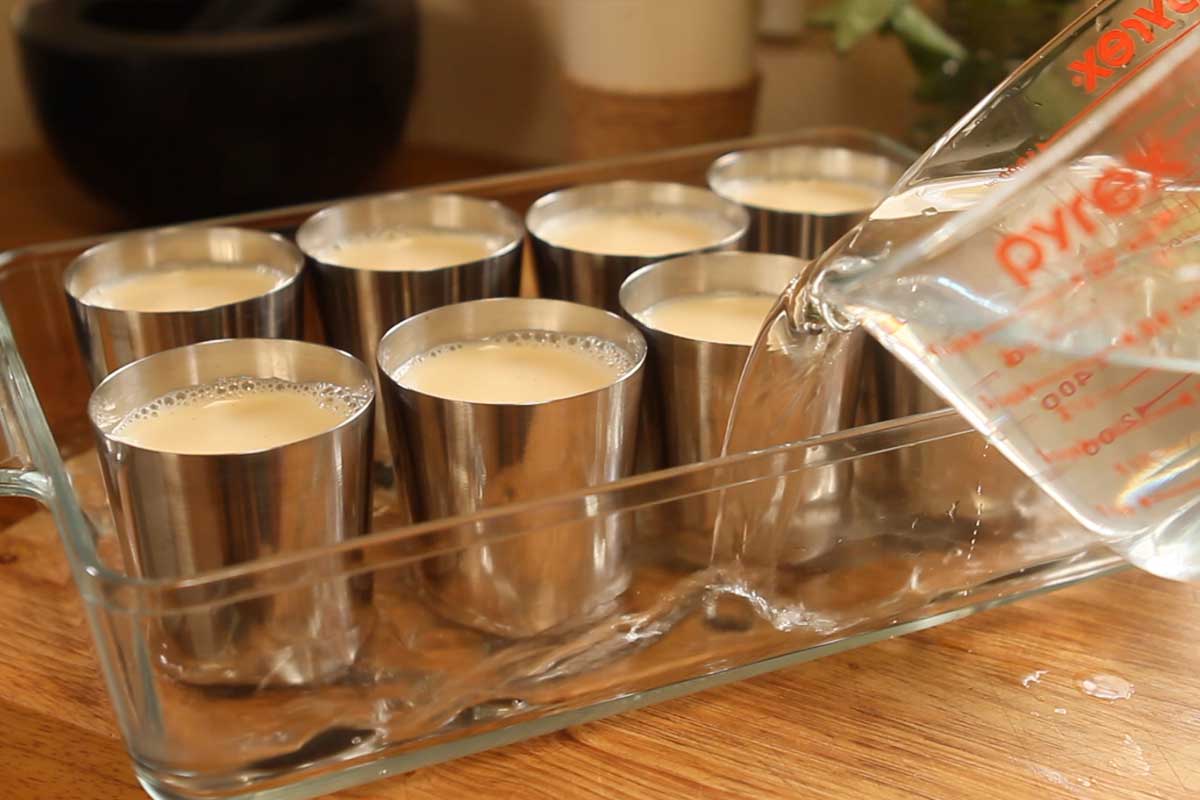
A crème caramel must be baked in a water bath, or bain marie.
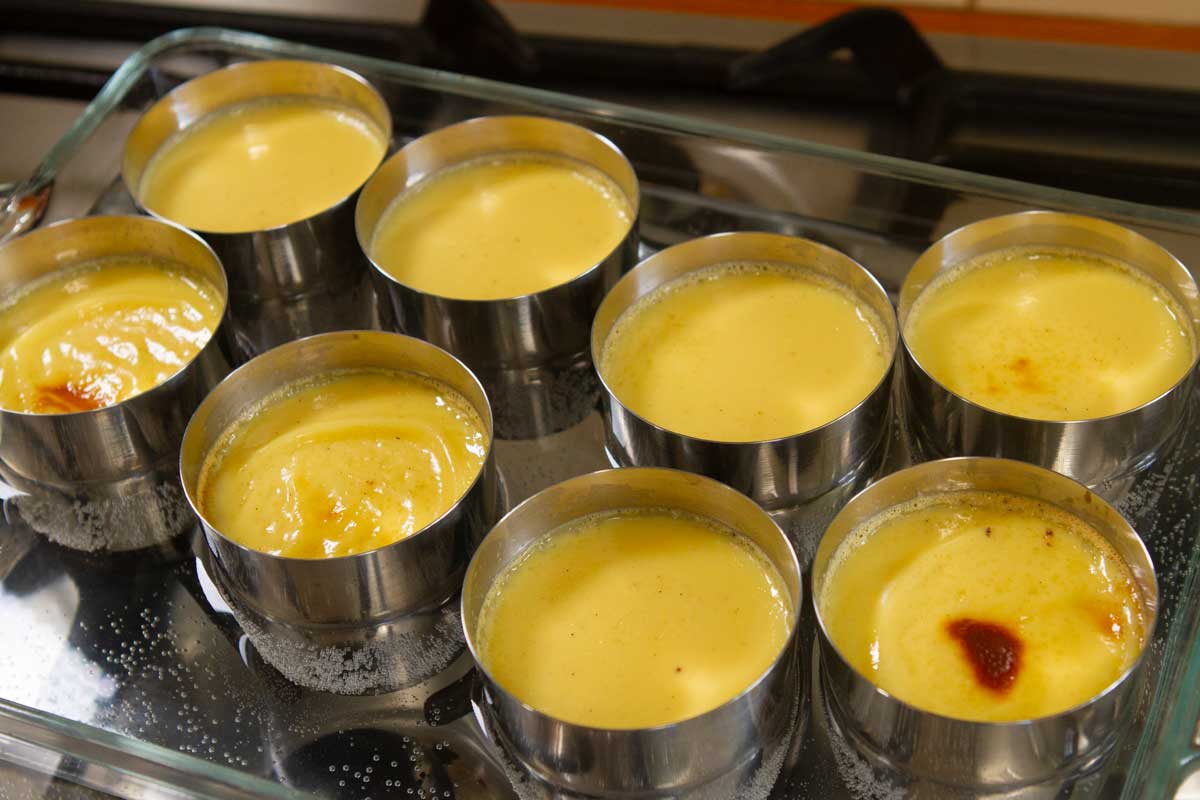
The surrounding water keeps the temperature gentle and even, preventing the edges from overcooking before the centre sets. Without the water bath, you get rubbery, curdled custard with bubbles on the sides.
A perfect crème caramel has no bubbles on the sides at all. Smooth, silky and clean. That’s the benchmark.
Cooking Tips
Strain the custard mixture through a fine sieve before pouring into moulds. This removes the vanilla pod, any cooked egg pieces and ensures a perfectly smooth custard.
Mix the custard by hand, not with an electric mixer. Vigorous mixing incorporates air which creates bubbles. Gentle hand mixing keeps the custard smooth.
Pour the hot milk into the egg mixture slowly while whisking constantly. Adding it all at once can scramble the eggs.
Be extremely careful when pouring the caramel. Caramel is one of the hottest substances in a kitchen and causes serious burns. Pour slowly and keep children away from this step.
Let the caramel cool for five minutes before filling the moulds with custard. Pouring custard onto caramel that’s still extremely hot can start cooking the bottom of the custard unevenly.
Common Mistakes
Unmoulding too soon. If the caramel hasn’t had enough time to dissolve in the fridge, it sticks to the bottom of the mould and won’t flow over the top. Always wait at least one full day.
Overcooking the custard. The crème caramel should have a very slight wobble in the centre when you remove it from the oven. It firms up as it cools. Overbaked custard goes rubbery and grainy.
Burning the caramel. Watch it constantly once it starts to colour. It goes from perfect amber to burnt in under a minute.
Using low fat milk. This produces a thin, watery custard without the silky richness that makes a crème caramel worth eating. Full cream milk only.
What to Serve With It
Crème caramel is perfect on its own. It needs nothing else.
A small amount of lightly whipped cream on the side adds richness if you want to make it feel even more indulgent.
A few fresh berries alongside provide a sharp contrast to the sweet caramel sauce.
Serve it cold, straight from the fridge. This is not a warm dessert.
Storage
Fridge: Crème caramel keeps beautifully in the fridge for up to 4 days in the mould. The flavour actually improves with time as the caramel continues to dissolve.
Do not freeze. The custard texture suffers badly after freezing and becomes grainy and watery on thawing.
Only unmould when ready to serve. Once unmoulded the caramel sauce begins to spread and the presentation is best eaten immediately.
FAQs
What is the difference between crème caramel and crème brûlée?
Both are baked custards but they are quite different. Crème caramel is made with whole milk and is unmoulded with a liquid caramel sauce on top. Crème brûlée is made with heavy cream, served in its dish and has a hard burnt sugar crust on top. Crème caramel is lighter and more delicate. Crème brûlée is richer and more indulgent.
Can I make crème caramel without a vanilla bean?
Yes. Use one teaspoon of genuine vanilla bean extract or vanilla bean paste. Avoid artificial vanilla essence as the flavour is noticeably inferior in a recipe this simple.
How do I know when the crème caramel is cooked?
Gently shake the baking dish. The custard should be set around the edges but have a slight wobble in the very centre, similar to a just-set jelly. It will firm up completely as it cools in the fridge.
Why does my crème caramel have bubbles on the sides?
Bubbles are usually caused by the oven temperature being too high or by whisking the custard too vigorously. Keep the oven at 160°C / 320°F and mix the custard gently by hand rather than with a mixer.
Can I make individual portions or one large crème caramel?
Both work beautifully. Individual ramekins or dariole moulds take around 35 to 40 minutes. A single large mould will need 50 to 60 minutes. Check with the wobble test rather than relying on time alone.
My caramel hardened before I could pour it. What happened?
Caramel sets very quickly once it leaves the heat. Work fast when pouring it into the moulds and tilt each mould to coat the base evenly before it sets. If it hardens in the pan, put it back over low heat with a splash of water to dissolve it again.
The Magic of Four Ingredients
There’s something deeply satisfying about a recipe that asks so little and delivers so much.
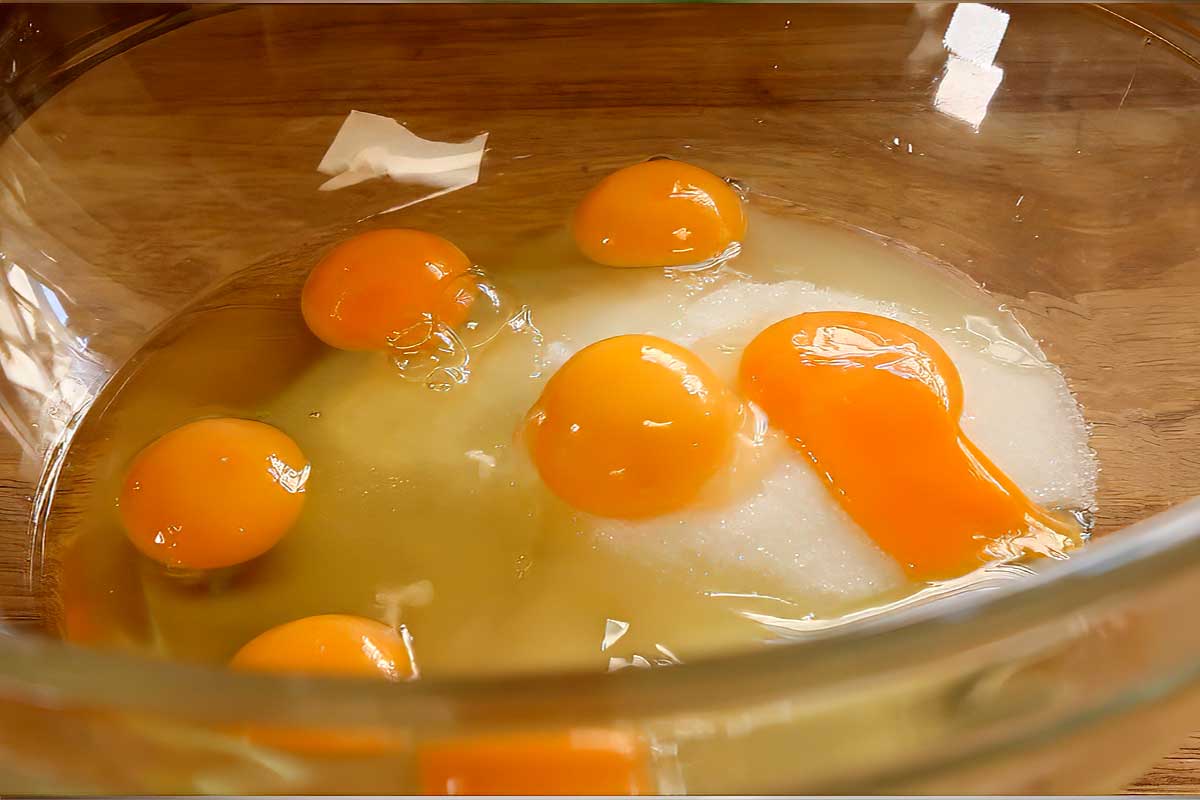
Sugar, eggs, milk, vanilla. Four humble ingredients transformed by patience and technique into something genuinely elegant.
Follow this recipe carefully, wait the full day in the fridge, and you will achieve perfection. Bon appétit.
 By
By 
You must be logged in to post a comment