
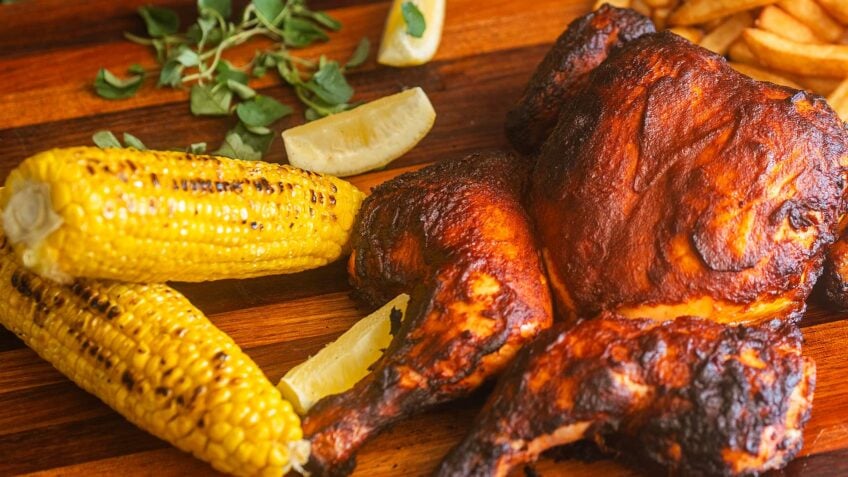
Portuguese Piri Piri Chicken
Juicy, smoky, spicy and packed with fresh chilli.
Piri Piri Chicken is Portuguese soul food with an African backbone. Those tiny bird’s eye chillies made the trip from South America to Africa, got tangled up with Portuguese charcoal grilling, and came back home as one of the country’s most iconic dishes.
This version skips the overnight marinade. Instead, the chicken gets a light salt cure, then builds its flavour on the grill, basted with a fresh piri piri sauce made from charred red pepper, chillies, garlic and lemon.
The result is crisp, smoky skin with heat that layers instead of just burning through. It’s the kind of cooking that feels like a conversation with history.
Kenji sat by the barbecue the entire time, hoping for a scrap, but I held the line, this one was too good to share. I actually caved and gave him the backbone, he loves them! Give this chicken a go.
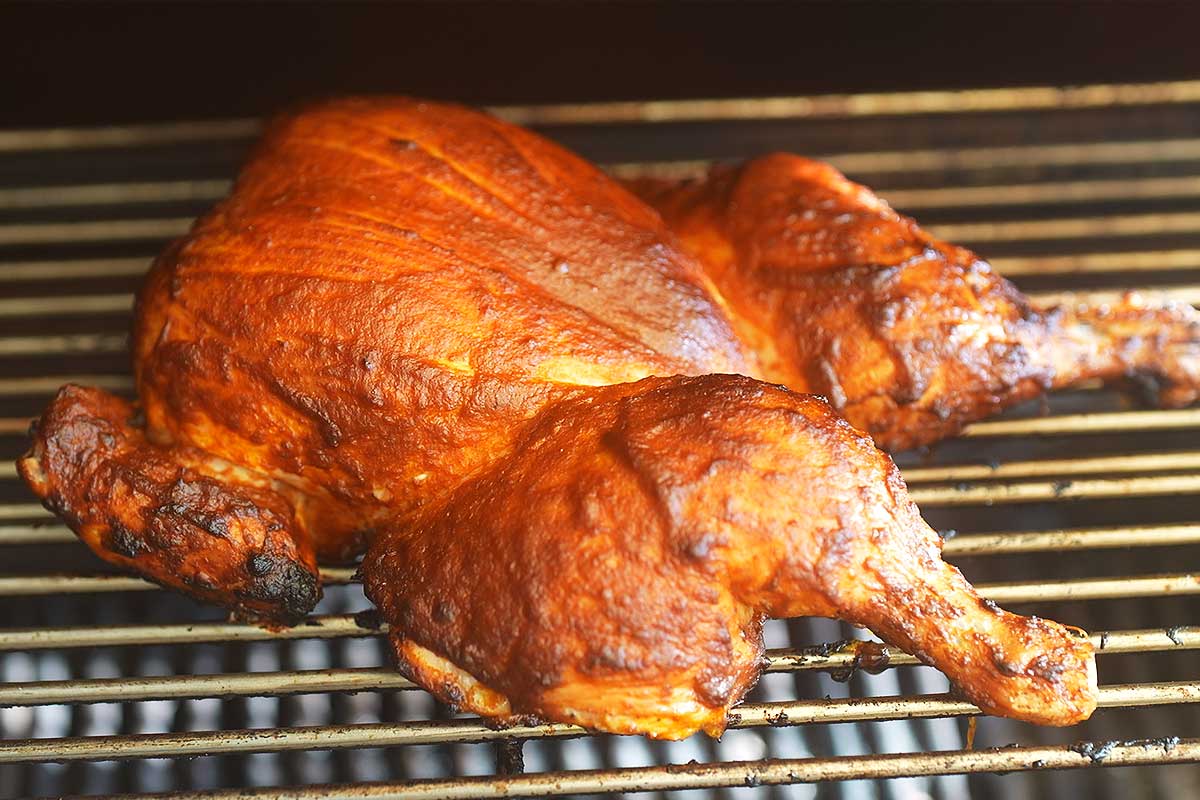
A Chilli That Travelled Further Than You’d Think
Piri piri chicken feels Portuguese through and through, but the chilli behind it started life on the other side of the world.
Bird’s eye chillies are originally South American. Portuguese traders picked them up and planted them in their African colonies, especially Mozambique and Angola.
There, the chilli met garlic, citrus and charcoal fire, and piri piri sauce was born. It sailed back to Portugal and never left the menu again.
So this dish is really three continents on one plate. South American chilli, African technique, Portuguese grill.
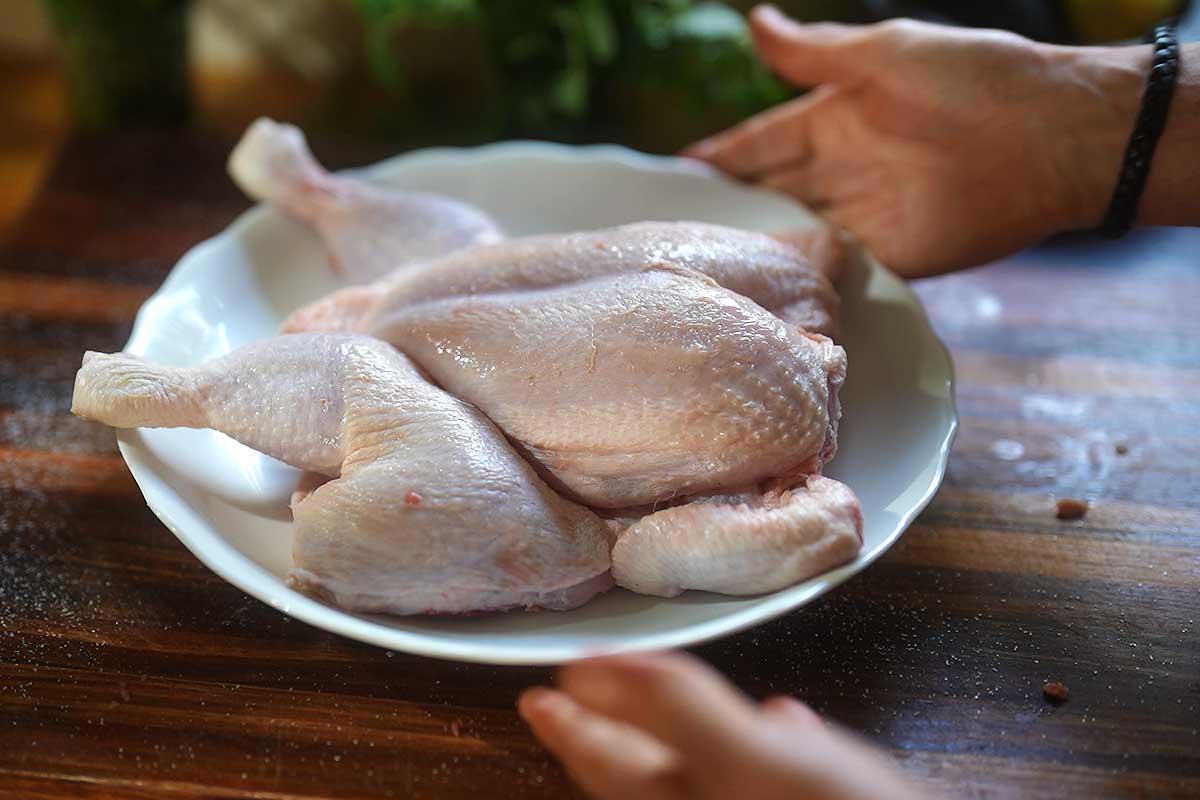
Why Salt Cure Instead of Marinade
Most piri piri recipes dunk the chicken in sauce overnight. This one does something different.
A light salt cure, uncovered in the fridge, dries the skin and seasons the meat right through. That is what gets you proper crackling skin instead of a soggy, steamed surface.
The fresh sauce goes on closer to cooking time, so it stays bright and vivid rather than dulling down overnight.
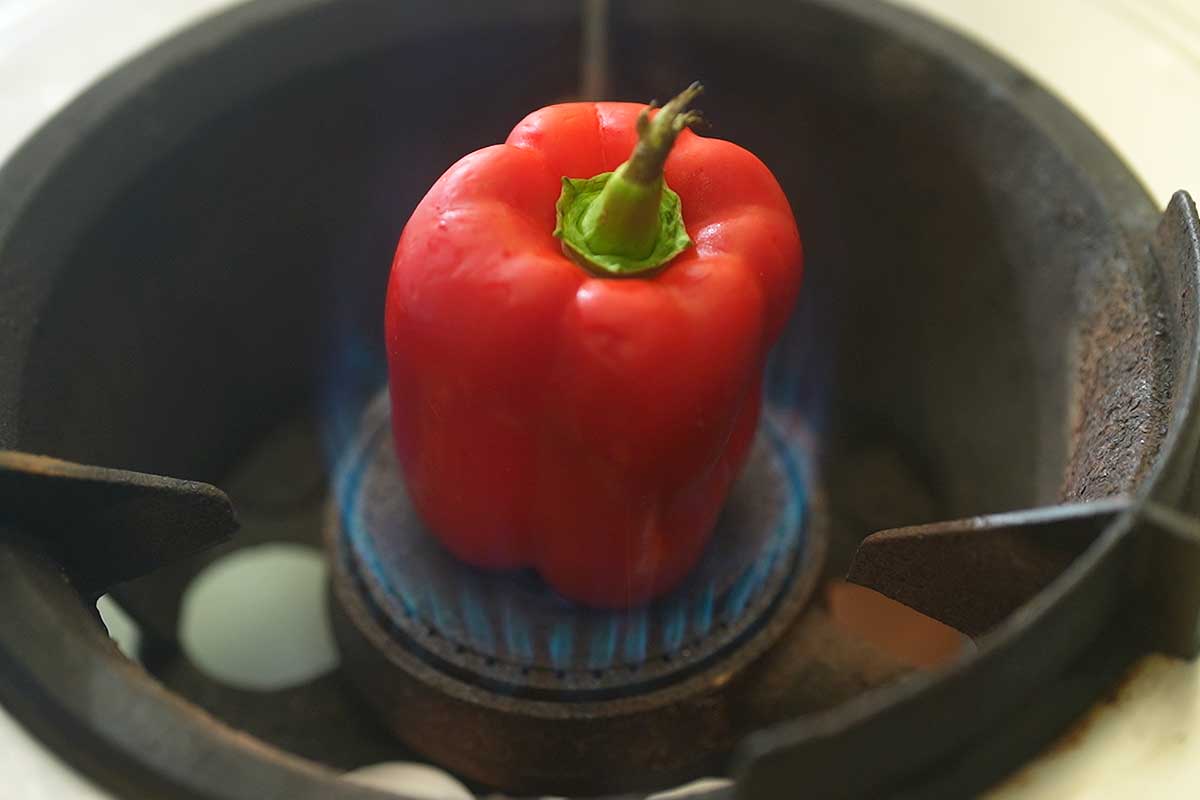
The Charred Pepper Is Doing the Real Work
Charring a whole red pepper until it is properly blackened is the step people skip, and it is the one that matters most.
That black skin brings a deep smokiness into the sauce, while the soft roasted flesh gives it body so the chilli does not just sit there shouting.
Blend that pepper with the chillies, garlic, lemon juice, vinegar and spices, and you get a sauce with actual depth, not just heat.
Direct Char or Low and Slow, Your Call
Some charring on the skin is a good thing here. Those blackened edges carry real flavour, not burnt bitterness, as long as you keep the fire under control.
If you would rather play it safer, cook the chicken over a lower indirect heat for longer instead of hard direct heat. You will get a softer colour but the same juicy result underneath.
Either way you are aiming for the same internal number, so use a thermometer rather than judging by colour alone.
Cooking Tips
Pat the chicken completely dry before salting. Moisture is the enemy of crisp skin.
Salt it uncovered for at least two hours, or overnight if you have the time.
Reserve a third of your sauce before it ever touches raw chicken. That portion is your basting and serving sauce.
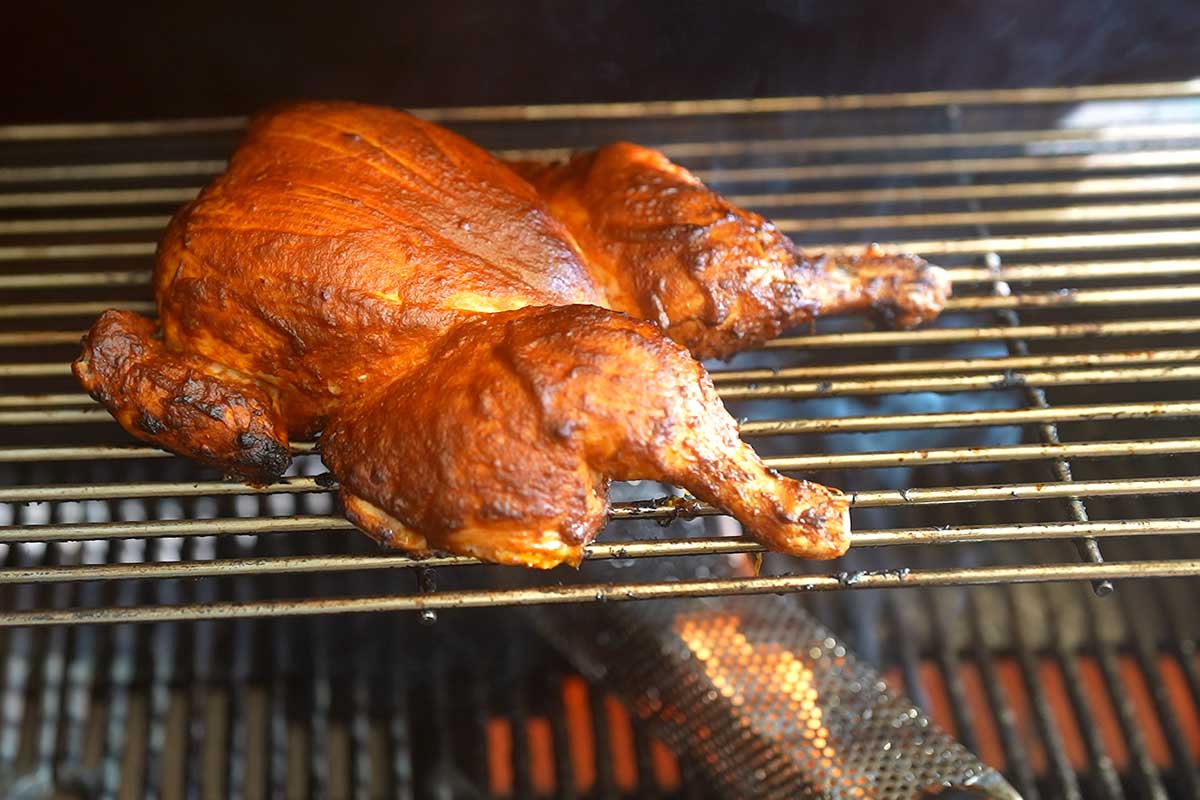
Set up your barbecue for two zones, direct heat on one side, indirect on the other.
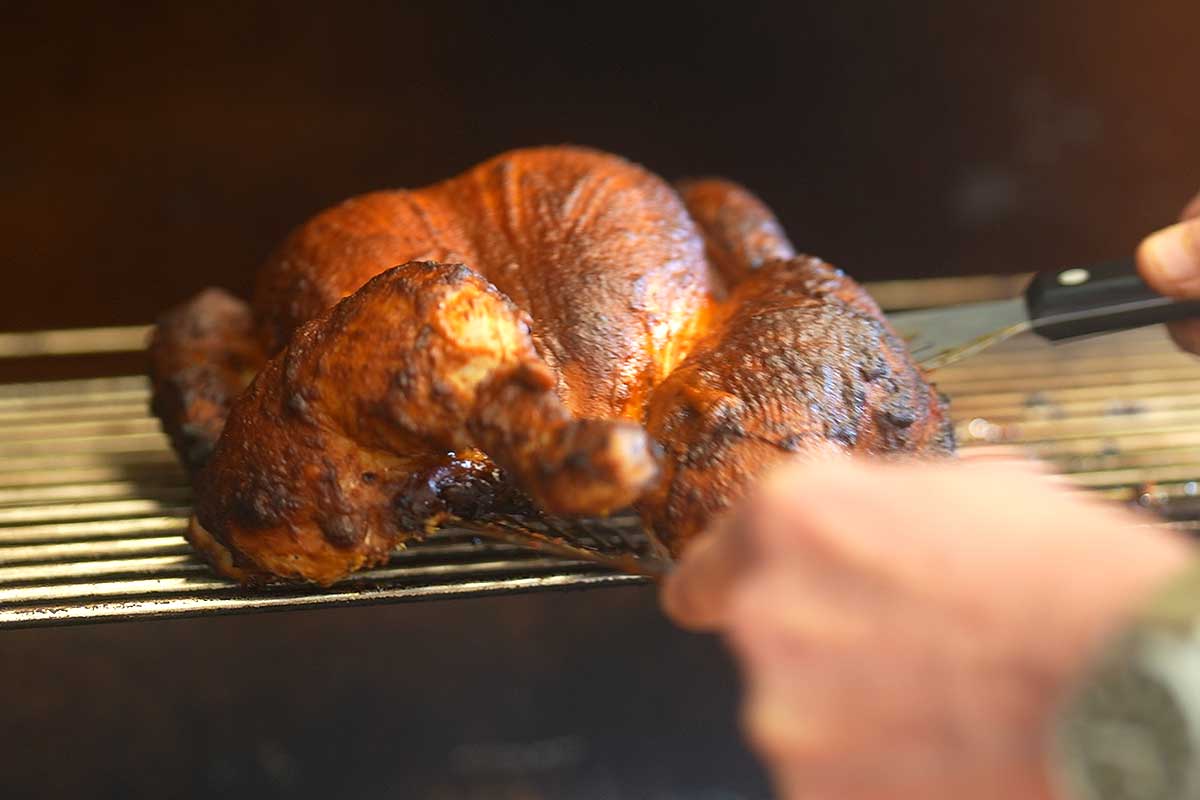
Start skin side over direct heat for colour, then move to indirect heat to finish cooking through.
Pull the chicken at 165°F | 74°C in the thickest part of the thigh, then rest it for ten minutes before carving.
Ingredient Swaps
No bird’s eye chillies where you are? Any small, hot fresh red chilli will get you close.
Red wine vinegar can be swapped for white wine vinegar if that is what is in the cupboard.
No charcoal barbecue? A gas grill with a smoke box, or even a very hot oven finished under the grill, will still get you most of the way there.
Common Mistakes
Basting with sauce that has touched raw chicken. Always keep a separate, clean portion aside before it goes anywhere near the bird.
Skipping the salt cure to save time. That dry skin is what gives you the crackle everyone is after.
Cooking entirely over direct heat. Great for colour, terrible for even cooking. That is what the indirect side is for.
![extra sauce in a small bowl]](https://b3067249.smushcdn.com/2.0/3067249/wp-content/uploads/2026/07/Portuguese-Piri-Piri-Chicken6.jpg?lossy=0&strip=1&webp=1)
What to Serve With It
French fries are the classic Portuguese side, thick cut and crisp.
Grilled vegetables cooked alongside the chicken pick up the same smoky character.
A scattering of fresh parsley and extra piri piri sauce on the side never goes astray.
Storage and Reheating
Leftovers keep in the fridge for up to three days in an airtight container.
Reheat gently in a covered frying pan with a splash of stock so the meat does not dry out.
The reserved sauce keeps separately in the fridge for about a week and is brilliant spooned over almost anything.
![Overhead of the full plate, chicken, fries, grilled vegetables and lemon wedges]](https://b3067249.smushcdn.com/2.0/3067249/wp-content/uploads/2026/07/Portuguese-Piri-Piri-Chicken7.jpg?lossy=0&strip=1&webp=1)
FAQs
Is piri piri chicken very spicy?
It has a real kick but you are in control. Fewer chillies gives you warmth, more chillies turns up the fire.
Why char the pepper instead of using it raw?
Charring builds smokiness and softens the flesh, which gives the sauce body instead of just raw pepper crunch.
![Whole red pepper blackened over open flame]](https://b3067249.smushcdn.com/2.0/3067249/wp-content/uploads/2026/07/Portuguese-Piri-Piri-Chicken8.jpg?lossy=0&strip=1&webp=1)
Do I have to use a charcoal barbecue?
No, but the fat dripping onto coals is where a lot of that traditional churrasqueira flavour comes from. A gas grill with a smoke box gets you close.
What is the difference between piri piri and peri peri?
Same thing, different spelling. It comes down to regional and brand variations, not a different sauce.
Can I use bottled piri piri sauce instead?
You can, but a fresh batch with charred pepper takes twenty minutes and tastes miles better.
Get the Fire Going
This is one of those recipes that turns an ordinary dinner into an event.
Get the coals going, or the gas BBQ, char it your way, and let the chicken do the rest.
 By
By 
You must be logged in to post a comment