
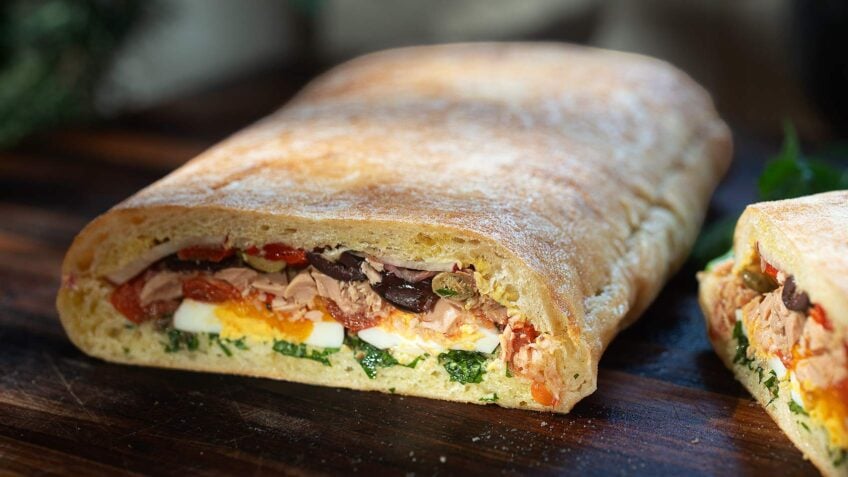
The Sandwich That Ruins All Other Sandwiches
Servings: 4 | Prep Time: 30 minutes | Pressing Time: 1-2 hours (or overnight) | Ready In: 2-3 hours
Pan bagnat means bathed bread in Provençal French, and the bread absolutely bathes in good olive oil.
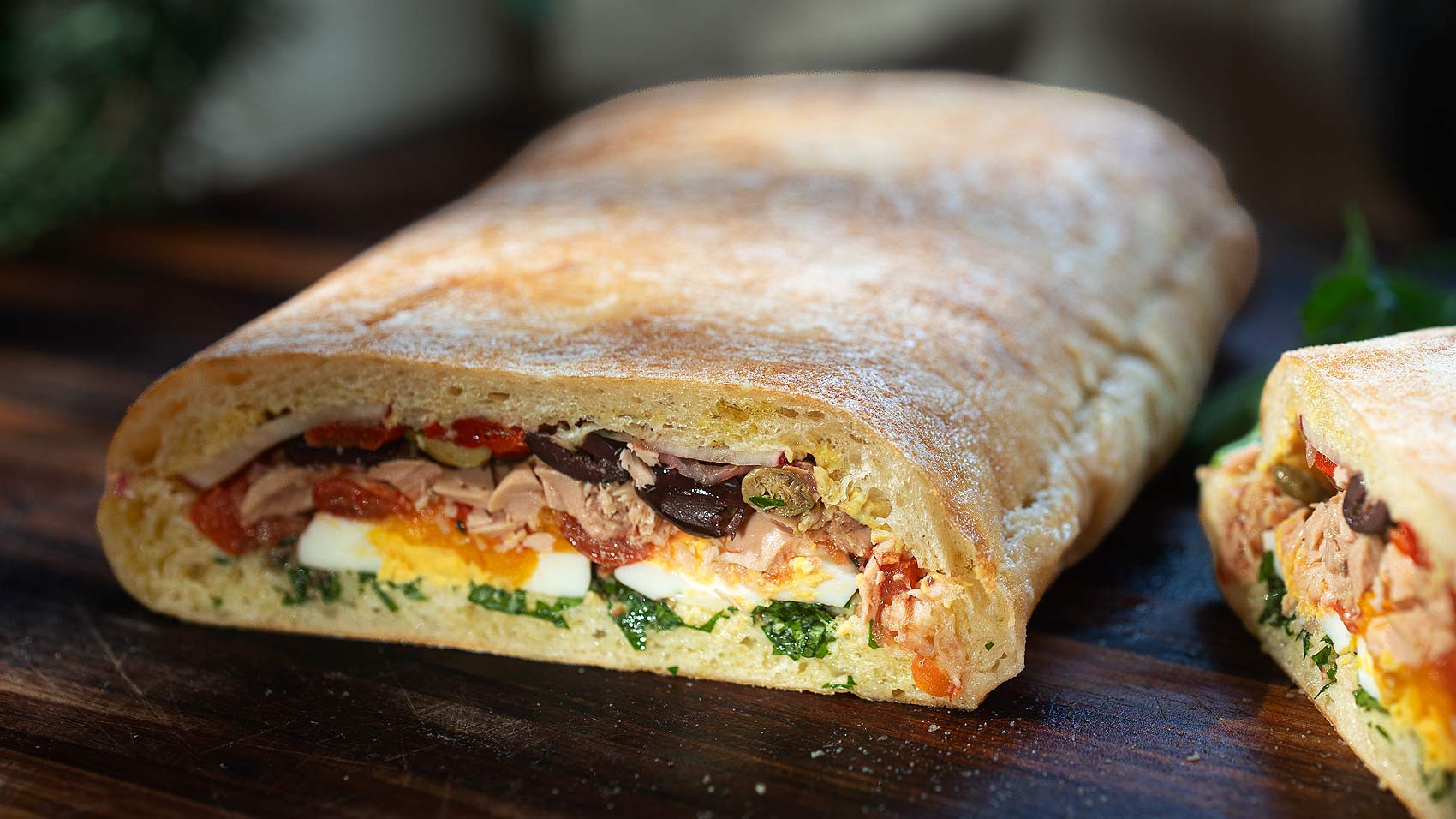
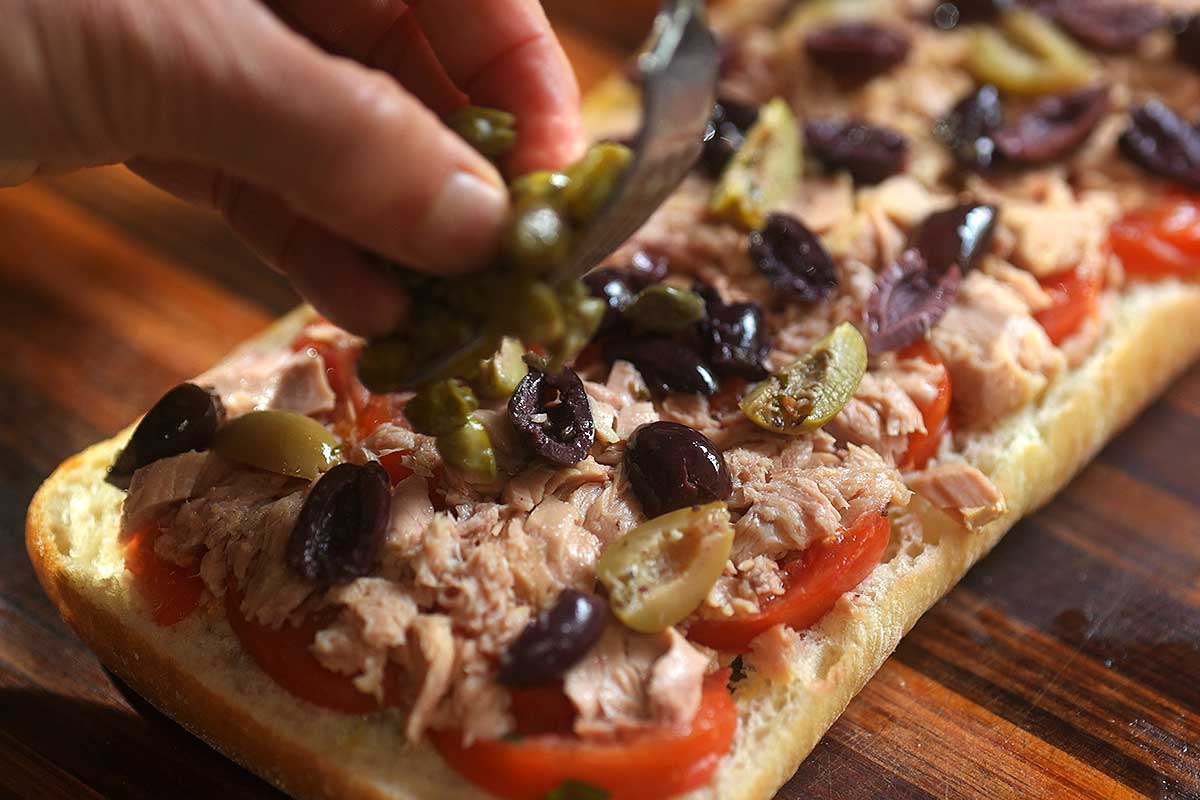
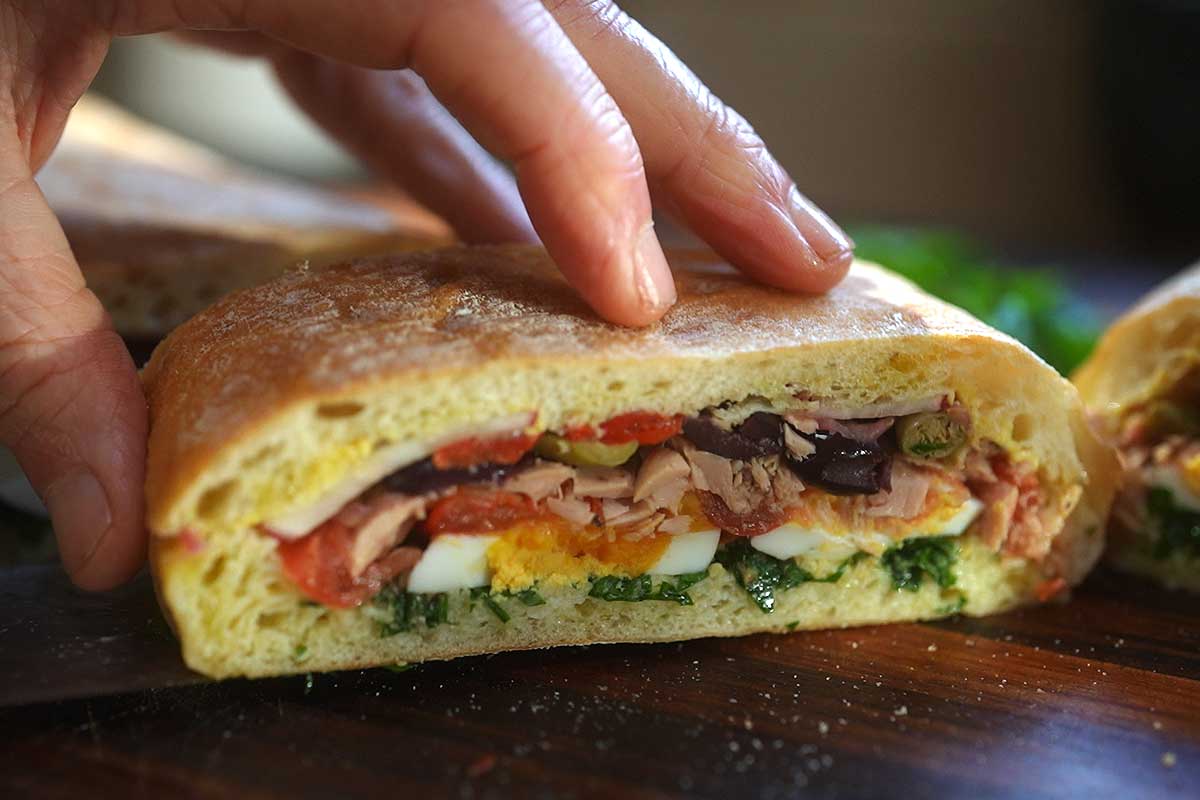
Tuna, briny olives, pickled onions, hard-boiled eggs and ripe tomatoes all pressed together until every bite is perfectly unified.
Make it once and you’ll get why the French don’t do fast food.
A Worker’s Sandwich From Old Nice
Not the fancy postcard Nice. The old Nice. Fishermen, markets, tomatoes, olives, anchovies, bread.
Pan bagnat started as a worker’s sandwich. A way to take simple ingredients and turn them into a full meal you could carry to the docks or the fields and eat with your hands.
The name means bathed bread. And that is the secret. The bread is not just holding the filling. It is drinking it.
Why the Bread Drinks the Filling
Olive oil. Tomato juice. A little vinegar. Anchovy. Basil.
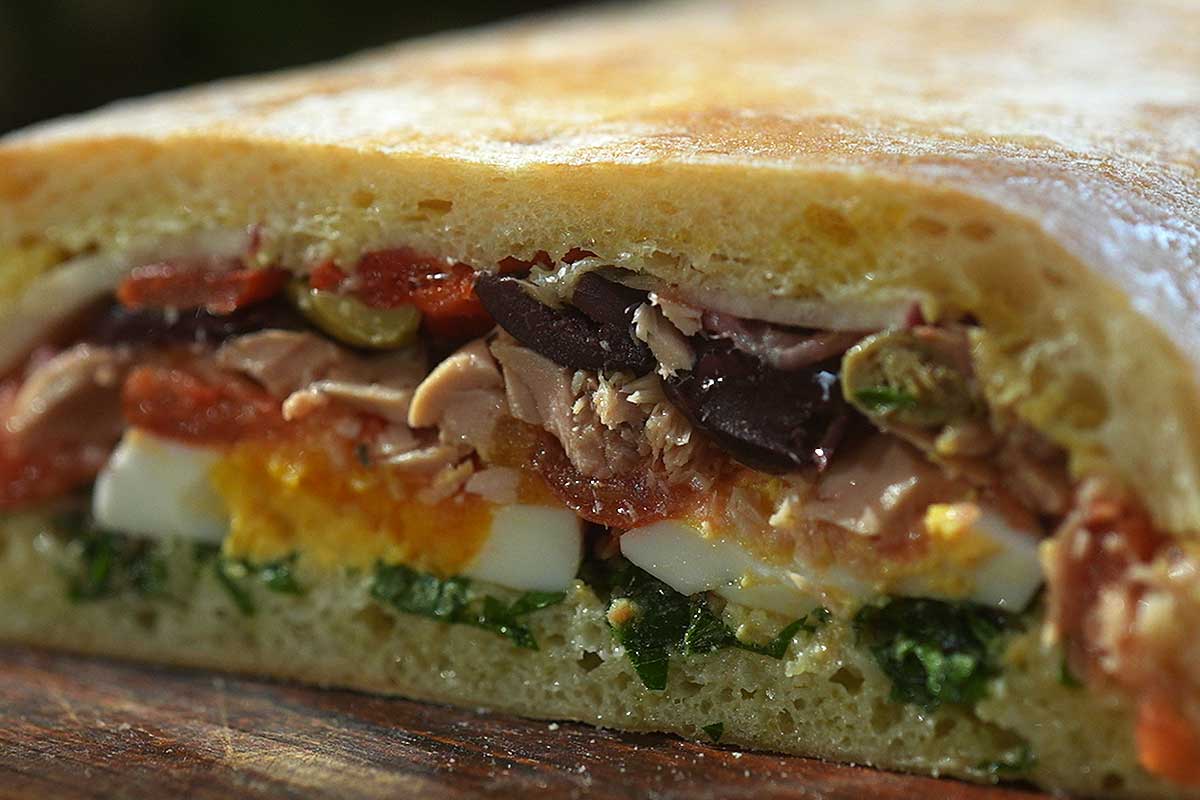
Everything gets pressed together until the sandwich becomes one thing. Not bread here and filling there. One juicy, salty, Mediterranean beast.
And yes, it should be mostly filling. The bread is only the boat. The treasure is inside.
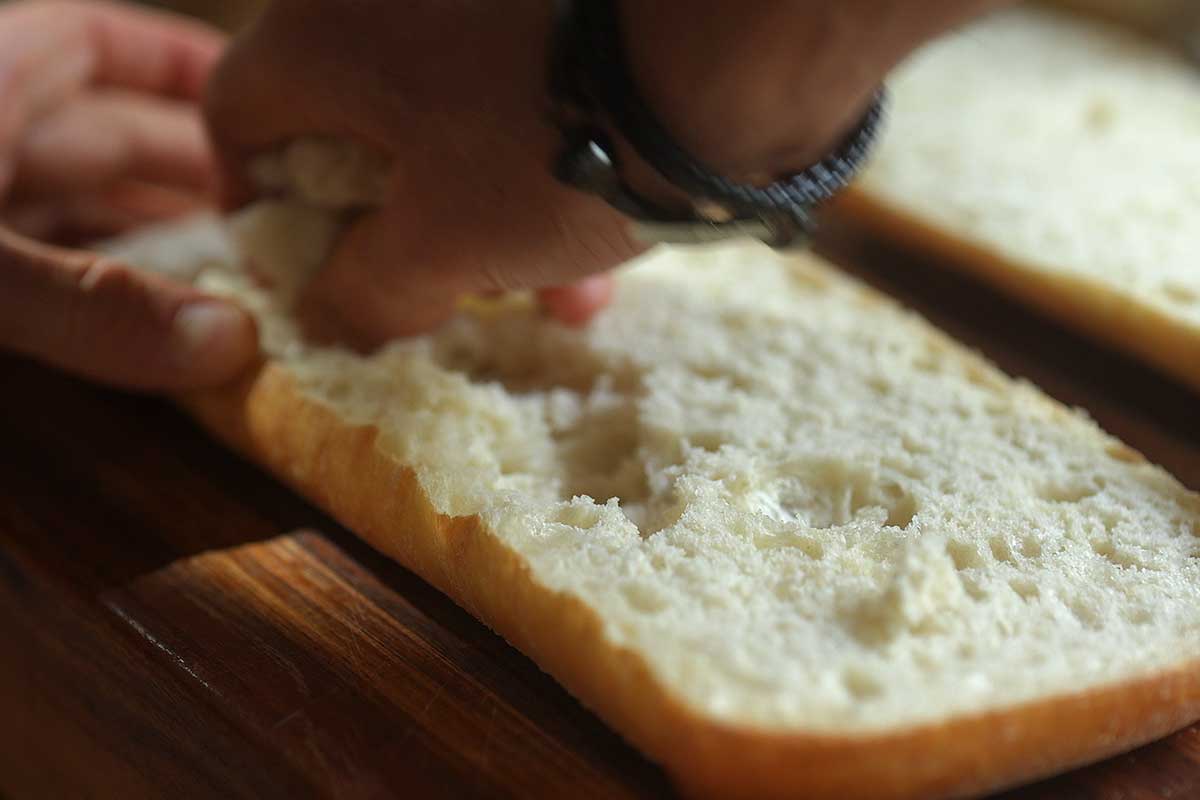
Why You Hollow Out the Bread
This is the step that makes Pan Bagnat different from just piling fillings onto a baguette.
Removing the soft crumb from the centre of the loaf creates a channel, leaving just the crust and a thin layer of bread intact. That channel does two things. It holds far more filling than a flat sandwich could, and it gives all that olive oil and tomato juice somewhere to soak into rather than running straight out the sides.
The crust stays the structural shell. The hollow inside becomes a vessel built specifically to drink in flavour.
The Pressing Step Is Not Optional
Weighing the sandwich down for one to two hours, or overnight in the fridge, is what actually makes Pan Bagnat work.
Under that weight, the tomato juices, olive oil, vinegar and anchovy oil are forced into the bread. The layers compress into each other. By the time you slice it, every single layer has flavoured every other layer. It’s no longer a sandwich with separate components. It’s unified.
Skip the pressing and you have a decent sandwich. Do the pressing and you have something genuinely transformed.
Cooking Tips
Don’t drain the tomato juices after seasoning. Those juices are exactly what soaks into the bread during pressing. Draining them away wastes the most important flavour in the whole build.
Crush the anchovy and herb paste together rather than just stirring. Crushing breaks the anchovy down properly so it disappears into the parsley and basil rather than sitting in distinct pieces.
Let the pickled onion sit in the vinegar for the full prep time. Even thirty minutes mellows the sharpness and gives you a gentler, more rounded onion flavour by the time it goes into the sandwich.
Layer in the order given. The sequence matters for how the juices distribute and how the sandwich holds together once sliced.
Use a flat tray with a heavy weight on top for pressing, not just your hands. Consistent, even weight over the full one to two hours is what does the real work.
Slice with a sharp serrated knife once pressed. The layers should hold together cleanly rather than sliding apart.
Ingredient Swaps
No ventresca tuna? Any good quality tuna in olive oil works well. The oil it’s packed in matters more than the specific cut, since that oil becomes part of the flavour.
No anchovies? A teaspoon of capers brine stirred into the herb paste gives a similar briny depth, though anchovy lovers will notice the difference.
No Castelvetrano olives? Kalamata or any good quality olive works. Niçoise olives are the most traditional choice if you can find them.
No red bell pepper? Thinly sliced cucumber adds a similar crunch and freshness without the sweetness.
Common Mistakes
Skipping the pressing step entirely. This is the single most important technique in the whole recipe. Without it, you just have a packed sandwich, not a true Pan Bagnat.
Removing too much bread from the centre. You want a thin shell of crust remaining, not a paper-thin sliver that falls apart. Leave around 5mm of bread around the crust.
Draining the tomato juices. They’re not waste, they’re an ingredient. Keep every drop.
Eating it immediately after building. The whole point is the rest and the press. Patience is the technique here.
What to Serve With It
This sandwich is a complete meal on its own. It doesn’t need much alongside it.
A simple green salad if you want to round the meal out further.
A glass of crisp rosé. This is what’s traditionally drunk with Pan Bagnat along the French Riviera, and it pairs perfectly.
Good olives and a small dish of extra anchovies on the side for anyone who wants more of that briny hit.
Storage
Best eaten the day it is made. The pressing and resting is part of the dish, but once sliced and exposed to air the bread can become too soft if held much longer.
If you must store leftovers, wrap tightly and refrigerate for up to 1 day. The texture will soften further but the flavour remains excellent.
Do not freeze. The tomatoes, eggs and bread all suffer badly in texture after freezing.
FAQs
What does Pan Bagnat mean?
It means bathed bread in the Provençal dialect of southern France. The name refers to the way the bread is deliberately soaked in olive oil and the juices of the filling, rather than staying dry the way most sandwich bread does.
Can I make this without anchovies?
Yes, though anchovies are traditional and add a savoury depth that’s hard to replace exactly. If you’re avoiding them, a little extra caper brine in the herb paste gets you closer to that briny, umami character.
How long should I press it for?
One to two hours at room temperature is the minimum for the flavours to properly meld. Overnight in the fridge gives an even better result, as the bread has more time to absorb all the juices and oils. Longer pressing generally means a better sandwich, within reason.
Can I make this ahead for a picnic?
This is exactly what Pan Bagnat was built for. Press it the night before, keep it wrapped tightly in the fridge, and it travels brilliantly. Slice it just before serving or pack it pre-sliced in foil for easy eating outdoors.
Is this recipe gluten free?
Not as written, since the bread is the structural foundation of the entire dish. A gluten free crusty loaf could be substituted but the hollowing and pressing technique works best with a sturdy, crusty bread that can hold its shape under weight.
One Juicy, Salty, Mediterranean Beast
Early morning. The sea is quiet. The birds are awake. Kenji is pretending he has important coastal business.
And this is exactly the kind of morning that makes you think of Nice. Not the postcard version. The old one. Fishermen, markets, simple food built to carry you through a working day.
Press it, wait, then unwrap something that tastes like the whole Mediterranean coastline in one bite.
 By
By 
You must be logged in to post a comment