
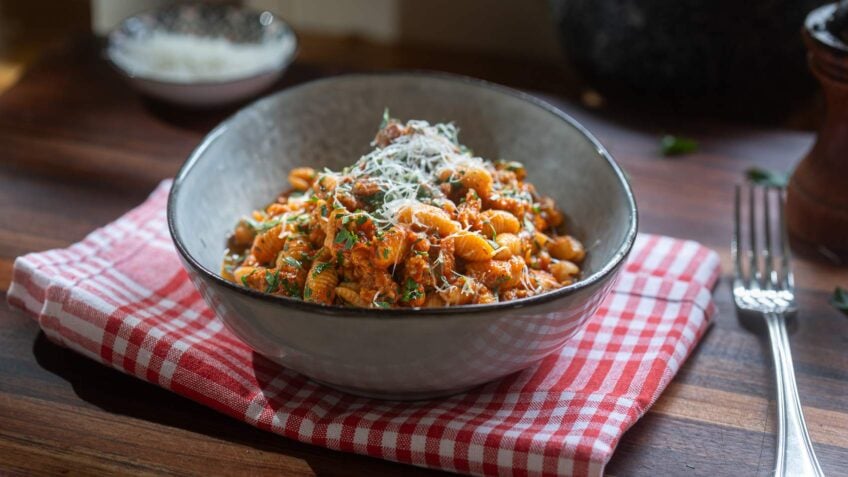
A Bowl of Pasta That Tastes Like a Trip to Sardinia
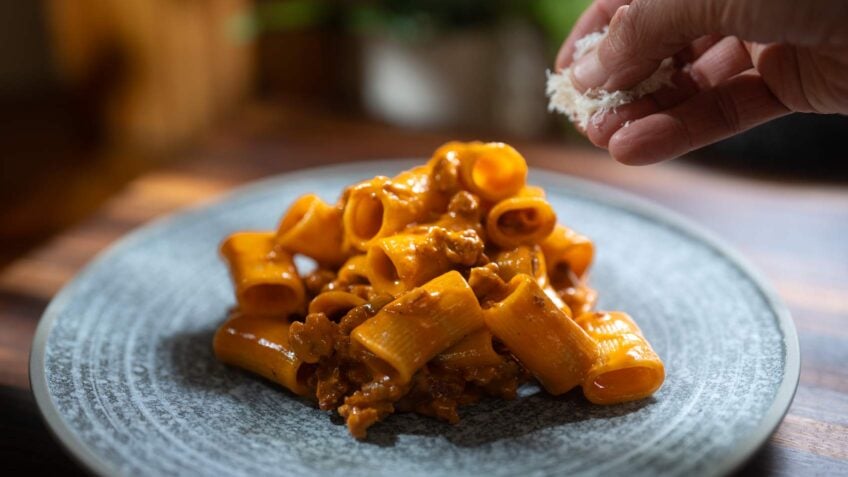
This isn’t just a bowl of pasta. It’s a trip to the rugged, sun-drenched hills of Sardinia.
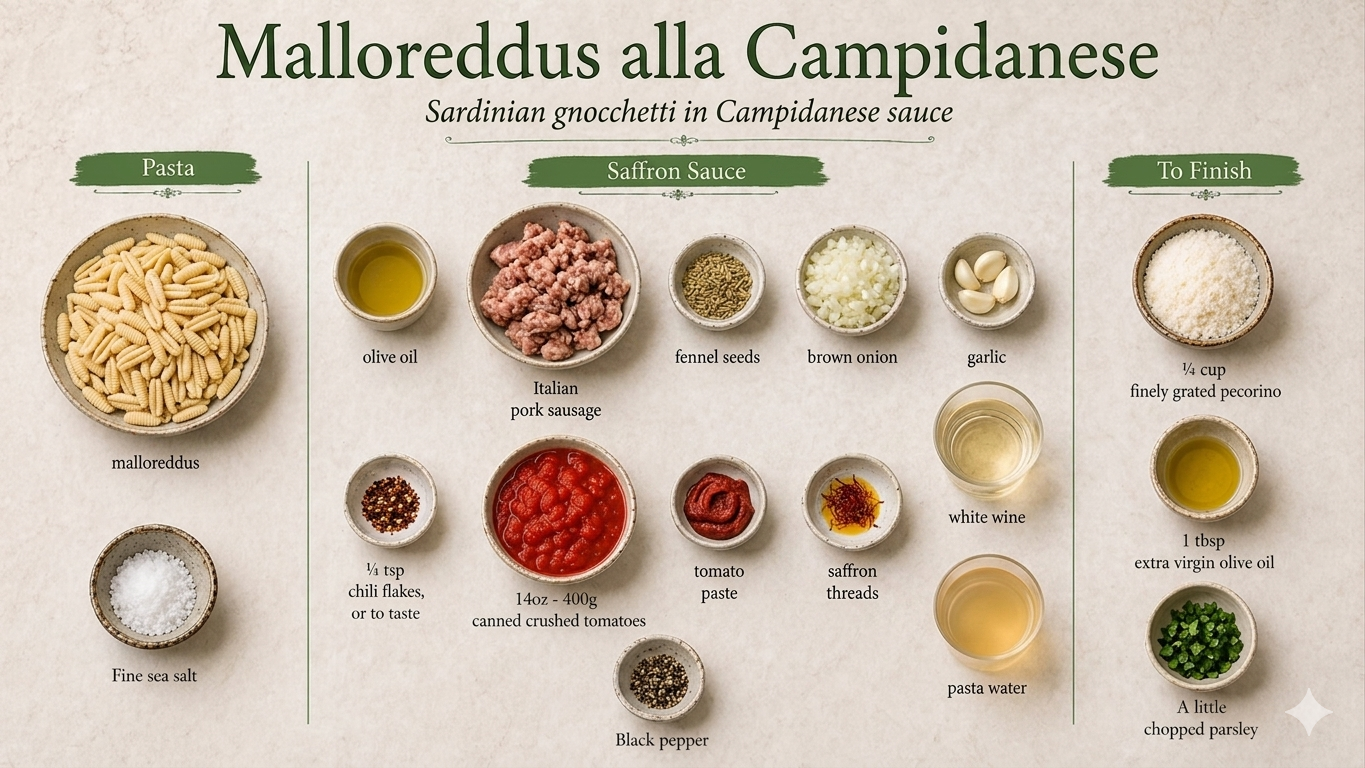
When you toast those malloreddus, you’re smelling the ancient semolina fields. As the sausage hits the fennel and saffron, the aroma is heavy and warm. It feels like a hug from a nonna you never knew you had.
Comfort food that tastes like history. Grounding, satisfying, and best eaten with a glass of wine and no particular plans.
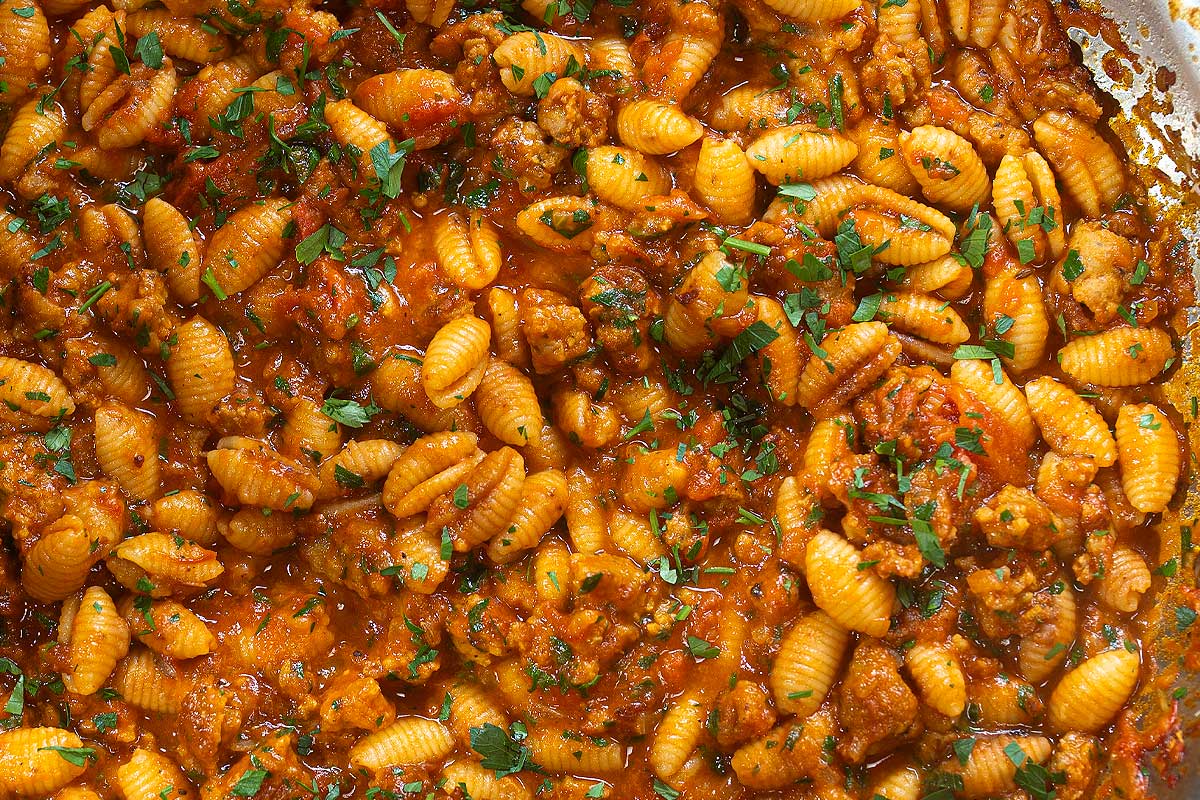
What Is Malloreddus and Why Is It Not Mini Gnocchi?
Most people assume gnocchetti are just small gnocchi. That’s a myth worth correcting.
Traditional malloreddus are made from durum wheat semolina and water, not potato. They’re a uniquely Sardinian pasta with a dense, chewy texture and ridged surface designed to hold thick, meaty sauces exactly like this one.
The name malloreddus roughly translates to little bulls in Sardinian dialect. They’ve been made on the island for centuries and are considered one of Sardinia’s most important culinary traditions.
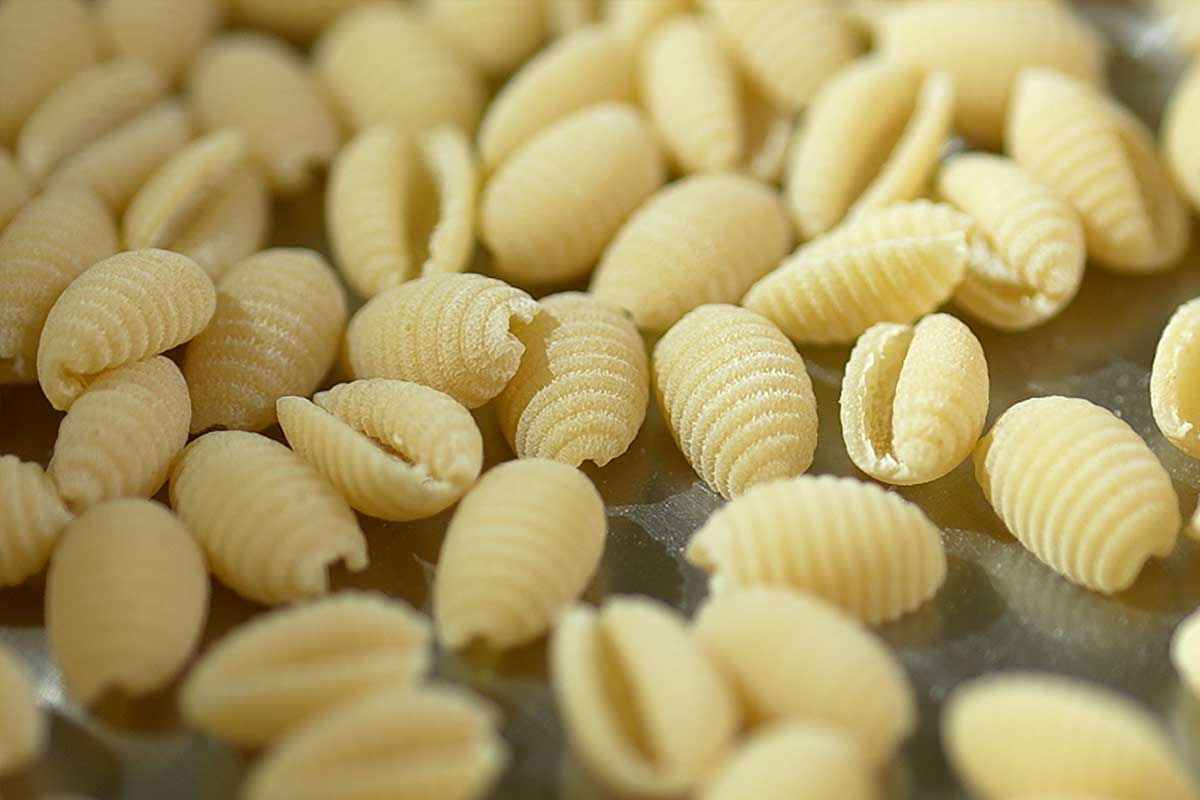
The Toasting Step That Changes Everything
Most pasta recipes tell you to go straight to the boiling water. Mine doesn’t. And that difference matters.
Toasting dry malloreddus in a hot pan triggers the Maillard reaction on the starch molecules before they ever hit the water. This doesn’t just add a subtle nutty flavour. It creates a protective barrier that keeps the pasta al dente longer and prevents the starch from leaching out too quickly.
The result is pasta that holds its texture in the sauce and lets the ridges grip every drop of that saffron and pork ragù rather than letting it slide off. Two minutes in a dry pan. Don’t skip it.
Why Saffron Is More Than Just Colour
In Sardinian tradition, saffron was known as red gold. It was one of the island’s most prized exports and it still grows there today.
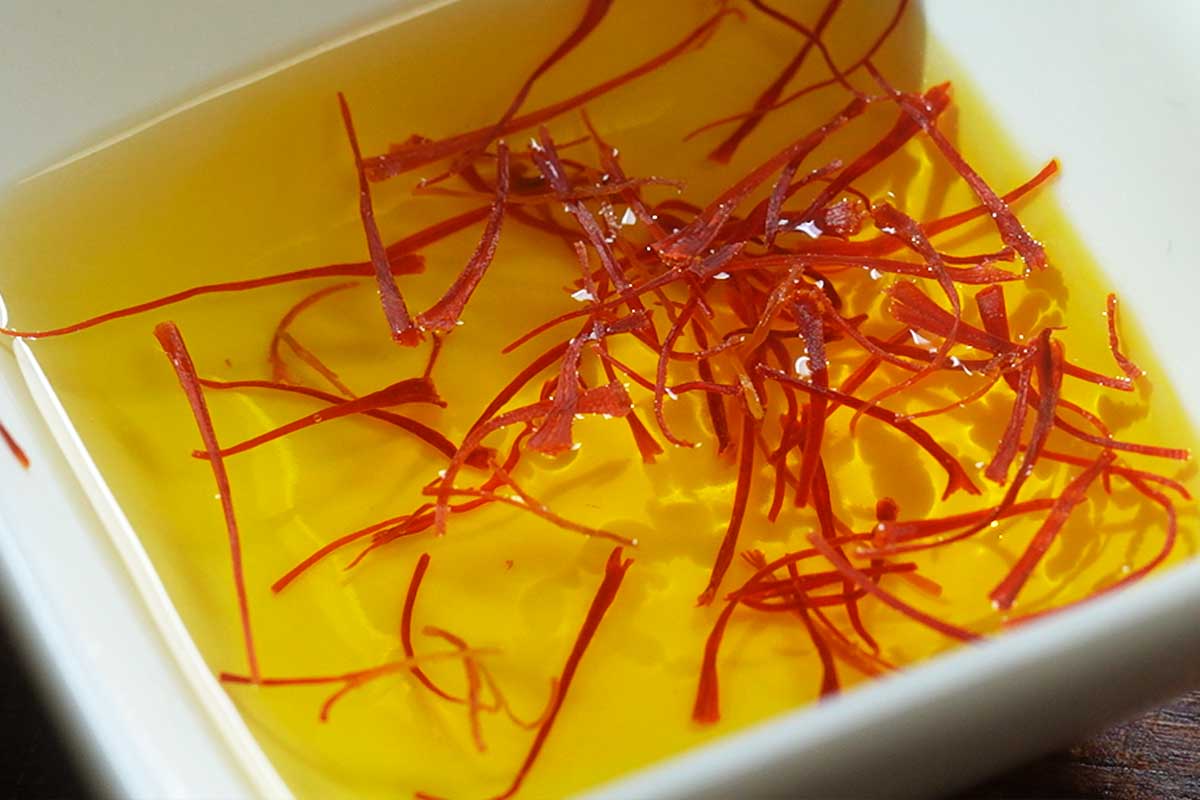
The reason you steep the threads in hot water first is chemistry. Saffron contains two key compounds, crocin which is water-soluble and safranal which is oil-soluble. By steeping in water and then adding it to the pork fat in the pan, you unlock the full spectrum of its floral, earthy profile. Tossing it in dry would give you colour but miss half the flavour entirely.
A small pinch does a lot here. Don’t overdo it. Maybe I did a little as I love it!
Cooking Tips
Toast the malloreddus in a dry pan for two minutes before boiling. Toss often and pull them off before they colour. You want fragrant and nutty, not brown.
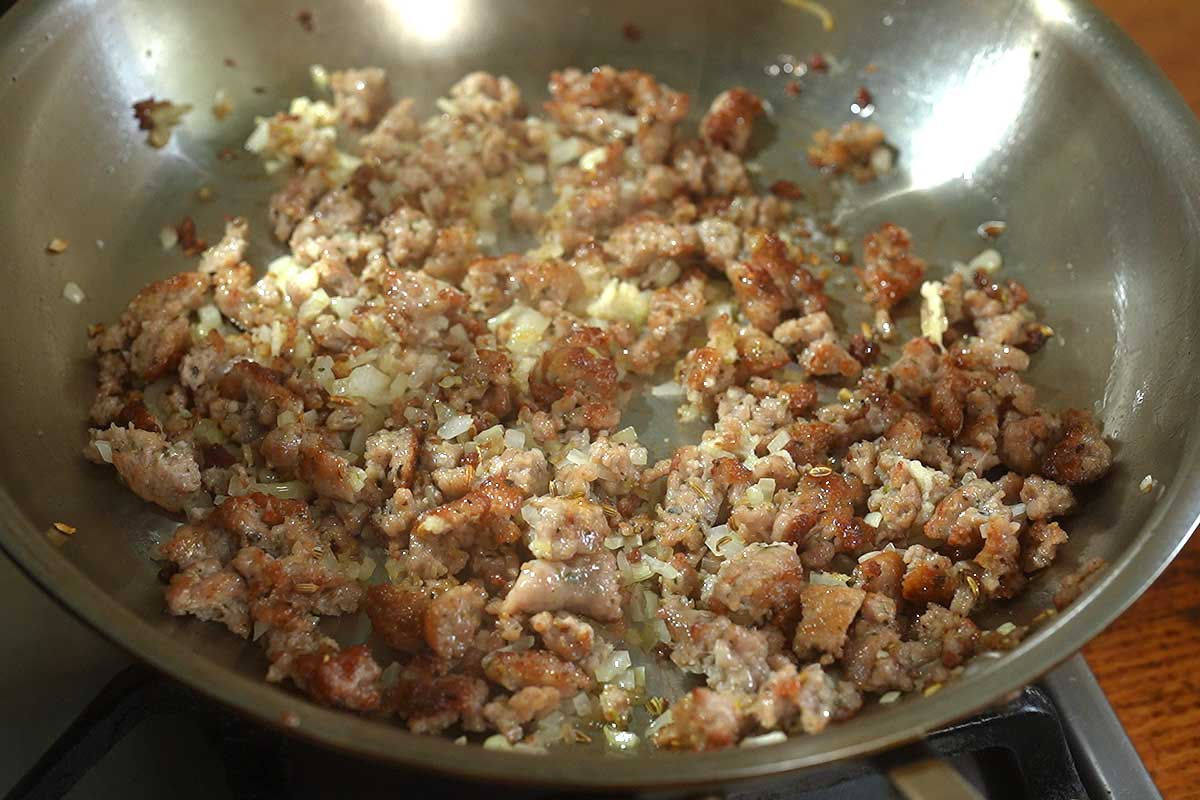
Remove the sausage casings and break the meat up well as it cooks. You want small, irregular pieces that become part of the sauce, not large chunks that sit on top.
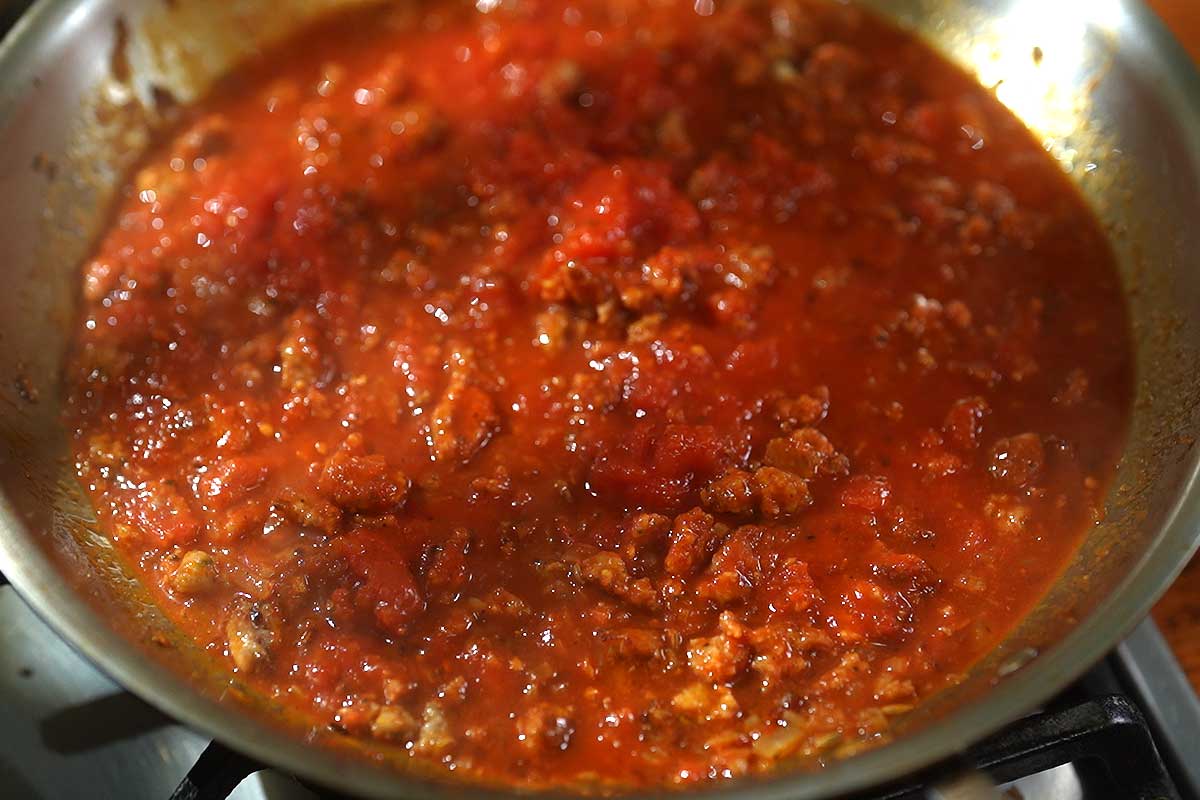
Let the wine reduce to almost dry before adding the tomato paste. Raw wine in a finished sauce is one of the most common mistakes in pasta cooking.
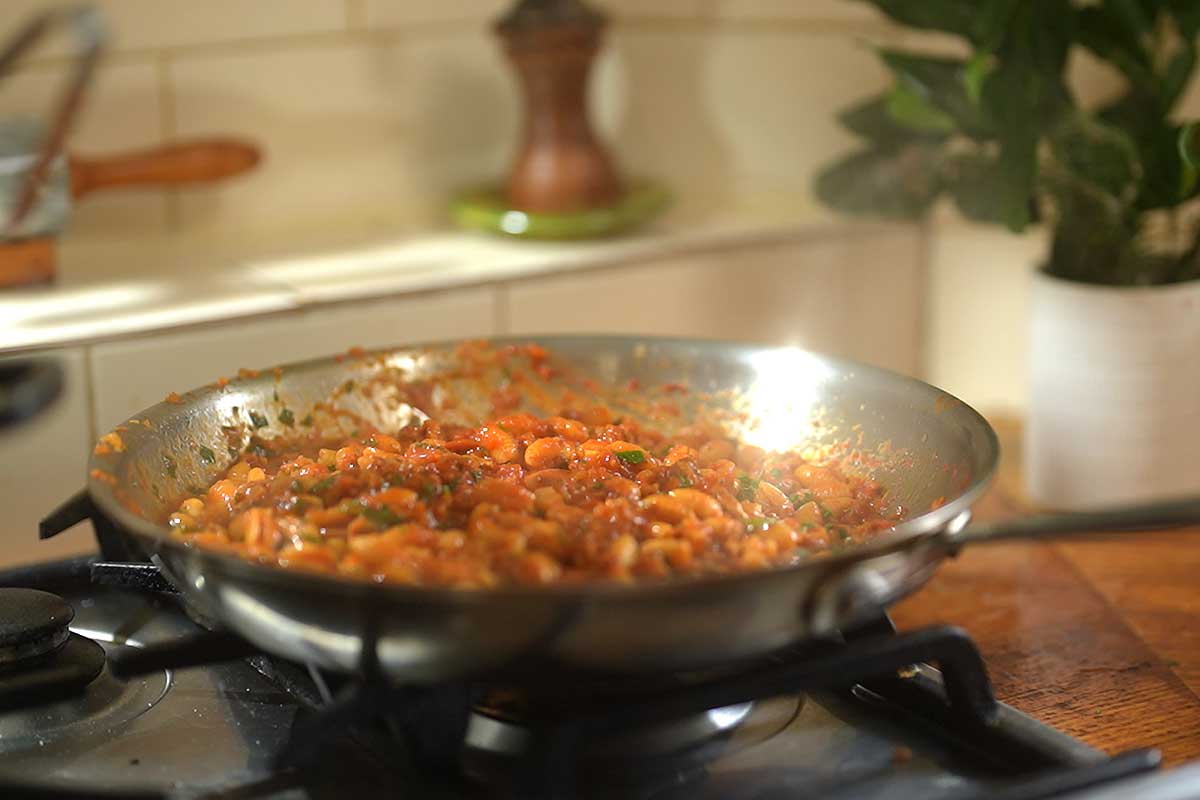
Finish the pasta in the sauce, not in a colander. Add the drained malloreddus to the pan with pasta water and toss over low heat for one to two minutes. This is what makes everything cling properly.
Add the pecorino off the heat. Too much heat causes it to clump. Turn off the burner, stir it through, and serve immediately.
Ingredient Swaps
No malloreddus? Regular gnocchetti sardi or even orecchiette work well. The ridged surface is what matters for holding the sauce.
No Italian pork sausages? Use plain pork mince with an extra half teaspoon of fennel seeds added when you brown the meat. You get the same flavour profile.
No saffron? The dish still works without it but loses that distinctive golden colour and floral depth. A small pinch of turmeric can approximate the colour though not the flavour. Please try to use real saffron.
No pecorino? Parmesan works as a substitute. Pecorino is saltier and sharper so use a little less parmesan and taste as you go.
Common Mistakes
Not toasting the pasta first. It’s the step that sets this dish apart from every other tomato and sausage pasta. Don’t skip it.
Adding the saffron dry. Always steep it in hot water first to unlock both its water and oil-soluble compounds. Dry saffron gives you colour but not full flavour.
Draining the pasta and leaving it in the colander. The pasta needs to finish cooking in the sauce. Every second it sits draining it’s losing heat and drying out.
Under-seasoning. This sauce needs confident seasoning. Taste it before the pasta goes in and again before serving.
What to Serve With It
This is a complete meal on its own. The sausage and pasta together make it genuinely filling.
A simple green salad with lemon and olive oil is all you need on the side. Something fresh to cut through the richness of the pork and saffron sauce.
Good crusty sourdough bread on the table to mop up the sauce. Non-negotiable. See my recipe.
A glass of Sardinian red wine if you can find one. Cannonau is the classic pairing and it’s worth seeking out.
Storage
Fridge: Store covered for up to 3 days. The flavour of the sauce improves overnight as the saffron continues to develop.
Reheat gently in a pan over low heat with a splash of water to loosen the sauce. The pasta will have absorbed most of the liquid as it sits.
Freezer: The sauce freezes well for up to 2 months without the pasta. Make a double batch of sauce and freeze half for a genuinely fast weeknight dinner another time.
FAQs
Can I use regular pasta instead of malloreddus?
You can, but you lose something in the process. The ridged, dense texture of malloreddus is specifically designed for thick, meaty sauces like this one. If you can’t find them, gnocchetti sardi or orecchiette are the closest alternatives.
Do I have to toast the pasta?
You don’t have to, but you absolutely should. It takes two minutes and makes a noticeable difference to both the flavour and texture of the finished dish. It’s the step that makes this recipe worth making.
Where can I buy malloreddus?
Most Italian delis and specialty food stores carry them. They are also widely available online. Look for the name malloreddus or gnocchetti sardi on the packaging.
Is this recipe gluten free?
Not as written, since malloreddus are made from semolina. Swap for a gluten free pasta of similar size and shape and the rest of the recipe is naturally gluten free.
Can I make the sauce ahead of time?
Yes and it’s actually better the next day. Make the sauce up to two days ahead and store it in the fridge. Cook the pasta fresh when you’re ready to eat and finish it in the reheated sauce.
What does Campidanese mean?
Campidanese refers to the Campidano plain in southern Sardinia, one of the island’s most fertile agricultural regions. The sauce takes its name from this area and traditionally uses the local pork sausages, fennel and saffron that the region is known for.
The Pasta That Tastes Like History
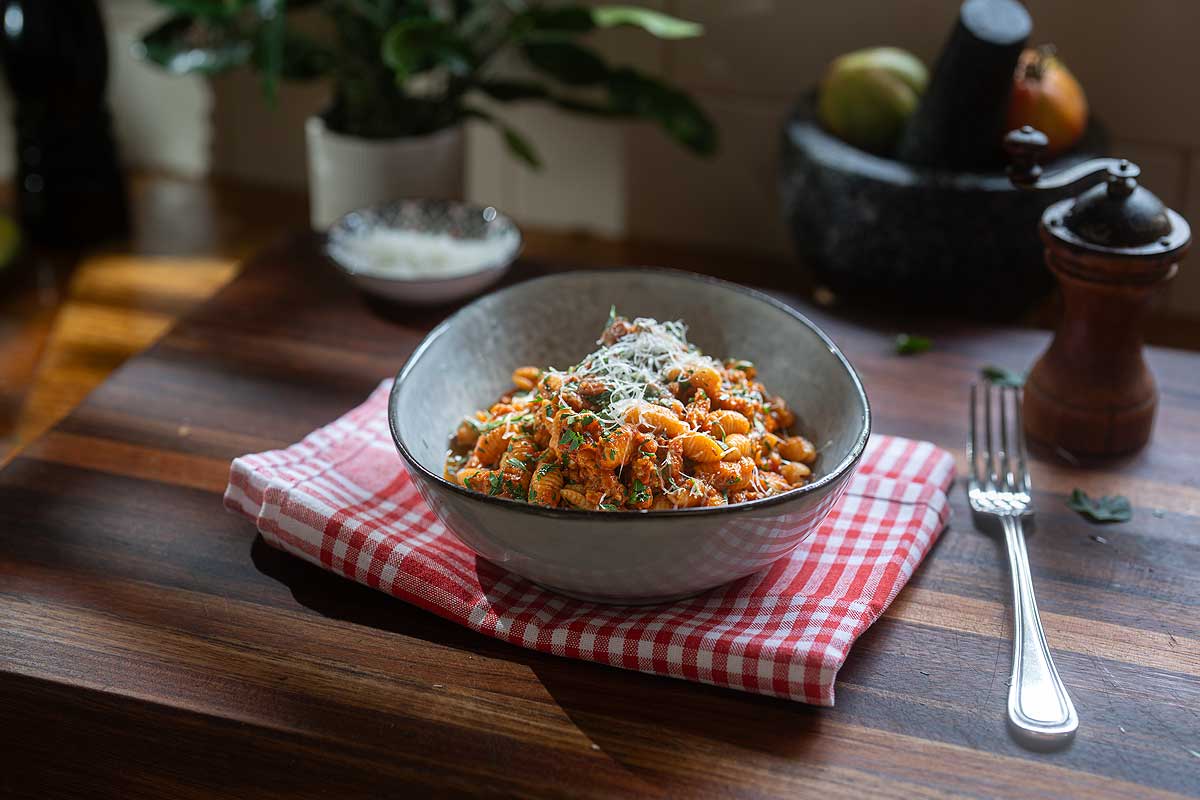
Malloreddus alla Campidanese has been eaten on the island of Sardinia for centuries. It’s a dish built from the land, pork from local farms, saffron from the fields, semolina from durum wheat grown in the Campidano plain.
Nothing about it is complicated. Everything about it is intentional.
Toast the pasta, steep the saffron, let the sauce simmer until it’s rich and fragrant. Then eat it with good wine and no rush. That’s the Sardinian way.
 By
By 

You must be logged in to post a comment