
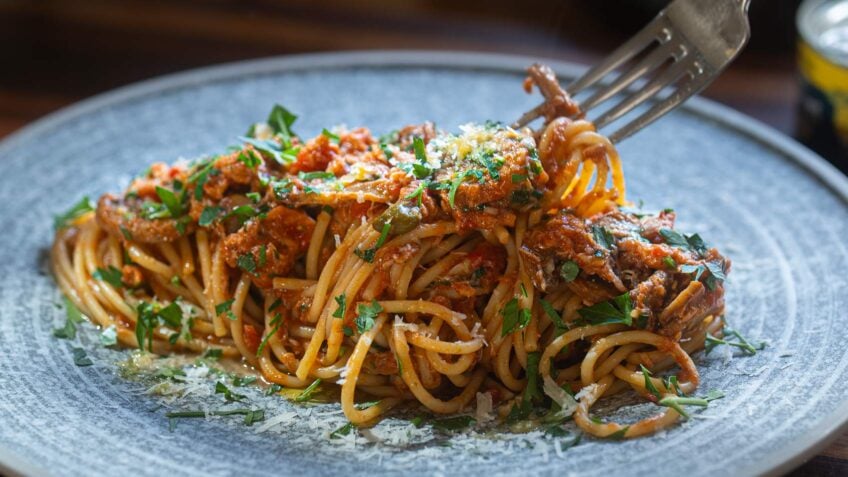
What Is Spaghetti alla Carrettiera and Why Does It Taste So Good?
There is a specific kind of magic in a meal that rescues you from a long, draining day.
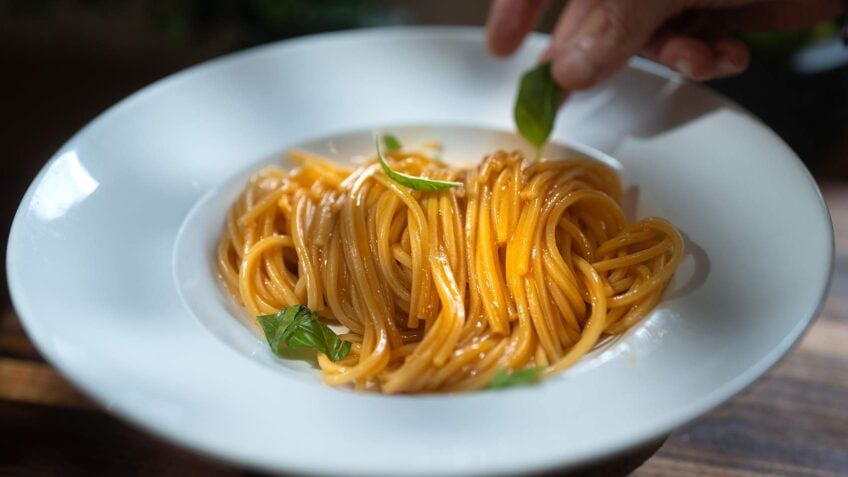
This isn’t just fuel. It’s that moment when you crack open a tin of tuna and a jar of tomatoes, feeling a bit uninspired, only to watch them transform into something that smells like a sun-drenched Italian alleyway.
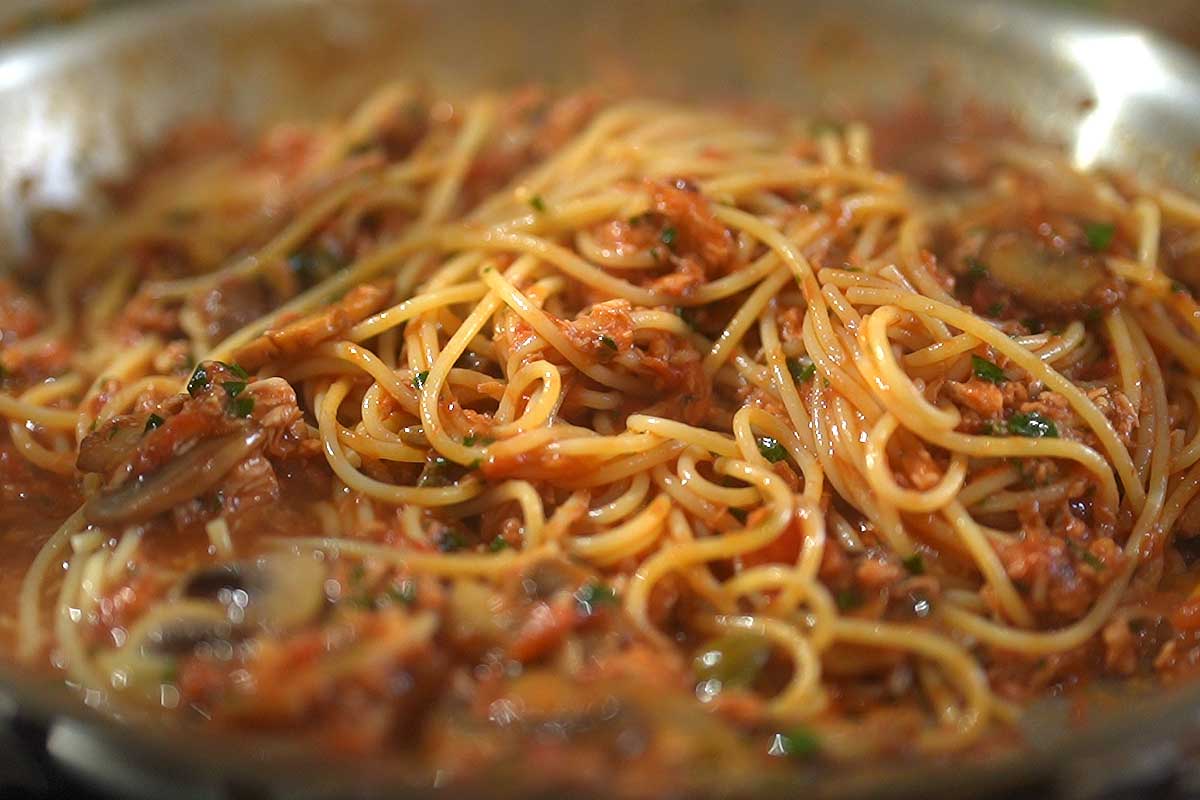
Salty, spicy, and deeply grounding. A few pantry staples, tuna, tomato, garlic, chili, mushrooms, turn into something deep, savoury, and full of character.
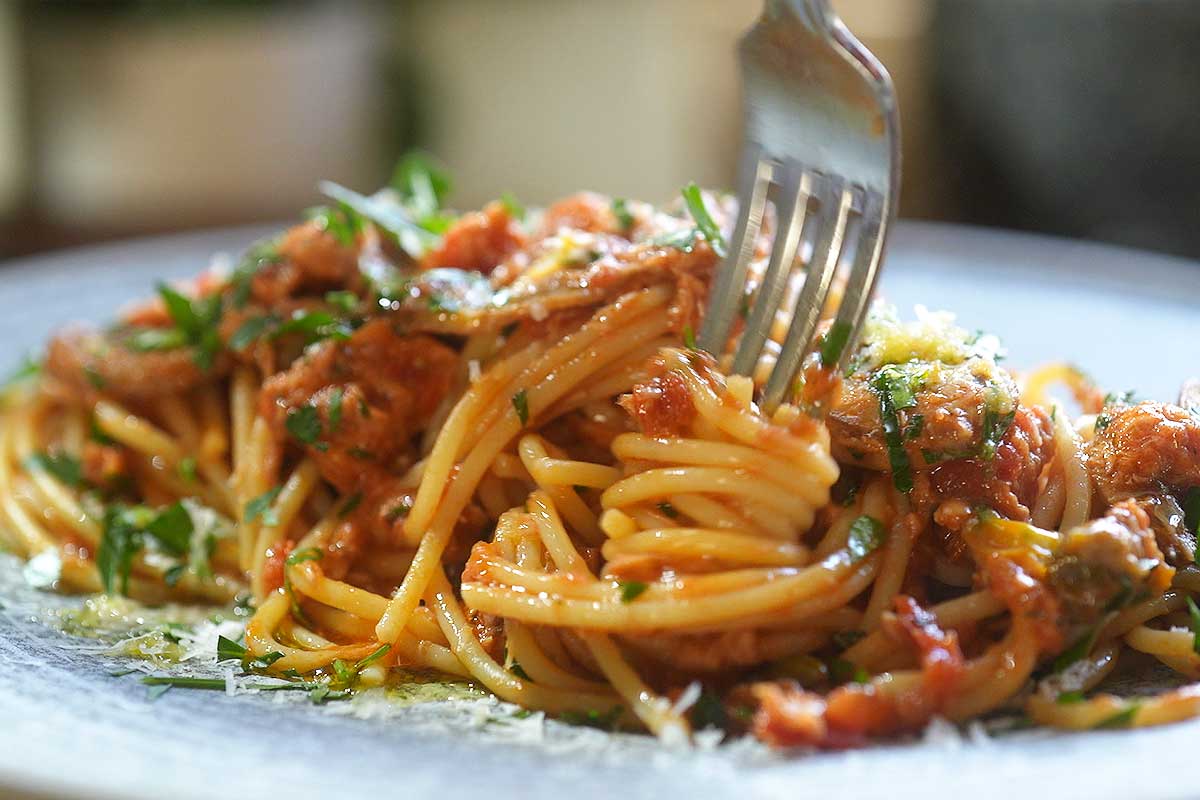
Where Does Carrettiera Pasta Come From?
The name translates roughly to cart driver’s pasta, named after the men who hauled goods through Rome before refrigeration existed.
They needed food that was cheap, filling, and built entirely from shelf-stable ingredients. Canned tuna, dried pasta, oil, garlic, chili. That’s it.
What started as working-class street food is now a beloved Roman classic, and for good reason. The combination of tuna and tomato might sound underwhelming until you taste it done properly.
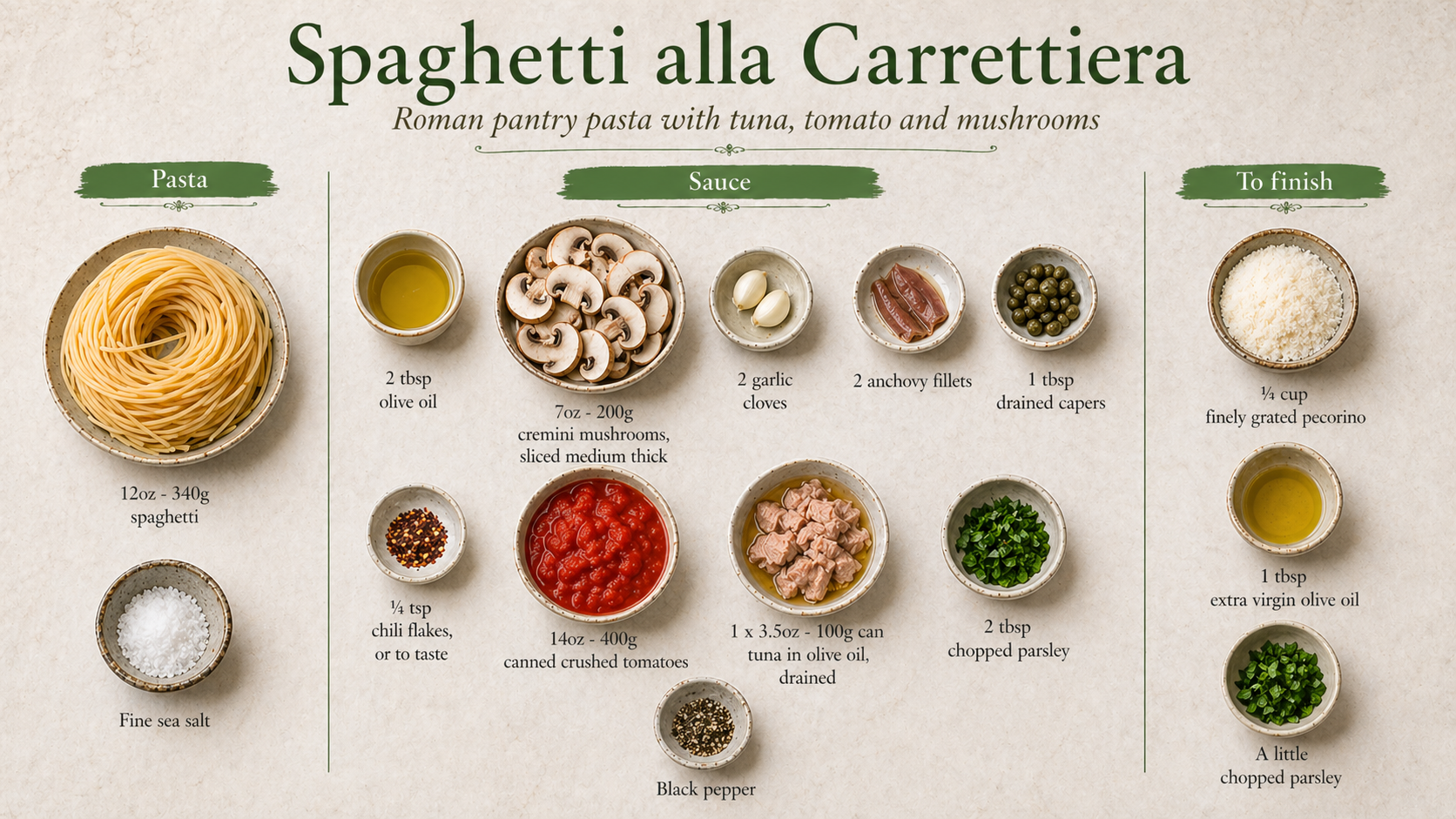
Why This Recipe Works
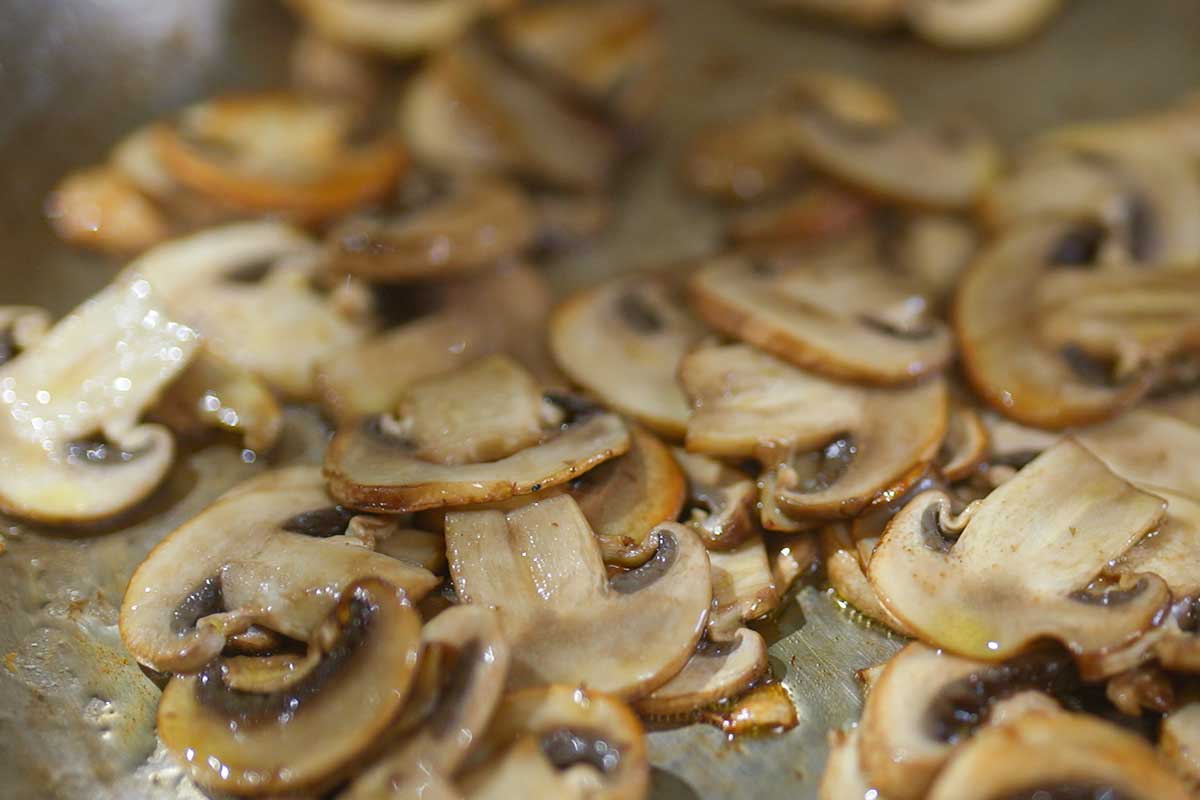
The mushrooms are the quiet hero here. Most home cooks pull them from the heat too soon, while they are still pale and soft.
You need to keep going until they lose all their water, start to brown properly, and smell faintly nutty. That browning is where the deeper savoury flavour lives.
The anchovy or caper layer is what separates a good carrettiera from a great one. Neither one announces itself in the finished dish. The anchovy dissolves completely into the oil, leaving behind a low, savoury hum that you can’t quite identify but would absolutely miss.
The pasta water finish is not optional. The starch it carries binds the tomato, tuna oil, and cheese into a proper emulsion, glossy and clingy rather than watery and separated.
Tips for the Best Spaghetti alla Carrettiera
Cook the mushrooms past the point you think is right. When they start to squeak slightly in the pan and smell nutty, that is when the flavour really wakes up. Pull them too early and you lose the depth.
Use tuna in olive oil, not brine. The oil carries flavour and becomes part of the sauce. Tuna in brine is leaner but blander, and you lose that richness when you drain it. Drain half but not all of it.
Salt your pasta water properly. It should taste pleasantly salty, close to a light broth. Under-salted pasta water is one of the most common reasons a pasta dish tastes flat, even when the sauce is well seasoned.

Easy Swaps and Variations
If you cannot find cremini mushrooms, regular white button mushrooms work fine. They are less earthy but will still brown properly if you give them enough time and heat.
Anchovy and capers are interchangeable here depending on what you have. Anchovy gives a rounder, deeper flavour. Capers are sharper and more acidic. This version uses both, I think it works.
Pecorino is traditional and worth seeking out. Its salty, sharp bite cuts through the oily tuna better than parmesan. That said, if you only have parmesan on hand, use it. The dish will still be delicious.
Common Mistakes to Avoid
Do not break the tuna up too fine. You want some chunks remaining for texture. Over-stirred tuna turns to mush and the sauce becomes one-dimensional.
Do not add the tuna too early. It goes in after the tomato has reduced, not before. Tuna that simmers for too long loses its texture and becomes grainy.
Do not skip the final drizzle of extra virgin olive oil. It lifts the whole dish at the end and gives it that finishing brightness. It takes two seconds and makes a real difference.
What to Serve with Carrettiera Pasta
This dish is a complete meal on its own and does not need much alongside it. A simple green salad dressed with lemon and olive oil is all you really need to round it out.
A glass of dry white wine works beautifully here. Something Italian, a Pinot Grigio or a Vermentino, sits well with the tuna and tomato.
If you are feeding a crowd, a plate of good bread on the table to mop up any sauce left behind is never a bad idea.
How to Store Leftover Carrettiera
Store leftovers in an airtight container in the fridge for up to two days. The pasta will absorb the sauce as it sits, so add a splash of water when you reheat it to loosen things up.
Reheat gently in a pan over low heat rather than the microwave. It comes back to life much better that way and you can adjust the consistency as it warms.
This dish does not freeze well. The tuna texture suffers and the pasta goes soft. Best eaten fresh or within a day.
FAQs
Can I use tuna in springwater instead of olive oil?
You can, but the sauce will be noticeably less rich. The oil from the tuna becomes part of the emulsion in the final toss. If brine is all you have, add an extra tablespoon of olive oil to compensate.
Do I have to use pecorino? Can I use parmesan?
Pecorino is the traditional choice and works better here because its sharper, saltier profile cuts through the oily tuna. Parmesan is milder and slightly sweeter, but it will still work if that is what you have.

Is it weird to put cheese on fish pasta?
In most of Italy, yes. But Roman cooking has always done things its own way. Pecorino on tuna pasta is a Roman habit and it works. The sheep’s milk fat balances the fish oil rather than clashing with it. Plus tuna and anchovies are not considered a delicate fish, so cheese will not overpower them.

What does carrettiera mean?
It means cart driver’s style, referring to the workers who transported goods through Rome before modern logistics existed. The dish was designed to be made entirely from non-perishable pantry ingredients.
Can I make this without mushrooms?
Yes. The traditional version is often just tuna, tomato, garlic, chili, and capers or anchovy. The mushrooms add body and a meatier texture, but leaving them out gives you a lighter, more classic result.
Why does my sauce look watery and separated?
The toss at the end needs to happen over heat and with enough force. If the pan is too cool or you stir gently, the starch, oil, and tomato will not emulsify. Turn the heat up, add your pasta water, and toss hard for a full minute.

The Pasta That Proves Pantry Cooking Is an Art
Carrettiera is the kind of recipe that makes you look at your pantry differently.
A tin of tuna, a jar of tomatoes, some garlic and dried pasta. In the right hands, that’s not a compromise dinner. That’s a Roman classic with centuries behind it.
Toss hard, finish with good olive oil, and eat immediately. That’s all there is to it.
 By
By 
You must be logged in to post a comment