


This is Recipe30’s second most viewed recipe for a reason. Millions of people have made it and the comments speak for themselves.
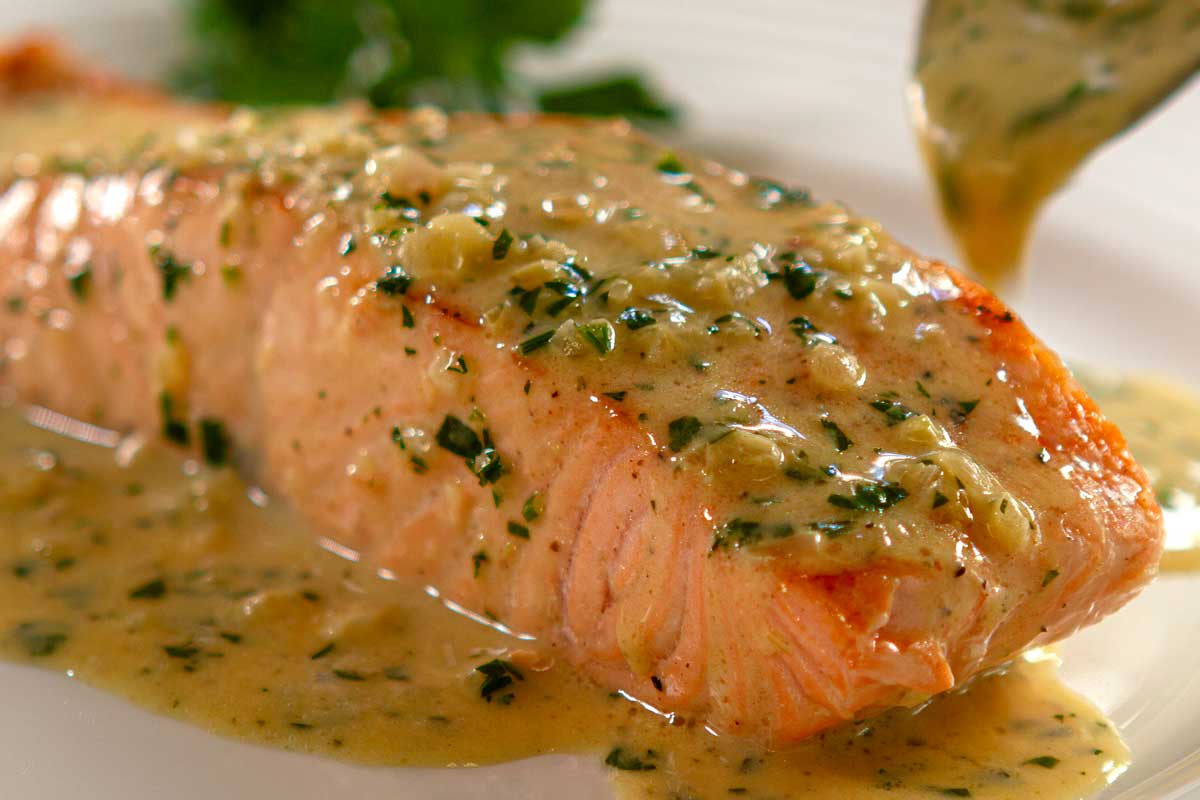
Salmon poached in its own lemon butter cream sauce, finished with a crispy skin that stays crispy. That last part is the secret and it changes everything.
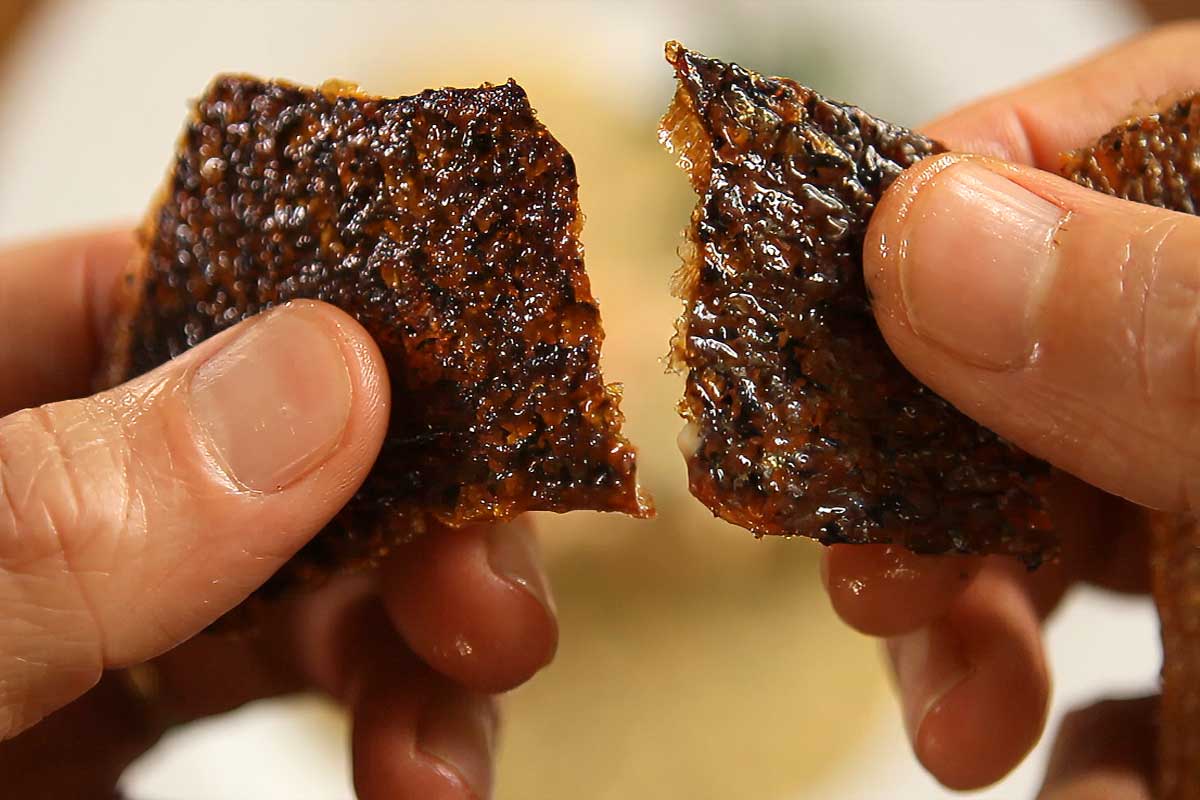
The Crispy Skin Secret
Here is the problem with crispy salmon skin and cream sauce. They are enemies.
The moment crispy skin touches a cream sauce it goes soft. Every time. The solution is to cook the skin separately in the oven while the salmon poaches in the sauce. Two things cooked perfectly at the same time, combined only at the very last second on the plate.
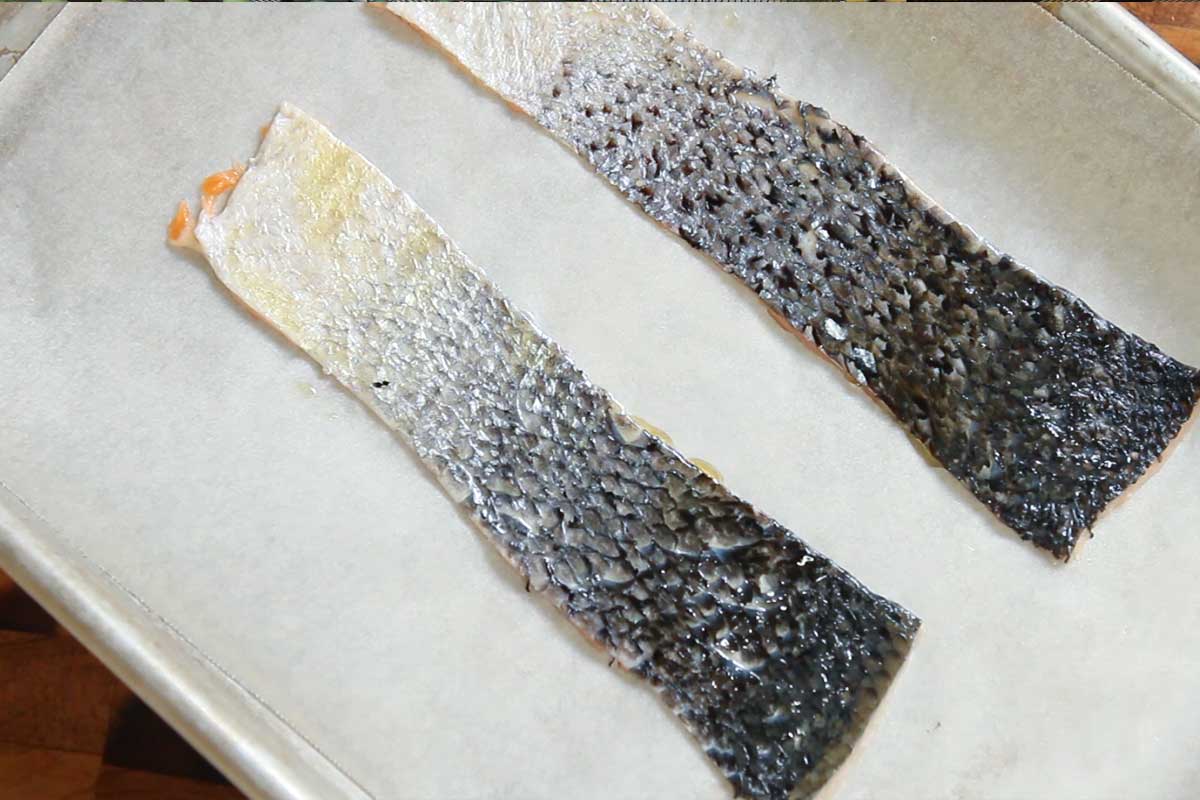
The skin goes between two sheets of parchment paper with a heavy flat object on top to keep it flat. Thirty minutes at 375°F (190°C) and it comes out like a savoury crisp. Tell nobody this trick and watch them try to figure out how you did it.
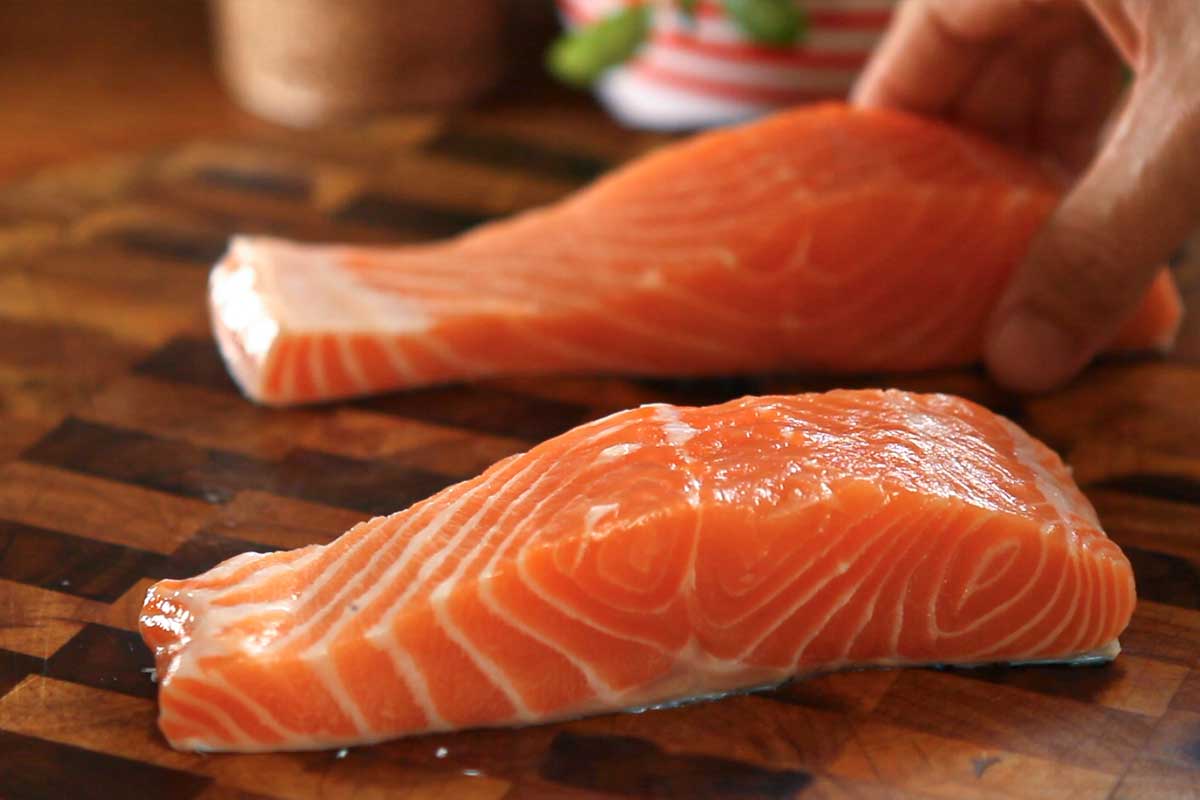
How to Buy the Right Salmon
Wild salmon is worth seeking out if you can find it. The flavour is richer, the colour is deeper, and the nutritional profile is significantly better than farmed. In the US and parts of Europe fresh wild salmon is relatively accessible.
In Australia fresh wild salmon is virtually impossible to find unless frozen. The good news is that Tasmanian farmed salmon, which is what you see in this recipe, is genuinely world class. Tasmania’s cold, clean waters produce salmon with exceptional flavour and texture that rivals wild caught in most dishes.
Buy it fresh from a fishmonger if you can. Ask them to portion it for you and keep the skin on if you want to use it. Salmon deteriorates quickly so cook it the same day or the next day at the latest.
Look for flesh that is firm and bright, not soft or dull. Fresh salmon should smell like the ocean, not like fish.
How Cooked Should Salmon Be
This is where most people overcook it and wonder why their salmon is dry.
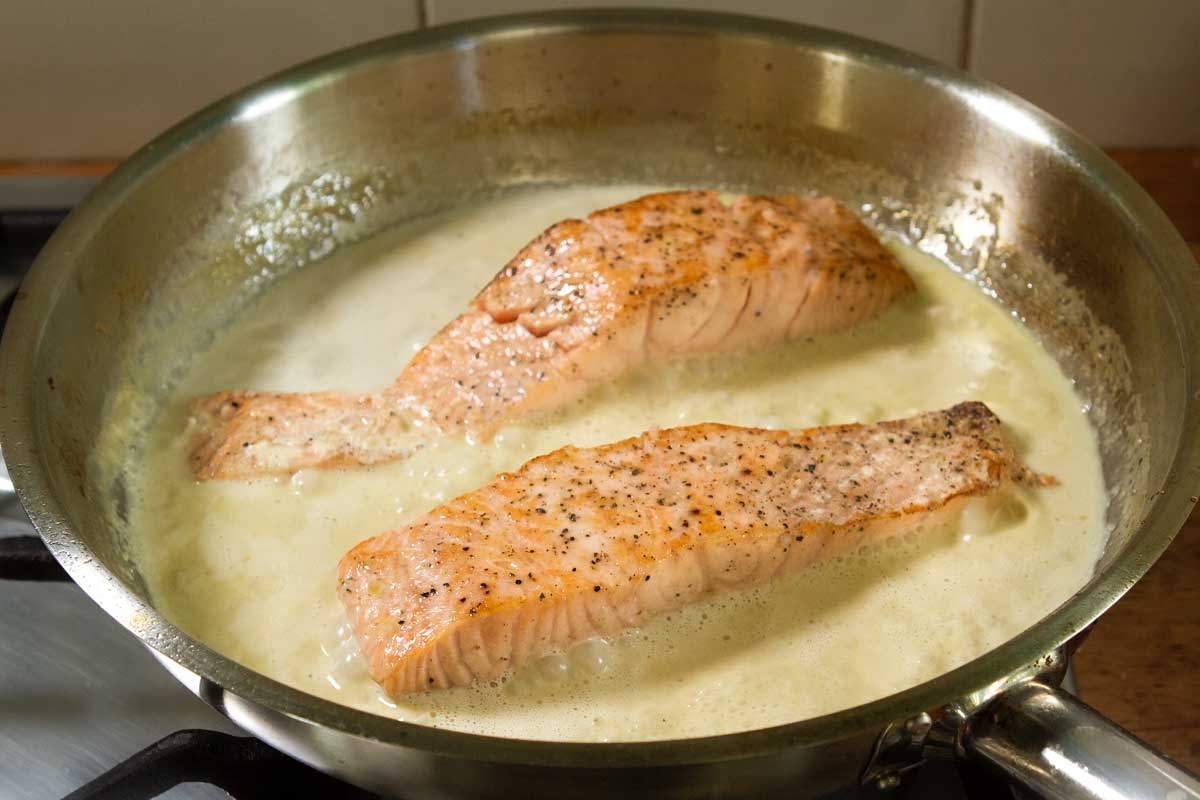
Salmon is best cooked medium to medium rare. The centre should still look slightly translucent, not opaque like canned tuna. That translucent centre is not raw, it is perfectly cooked. The residual heat continues cooking it for another minute after it leaves the pan.
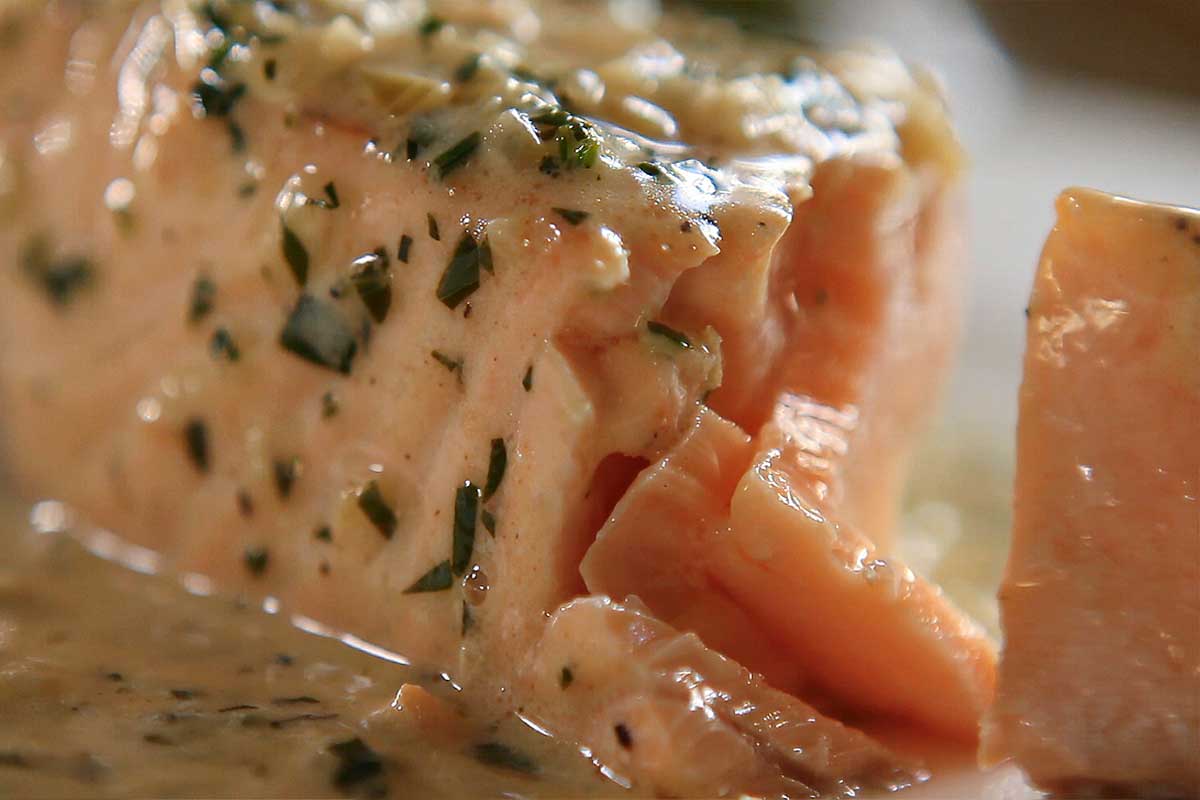
If you absolutely prefer it cooked through, cook for 5 minutes in the sauce and baste continuously. But try the medium version at least once. It is a completely different experience.
The Sauce
Use a wine you would actually drink. The fruity notes carry directly into the sauce. A good dry Sauvignon Blanc or Pinot Grigio both work beautifully.
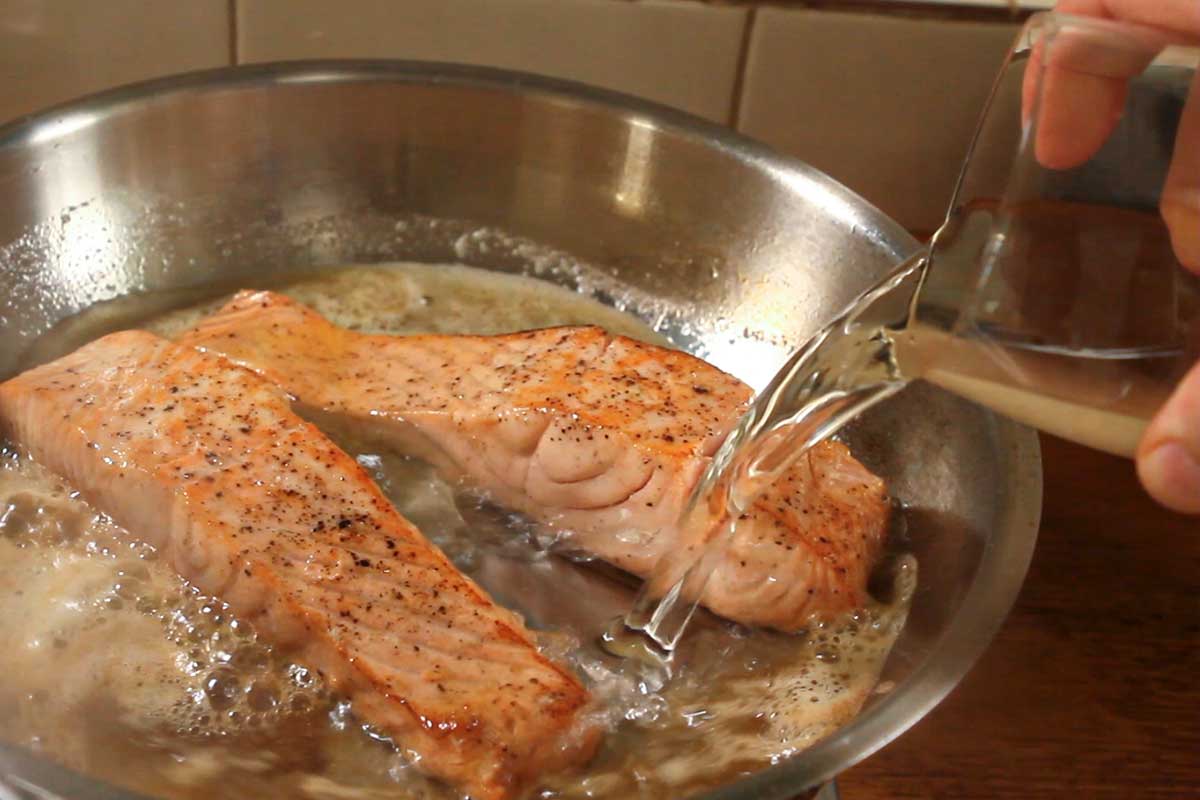
Use heavy cream, not low fat. Low fat cream splits under heat and gives you a watery, broken sauce instead of something glossy and rich. This is not the place to save calories.
The shallots go into the sauce, not over the fish. They need to cook gently in the liquid and become part of the sauce rather than sitting on top of the salmon.
Cooking for a Dinner Party
This dish is perfect for entertaining because most of the work can be done ahead.
Get the skins in the oven early. Precook the salmon lightly in the butter, then transfer to a baking tray and finish in the oven at 325°F (160°C) when your guests are seated. Reduce the sauce in the pan while the salmon finishes. Everything comes together in under five minutes at serving time.
No last minute panic. No dry overcooked fish. Just a composed, elegant plate that looks like serious restaurant cooking.
Cooking Tips
Get everything prepped before you start cooking. The salmon cooks fast. Shallots chopped, parsley ready, wine and cream measured. Once the fish hits the butter there is no time to be searching for things.
Start the skins first and begin cooking the salmon about 15 minutes later so everything finishes at the same time.
Cook the salmon topside down first in the butter until lightly golden, then flip. The butter will turn nutty brown which adds enormous flavour to the sauce.
Remove the salmon from the pan before reducing the sauce. Leaving it in while the sauce reduces will overcook the fish.
Use a fish spatula to handle the salmon. It is thin and flexible enough to slide under delicate fish without breaking it.
Ingredient Swaps
No salmon? This sauce works beautifully with barramundi, sea bass, or any firm white fish. Adjust cooking time based on thickness.
No white wine? A good quality chicken stock with an extra squeeze of lemon and a small splash of white wine vinegar gets you close.
No shallots? A very finely diced small onion works. Shallots are milder and sweeter but onion is a perfectly good substitute.
No heavy cream? Full fat creme fraiche added off the heat gives a slightly tangier sauce that works well with the lemon.
Common Mistakes
Overcooking the salmon. The most common mistake. Pull it when the centre is still slightly translucent. It will finish cooking from residual heat.
Using low fat cream. It will split and you will have a watery broken sauce. Always use heavy cream.
Not removing the salmon before reducing the sauce. Every extra minute in the pan overcooks the fish. Remove it, rest it on a warm plate, then reduce.
Skipping the skin step because it seems fussy. It takes 30 minutes of oven time and almost zero effort. The result is worth every second.
Not using flat leaf parsley. Curly parsley is mostly decoration. Flat leaf parsley has actual flavour. Always use flat leaf.
What to Serve With It
Plain steamed rice is the classic pairing. It absorbs the cream sauce perfectly and lets the salmon be the star.
Asparagus, broccolini, green beans, or wilted spinach alongside add colour and freshness. Keep the sides simple so nothing competes with the sauce.
A glass of cold Chardonnay or Viognier mirrors the buttery richness of the dish beautifully.
Crusty bread to mop up any sauce left on the plate. Do not waste a drop of it.
Storage and Reheating
Fridge: Store covered for up to 2 days. The sauce will thicken considerably when cold.
Reheating: Warm very gently in a pan on the lowest heat with a small splash of cream or water. Salmon overcooks incredibly fast when reheated. One to two minutes maximum.
The crispy skin does not survive storage. Make it fresh each time. It takes 30 minutes but cannot be reheated successfully.
Do not freeze. Salmon texture suffers badly after freezing and the cream sauce will not survive it.
FAQs
Can I make this without the crispy skin?
Absolutely. The dish is excellent without it. Simply cook the salmon with skin on or off directly in the butter and sauce. The crispy skin step is optional but highly recommended if you have the time.
What does medium rare salmon look like?
The outside is fully cooked and opaque. The very centre still has a slightly darker, translucent appearance. It should flake easily but still feel moist and almost silky. Not raw, just perfectly cooked.
Can I use frozen salmon?
Yes. Thaw it completely in the fridge overnight and pat it very dry with paper towels before cooking. Frozen salmon releases more water which can prevent proper browning in the butter.
Why did my sauce split?
Either the heat was too high or low fat cream was used. Always use heavy cream and keep the sauce at a gentle simmer, never a rolling boil.
Can I use salmon portions with the skin already removed?
Yes. You simply skip the crispy skin step entirely. The dish is still excellent without it.
Is this suitable for a dinner party?
It is one of the best dinner party dishes going. Elegant, impressive, and almost entirely preparable ahead of time. Guests will think you spent hours on it.
 By
By 


You must be logged in to post a comment