
This Is How French Chefs Cook Chicken
The kind of dish French chefs quietly cook for themselves after service.
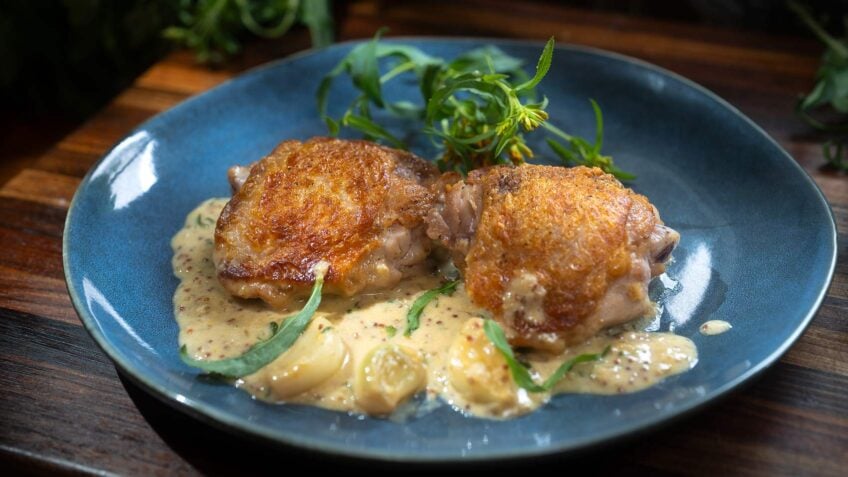
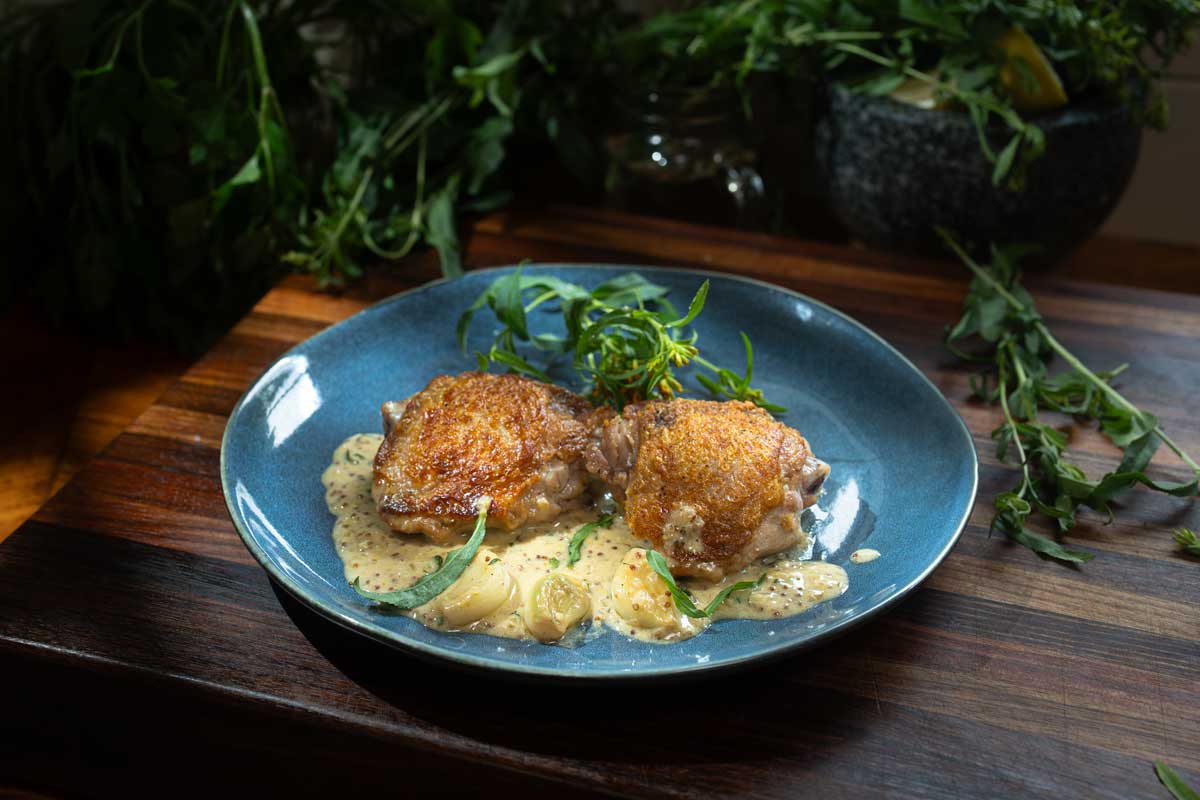
A proper French bistro classic. Golden chicken thighs, white wine, Dijon mustard and crème fraîche finished with fresh tarragon.
Light, glossy and deeply comforting without feeling heavy. This is bright richness, not heavy richness. That’s the philosophy difference, and it’s what French bistro cooking does better than almost anyone.
The Hidden Kingdom of Flavour Most Cooks Ignore
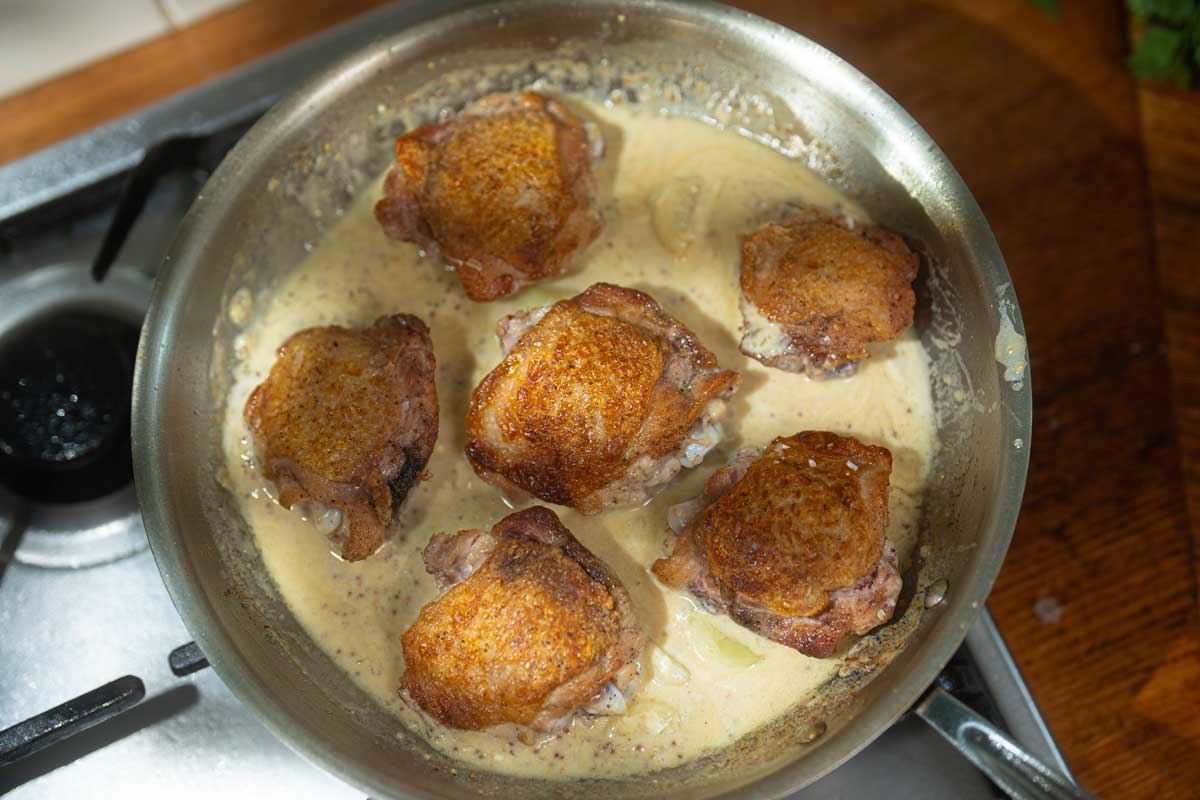
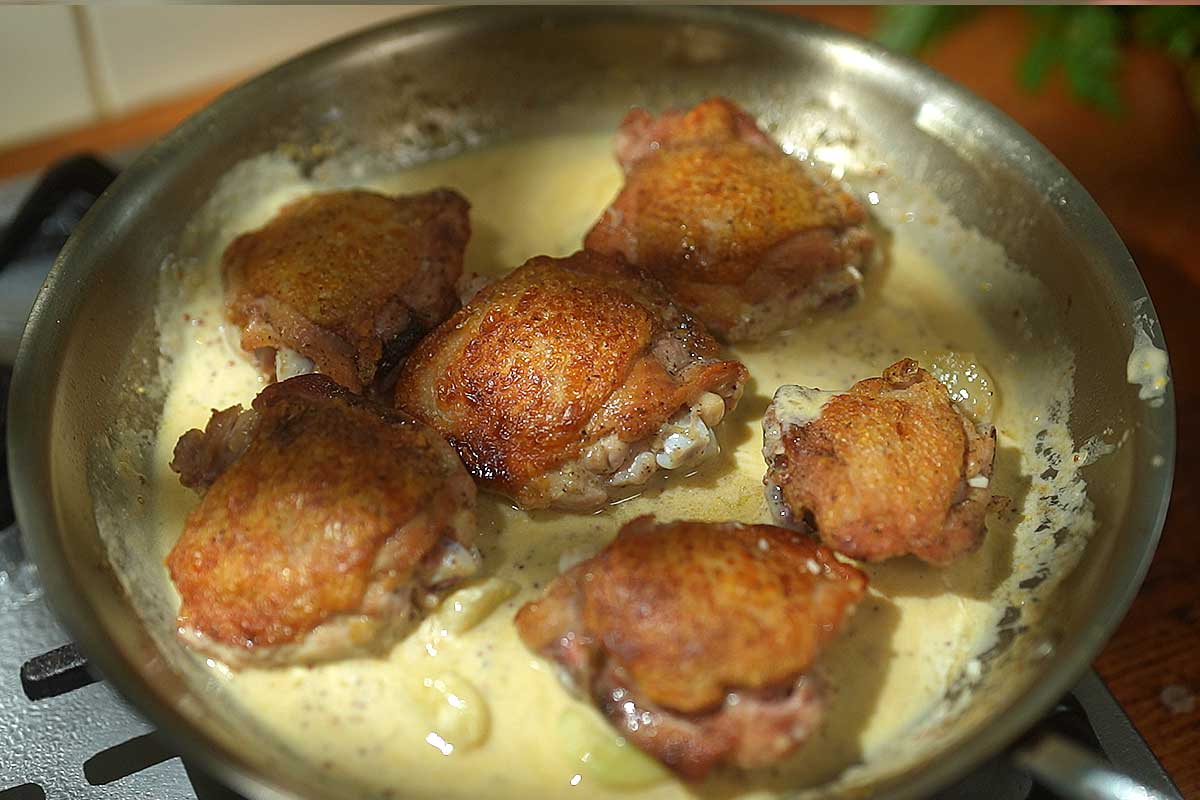
When you sear chicken in a stainless or cast iron pan, something magical happens on the bottom of the pan. The juices caramelise into dark, sticky, intensely flavoured bits called fond.
Most home cooks see it and think the pan is burnt. French cooks see it and know the sauce just arrived.
When the wine goes in and you scrape that fond up with a wooden spoon, every bit of it dissolves into the sauce. That’s where the depth comes from. That’s the flavour base that separates a bistro sauce from a flat, one-dimensional one.
Why the Pan You Use Matters
Use a stainless steel or cast iron pan for this dish, not non-stick.
Non-stick pans prevent fond from forming. The coating stops the browning reaction that creates all those flavour compounds on the bottom of the pan. You get pale, steamed chicken and a sauce with nothing to build on.
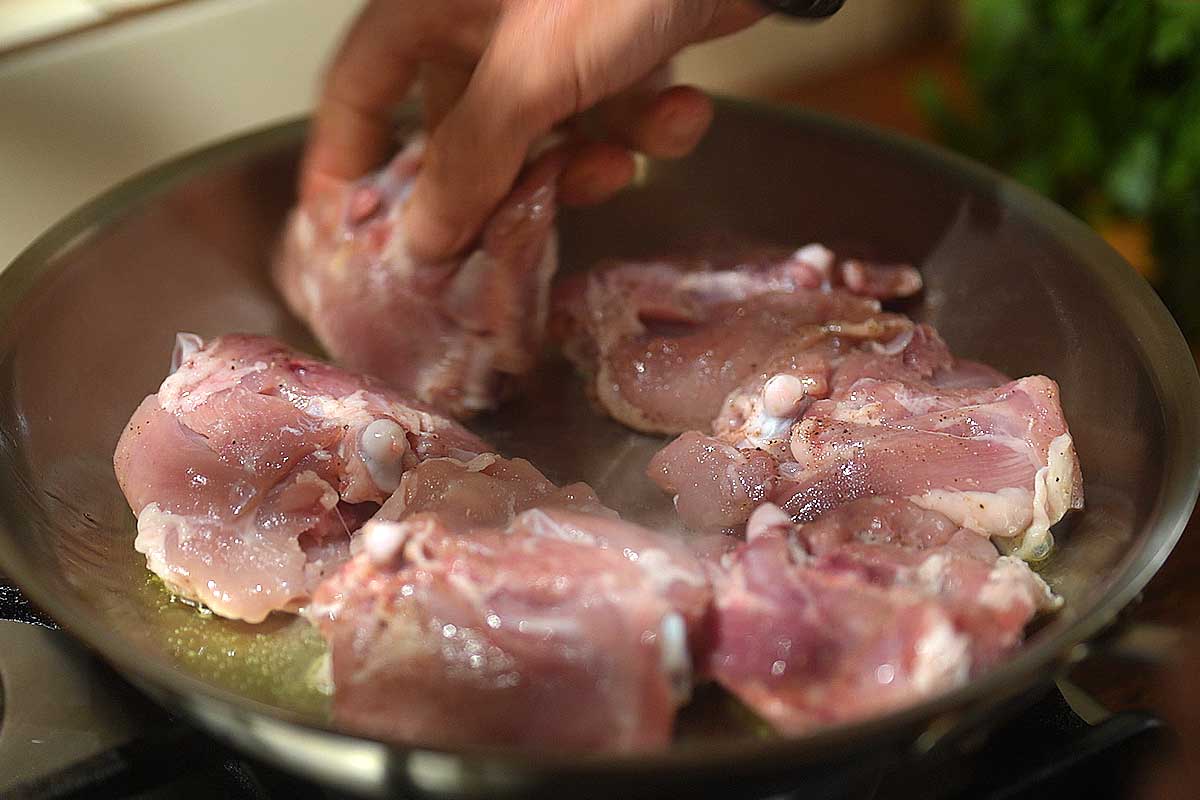
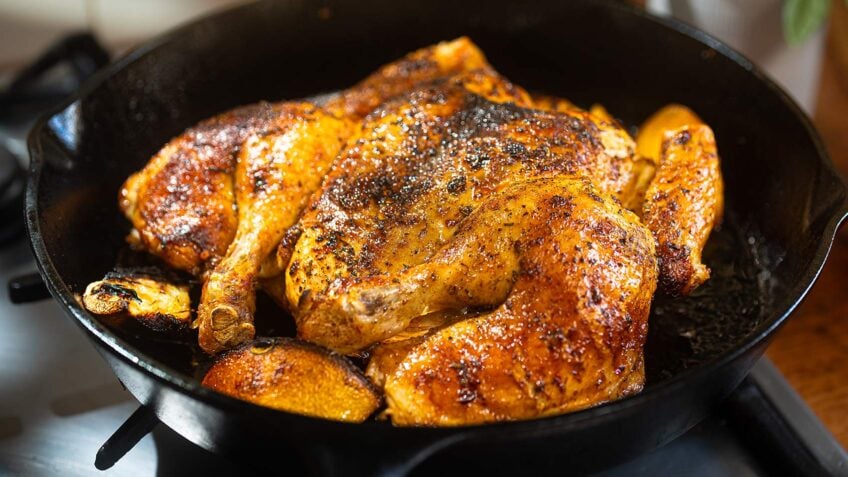
Stainless steel feels intimidating but it rewards patience. Leave the chicken completely alone for 8 to 10 minutes skin-side down and it will release naturally when it’s ready. Move it too early and it tears.
The Mustard Goes in at the End and Here’s Why
Both mustards, the whole grain and the Dijon, go in at different stages and for different reasons.
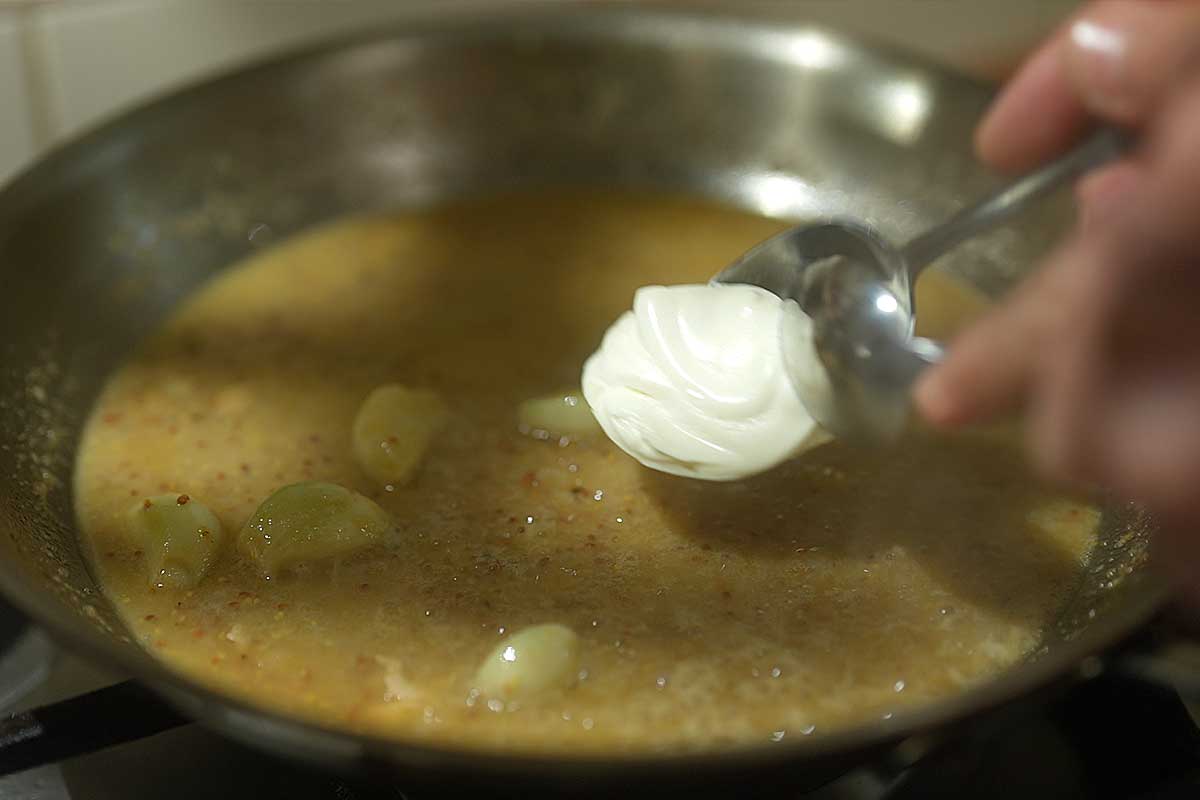
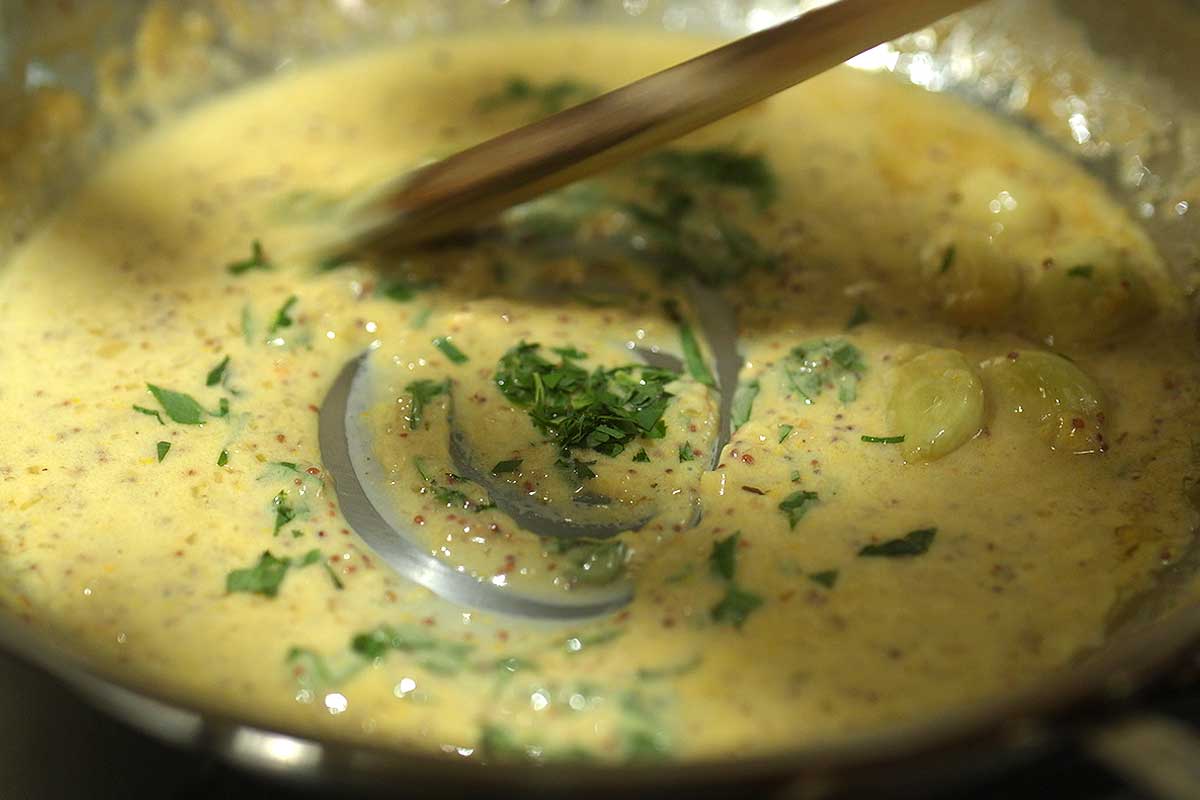
The whole grain mustard goes in with the crème fraîche while the sauce simmers. It has time to mellow and integrate, adding body and a gentle heat that runs through the whole dish.
The Dijon goes in at the very end with the heat off. Cooking Dijon destroys its sharp, clean flavour. Added cold into a hot sauce that’s stopped bubbling, it stays bright, punchy and alive. That’s what makes the sauce sparkle rather than just taste vaguely mustardy.
Cooking Tips
Pat the chicken completely dry before searing. Moisture stops browning. This single step is the difference between golden crispy skin and pale, steamed disappointment.
Leave the chicken completely alone skin-side down for 8 to 10 minutes. Don’t check it, don’t move it. It releases naturally when it’s ready and the skin will be deeply golden.
Add the butter in the last 2 minutes of searing so it foams around the chicken without burning. Baste the skin with the foaming butter and chicken fat as it cooks.
Reduce the wine by half before adding the stock, this burns away any alcohol bitterness.
Keep the heat gentle once the crème fraîche is in. A hard boil will split the sauce. A gentle simmer keeps it glossy and smooth.
Wait 30 seconds after removing the pan from the heat before stirring in the Dijon and tarragon . The sauce needs to stop bubbling completely so the mustard doesn’t cook.
Ingredient Swaps
No crème fraîche? Heavy cream works as a substitute. The sauce will be slightly richer and less tangy. Add a small extra squeeze of lemon at the end to compensate for the missing acidity.
No fresh tarragon? Dried tarragon works but use half the quantity. Fresh tarragon has a more delicate, anise-like flavour that’s worth seeking out for this dish specifically.
No whole grain mustard? Use all Dijon but add both portions at the very end off the heat. The texture will be smoother but the flavour still excellent.
Bone-in chicken breasts work but watch the timing carefully. They cook faster than thighs and dry out easily. Check from 15 minutes and pull them the moment they reach 165°F / 75°C.
Common Mistakes
Using a non-stick pan. It kills fond development and you lose the entire flavour base of the sauce. Use stainless or cast iron.
Moving the chicken too soon during searing. It will stick and tear. Leave it completely alone until it releases naturally.
Boiling the crème fraîche sauce hard. It splits into a greasy, broken mess. Gentle simmer only once the cream is in.
Adding the Dijon mustard while the sauce is still bubbling. The heat cooks away the sharp flavour that makes it sing. Always add it off the heat.
Over-garnishing. One tarragon sprig is enough. Rustic elegance wins here.
What to Serve With It
Crusty French bread to mop up the sauce. This is non-negotiable. The sauce is the point.
Steamed green beans or wilted spinach. Something simple and green that doesn’t compete with the sauce.
Plain steamed rice soaks up the mustard cream beautifully if you want something more substantial.
A glass of the same dry white wine you used in the sauce. Always the right call.
Storage and Reheating
Fridge: Store covered for up to 3 days. The sauce thickens considerably in the fridge but loosens again with gentle heat.
Reheat gently in a pan over low heat with a small splash of water or stock. Do not boil or the crème fraîche sauce may split.
Freezer: The chicken freezes well but the cream sauce does not. If freezing, store the chicken pieces separately from the sauce and make a fresh sauce when reheating.
FAQs
Why does the recipe use two different mustards?
They do different jobs. Whole grain mustard has a milder, nuttier flavour and adds texture. It can handle some cooking time. Dijon is sharper and more pungent and loses its bite if heated. Adding each at the right stage gives you the full range of mustard flavour in the finished dish.
Can I use boneless chicken thighs?
Yes, but reduce the final simmering time to around 12 to 15 minutes and check the temperature early. Boneless thighs cook faster and don’t have the bone to help retain moisture during the longer braise.
My sauce split and looks greasy. Can I fix it?
Sometimes. Remove the chicken and set it aside. Add a small splash of cold water or stock to the pan and whisk vigorously over low heat. The emulsion can often come back together. If the heat was too high when it split, prevention is easier than the fix.
What is fond and why does it matter?
Fond is the dark, caramelised bits stuck to the bottom of the pan after searing meat. It’s concentrated flavour from the Maillard reaction, the same browning process that makes seared meat taste so much better than boiled meat. When you deglaze with wine and scrape it up, it dissolves into the sauce and becomes the backbone of the entire flavour profile.
Is this dish traditionally French?
Yes. Poulet à la Moutarde is a classic of French bistro cooking, particularly associated with the Burgundy region where Dijon mustard originates. It’s the kind of straightforward, deeply flavoured dish that has appeared on French home tables and bistro menus for generations.
French Bistro Cooking at Its Best
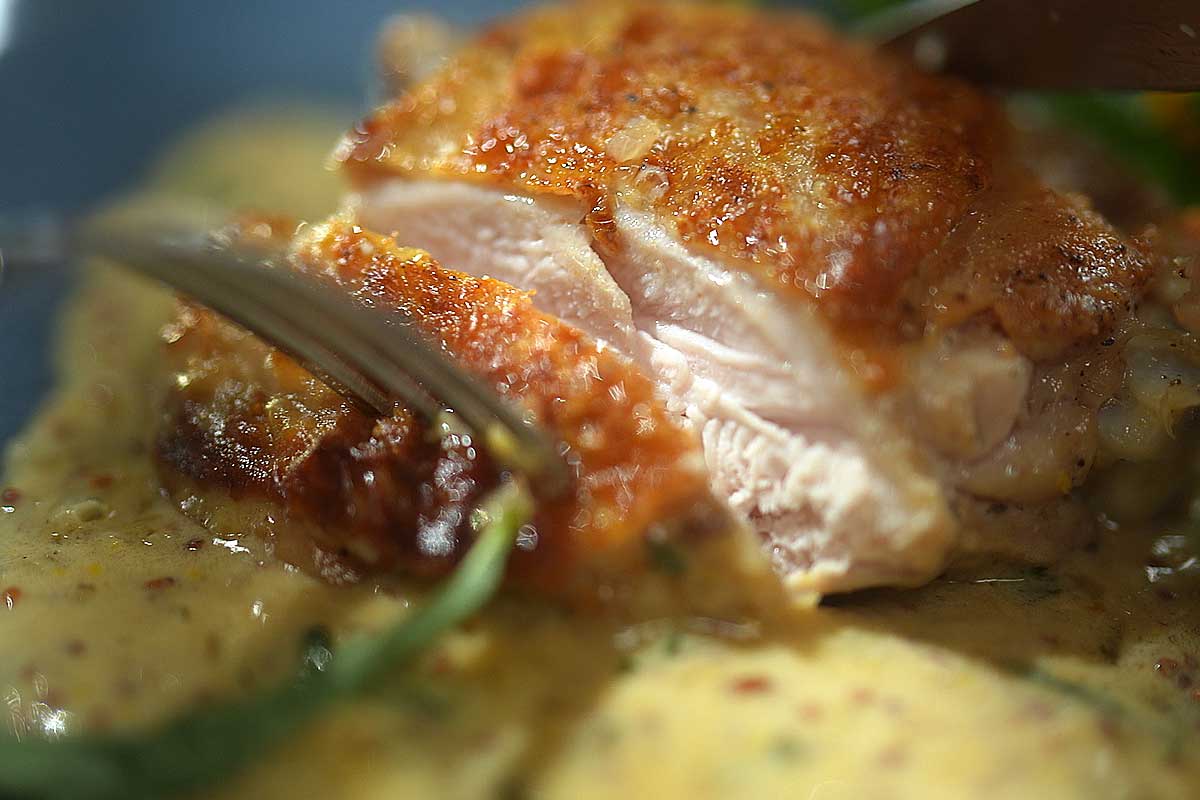
This is bright richness, not heavy richness. That’s what separates it from a generic cream sauce.
The lemon at the end is not traditional-traditional, but it quietly modernises the dish for today’s palate and makes the mustard sparkle. A small addition that earns its place.
One pan, 35 minutes, and you’ve made the kind of chicken that makes people go quiet at the table. That’s always the goal.
 By
By 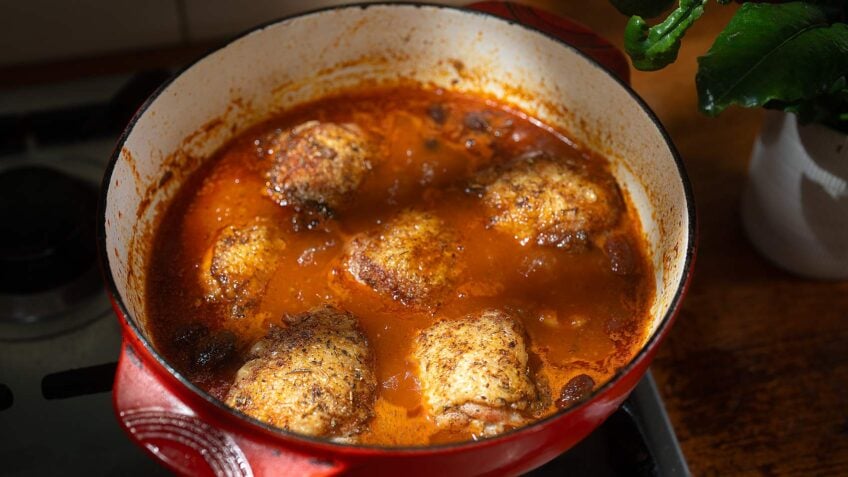
You must be logged in to post a comment