
The Ultimate French Country Chicken
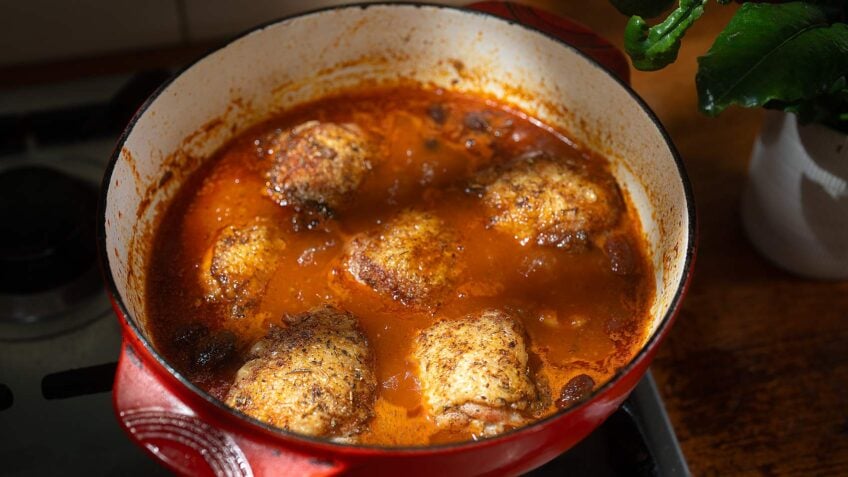
This is a deeper, more rustic version of the original. Much more French country kitchen.
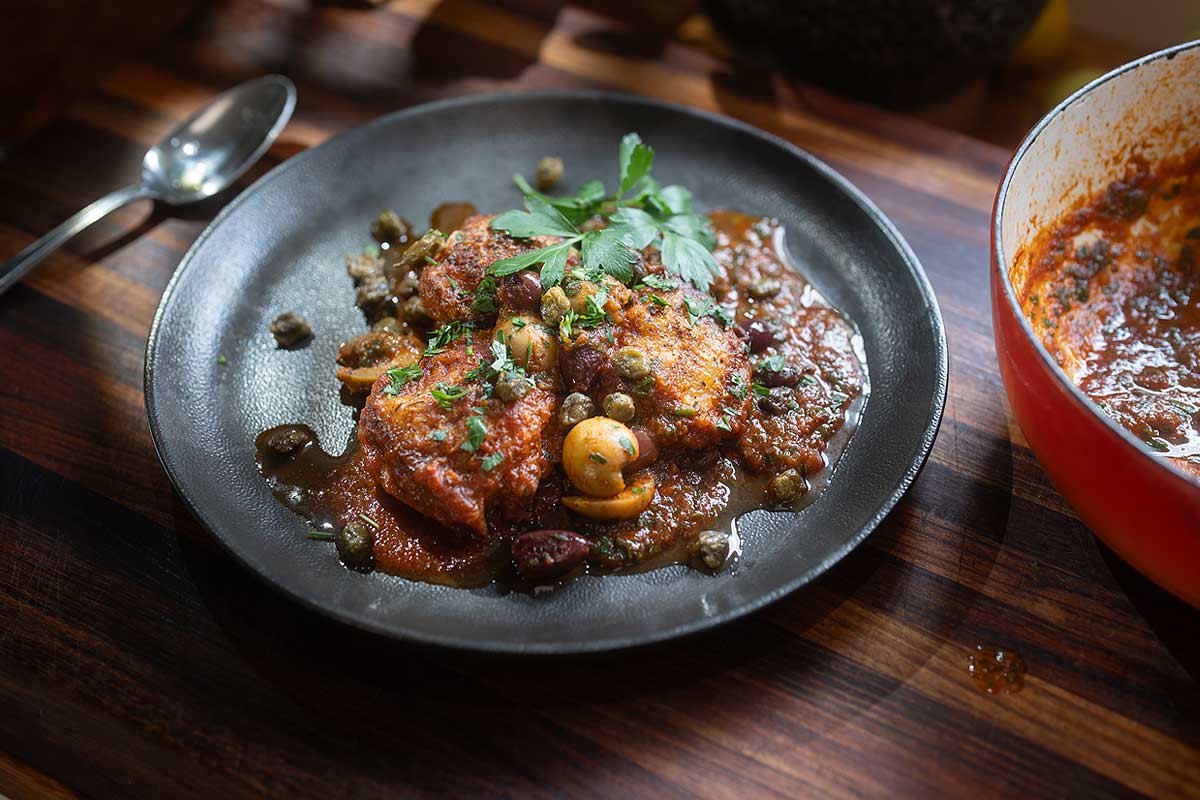
Bone-in chicken thighs give you richer flavour, crisp golden skin, and a sauce that tastes like it has been bubbling away in a village somewhere, probably with a dog asleep by the fire. In my case it’s Kenji.
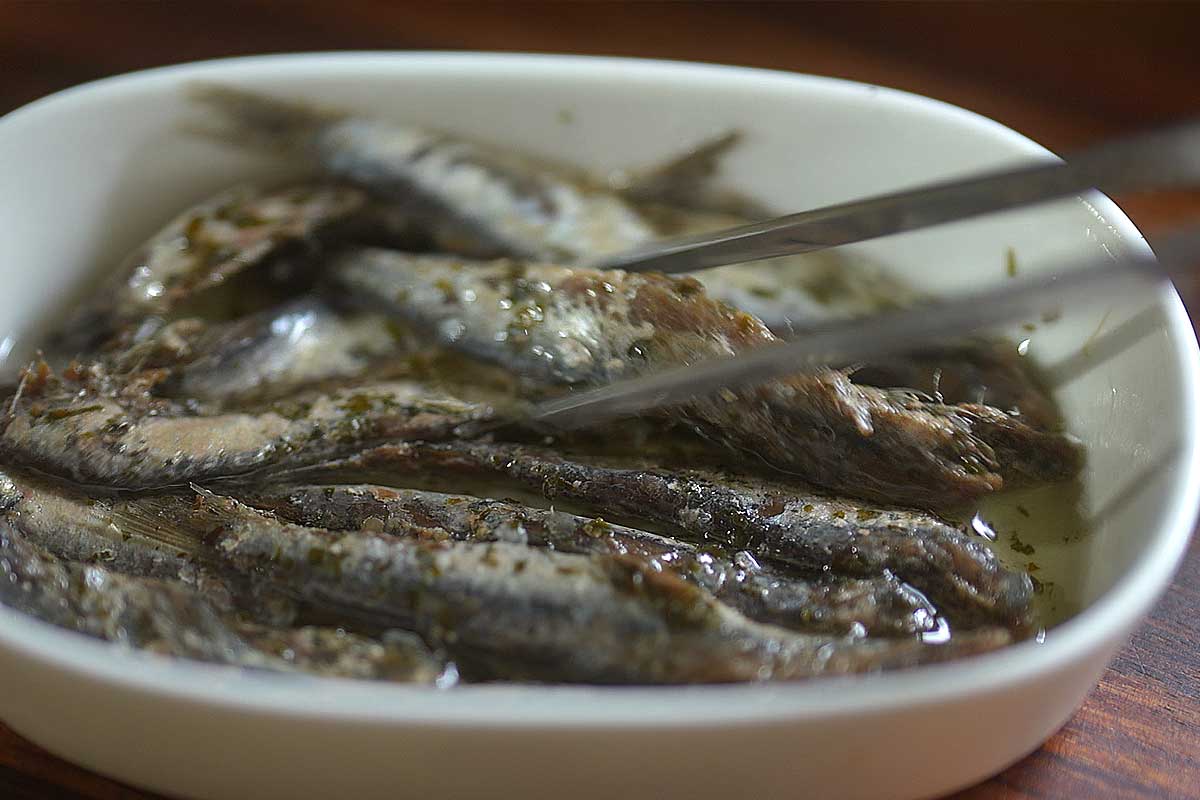
The anchovies don’t make it taste fishy. They melt into the shallots, garlic and wine, giving the sauce that deep savoury backbone that makes people ask what your secret is.
Why Bone-In Chicken Thighs Are the Right Choice
Boneless thighs are convenient. Bone-in thighs are better.
The bone conducts heat into the deepest part of the meat, which means more even cooking and more juicy, tender flesh. The fat under the skin renders slowly during the long simmer, basting the meat from the inside out.
For a juicier result and dryer skin, leave the seasoned thighs uncovered in the fridge overnight. That extra drying time makes the skin crispier from the moment it hits the pan.
The Anchovy Secret
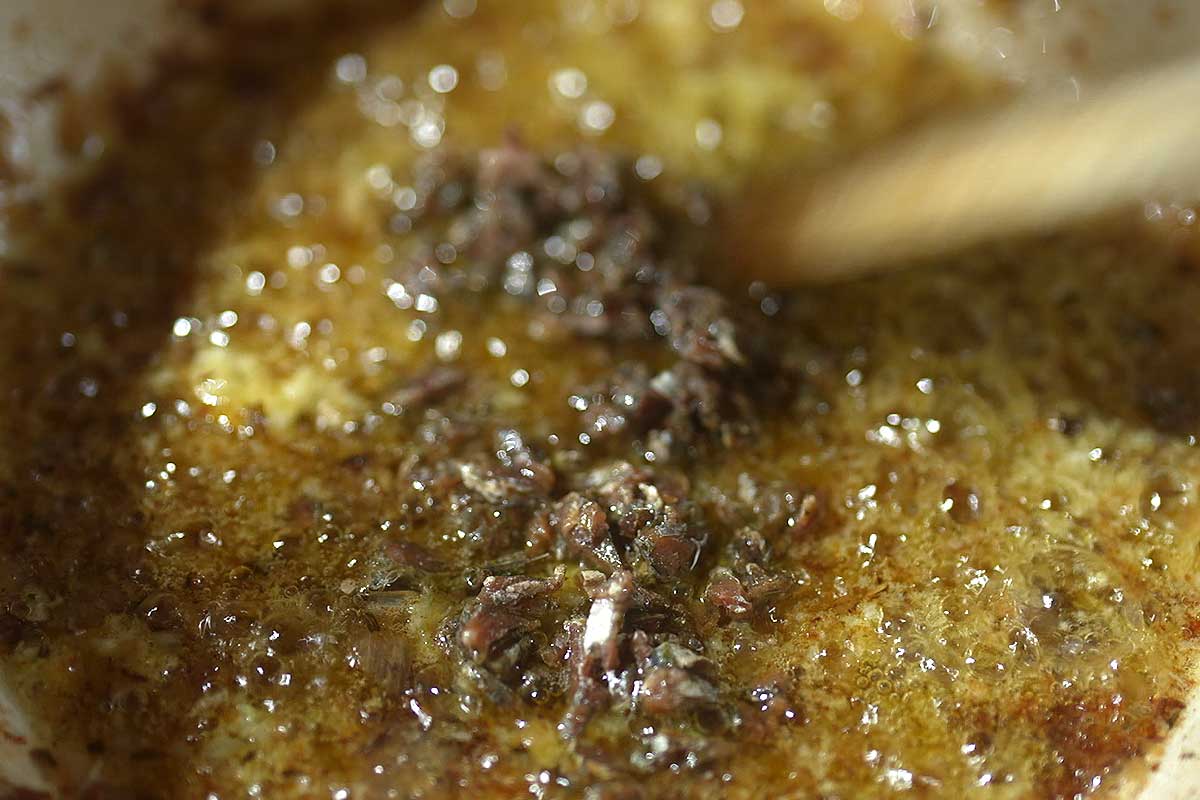
If the word anchovy puts you off, here’s what actually happens when you add them to a hot pan with shallots and garlic.
They dissolve completely. Within about a minute of stirring and pressing, they melt into the oil and disappear. No fishy flavour, no texture, no trace. What they leave behind is a low, savoury hum that lifts the entire sauce and makes it taste deeper and more complex than it has any right to.
This is one of the oldest tricks in French and Italian cooking. Four small fillets in a pan feeding four people. You’d never know they were there, but you’d notice if they weren’t.
Olives, Herbs de Provence and the Southern French Perfume
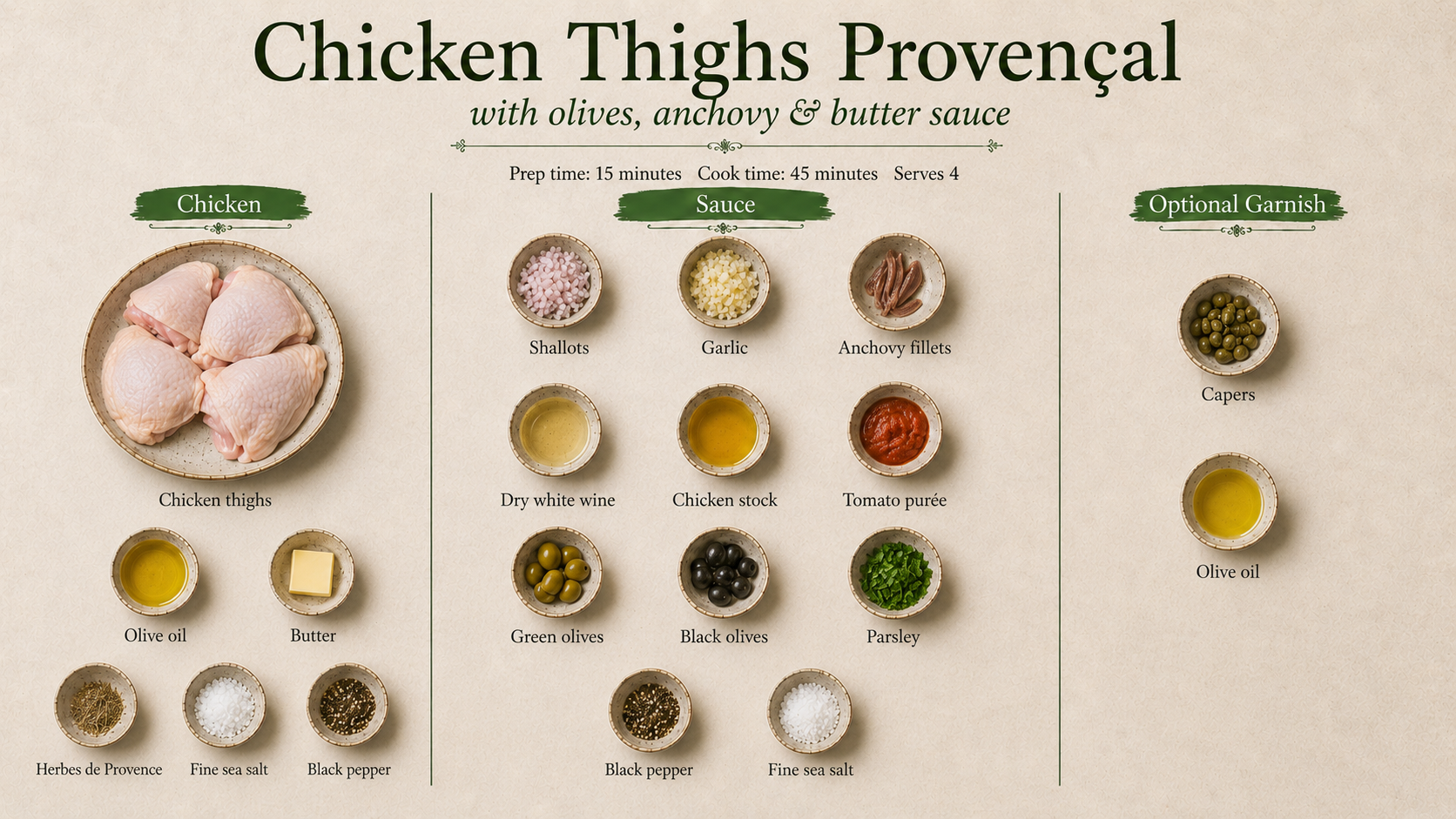
The olives bring the briny punch. The herbs de Provence give it the unmistakable southern French perfume of thyme, rosemary, lavender and savory.
Together they do something the anchovies can’t. They keep the sauce lively and fragrant throughout the long simmer, so the finished dish smells as good as it tastes.
Using both green and black olives is worth the extra effort. Green olives bring a sharper, firmer bite. Black olives are softer and more mellow. The contrast makes every forkful slightly different.
Cooking Tips
Pat the chicken completely dry before seasoning. Moisture on the skin is the enemy of crispiness. Use paper towel and really press it down.
Start the chicken skin-side down in a medium heat pan, not high heat. Too hot and the skin colours before the fat has time to render properly. Low and slow for the skin gives you deeper, more even gold.
Don’t rush the shallots. Three to four minutes over medium-low heat until they are soft and sweet. That’s where the sauce starts building its character.
Scrape the bottom of the pan when the wine goes in. All those golden bits stuck to the pan are concentrated flavour. Every bit of it belongs in the sauce.
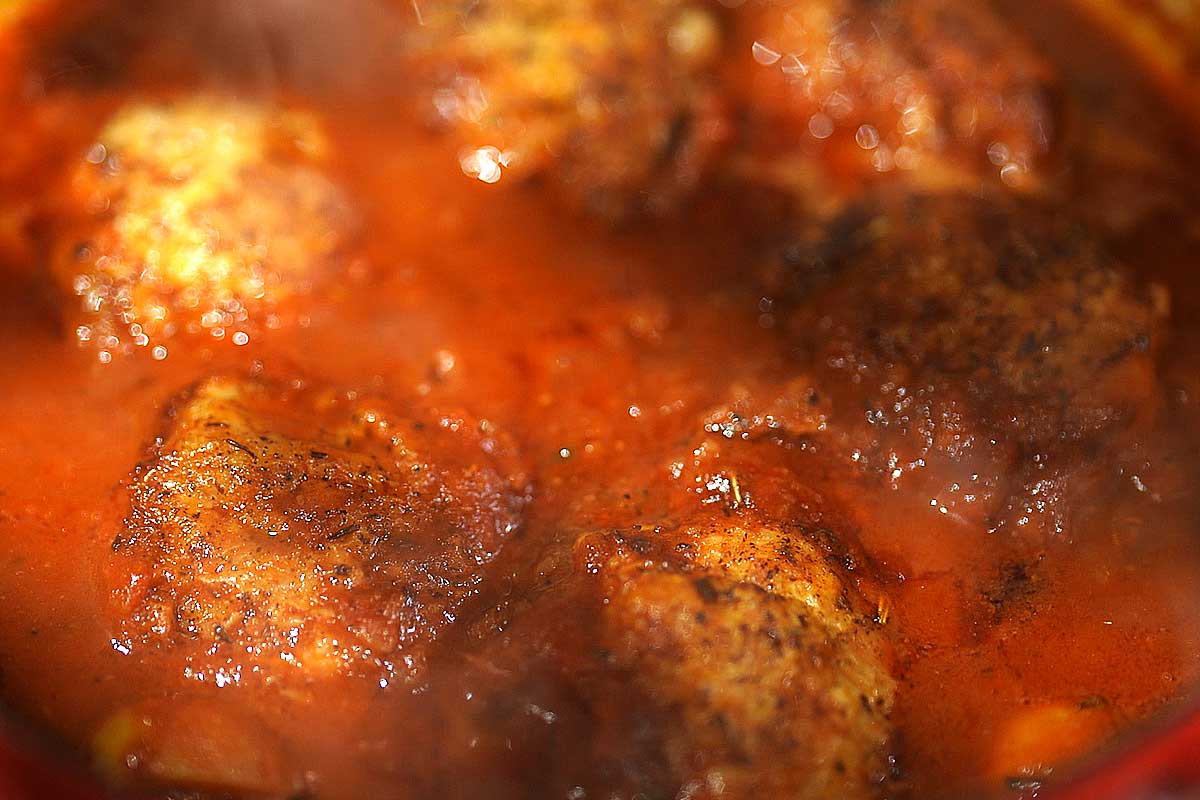
Return the chicken skin-side up for the simmer. Skin submerged in liquid goes soft. Skin facing up stays crisp and proud.
Taste before adding salt. The anchovies and olives bring a lot of salt already. The sauce may need none at all.
The Crispy Caper Garnish
The fried capers are optional but worth doing at least once.
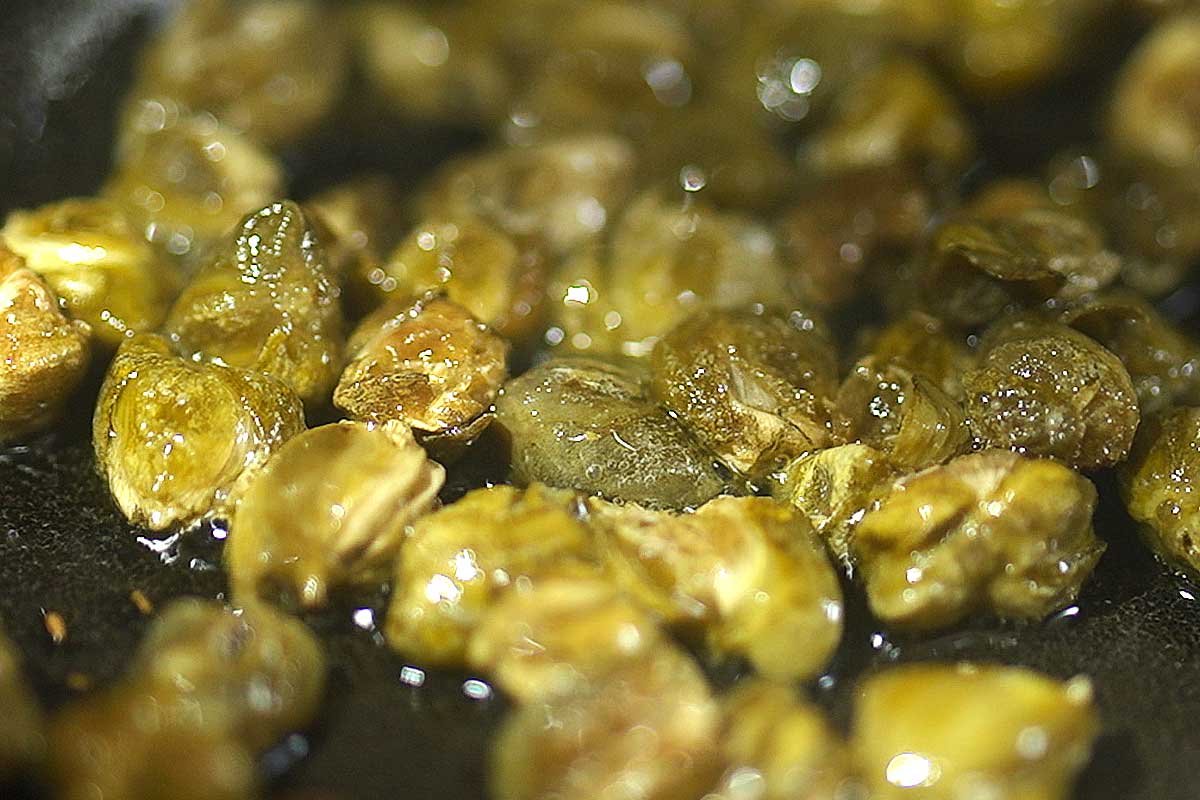
Dried capers dropped into hot olive oil puff up and crisp on the outside while staying slightly soft inside. They shatter when you bite them and release that sharp, lemony-briny hit all at once.
The trick is to pull them before they go too dark. Too dark and they lose that sharp kick and just taste salty and burnt. Golden and crisp is the target. Watch them closely as they go fast.
Ingredient Swaps
No anchovies? A teaspoon of Worcestershire sauce gives a similar savoury depth without any fishiness. Or simply leave them out, the sauce will be lighter but still very good.
No herbes de Provence? A mix of dried thyme, dried rosemary and dried oregano in equal parts gets you close to the same effect.
Only one type of olive? That’s fine. Use whatever you have. Kalamata olives work beautifully in place of both green and black if that’s what’s in the jar.
No dry white wine? A dry vermouth works well. Or use extra chicken stock with a splash of white wine vinegar for the acidity.
Common Mistakes
Not drying the chicken skin before cooking. Wet skin steams instead of crisping. Always pat dry, season, and if you have time, leave uncovered in the fridge overnight.
Turning the chicken too early. Leave it skin-side down and don’t touch it. It will release naturally from the pan when the skin is properly golden. Forcing it off early tears the skin.
Simmering the chicken skin-side down. The skin softens in liquid. Always return it to the pan skin-side up and keep it that way.
What to Serve With It
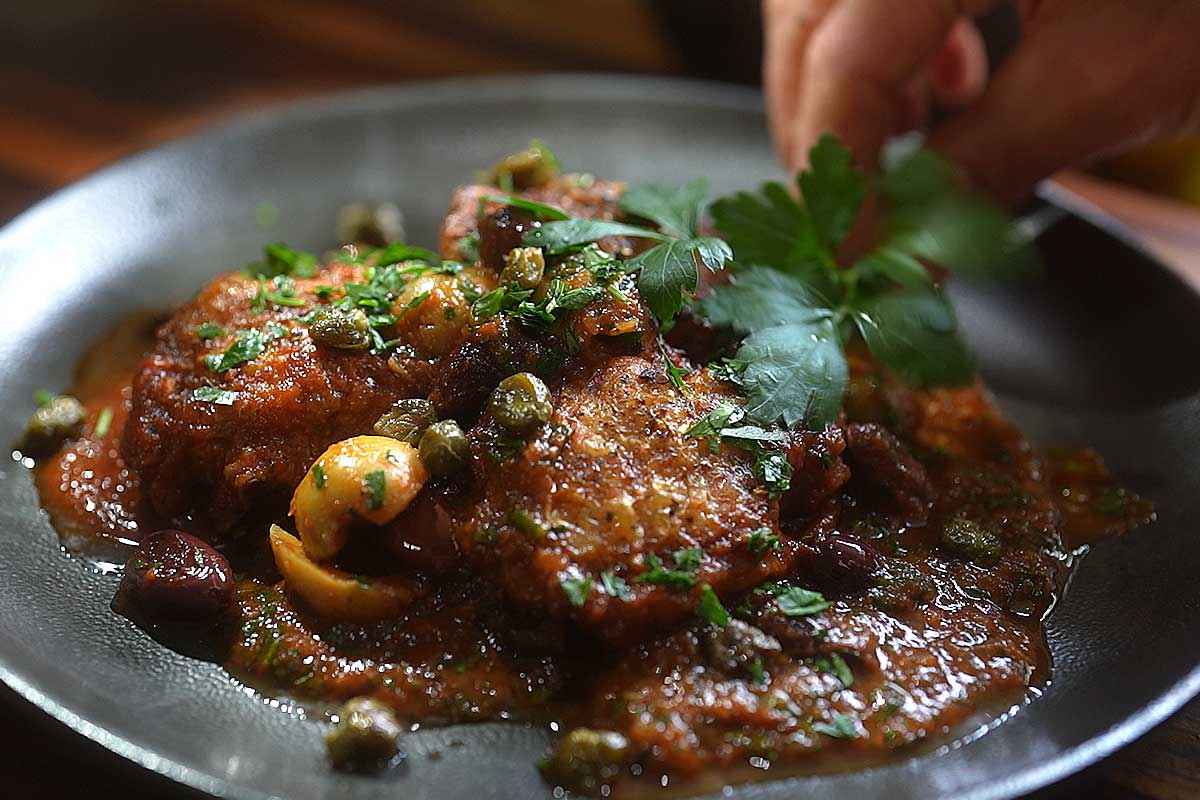
Crusty bread is non-negotiable. Leaving that sauce behind would be a small culinary crime.
Steamed rice soaks up the sauce beautifully and makes the meal more substantial.
Creamy mashed potato alongside is a deeply satisfying combination with the rich, briny sauce.
A simple green salad dressed with lemon and olive oil keeps things balanced and cuts through the richness.
Storage and Reheating
Fridge: Store covered for up to 3 days. The flavour develops further overnight and this dish reheats beautifully.
Reheat gently in a covered pan over low heat with a small splash of water or stock. The sauce comes back together easily.
Freezer: The sauce freezes well for up to 2 months. The chicken can be frozen with it, though the skin texture softens after thawing. Still delicious.
FAQs
Will I taste the anchovies?
No. They dissolve completely into the oil within a minute of cooking. What they leave behind is a deep savoury background note that makes the sauce taste richer and more complex. No fishiness, no texture, just depth.
Can I use boneless chicken thighs?
Yes, but reduce the simmering time to around 15 to 20 minutes and check the internal temperature reaches 165°F / 75°C. Boneless thighs cook faster and can dry out if left too long in the sauce.
Can I make this ahead of time?
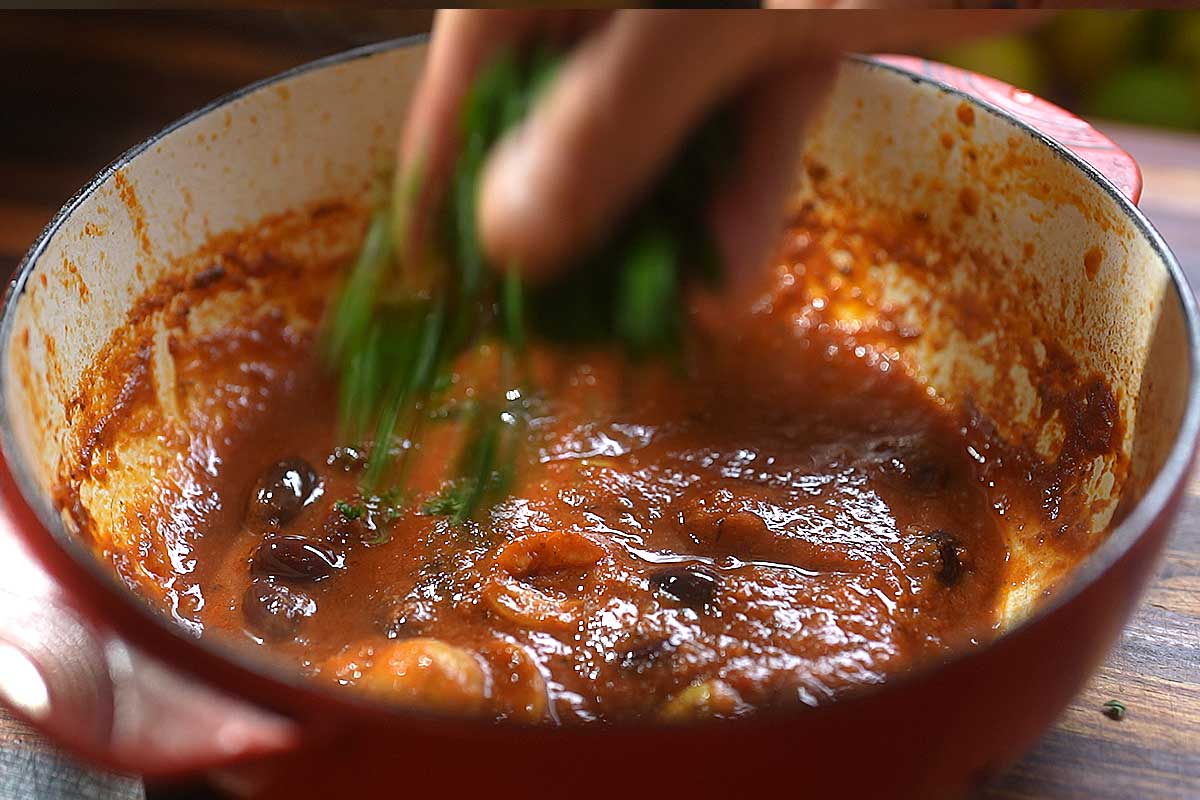
Yes, and it’s actually better the next day. Make the whole dish, cool completely, refrigerate overnight and reheat gently before serving. The sauce deepens considerably in flavour.
What is Provençal cooking?
Provençal refers to the cooking style of Provence in southern France, characterised by olive oil, garlic, tomatoes, olives, anchovies and herbs de Provence. It’s Mediterranean in spirit, bold in flavour, and built on a pantry of preserved and fermented ingredients.
Is this recipe gluten free?
Yes, completely gluten free as written. Just check your chicken stock label to be certain.
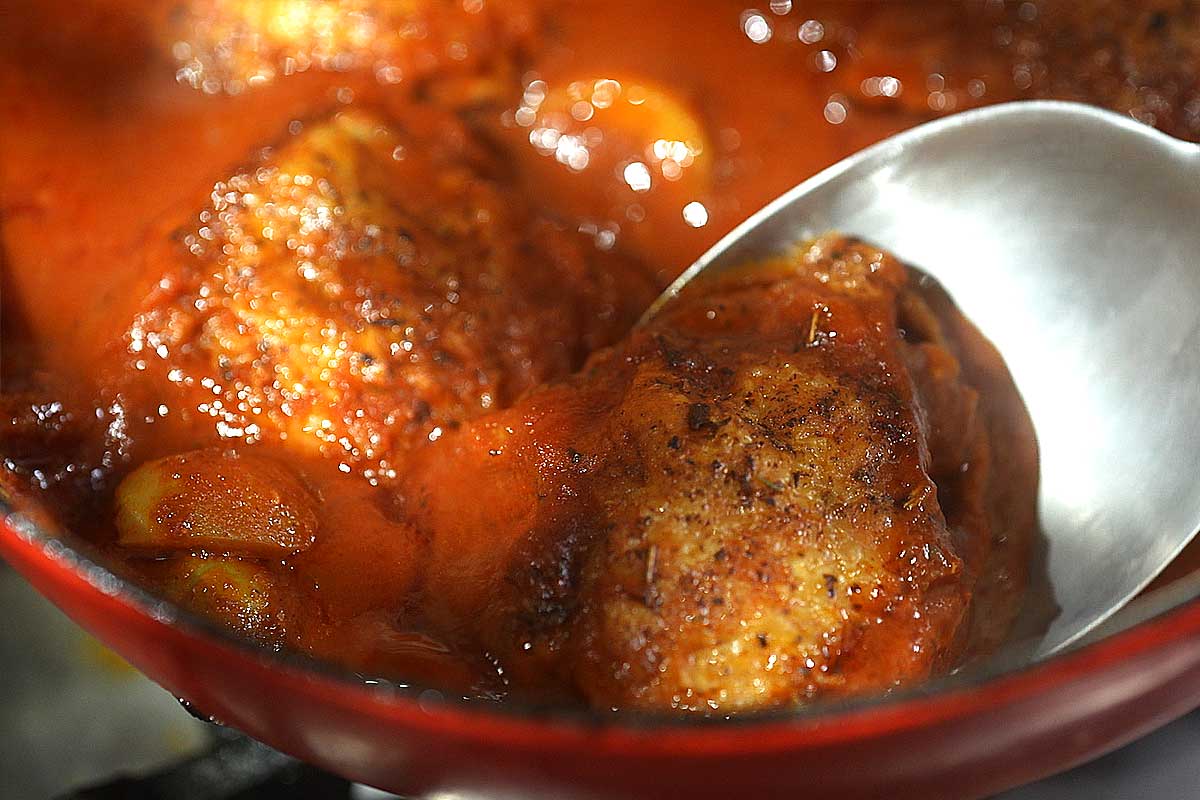
French Country Cooking at Its Best
This is the kind of dish that makes a Tuesday night feel like something worth sitting down for properly.
Bold without being complicated. Rich without being heavy. The kind of sauce that makes crusty bread feel like a necessity rather than an extra.
That’s French country cooking. Honest ingredients, patient technique, and a result that tastes like far more effort than it was.
 By
By 
You must be logged in to post a comment